.png)
Whole Food Nutrition for Dogs: Why It Matters
- Nick Willkom
- 1 day ago
- 9 min read


Finding trustworthy dog food is more confusing than ever for American pet owners. Busy urban life means you want quick choices, but also meals for your dog packed with real nutrients. Over 60 percent of American households rely on commercial kibble that may include fillers and additives instead of fresh, whole ingredients. Understanding how whole food nutrition supports your dog’s longevity and vitality helps you make smarter, vet-approved decisions for their everyday health.
Table of Contents
Key Takeaways
Point | Details |
Whole Food Nutrition Benefits | Whole food nutrition enhances immune function, reduces inflammation, and ensures better absorption of essential nutrients compared to processed alternatives. |
Nutrient Variety is Key | Incorporating diverse whole foods, including fresh proteins, fruits, and vegetables, provides critical nutrients for a dog’s overall health. |
Beware of Nutrition Myths | Many dog nutrition myths, such as the belief that all expensive foods are better, lack scientific backing and can mislead pet owners. |
Proper Transition to Whole Foods | Transitioning dogs to whole food diets should be gradual to avoid digestive issues, requiring careful monitoring of their health indicators throughout the process. |
Defining Whole Food Nutrition for Dogs
Whole food nutrition represents a revolutionary approach to feeding dogs that prioritizes fresh, minimally processed ingredients sourced from whole food components. Unlike traditional commercial kibble, which often contains fillers and synthetic additives, whole food nutrition focuses on delivering natural, nutrient-dense meals that closely mirror a canine’s ancestral diet.
In a groundbreaking clinical study examining whole food diets, researchers found that fresh ingredient-based meals significantly impact immune function and reduce systemic inflammation in dogs. This approach fundamentally differs from standard commercial pet foods by emphasizing ingredients that remain as close to their original state as possible. Whole food nutrition typically includes:
Fresh meat proteins
Whole vegetables
Unprocessed fruits
Natural organ meats
Minimally processed grains or grain alternatives
The core philosophy behind whole food nutrition recognizes that dogs, like their wolf ancestors, thrive on diets rich in whole, recognizable ingredients. These nutrient-dense meals provide superior bioavailability, meaning dogs can more efficiently absorb and utilize essential vitamins, minerals, and amino acids compared to heavily processed alternatives. By maintaining ingredient integrity, whole food nutrition supports optimal cellular function, promotes healthier coat and skin quality, and potentially contributes to longer, more vibrant canine lifespans.
Pro Tip - Ingredient Detective: Always read dog food labels carefully and prioritize products where whole, named protein sources appear first, indicating higher nutritional quality and genuine commitment to whole food principles.
Types of Whole Foods in Canine Diets
Whole food nutrition for dogs encompasses a diverse range of nutrient-rich ingredients that mimic the natural dietary patterns of canines. The foundation of these diets typically includes high-quality protein sources that provide essential amino acids and support muscle development, with fresh animal proteins taking center stage. These proteins can include lean meats like chicken, turkey, beef, fish, and lamb, each offering unique nutritional profiles that contribute to a dog’s overall health.
Beyond proteins, whole food diets incorporate a variety of fresh fruits and vegetables that deliver critical micronutrients. Nutritional diversity in dog diets can include ingredients like:
Lean muscle meats
Organ meats (liver, heart)
Green leafy vegetables
Berries rich in antioxidants
Root vegetables
Omega-3 rich fish
Some whole food approaches also integrate alternative protein sources, recognizing the potential nutritional benefits of plant-based ingredients. Carefully selected plant proteins like quinoa, lentils, and specific legumes can complement animal proteins, providing additional amino acids and fiber. These ingredients must be thoughtfully balanced to ensure complete nutritional requirements are met, as dogs have specific dietary needs different from humans.
Natural organ meats play a crucial role in whole food nutrition, offering concentrated sources of vitamins and minerals that support metabolic functions. Liver, for instance, provides rich stores of vitamin A, B vitamins, and essential minerals, while heart meat delivers crucial CoQ10 and amino acids that support cardiovascular health. The key is variety and careful proportion to create a balanced, nutritionally complete diet.

Pro Tip - Protein Proportions: Aim for diets where high-quality animal proteins constitute 50-70% of total nutritional content, ensuring optimal protein intake for your dog’s specific life stage and activity level.
Key Nutrients and Health Benefits
Whole food nutrition delivers a comprehensive approach to canine health by providing essential nutrients that support multiple biological functions. Scientific research on functional foods in dogs reveals that carefully selected whole food ingredients can significantly impact immune function, metabolic processes, and long-term wellness. These nutrient-dense foods go beyond basic sustenance, offering targeted health benefits that support dogs from puppyhood through their senior years.
The key nutrients in whole food diets play critical roles in canine health:
Proteins: Building blocks for muscle, tissue repair, and immune function
Omega-3 Fatty Acids: Support skin health, reduce inflammation
Antioxidants: Protect cells from oxidative damage
Vitamins and Minerals: Support metabolic processes
Probiotics: Enhance digestive and immune system function
Each nutrient category contributes uniquely to a dog’s overall health. Proteins provide essential amino acids that support muscle maintenance and cellular repair, while omega-3 fatty acids help manage inflammation and support cognitive function. Antioxidant-rich ingredients like berries and leafy greens combat cellular aging, potentially reducing the risk of chronic diseases. Vitamins and minerals from whole food sources are often more bioavailable than synthetic supplements, meaning dogs can more efficiently absorb and utilize these critical nutrients.
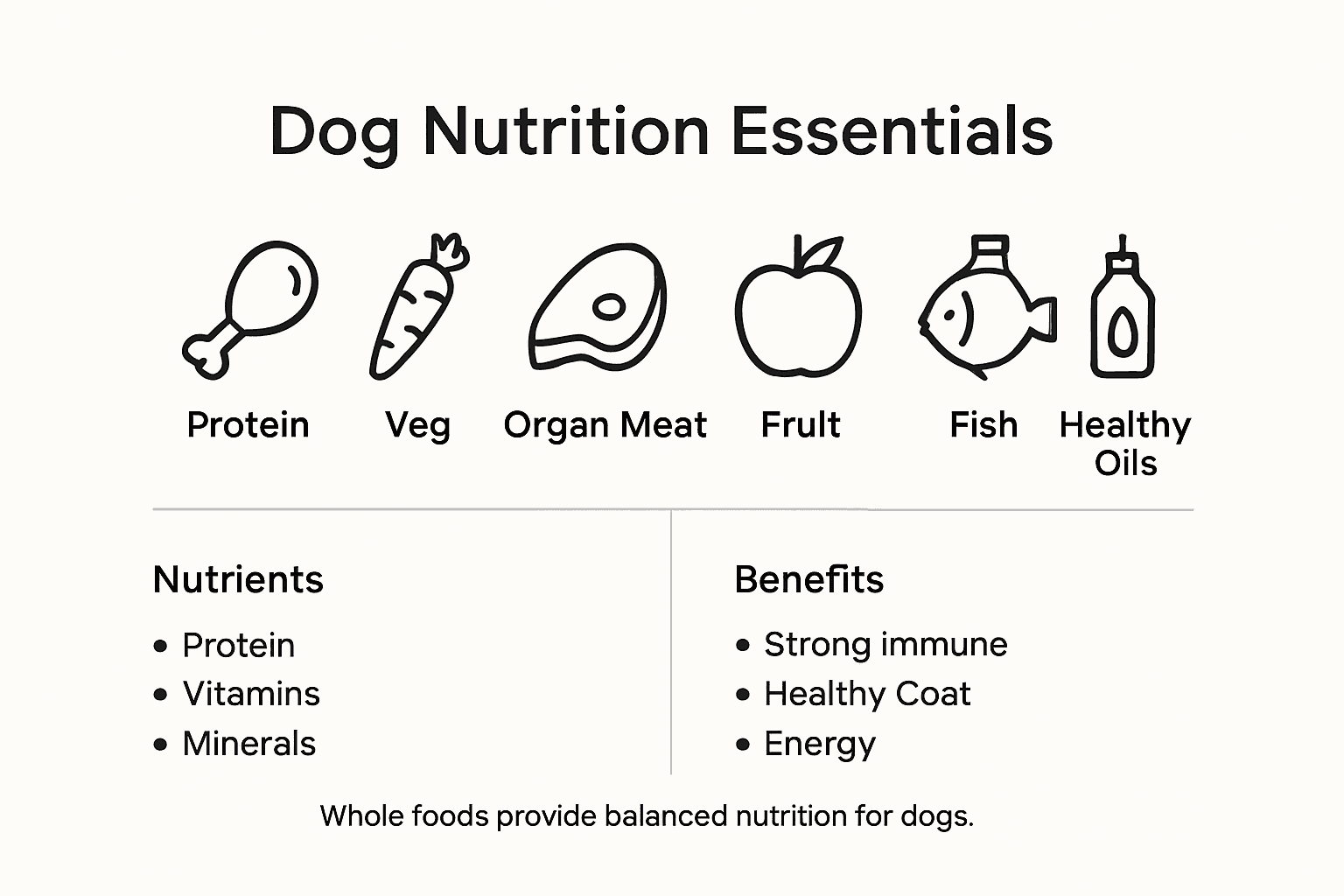
Dogs with targeted nutritional support through whole food diets may experience improved energy levels, stronger immune responses, healthier skin and coat quality, and more stable digestive function. Insights into balanced nutrition demonstrate that a holistic approach to diet can address multiple health dimensions simultaneously, potentially preventing nutritional deficiencies before they become problematic.
Pro Tip - Nutritional Diversity: Rotate protein sources and include a variety of colorful fruits and vegetables to ensure a broad spectrum of nutrients and prevent dietary monotony.
Common Myths and Misconceptions
Dog nutrition is fraught with misinformation that can potentially harm your pet’s health. Critical analysis of pet nutrition myths reveals that many popular beliefs about canine diet are not grounded in scientific evidence. Dog owners often fall prey to marketing tactics and trendy dietary claims that sound appealing but lack substantive nutritional merit.
Some of the most pervasive myths in dog nutrition include:
Price Equals Quality: More expensive does not guarantee better nutrition
Grain-Free Diets Are Always Healthier: Often a marketing ploy without scientific backing
Raw Diets Are Natural: Can pose significant health risks
One-Size-Fits-All Nutrition: Dogs have individual nutritional needs
Supplements Can Replace Balanced Diets: Nutrients work best in whole food contexts
Marketing terms like ‘holistic,’ ‘natural,’ and ‘organic’ often mislead pet owners about the actual nutritional value of dog food. Veterinary perspectives on nutrition misconceptions demonstrate that these buzzwords frequently serve marketing purposes rather than providing meaningful insights into dietary quality. The reality is that nutritional value stems from balanced, scientifically formulated diets that meet a dog’s specific metabolic requirements, not from trendy packaging or exclusionary ingredient lists.
Many dog owners mistakenly believe that more exotic or expensive ingredients automatically translate to superior nutrition. However, nutritional science emphasizes that balanced nutrient profiles, proper preparation, and meeting individual dog’s specific needs are far more important than chasing the latest dietary trend. A well-researched, veterinarian-approved diet that considers the dog’s age, weight, activity level, and health conditions will always outperform trendy, unsubstantiated nutritional approaches.
Pro Tip - Label Detective: Always read beyond marketing claims and look for AAFCO (Association of American Feed Control Officials) statements that confirm nutritional completeness.
Link to balanced nutrition insights
Comparing Whole Food to Processed Dog Foods
The fundamental difference between whole food and processed dog foods lies in their ingredient quality, nutritional integrity, and manufacturing processes. Processed dog foods typically rely on high-heat extrusion methods that can significantly degrade nutrient content, while whole food approaches prioritize minimal processing and nutrient preservation. Comparing protein quality across different dog food formats reveals stark differences in how various preparation methods impact nutritional bioavailability.
Key distinctions between whole food and processed dog foods include:
Ingredient Sourcing
Whole Food: Fresh, human-grade ingredients
Processed Foods: Rendered meats, by-products, synthetic additives
Nutrient Preservation
Whole Food: Minimal processing, maximum nutrient retention
Processed Foods: High-heat treatment destroys natural enzymes
Digestibility
Whole Food: Higher natural enzyme content, easier digestion
Processed Foods: Lower digestibility, potential nutrient blocking
Additive Content
Whole Food: Minimal to no artificial preservatives
Processed Foods: Synthetic preservatives, stabilizers, color enhancers
Processed dog foods often rely on synthetic vitamin and mineral supplementation to compensate for nutrients lost during extreme manufacturing processes. These artificial replacements cannot fully replicate the complex nutritional profile found in whole food ingredients. The body processes naturally occurring nutrients more efficiently, with greater absorption and utilization compared to synthetic alternatives. Whole food diets provide a more comprehensive nutritional approach, delivering nutrients in their most natural, recognizable form.
The manufacturing process represents another critical differentiator. Most commercial kibble undergoes extreme heat extrusion, which can destroy heat-sensitive nutrients and create potentially harmful compounds. In contrast, whole food approaches like freeze-drying maintain ingredient integrity, preserving natural enzymes, vitamins, and amino acid structures. This approach ensures that dogs receive nutrition closer to what their bodies have evolved to process over thousands of years.
Here’s a quick overview of how whole food and processed dog foods differ by critical factors:
Category | Whole Food Diets | Processed Dog Foods |
Ingredient Quality | Fresh, human-grade | Rendered or low-grade meats |
Nutrient Integrity | High, minimal processing | Lower, nutrients degraded |
Digestive Health Impact | Easier digestion | More digestive challenges |
Artificial Additives | Few or none | Commonly used |
Bioavailability | Highly bioavailable | Lower absorption rates |
Pro Tip - Ingredient Investigation: Examine dog food labels carefully, prioritizing whole protein sources as the first ingredients and avoiding foods with multiple unrecognizable or chemically modified components.
Transitioning Your Dog to Whole Food Nutrition
Transitioning your dog to whole food nutrition requires a strategic, patient approach that prioritizes your pet’s digestive health and nutritional adaptation. Systematic methods for introducing fresh food diets emphasize gradual change to minimize potential digestive disruptions and ensure successful dietary transformation. Understanding the nuanced steps of nutritional transition can significantly impact your dog’s comfort and long-term dietary success.
The recommended transition process typically involves several critical stages:
Week 1-2: Introduce 25% new whole food diet
Mix with current food
Monitor digestive response
Week 3-4: Increase to 50% whole food diet
Gradually reduce previous food
Watch for any adverse reactions
Week 5-6: Transition to 75% whole food diet
Minimal previous food remnants
Continue close observation
Week 7-8: Complete whole food diet implementation
100% new nutritional approach
Stabilize digestive adaptation
Strategies for dogs with sensitive stomachs highlight the importance of individualized transition plans. Some dogs may require even slower integration, particularly those with preexisting digestive sensitivities or chronic health conditions. Consulting with a veterinarian becomes crucial in developing a personalized transition strategy that accounts for your dog’s unique health profile, age, weight, and existing nutritional status.
Key considerations during the transition include monitoring your dog’s energy levels, coat quality, stool consistency, and overall vitality. Unexpected changes like temporary digestive upset, minor weight fluctuations, or slight behavioral shifts are normal during dietary transitions. However, persistent symptoms warrant immediate veterinary consultation. The goal is a smooth, comfortable nutritional transformation that supports your dog’s long-term health and well-being.
For reference, here are important signs to monitor during your dog’s transition to a whole food diet:
Observation Area | What to Watch For | Healthy Indicator |
Energy Level | Increased playfulness | Consistent vitality |
Coat & Skin | Shinier coat, no flakes | Noticeable improvement |
Stool Consistency | Normal, well-formed stools | No persistent changes |
Appetite | Steady, eager eating | No loss of appetite |
Pro Tip - Transition Tracking: Maintain a detailed dietary transition journal, documenting your dog’s daily food intake, digestive responses, energy levels, and any noticeable health changes.
Elevate Your Dog’s Health with Whole Food Nutrition from Loyal Saints
If you are seeking to overcome the challenges of feeding your dog a diet rich in natural, nutrient-dense ingredients then Loyal Saints Pets offers a premium solution designed to meet this exact need. The article highlights key goals such as improving vitality, supporting immune function, and promoting better digestion through whole food nutrition. Our freeze-dried dog foods are crafted from human-grade proteins, fresh fruits, and vegetables that preserve essential nutrients without additives or fillers.

Discover the benefits of real, minimally processed ingredients by exploring our selection of Chicken and Beef products or save with thoughtfully combined options in our Bundles | Loyal Saints. Act now to provide your dog with balanced nutrition that supports long-term health and happiness. Visit Loyal Saints Pets today to choose fresh whole food meals that nurture your dog like family.
Frequently Asked Questions
What is whole food nutrition for dogs?
Whole food nutrition for dogs emphasizes fresh, minimally processed ingredients sourced from whole food components, providing natural, nutrient-dense meals that mirror a canine’s ancestral diet.
How does whole food nutrition benefit my dog’s health?
Whole food nutrition supports optimal immune function, reduces systemic inflammation, enhances nutrient absorption, and contributes to healthier skin, coat quality, and energy levels through its bioavailable ingredients.
Can I transition my dog to a whole food diet easily?
Yes, transitioning to a whole food diet should be done gradually over several weeks to minimize digestive upset. Start by mixing a small amount of whole food with existing food and gradually increase the proportion.
Are there any common misconceptions about dog nutrition I should be aware of?
Yes, common myths include beliefs that price equals quality, grain-free diets are always healthier, and that one-size-fits-all nutrition is adequate for all dogs. It’s important to rely on balanced, scientifically formulated diets tailored to your dog’s individual needs.
Recommended
Comments