.png)
What is hypoallergenic dog food? Benefits, myths, solutions
- wix mentor

- 1 day ago
- 8 min read

If you’ve ever grabbed a bag of dog food because it said “hypoallergenic” on the label, you’re not alone. But here’s the thing: “hypoallergenic” is an unregulated term with no legal definition or AAFCO standard behind it. Any brand can print it on a bag. That means your dog’s allergy relief depends far less on label-reading and far more on understanding what’s actually driving the reaction. This guide breaks down what food allergies really are, what hypoallergenic diets can and can’t do, how to diagnose the problem correctly, and how to find solutions that genuinely work for your dog.
Table of Contents
Key Takeaways
Point | Details |
Label isn’t guarantee | The term ‘hypoallergenic’ is unregulated and doesn’t ensure allergy safety. |
Allergy triggers are proteins | Most food allergies in dogs are caused by proteins, not grains. |
Patience is critical | Diet trials need 8–12 weeks to judge effectiveness—expect slow improvement. |
Supplements add value | Omega-3s and vitamins in diets can ease inflammation and boost skin health. |
Veterinary guidance required | Work closely with a vet for proper diagnosis and a lasting allergy management plan. |
Understanding canine food allergies
Before you can manage a food allergy, you need to know what you’re dealing with. A true food allergy is an immune system response, where your dog’s body identifies a specific ingredient as a threat and attacks it. A food intolerance, on the other hand, causes digestive upset without that immune reaction. Both are frustrating, but they’re not the same thing, and the distinction matters for treatment.
Symptoms of food allergies in dogs often include:
Chronic itching, especially around the face, paws, and ears
Recurring skin infections or hot spots
Vomiting or diarrhea that doesn’t resolve
Hair loss or inflamed skin
Ear infections that keep coming back
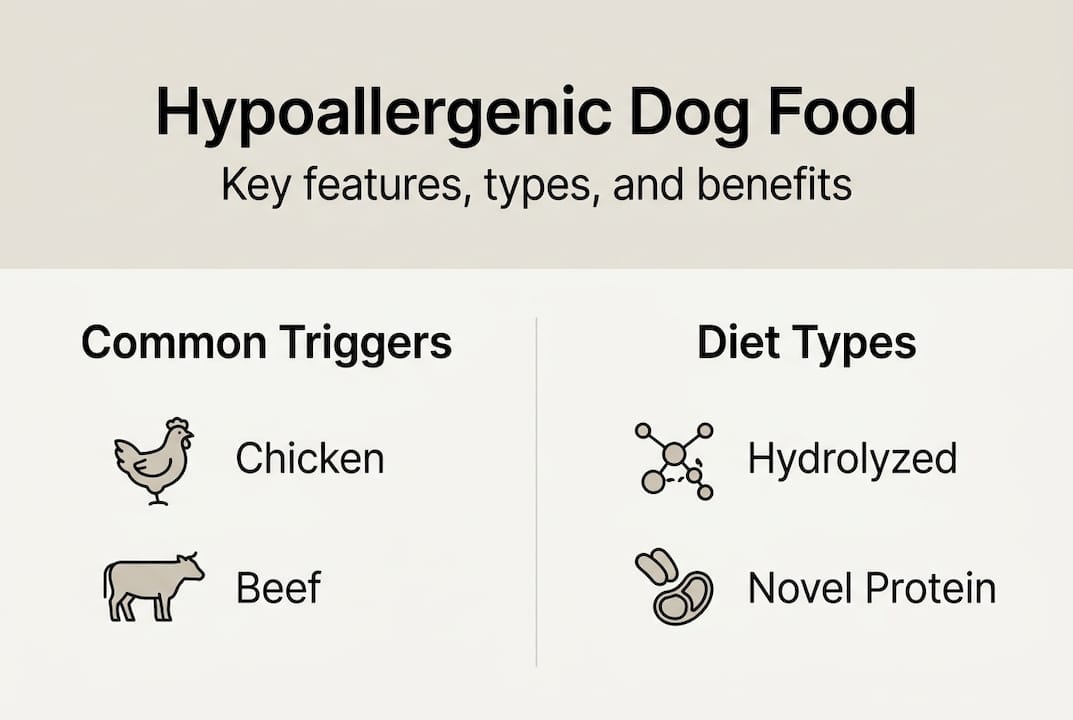
Here’s a fact that surprises most dog owners: over 80% of allergens are proteins, not grains. The most common culprits are beef (34%), dairy (17%), chicken (15%), wheat (13%), and egg (4%). Grains get a lot of blame, but the data tells a different story.
Food allergies affect only 1 to 2% of all dogs, but for those dogs, the impact is significant. And unlike a seasonal cold, food allergies are lifelong. There’s no cure. The only real solution is identifying the trigger and avoiding it permanently. That’s why solid food allergy management starts with understanding, not guessing. Learning the basics of allergy-free dog nutrition gives you a real foundation to work from, and exploring a natural approach to dog food allergies can open up practical options you may not have considered.
What does ‘hypoallergenic’ dog food mean?
With allergy basics in mind, it’s time to look at what “hypoallergenic” actually means in practice. The word sounds reassuring, but the reality is more nuanced.
Hypoallergenic dog food refers to diets formulated to minimize allergic reactions, typically through one of two approaches: hydrolyzed protein diets or novel ingredient diets. Hydrolyzed proteins are proteins that have been broken down into tiny fragments, small enough that the immune system is less likely to recognize and react to them. Novel ingredient diets use proteins your dog has never eaten before, like kangaroo, venison, or duck, so there’s no prior sensitization.
Important: “Hypoallergenic” carries no AAFCO definition or legal standard. Any manufacturer can use the term freely, regardless of what’s actually in the bag.
Feature | Hydrolyzed protein diet | Novel protein diet |
Mechanism | Proteins broken into tiny fragments | Uses unfamiliar protein sources |
Best for | Severe or confirmed allergies | Mild sensitivities or first-time trials |
Pros | Highly controlled, vet-recommended | More palatable, often less expensive |
Cons | Can be costly, less tasty | Risk of prior exposure to “novel” protein |
Pro Tip: Always read the full ingredient list, not just the front-of-bag claims. Look for limited ingredient diets with a single, clearly identified protein source. Understanding allergy-friendly dog food basics helps you cut through the marketing noise fast.
How effective are hypoallergenic diets for dogs?
Now that we know how these diets work, let’s look at how well they actually perform. The good news is that the data is encouraging, with some important caveats.
Hydrolyzed diets reduce symptoms in 70 to 87% of allergic dogs, with measurable reductions in itching and skin inflammation scores. That’s a strong result. But it doesn’t happen overnight.
Diet type | Response rate | Time to improvement | Cost | Palatability |
Hydrolyzed protein | 70 to 87% | 4 to 12 weeks | Higher | Variable |
Novel protein | 60 to 75% | 4 to 8 weeks | Moderate | Generally good |
Standard commercial | Low for allergic dogs | N/A | Lower | High |
Prescription hydrolyzed diets like Hill’s z/d and Royal Canin HP are the most reliable options for severe cases, but they come with a higher price tag and some dogs simply don’t enjoy the taste. That palatability issue is real and can make long-term compliance tricky.

Symptom relief reaches up to 80% of dogs on the right diet, but patience is non-negotiable. Relapses are also possible if the triggering ingredient is reintroduced, even accidentally. Exploring how diet and seasonal allergies interact can also help you understand why some dogs seem to flare up at certain times of year. For a broader look at what works, revisit allergy-friendly options with your vet’s input.
Diagnosing and managing food allergies: What works
Effectiveness depends not just on picking the right food, but on using the right diagnostic process. And here’s where many dog owners go wrong.
Blood tests and skin prick tests for food allergies in dogs are unreliable for diagnosis. The gold standard is the elimination diet trial, a strict, controlled process that takes time but delivers real answers. Veterinary-guided elimination trials consistently outperform label-based guessing.
Here’s how the process works:
Consult your vet to rule out environmental allergies and confirm food allergy is suspected
Choose a strict elimination diet using a hydrolyzed or novel protein your dog has never eaten
Feed only that diet for 8 to 12 weeks, with zero exceptions
No treats, table scraps, or flavored medications during the trial period
Monitor symptoms weekly and document changes in skin, coat, and digestion
Rechallenge with the original food to confirm the allergy if symptoms resolved
Pro Tip: More than 50% of dogs need at least 4 weeks before showing meaningful improvement. Don’t give up early. Consistency is everything during this phase.
The most common mistake owners make is “cheating” on the diet, slipping in a treat or a bite of table food. Even a small amount of the trigger protein can reset the entire trial. After identification, long-term avoidance is the only reliable management strategy. A detailed elimination diet guide can walk you through each step, and ongoing managing dog food allergies resources help you stay on track after diagnosis.
Supplements and additional ingredients: Supporting the allergic dog
Beyond the main proteins, many hypoallergenic diets include added nutrients specifically chosen to support skin and immune health. These aren’t just filler. They serve a real purpose.
Omega-3 fatty acids, vitamins A and E, and zinc are commonly added to reduce inflammation and support the skin barrier. Omega-3s in particular have strong evidence behind them for easing itching and calming inflammatory responses in allergic dogs.
Here’s what to look for on the label:
Omega-3 fatty acids (from fish oil or flaxseed): reduce skin inflammation and support coat health
Vitamin E: antioxidant that protects skin cells and supports immune function
Vitamin A: essential for healthy skin cell turnover
Zinc: supports immune response and helps maintain the skin barrier
Probiotics: can support gut health and may reduce sensitivity over time
These supplements work best as part of a complete, balanced diet. They complement the elimination process but don’t replace it. If you want to understand the full picture, the omega-3 benefits for skin and coat are well worth reading. For more specific guidance, check out EPA and DHA dosage recommendations for allergy relief, and see what an omega-6 fatty acids study reveals about managing dog allergy symptoms.
Common myths and pitfalls of hypoallergenic dog food
Let’s clear up some of the most persistent misconceptions, because getting these wrong can set your dog’s recovery back significantly.
Myth 1: All hypoallergenic foods are safe for allergic dogs. Not true. Because the term is unregulated, a product labeled hypoallergenic may still contain your dog’s specific trigger protein. Always verify the ingredient list.
Myth 2: Hypoallergenic diets cause blood fat problems. This one has been definitively debunked. Research confirms that hypoallergenic diets do not cause dyslipidemia (abnormal blood fat levels) and have fat content comparable to standard diets. You can feed these diets long-term without that concern.
Real results require strict adherence. No treats or table scraps during the trial period, and consistent monitoring for 8 to 12 weeks, are what separate successful outcomes from frustrating ones.
Common owner pitfalls to avoid:
Switching foods too quickly without a proper transition period
Giving flavored supplements, chews, or medications during the trial
Assuming “grain-free” equals hypoallergenic (it doesn’t)
Stopping the trial early because improvement seems slow
Reintroducing old foods without veterinary guidance
For ongoing support, revisit the fundamentals of dog allergy management and use a step-by-step elimination plan to stay organized throughout the process.
Explore hypoallergenic solutions for your dog
You now have a clear picture of what hypoallergenic dog food really means, how to use it effectively, and what pitfalls to avoid. The next step is finding the right food for your specific dog.

At Loyal Saints Pets, we believe every dog deserves food made from real, whole ingredients with nothing hidden in the fine print. Our freeze-dried formulas are crafted from human-grade proteins, fruits, and vegetables, with no fillers, no artificial additives, and full transparency on every label. They’re designed with sensitive dogs in mind and meet AAFCO nutritional standards. Learn more about why freeze-dried dog food is a smart choice for dogs with sensitivities, or browse our allergy-friendly dog food shop to find options tailored to your dog’s needs. More tail wags are coming.
Frequently asked questions
Can any dog benefit from hypoallergenic food?
Food allergies affect only 1 to 2% of dogs, so hypoallergenic food is best reserved for dogs with a confirmed allergy or documented sensitivity. Healthy dogs without sensitivities don’t require it.
Does hypoallergenic mean grain-free?
No. Over 80% of dog food allergies are triggered by animal proteins, not grains. Hypoallergenic diets focus on hydrolyzed or novel proteins, not grain removal.
How long does it take for hypoallergenic diets to show results?
Over 50% of dogs need more than 4 weeks to show meaningful improvement, and the gold standard trial runs 6 to 12 weeks for 85 to 95% diagnostic accuracy. Patience and strict adherence are essential.
Are hydrolyzed protein diets safe long-term?
Yes. Research confirms that hydrolyzed diets don’t cause dyslipidemia and are nutritionally adequate for ongoing use. They’re a safe, long-term option for dogs with confirmed allergies.
Do I need a prescription for hypoallergenic dog food?
Some therapeutic options, particularly prescription hydrolyzed diets for severe cases, do require veterinary supervision. Over-the-counter limited ingredient diets are available without a prescription but should still be chosen with your vet’s input.
Recommended
Comments