.png)
Pet food allergy management: A dog owner's guide
- wix mentor

- 2 days ago
- 8 min read

Switching your dog to a “natural” or freeze-dried food and hoping the itching stops is one of the most common mistakes allergy-frustrated owners make. True food allergy management starts with a strict, veterinarian-supervised elimination diet, not a brand swap. The process is more structured than most people expect, but it works. This guide walks you through every step, from spotting the signs to making smart long-term food choices, including when freeze-dried options genuinely fit into the picture.
Table of Contents
Key Takeaways
Point | Details |
Elimination diets are essential | Diagnosing food allergies in dogs requires a strict elimination trial with veterinary-prescribed food for 8-12 weeks. |
Freeze-dried food role | Freeze-dried food can support allergy management after diagnosis but is not a substitute for prescribed trials. |
Read labels carefully | Always check ingredient labels to avoid hidden allergens and ensure food fits your dog’s diagnosed needs. |
Vet guidance matters | Work closely with your veterinarian for both identifying and managing dog food allergies safely. |
What is pet food allergy management? The real definition
Pet food allergy management is not about buying a bag labeled “grain-free” or “limited ingredient” and calling it done. It is a clinical process designed to identify the specific food trigger causing your dog’s symptoms and then eliminate it permanently from their diet.
First, it helps to know the difference between an allergy and a sensitivity. A food allergy triggers an immune response, often showing up as skin problems, ear infections, or gastrointestinal issues. A food sensitivity (or intolerance) causes digestive upset without the immune system getting involved. Both are real problems, but they are managed differently.
Veterinarians follow a clear framework for food allergies:
Rule out environmental allergens first
Start a strict elimination diet step-by-step trial using a novel or hydrolyzed protein
Monitor for symptom resolution over 8 to 12 weeks
Rechallenge with the original diet to confirm the diagnosis
Build a long-term feeding plan around the confirmed safe ingredients
“Pet food allergy management in dogs involves a strict elimination diet using novel proteins or hydrolyzed diets, not over-the-counter solutions.”
Over-the-counter remedies and home-cooked guesswork are not first-line solutions. The goal of proper management is accurate diagnosis first, then long-term symptom control. Without the diagnosis, you are just guessing.
Recognizing food allergies in dogs: Signs, symptoms, and red flags
Before you start any management plan, you need to know whether food is actually the problem. Many owners assume allergies when the real culprit is fleas, pollen, or a contact irritant. Food allergies account for roughly 10 to 15 percent of all allergic skin disease in dogs, so they are real but not the most common cause.
Skin symptoms to watch for:
Chronic itching, especially around the face, paws, ears, and belly
Recurring ear infections (more than twice a year is a red flag)
Hot spots or rashes that keep coming back
Hair loss or thickened, darkened skin from constant scratching
Gastrointestinal symptoms:
Vomiting or loose stools more than twice a week
Excessive gas or gurgling stomach sounds
Mucus in the stool
The most common allergens in dogs are beef, dairy, chicken, wheat, soy, and corn. Notice that these are not exotic ingredients. They are the proteins and grains found in the majority of mainstream dog foods, which is exactly why so many dogs react to them after years of repeated exposure.

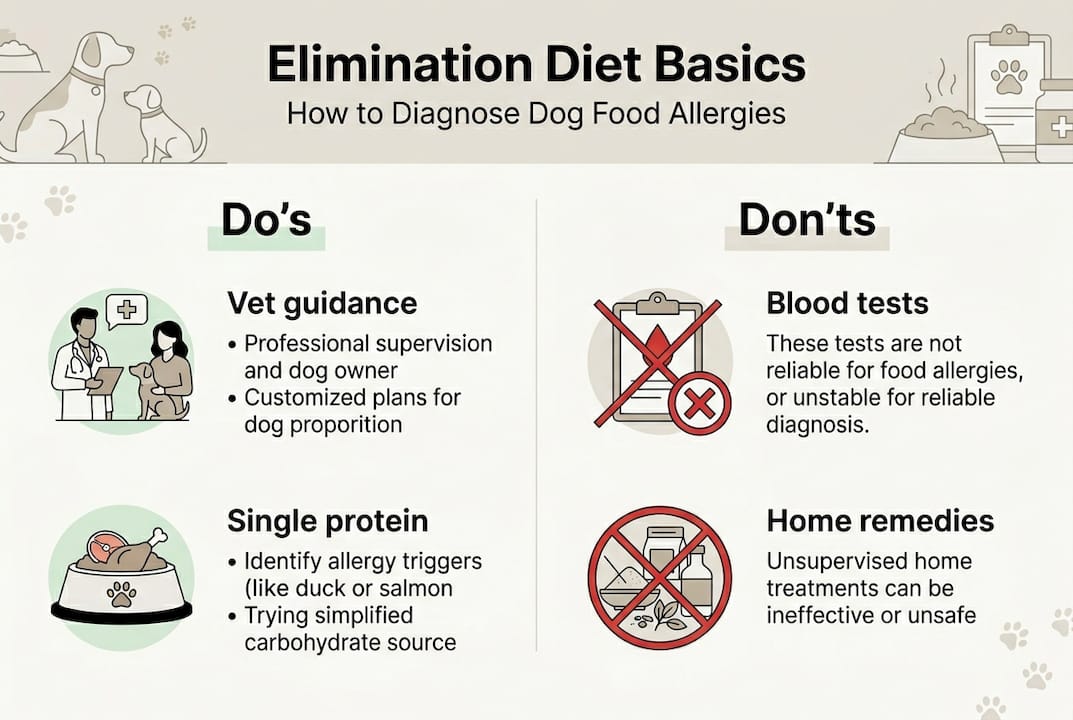
One thing worth knowing: blood tests and saliva tests marketed for pet food allergies are not reliable. They produce a high rate of false positives and false negatives. The only method that actually works is a properly conducted elimination diet, supervised by your vet. A natural allergy approach can support long-term health, but diagnosis has to come first.
Pro Tip: Keep a symptom journal for two weeks before your vet appointment. Note what your dog eats, when symptoms flare, and how severe they are. This data helps your vet make faster, more accurate decisions.
How elimination diets work: The gold standard for diagnosis
The elimination diet is the only veterinary-approved method for diagnosing food allergies in dogs. It works by removing every potential allergen from your dog’s diet and replacing it with ingredients they have never eaten before.
Step-by-step elimination diet process:
Work with your vet to choose a novel protein (like venison, rabbit, or kangaroo) or a prescription hydrolyzed diet
Feed only that single diet for 8 to 12 weeks, with zero exceptions
Provide only filtered water, no flavored supplements or chews
Track symptoms weekly and report changes to your vet
If symptoms resolve, move to the challenge phase
Reintroduce the original food to confirm the allergy
Veterinary guidelines recommend prescription hydrolyzed or novel protein diets for allergy trials because they offer the most controlled ingredient profiles. Prescription hydrolyzed diets break proteins into fragments too small for the immune system to recognize, which makes them especially useful when you are not sure which protein is the trigger.
Diet type | Best use | Allergy trial approved? |
Prescription hydrolyzed | Unknown allergen, first-time trial | Yes |
Novel protein (prescription) | Known allergen history | Yes |
OTC limited ingredient | Maintenance after diagnosis | Sometimes |
Freeze-dried natural | Post-diagnosis support | With vet guidance |
Raw commercial | Sensitivity management | Not recommended for trials |
Compliance is everything. No treats, flavored medications, or non-prescribed foods are allowed during the trial, and 95% of dogs show clear improvement by week 8 when the protocol is followed strictly. One accidental bite of a chicken treat can reset the entire process.
Pro Tip: If your dog takes flavored heartworm or flea prevention, ask your vet for an unflavored alternative before starting the trial. Flavored medications are a hidden source of allergens that many owners overlook.
The challenge phase is what separates a real diagnosis from a lucky guess. Once symptoms clear, you reintroduce the original food. If symptoms return, the food allergy diagnosis is confirmed. If they do not, food was probably not the issue. This step matters because it prevents you from unnecessarily restricting your dog’s diet for life.
For a detailed walkthrough of the full elimination diet process, including how to handle multi-dog households and common pitfalls, we have a dedicated guide that covers it all. You can also explore our allergy-free nutrition resource for a broader look at building a safe long-term diet.
Freeze-dried, raw, novel, hydrolyzed: What’s safest for allergy-prone dogs?
The pet food market is full of products claiming to solve allergies. Freeze-dried, raw, grain-free, limited ingredient, single protein. The marketing is convincing, but the science tells a more nuanced story.
Veterinary guidelines prioritize prescription hydrolyzed and novel protein diets for diagnosis because they are the only options with controlled, verified ingredient lists. Over-the-counter foods, including freeze-dried options, often share manufacturing lines with common allergens, which introduces cross-contamination risk.
How popular diet types compare for allergy management:
Diet type | Allergy trial use | Post-diagnosis use | Key risk |
Prescription hydrolyzed | Best option | Good | Cost |
Prescription novel protein | Best option | Good | Limited flavors |
OTC novel protein | Not recommended | Possible | Cross-contamination |
Freeze-dried natural | Not recommended | Good with guidance | Ingredient verification |
Raw commercial | Not recommended | Risky | Bacterial contamination |
Freeze-dried natural foods are marketed heavily for dogs with sensitivities, and they do offer real advantages after a diagnosis is confirmed. Minimal processing preserves nutrients, ingredient lists tend to be shorter and cleaner, and the absence of fillers and artificial additives reduces the overall allergen load. However, bacterial contamination concerns with raw and freeze-dried formats remain a legitimate issue, especially for immunocompromised dogs.
The key distinction: freeze-dried foods can be a smart part of your dog’s long-term allergy management plan, but they are not a substitute for prescription diets during the diagnostic trial phase.
When evaluating any freeze-dried option post-diagnosis, look for AAFCO-compliant labels, single-source proteins, and transparent manufacturing practices. Our guide on freeze-dried vs kibble breaks down the specific advantages for allergy-prone dogs, and our limited ingredient diets resource explains how to read labels effectively.
What happens after a diagnosis? Ongoing management and tips
Getting a confirmed diagnosis is a genuine win. Now the work shifts from detective mode to maintenance mode, and this phase is actually manageable with the right approach.
Once your vet confirms the allergy through rechallenge (symptoms return within 1 to 2 weeks of reintroducing the original food), you have a clear roadmap. Avoid the confirmed allergen. Build a diet around safe, verified ingredients. Reintroduce new foods one at a time to expand options safely.
Steps for transitioning to a long-term allergy management diet:
Get a written list of confirmed allergens from your vet
Choose a base diet (prescription or high-quality commercial) that avoids all confirmed triggers
Introduce one new ingredient every two weeks and monitor for reactions
Read every label, including treats, supplements, and dental chews
Schedule a vet recheck every six months for the first year
If new symptoms appear, treat them as a potential new allergen until proven otherwise
Freeze-dried foods can absolutely have a place in this phase. Their short ingredient lists make label reading straightforward. Their minimal processing means fewer hidden additives. And their palatability makes them a great option for picky eaters who have been through weeks of a restricted trial diet. Understanding the freeze-dried cost benefits can also help you plan a sustainable long-term feeding budget.
Pro Tip: Use our freeze-dried food checklist when evaluating any new product. It covers the key label markers, protein sourcing questions, and AAFCO compliance checks that matter most for allergy-prone dogs.
If your dog develops new symptoms after months of stability, do not assume it is the same allergen. Dogs can develop new allergies over time, especially if a new protein is introduced repeatedly. Your vet is your best resource for deciding whether a new elimination trial is needed.
Discover safe freeze-dried food options for allergy-conscious dogs
Managing your dog’s food allergies takes patience, but the right food choices make it significantly easier. Once your vet has guided you through the diagnostic phase, choosing a clean, minimally processed diet becomes the foundation of long-term health.

At Loyal Saints Pets, our freeze-dried dog foods are crafted from human-grade, whole ingredients with no fillers, no artificial additives, and transparent protein sourcing. They are not a replacement for prescription elimination diets during the diagnostic phase, but they are a thoughtful, AAFCO-compliant option for dogs whose allergens are already identified. Learn why freeze-dried nutrition supports allergy-prone dogs, or browse our full line of freeze-dried dog food options built for dogs you love like family.
Frequently asked questions
Can freeze-dried dog food help manage food allergies?
Freeze-dried food can be a suitable option after a diagnosis is confirmed, but prescription diets are recommended for the actual allergy trial and diagnosis phase.
How long does an elimination diet trial take for dogs?
Most elimination diet trials last 8 to 12 weeks, and most dogs respond within the first 8 weeks when the protocol is followed strictly.
What dog foods are most likely to cause allergies?
The most common allergens in dogs are beef, dairy, chicken, wheat, soy, and corn, which are found in the majority of mainstream commercial dog foods.
Are blood or saliva allergy tests reliable for dogs?
No. Blood and saliva tests are not reliable for diagnosing dog food allergies. Only a supervised elimination diet provides an accurate diagnosis.
How do you confirm a food allergy after an elimination diet?
You reintroduce the original food after the trial period. If the symptoms return within 1 to 2 weeks, the food allergy diagnosis is confirmed.
Recommended
Comments