.png)
Dog food allergy guide: 5 steps to healthier pets
- wix mentor

- Mar 29
- 7 min read

Watching your dog scratch relentlessly, deal with recurring ear infections, or struggle with an upset stomach is genuinely heartbreaking. What makes it worse is not knowing why it keeps happening. Food allergies in dogs are more common than many owners realize, and the symptoms can look just like a dozen other conditions. Without a clear, structured approach, you can spend months switching foods and getting nowhere. This guide walks you through every step, from spotting the right symptoms to choosing the best long-term diet, so you and your dog can finally get some relief.
Table of Contents
Key Takeaways
Point | Details |
Elimination diet is essential | A strict elimination diet is the only reliable way to diagnose food allergies in dogs. |
Symptoms can be subtle | Watch for itching, infections, or GI upset as signs of possible food allergies. |
Hydrolyzed protein is most reliable | Hydrolyzed protein diets offer the highest success rate for severe and complex cases. |
Strict avoidance prevents relapse | Continuing to avoid identified allergens and monitoring treats and medications is crucial. |
Supplements offer extra relief | Omega-3 fatty acids and other vet-recommended therapies can support long-term comfort for allergic dogs. |
Recognizing food allergy symptoms in dogs
Food allergies in dogs do not always look the way you might expect. Many owners assume a food allergy means vomiting or diarrhea, but the most common signs are actually skin-related. Knowing what to look for is the first step toward getting your dog real help.
According to veterinary research, non-seasonal pruritus and infections are the primary signs of a cutaneous food allergy in dogs. “Non-seasonal” is the key word here. If your dog itches year-round rather than just during pollen season, food is a more likely culprit than environmental triggers.
Here are the most common symptoms to watch for:
Itching focused on the paws, ears, face, and belly
Chronic ear infections that keep coming back despite treatment
Skin infections or hot spots that do not fully resolve
Vomiting or diarrhea that occurs regularly without another clear cause
Hives or facial swelling in more acute reactions
One important nuance: food allergies often overlap with atopic dermatitis (a skin condition triggered by environmental allergens) and flea allergies. This overlap is exactly why so many dogs get misdiagnosed. A vet assessment is essential before drawing conclusions.
“Many misdiagnoses happen because owners give treats or flavored medications that contain the very allergen they are trying to avoid. Strict control of everything that goes into your dog’s mouth is non-negotiable during any diagnostic process.”
Pro Tip: Keep a simple log of every food, treat, and flavored medication your dog receives before your vet visit. This record can save weeks of guesswork and help your vet spot patterns faster. You can also review these food allergy management tips to get a head start.
Getting ready: What you need for a safe elimination diet trial
Once you and your vet agree that a food allergy is likely, the next step is preparing for a proper diagnostic trial. The gold-standard method is an 8 to 12 week strict elimination diet using either a novel protein or a hydrolyzed protein diet. There is no shortcut that works as reliably.
Here is what you will need before you start:
A veterinarian’s guidance to select the right diet type for your dog’s history
Prescription or vet-recommended food (novel or hydrolyzed protein)
A feeding journal to track meals, symptoms, and any accidental exposures
Measuring cups to keep portions consistent
Hypoallergenic treats, only if your vet approves them
A checklist of medications and supplements to review with your vet for hidden allergens
The most important rule of the trial is strict compliance. Any slip, even a small piece of table food or a flavored pill, can invalidate weeks of progress. This is why preparation matters so much before you begin.
Trial component | Why it matters |
Novel protein food | Avoids proteins your dog has been exposed to before |
Hydrolyzed protein food | Proteins are broken down so the immune system does not react |
Feeding journal | Tracks patterns and catches accidental exposures |
Vet check-ins | Ensures the trial stays on track and adjusts if needed |
Pro Tip: Read through detailed elimination diet instructions before day one so you are not making decisions under pressure. Also, understanding limited ingredient diet benefits can help you choose the right food with confidence.
Step-by-step: How to run an elimination diet trial
With everything in place, you are ready to run the trial. The process is straightforward, but the details matter a lot.
Transition gradually. Over 5 to 7 days, mix increasing amounts of the new food with the old food to reduce GI upset.
Start the full trial. Feed only the approved food and water. Nothing else.
Monitor and record daily. Note itching levels, stool quality, ear condition, and energy. Use a simple 1 to 10 scale for consistency.
Avoid all extras. No flavored medications, no chews, no table scraps. Check with your vet about unflavored alternatives for any required meds.
Stay the course for 8 to 12 weeks. Patience is critical. 95% of dogs improve by 8 weeks on a properly run trial, but more than half need longer than 4 weeks to show meaningful change.
Rechallenge phase. After improvement, reintroduce the original food under vet supervision. If symptoms return, the food allergy diagnosis is confirmed.
The rechallenge step is one that many owners skip, but it is actually what confirms the diagnosis. Without it, you cannot be certain the improvement was due to the diet change.
Pro Tip: Follow a structured set of diet trial steps to stay organized and avoid the most common mistakes that derail trials early.
Choosing the right diet: Hydrolyzed, novel protein, or other options?
Not every dog needs the same type of diet, and choosing the right one makes a real difference in both diagnosis accuracy and long-term comfort.
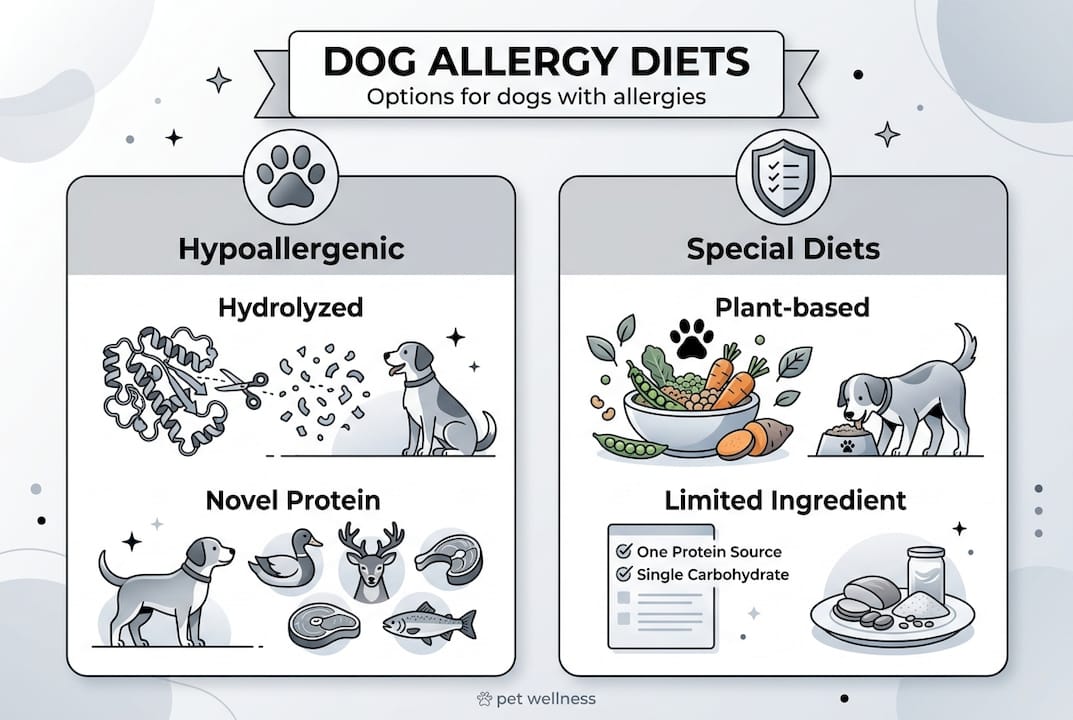
Hydrolyzed diets succeed in 85 to 95% of severe cases, while novel protein diets work in 70 to 80% of cases, and over-the-counter limited ingredient diets (OTC LIDs) carry a real risk of cross-contamination that can undermine the entire trial.
Here is a quick decision guide:
Hydrolyzed protein diet: Best for dogs with multiple known allergens, severe reactions, or when you are unsure what proteins they have eaten before. More expensive but most reliable.
Novel protein diet: Works well when your dog has a limited food history and you can identify a protein they have never eaten (like kangaroo, venison, or rabbit).
OTC limited ingredient diets: Use with caution. Many are processed in facilities that also handle common allergens, which creates contamination risk.
Plant-based or alternative proteins: An emerging option with limited research data so far. Worth discussing with your vet if other options have failed.
Diet type | Best for | Success rate | Key risk |
Hydrolyzed protein | Severe or multi-allergen cases | 85 to 95% | Cost, palatability |
Novel protein | Dogs with limited food history | 70 to 80% | Prior exposure unknown |
OTC LID | Mild cases with vet oversight | Variable | Cross-contamination |
Plant-based | Experimental cases | Limited data | Nutritional gaps |
You can also explore plant-based protein options and learn more about high protein diet effects to make a fully informed choice with your vet.
Long-term management for allergy-free living
Diagnosis is a milestone, not a finish line. Once you know what your dog is allergic to, the real work is keeping them comfortable and preventing relapses over the long term.
Here are the core steps for ongoing management:
Stick to the allergy-safe diet every single day, with no exceptions
Use hypoallergenic grooming products to avoid skin flare-ups from shampoos or conditioners with irritating ingredients
Consider omega-3 supplementation to support skin barrier health and reduce inflammation
Work with your vet on adjunct treatments like antihistamines or short-term anti-itch medications during flare-ups
Audit everything regularly, including flavored medications, new treats, and any food your dog might access at home or outside
The AKC recommends avoidance combined with omega-3s, hypoallergenic shampoos, and careful management of treats and medications as the foundation of long-term allergy control. This is not a one-time fix. It is a lifestyle adjustment that pays off in fewer vet visits, less discomfort for your dog, and more tail wags for you.
Learn more about omega-3 usage for relief and the specific omega-3 benefits for dogs dealing with skin-related allergy symptoms.
Pro Tip: Set a monthly reminder to review your dog’s full diet, including medications and treats, with fresh eyes. Allergens have a way of sneaking back in through small changes you might not notice day to day.
Give your dog the clean nutrition they deserve
Managing a food allergy is so much easier when you start with food you can actually trust. At Loyal Saints Pets, every product is made from human-grade, whole ingredients with no fillers, no artificial additives, and no hidden proteins that could trigger a reaction. Our freeze-dried dog food is minimally processed to preserve nutrients and flavor, and it meets AAFCO standards for complete and balanced nutrition.

Whether you are in the middle of an elimination diet trial or looking for a long-term allergy-safe option, our limited ingredient and single-protein recipes give you full transparency over what goes into your dog’s bowl. We also offer free shipping on qualifying orders, so getting started is simple. Visit Loyal Saints Pets and find the clean, natural food your dog has been waiting for.
Frequently asked questions
How can I tell if my dog has a food allergy or a different allergy?
Only an elimination diet can confirm a food allergy. Blood and skin tests are not reliable for diagnosing food allergies in dogs, especially when symptoms overlap with environmental or flea allergies.
What are the most common food allergens for dogs?
Beef, dairy, chicken, wheat, lamb, eggs, soy, corn, pork, and rice are the top food allergens in dogs, and most of them are proteins rather than grains.
Are over-the-counter limited ingredient diets safe for dog food allergies?
They can be risky. OTC LIDs carry cross-contamination risks from shared manufacturing facilities, which is why vet-guided prescription options are the safer choice for a diagnostic trial.
How long does it take to see improvement after starting an elimination diet?
Most dogs show improvement within 8 weeks, but over half need more than 4 weeks to show a meaningful drop in symptoms, so patience and consistency are essential throughout the full trial period.
Recommended
Comments