.png)
Minimally processed dog food: 5 science-backed benefits
- wix mentor
- Mar 27
- 7 min read
Most commercial kibble is cooked at temperatures above 300°F, and that extreme heat does more damage than most dog owners realize. High-heat processing creates advanced glycation end products, known as AGEs, which are linked to accelerated aging, chronic inflammation, and long-term disease in dogs. Yet millions of pet owners assume all dog foods deliver the same nutritional value. They don’t. The difference between a minimally processed diet and a standard bag of kibble is not just marketing. It’s measurable, it’s backed by science, and it directly affects how your dog feels, moves, and ages. This guide breaks down exactly what minimally processed means, what the research shows, and what real changes you can expect to see in your dog.
Table of Contents
Key Takeaways
Point | Details |
Fewer harmful compounds | Minimally processed foods avoid damaging heat, which lowers risks of disease from AGEs. |
Improved nutrition | Your dog absorbs more critical nutrients and enjoys higher protein and vitamin retention. |
Noticeable health gains | Most owners see real results in digestion, coat, weight, and energy within weeks. |
Safer with guidance | Veterinary advice and gradual transitions ensure benefits and reduce risks. |
What does ‘minimally processed’ mean for dog food?
Now that you know high-heat processing can create harmful compounds, let’s clarify exactly what sets minimally processed foods apart. The term refers to foods prepared using gentle techniques that preserve the natural structure of ingredients. Think freeze-drying, air-drying, slow cooking, or fresh preparation. These methods use little to no high heat, and they avoid the synthetic preservatives and fillers that keep conventional kibble shelf-stable for years.
Standard kibble is made through a process called extrusion. Ingredients are mixed, pressurized, and blasted through a machine at very high temperatures. The result is a shelf-stable pellet, but a lot of nutritional value is lost along the way. Minimally processed foods retain far more of the original nutrients because gentle processing methods simply don’t strip them away.
Here are the most common types of minimally processed dog food:
Freeze-dried: Raw ingredients are frozen and then moisture is removed in a vacuum chamber, preserving nutrients and flavor without heat
Air-dried: Slow, low-temperature airflow removes moisture while keeping proteins and vitamins intact
Slow-cooked: Gentle heat over longer periods retains more nutrients than high-heat extrusion
Fresh or refrigerated: Lightly cooked or raw meals with whole ingredients and no artificial preservatives
The processing method matters because it directly affects how many nutrients survive into your dog’s bowl. Higher nutrient retention and digestibility are consistently seen in minimally processed foods compared to extruded kibble, and that gap has real consequences for your dog’s health.
Nutritional advantages: More digestible, less destroyed
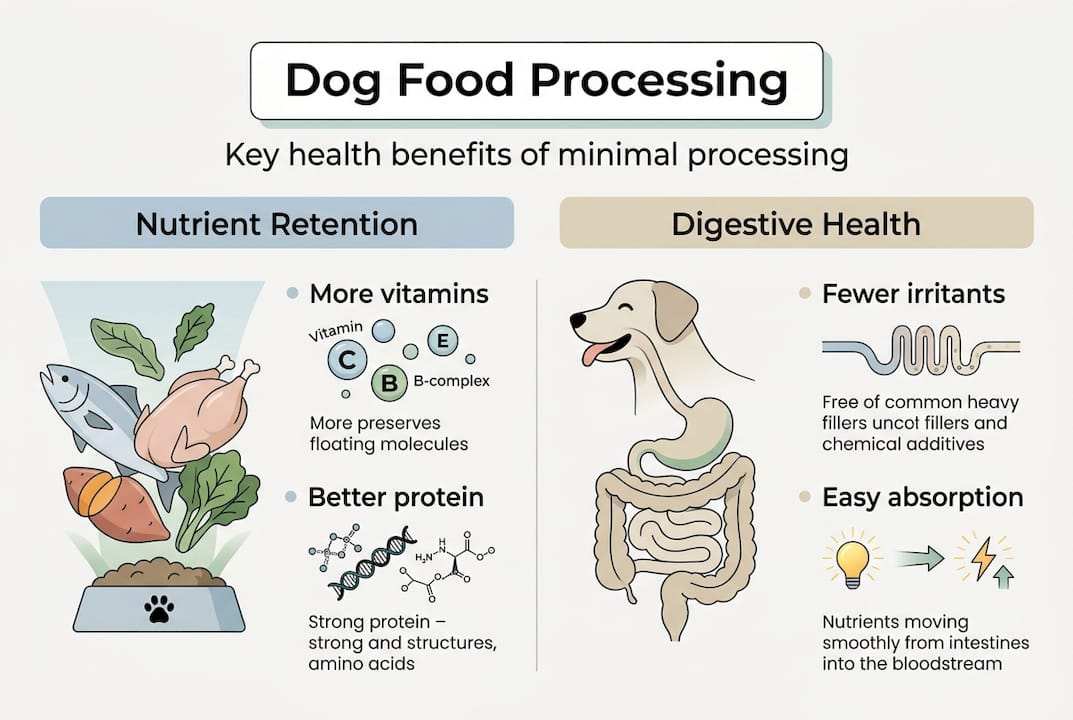
With clear definitions in mind, let’s look at the core nutritional differences these choices make for your dog. When food is exposed to extreme heat, amino acids break down, heat-sensitive vitamins like B and C are reduced significantly, and beneficial enzymes and probiotics are destroyed entirely. What’s left is a food that looks complete on the label but delivers far less to your dog’s body.

Minimally processed diets tell a very different story. Freeze-drying preserves enzymes and bioactive compounds that would otherwise be lost, and freeze-dried nutrient retention is measurably higher across proteins, fats, and micronutrients.
Nutrient factor | Freeze-dried | Fresh/slow-cooked | Extruded kibble |
Protein digestibility | Up to 98% | 85-95% | 60-80% |
Fat digestibility | Up to 98% | 85-92% | 65-80% |
Enzyme preservation | High | Moderate | Very low |
Vitamin retention | High | Moderate to high | Low |
Probiotic survival | High | Moderate | Minimal |
“Minimally processed foods show up to 98% digestibility for protein and fat, while preserving the enzymes and vitamins that high-extrusion kibble routinely destroys.”
This matters because digestibility is not the same as nutrient content. A food can list 30% crude protein on the label, but if your dog can only absorb 60% of it, the real benefit is much lower. The nutrients dogs absorb better from minimally processed diets include essential amino acids, omega fatty acids, and fat-soluble vitamins that support everything from muscle function to immune health.
Pro Tip: Don’t just check the protein percentage on the label. Ask whether the food is minimally processed, because bioavailability, meaning how much your dog actually absorbs, is what drives real health results.
Health benefits you can see (and measure)
Better nutrient profiles are promising, but what do the results look like in real life? Here’s what both owners and studies report after switching. The changes are not subtle. Many dog owners notice visible improvements within just a few weeks, and the science backs that up.
Switching to a minimally processed diet is linked to 70% fewer digestive issues, along with better stool quality, shinier coats, more energy, and reductions in allergy symptoms. These improvements often appear within 4 to 12 weeks of making the change.
Here’s a quick look at what owners and researchers commonly observe:
Digestive health: Firmer stools, less gas, and fewer upset stomach episodes
Skin and coat: Noticeably shinier fur and reduced itching or flaking
Energy levels: More consistent activity and alertness throughout the day
Allergy symptoms: Fewer skin reactions and less scratching linked to food sensitivities
Body condition: Healthier weight distribution and improved muscle tone
Health area | Minimally processed diet | Conventional kibble |
Digestive comfort | Significant improvement | Frequent issues common |
Coat and skin quality | Visibly improved | Often dull or dry |
Allergy management | Reduced symptoms | Symptoms may persist |
Energy and vitality | Noticeably higher | Variable |
Obesity risk | Lower | Higher |
Recent research adds even more weight to these findings. Lower obesity risk and improved metabolic markers are documented in dogs eating minimally processed or raw diets, including enhanced antioxidant levels that support long-term cellular health. You can read more about how these changes connect to minimally processed dog food longevity and what that means for your dog’s years ahead.
Dogs that benefit most include seniors, overweight dogs, and allergy-prone breeds. Benefits for seniors and edge cases are well-documented, and the freeze-dried digestive health improvements are especially meaningful for older dogs whose digestive systems are less efficient. If your dog has a history of heart issues, it’s also worth exploring how diet and heart health in older dogs are connected.
Risks, expert advice, and pitfall avoidance
Knowing the potential benefits, it’s equally important not to overlook risks or make rushed transitions. Here’s how to do it right. Switching your dog’s food too quickly is one of the most common mistakes owners make, and it can cause the very digestive issues you’re trying to avoid.
Here’s how to transition safely:
Start slow: Replace 25% of your dog’s current food with the new food for the first 3 to 4 days
Increase gradually: Move to 50% new food for days 5 through 7, watching for any loose stools or changes in appetite
Continue the shift: Go to 75% new food for days 8 through 10
Complete the switch: By day 11 to 14, your dog should be fully on the new diet
Monitor closely: Track stool quality, energy, and appetite throughout the transition
Not all minimally processed foods are created equal. Some products use the label without meeting real nutritional standards. Watch out for incomplete formulas that lack essential vitamins and minerals, or products with vague ingredient sourcing. The minimally processed pet food benefits you’re looking for only come from foods that are genuinely complete and balanced.
“Veterinarians recommend complete and balanced, vet-formulated diets and a gradual transition. Raw diets may not be suitable for all dogs, especially those that are immunocompromised, puppies, or households with vulnerable people.”
For commercial fresh vs raw comparisons, commercial fresh options tend to carry lower bacterial contamination risks than home-prepared raw diets, making them a safer starting point for most families.
Pro Tip: Always look for the AAFCO statement on the packaging. It should say “complete and balanced” for your dog’s life stage. If it doesn’t, the food is not a standalone diet and will need supplementation.
Ready to switch? The next step for your dog’s wellness
You’re now equipped to make an informed choice, and the good news is that finding a trustworthy, vet-formulated option doesn’t have to be complicated. At Loyal Saints Pets, every product is crafted from human-grade, whole ingredients with no fillers, no artificial additives, and full AAFCO compliance. That means you get the freeze-dried freshness and nutrient retention this article has covered, backed by the safety standards your dog deserves.
Explore the freeze dried dog food benefits that make freeze-drying the gold standard for minimally processed nutrition, or head straight to shop dog foods to find the right formula for your dog’s age, size, and health needs. Free shipping is available on qualifying orders, so taking that first step toward better nutrition is easier than ever. Your dog’s best years are ahead, and the right food makes all the difference.
Frequently asked questions
How quickly will I see health improvements after switching my dog’s food?
Most dogs show visible improvements like better digestion and a shinier coat within 4 to 12 weeks of switching, with some changes appearing in as little as 4 weeks.
Is minimally processed dog food safe for puppies and seniors?
Vet-formulated, AAFCO-complete options are generally safe for all life stages, but extra caution is advised for puppies, seniors, and immunocompromised dogs, especially with raw or incomplete formulas.
Can switching to minimally processed food help with my dog’s allergies or digestive issues?
Yes. Research links minimally processed diets to 70% fewer digestive issues and meaningful reductions in allergy symptoms, making them a strong option for sensitive dogs.
Do I need to supplement a minimally processed dog food diet?
If the food carries an AAFCO complete and balanced statement for your dog’s life stage, additional supplements are typically not necessary.
Recommended