.png)
What is human-grade pet food? 15% better muscle health
- Towanda Brunson
- Mar 4
- 10 min read

You see ‘human-grade’ splashed across premium dog food labels everywhere, but did you know most brands using this term don’t actually meet federal human food safety standards? Health-conscious dog owners deserve reliable information to separate authentic human-grade pet food from misleading marketing. This guide explains the legal definitions, health benefits, ingredient quality standards, and practical selection tips you need to choose the best nutrition for your dog.
Table of Contents
How Human-Grade Pet Food Differs From Regular And AAFCO-Approved Pet Food
Ingredients And Sourcing Practices In Genuine Human-Grade Dog Food
Comparison: Human-Grade Versus Other Premium Pet Food Formats
Practical Guidance For Selecting And Using Human-Grade Pet Food
Explore Premium Human-Grade Freeze-Dried Dog Foods At Loyal Saints
Key takeaways
Point | Details |
Human-grade pet food must meet strict FDA/USDA ingredient and manufacturing standards | True human-grade requires facility certification and ingredient compliance with human food safety laws. |
It differs from AAFCO approval, focusing on ingredient quality and safety, not nutrition alone | AAFCO sets nutrient profiles but doesn’t regulate ingredient sourcing or production safety to human standards. |
Feeding human-grade pet food improves muscle mass, digestion, and allergy symptoms in dogs | Studies show 15% greater lean muscle retention and reduced sensitivities with whole food ingredients. |
Many ‘human-grade’ labels are misleading without proper facility and ingredient compliance | Authenticity requires verified USDA/FDA certified manufacturing and edible-grade ingredients. |
Freeze-dried human-grade food preserves more nutrients than conventional kibble | Minimal processing retains up to 95% of vitamins and minerals versus 70% in high-heat extrusion. |
Understanding the definition of human-grade pet food
The term ‘human-grade’ carries specific legal meaning in the pet food industry. Human-grade pet food requires ingredients that comply with human food safety standards and must be produced in USDA/FDA inspected facilities, ensuring every component meets the same safety criteria as food you’d find in your grocery store. This designation goes far beyond vague marketing terms like ‘premium’ or ‘natural.’
Manufacturing facilities must undergo rigorous inspection by human food regulatory bodies. These plants follow the same sanitation protocols, quality controls, and safety measures required for processing human meals. This certification process distinguishes true human-grade foods from standard pet food production, which typically operates under less stringent feed-grade manufacturing standards.
The legal framework protects consumers from deceptive labeling practices. Here’s what qualifies as genuine human-grade:
All ingredients must be legally edible by humans and sourced from USDA/FDA approved suppliers
Production occurs exclusively in certified human food manufacturing facilities
Every processing step follows human food safety protocols and quality standards
Complete transparency in ingredient sourcing and facility certification
This clear legal standard helps you identify authentic products and avoid brands making unsubstantiated ‘human-grade’ claims. Check FDA guidelines on human-grade pet food for detailed regulatory requirements.
How human-grade pet food differs from regular and AAFCO-approved pet food
Understanding these distinctions helps you make informed choices. AAFCO establishes nutritional adequacy profiles ensuring pet foods contain required nutrients, but it doesn’t regulate where ingredients come from or how safely they’re processed. A product can meet AAFCO standards while using feed-grade ingredients manufactured in facilities that never pass human food safety inspections.
Regular pet food production often relies on byproducts and ingredients deemed unfit for human consumption. These feed-grade components undergo processing in plants operating under agricultural feed standards, not the stricter protocols governing human food safety. The difference matters because manufacturing environments directly impact contamination risks and ingredient integrity.
Human-grade pet food uses ingredients and facilities meeting human food safety standards, while AAFCO approval ensures nutrient profiles but not ingredient quality or safety. This fundamental distinction affects how well your dog absorbs and utilizes nutrients. Whole food ingredients processed minimally retain more bioavailable nutrients compared to heavily processed feed-grade meals.
Key differences include:
Ingredient sourcing: Human-grade uses whole proteins and fresh produce versus feed-grade meals and byproducts
Facility standards: USDA/FDA human food certification versus agricultural feed facility approval
Processing safety: Human food safety protocols versus less regulated feed production methods
Quality transparency: Clear ingredient traceability versus opaque sourcing practices
These factors collectively impact digestibility, nutrient absorption, and potentially your dog’s long-term health outcomes. Recognizing human-grade as a separate quality metric from nutritional standards empowers you to evaluate products more effectively.
Health benefits of feeding dogs human-grade pet food
Scientific evidence confirms superior health outcomes for dogs eating authentic human-grade diets. Feeding dogs human-grade pet food is associated with 15% greater lean muscle mass retention and improved vitality over 12 weeks, demonstrating measurable physical benefits. The higher protein quality and bioavailability in whole food ingredients directly support muscle development and maintenance.
Dogs show dramatically better nutrient absorption when eating human-grade foods. The absence of synthetic fillers and artificial additives reduces digestive stress and allergic reactions. Veterinarians consistently recommend human-grade options for pets with food sensitivities or chronic digestive issues because clean ingredient lists minimize inflammatory triggers.
Clinical observations reveal additional improvements:
Enhanced energy levels and physical stamina during daily activities
Shinier coats and healthier skin from superior fat quality and omega fatty acids
Reduced allergy symptoms including itching, hot spots, and gastrointestinal upset
Better weight management due to higher satiety from nutrient-dense whole foods
Veterinary professionals note these diets support overall well-being beyond basic nutrition. The combination of digestible proteins, natural vitamins, and mineral-rich whole foods provides what your dog’s body actually uses, not just what meets minimum standards on paper.
Pro Tip: Consistently feeding authentic human-grade food can support long-term health improvements, but results become most noticeable after 8-12 weeks as your dog’s body adjusts and builds on better nutrition.
Explore more about benefits of human-grade pet food and how ingredient quality translates to visible health improvements. Detailed research on clinical study on muscle maintenance provides additional scientific validation.
Common misconceptions about human-grade pet food
Several persistent myths confuse dog owners trying to make informed choices. Clearing these misunderstandings helps you avoid misleading products and wasted money.
Misconception: Any label saying ‘human-grade’ guarantees federal verification. Reality check: many brands use this term without actually meeting legal manufacturing requirements. No automatic government seal verifies every claim, so you must independently confirm facility certification and ingredient compliance.
Misconception: Human-grade automatically means nutritionally complete. The designation addresses ingredient and facility quality, not whether the formula meets your dog’s complete nutritional needs. You still need separate AAFCO nutritional adequacy verification to ensure balanced meals.
Misconception: The term is purely marketing hype without regulation. While enforcement could be stronger, specific legal definitions and requirements exist in the U.S. Authentic human-grade products must genuinely use edible ingredients and certified facilities, not just claim superior quality.
Misconception: All premium pet foods are essentially human-grade. Premium pricing doesn’t equal human-grade standards. Many expensive brands use feed-grade ingredients in non-certified facilities while charging top dollar based on marketing alone.
Misconception: You can’t verify human-grade claims yourself. You absolutely can research facility certifications, contact manufacturers directly, and cross-reference ingredient sources. Transparency separates authentic brands from imposters.
Educating yourself on these points prevents falling for unauthorized claims. Always read ingredient sources and manufacturing notes on packaging critically, looking for specific facility certification details rather than vague quality promises.
Ingredients and sourcing practices in genuine human-grade dog food
Authentic human-grade pet foods start with whole protein sources you’d recognize from your own kitchen. Chicken breast, beef chunks, salmon fillets, and other named meats meeting USDA human edible standards form the foundation. These aren’t generic ‘poultry meal’ or ambiguous ‘meat byproducts’ but specific, identifiable cuts.
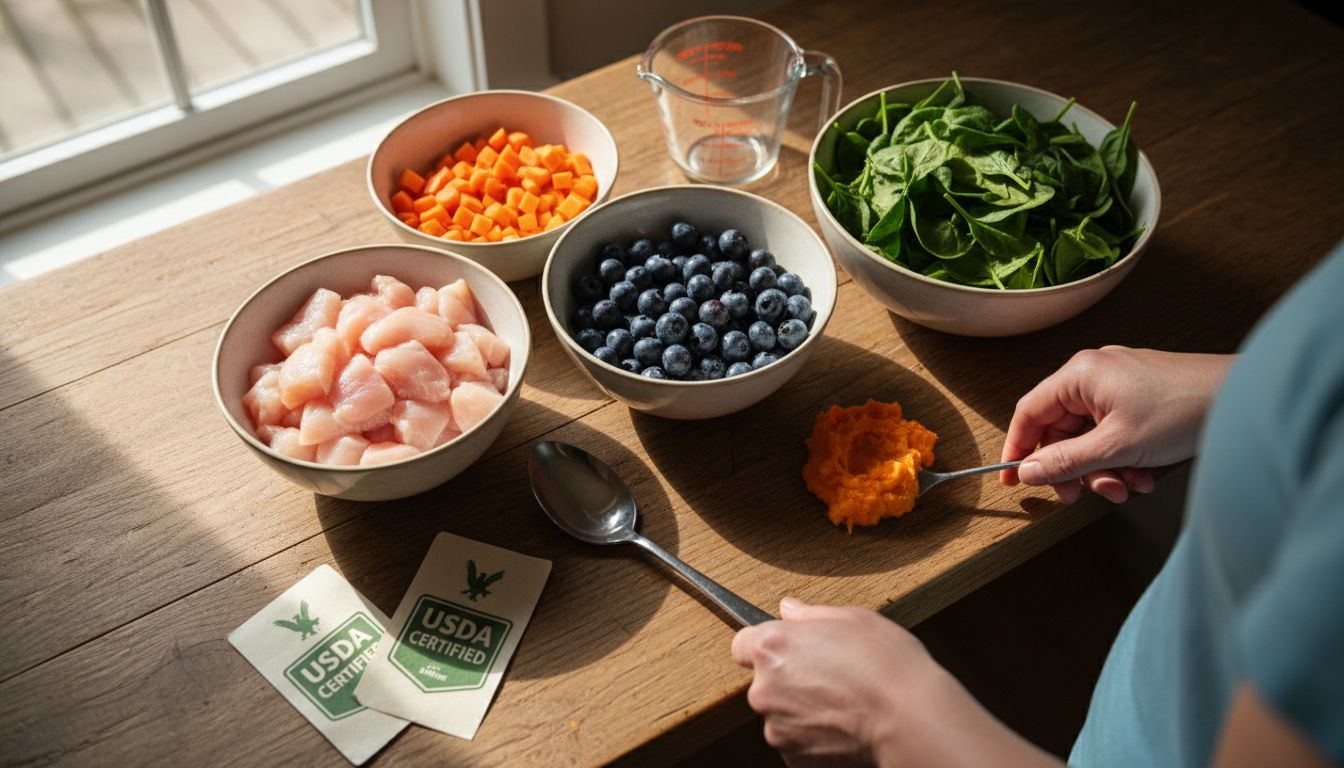
Fresh fruits and vegetables like sweet potatoes, blueberries, spinach, and carrots provide natural vitamins and fiber. You won’t find synthetic fillers, unnamed flavor enhancers, or chemical preservatives in legitimate formulas. Every ingredient serves a nutritional purpose and comes from verified human food suppliers.
Manufacturing transparency sets genuine products apart. Production occurs exclusively in USDA/FDA certified human food-grade facilities where safety protocols match those for preparing your family’s meals. These plants maintain strict sanitation standards, temperature controls, and contamination prevention measures required by human food law.
Minimal processing preserves ingredient integrity. Freeze-drying, for example, removes moisture at low temperatures without destroying heat-sensitive vitamins and enzymes. This gentle method retains more nutrients than high-heat extrusion used in conventional kibble production, where temperatures exceeding 300°F degrade protein quality and vitamin content.
Key sourcing and ingredient practices include:
Named whole proteins from USDA-inspected suppliers (never generic meals or byproducts)
Fresh produce meeting human consumption standards without pesticide residues above legal limits
Facility certification documentation available for customer verification
Complete ingredient traceability from farm to finished product
Pro Tip: Always verify facility certification and ingredient list clarity to confirm authenticity. Reputable brands readily share manufacturing location details and supplier information when asked.
Learn more about the ingredient verification process and what documentation to request from manufacturers.
Comparison: human-grade versus other premium pet food formats
Direct comparison reveals significant quality differences between human-grade freeze-dried foods and conventional premium options. Understanding these distinctions helps you evaluate true value beyond price tags.
Freeze-dried human-grade pet foods retain up to 95% of vitamins and minerals versus approximately 70% in extrusion kibble. The low-temperature freeze-drying process preserves heat-sensitive nutrients destroyed during high-heat kibble manufacturing. Your dog actually receives and absorbs more of the nutrition listed on the label.
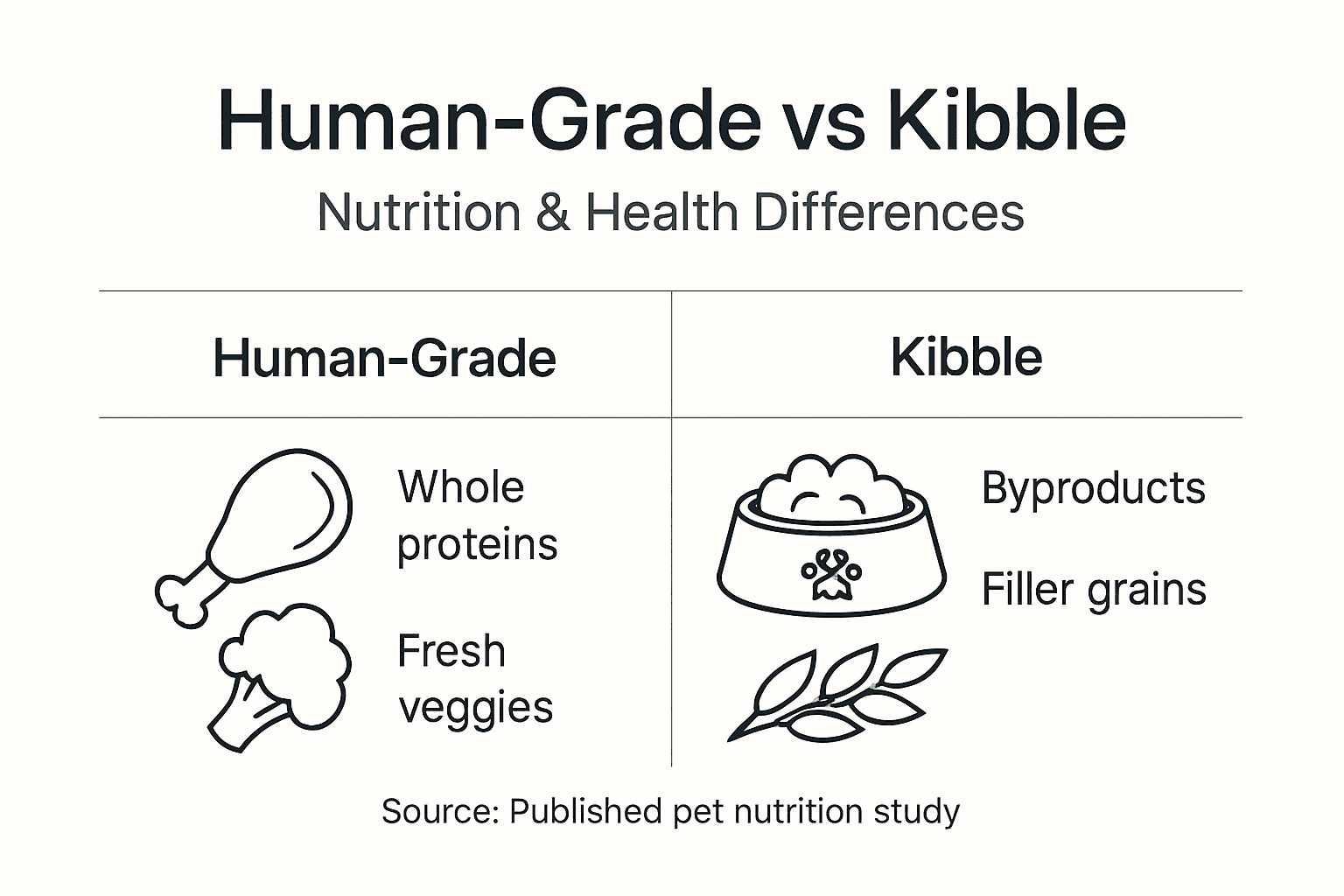
Facility standards create another major divide. Human-grade foods come from USDA/FDA certified human food plants, while even premium conventional kibble often originates in feed-grade facilities. This affects safety protocols, contamination prevention, and ingredient handling throughout production.
Feature | Human-Grade Freeze-Dried | Premium Kibble | Standard Kibble |
Nutrient Retention | 95% vitamins/minerals preserved | 70% retained after extrusion | 60-65% after processing |
Processing Method | Freeze-dried at low temps | High-heat extrusion (300°F+) | High-heat extrusion |
Ingredient Standards | USDA human edible grade | Mix of human and feed grade | Primarily feed grade |
Manufacturing Facility | USDA/FDA human food certified | Feed manufacturing plants | Feed manufacturing plants |
Digestibility | 85-90% digestible proteins | 75-80% digestible | 70-75% digestible |
Allergen Content | Minimal fillers/additives | Some fillers and preservatives | Common allergens present |
Ingredient quality remains consistently higher in authentic human-grade products. You get named whole meats instead of meals, fresh vegetables instead of dehydrated powders, and natural preservation instead of synthetic chemicals. These differences manifest as:
Reduced allergic reactions and food sensitivities
Better stool quality and digestive comfort
Improved coat shine and skin health
Higher satiety requiring smaller serving sizes
The human-grade versus feed-grade differences extend beyond nutrition to safety and quality assurance. Detailed information on what is human-grade dog food comparison provides additional context for evaluating options.
Practical guidance for selecting and using human-grade pet food
Applying your knowledge requires systematic evaluation. Follow these steps to confidently identify and choose authentic products.
Confirm manufacturing facility compliance. Contact the brand directly and ask for USDA/FDA human food facility certification documentation. Legitimate companies provide this information readily. Check packaging for specific facility location and certification numbers rather than vague quality claims.
Review ingredient lists meticulously. Look for named whole proteins like ‘chicken breast’ or ‘beef’ rather than ‘poultry meal’ or ‘meat byproducts.’ Fresh produce should be specifically identified (sweet potato, not ‘vegetable blend’). Avoid generic terms that hide ingredient quality.
Favor freeze-dried products for nutrient preservation. The minimal processing inherent in freeze-drying retains more vitamins, minerals, and enzymes than heat-intensive methods. Your dog receives closer to what nature intended without degraded protein structures.
Consult your veterinarian for health monitoring. Discuss dietary changes and establish baseline health metrics before switching foods. Schedule follow-up evaluations after 8-12 weeks to assess improvements in energy, coat quality, digestion, and any allergy symptoms.
Use third-party verification when possible. Independent resources help confirm manufacturer claims. Research facility inspection records and ingredient supplier certifications through regulatory databases and verification tools for authenticity.
Track your pet’s response systematically. Monitor vitality levels, stool consistency, coat appearance, and any allergy indicators over 2-3 months. Quality human-grade food produces noticeable improvements in most dogs within this timeframe.
Pro Tip: Start with small quantities when switching to human-grade food. Gradually transition over 7-10 days to prevent digestive upset, even though the superior quality typically causes fewer issues than conventional foods.
Visit resources on human-grade verification tips for additional guidance on confirming product authenticity and evaluating manufacturer transparency.
Summary: bringing it all together for your dog’s health
Human-grade pet food represents a legally defined standard governing both ingredient quality and manufacturing safety. This designation requires USDA/FDA facility certification and ingredients meeting human edibility standards, setting it apart from vague marketing terms or basic nutritional adequacy measures.
The health benefits extend beyond meeting minimum requirements. Dogs eating authentic human-grade diets show measurable improvements including 15% better muscle mass retention, enhanced digestibility, reduced allergy symptoms, and increased vitality. These outcomes stem from superior protein quality, minimal processing, and whole food ingredients your dog’s body actually recognizes and uses.
Beware common misconceptions that lead to poor choices. Not every ‘human-grade’ label meets legal standards, and the term addresses ingredient quality rather than complete nutrition. Premium pricing alone doesn’t guarantee authentic human-grade quality. You must verify facility certification and ingredient sourcing independently.
Use clear criteria when selecting products: confirmed USDA/FDA facility compliance, named whole ingredients, minimal processing methods like freeze-drying, and transparent sourcing practices. Consulting your veterinarian and monitoring your dog’s health response over time validates your choice.
Choosing genuine human-grade food significantly enhances your dog’s vitality and supports long-term health. The investment in quality nutrition pays dividends through reduced veterinary costs, extended healthy years, and a happier, more energetic companion.
Explore premium human-grade freeze-dried dog foods at Loyal Saints
Ready to give your dog the nutrition they deserve? Discover why freeze-dried dog food preserves vital nutrients and supports optimal health through gentle, minimal processing. Our formulas use exclusively USDA/FDA certified ingredients manufactured in human food-grade facilities, ensuring every meal meets the highest safety and quality standards.

Learn how our sourcing practices deliver unmatched quality and explore the specific freeze-dried dog food health benefits your dog will experience. From improved muscle mass to reduced allergies, our transparent ingredient lists and certified manufacturing give you complete confidence in every serving.
Shop authentic human-grade dog food designed specifically to boost your dog’s vitality and overall well-being. Experience the Loyal Saints difference with fully traceable ingredients, veterinarian-approved formulas, and the peace of mind that comes from feeding your family member truly premium nutrition.
What is human-grade pet food?
What exactly does human-grade mean for pet food?
Human-grade pet food uses ingredients legally edible by humans and produced in USDA/FDA certified facilities meeting human food safety standards. Every component must pass the same safety tests required for food in your grocery store. This differs from feed-grade pet food made with ingredients and in facilities approved only for animal consumption.
How can I verify if a pet food is genuinely human-grade?
Contact the manufacturer and request USDA/FDA facility certification documentation. Check the ingredient list for named whole proteins and fresh produce rather than generic meals or byproducts. Legitimate brands provide transparent facility location details and readily share certification proof. Look for specific facility numbers on packaging rather than vague quality claims.
Does human-grade pet food provide better nutrition than AAFCO-approved foods?
Human-grade addresses ingredient quality and manufacturing safety, while AAFCO ensures nutritional adequacy. The best foods meet both standards, combining complete nutrition with superior ingredient sourcing and safety protocols. Human-grade ingredients offer better bioavailability and digestibility, meaning your dog absorbs and uses nutrients more efficiently.
Is freeze-dried human-grade food better than kibble for my dog?
Freeze-dried human-grade food retains up to 95% of vitamins and minerals versus 70% in conventional kibble. The low-temperature process preserves heat-sensitive nutrients destroyed during high-heat extrusion. Most dogs show improved digestion, energy, and reduced allergy symptoms when switching to freeze-dried human-grade diets due to superior nutrient preservation and ingredient quality.
Recommended
Comments