.png)
Dog Food Ingredients: What Every Owner Should Know
- wix mentor

- 5 hours ago
- 9 min read

TL;DR:
Dog food ingredients must be evaluated based on source, processing, and nutritional contribution rather than marketing claims. Fresh ingredients like chicken rank lower on labels due to water content, while cooked meat meals often provide concentrated protein; quality depends on species-specific naming and manufacturing controls. Prioritizing transparency, third-party testing, and the full top-five ingredient profile ensures a safer, more nutritious diet for your dog.
Dog food ingredients are the listed components in a formula that supply the proteins, carbohydrates, fats, vitamins, and minerals your dog needs to thrive. Understanding what goes into your dog’s bowl matters far more than most owners realize. The quality, source, and processing of each ingredient directly shapes your dog’s energy, coat health, digestion, and longevity. This guide breaks down how ingredient lists actually work, what the best dog food components look like, and how to cut through marketing language to make genuinely informed choices for your dog.
What dog food ingredients actually tell you on the label
Reading a dog food ingredient list correctly starts with one key fact: ingredients are listed by pre-cooking weight, which includes water content. That means fresh chicken, which is roughly 70% water, can appear first on the label while contributing far less actual protein than a lower-listed ingredient like chicken meal. This single detail trips up more dog owners than almost any other labeling nuance.
Here is what that looks like in practice. “Chicken” listed first sounds impressive, but after cooking, the protein contribution shrinks significantly. “Chicken meal,” by contrast, is already rendered and dried, so meat meals deliver concentrated protein at a minimum of 50% crude protein on a dry matter basis. A food with chicken meal at position two or three may actually deliver more protein per cup than one with fresh chicken at position one.
Manufacturers also use a tactic called ingredient splitting, where a single ingredient like peas gets divided into “peas,” “pea protein,” and “pea flour.” Each fraction appears lower on the list individually, but combined they could outweigh the named protein source. You can use a dog food ingredient comparison tool to spot this pattern quickly.
To get the full picture from a dog food ingredient list, cross-reference it with the guaranteed analysis panel. Convert the protein and fat percentages to a dry matter basis to compare foods with different moisture levels fairly. This is especially useful when comparing kibble to freeze-dried or wet food options.
Check the top 5 ingredients together, not just the first one
Look for a named species in every protein source (“chicken meal” beats “poultry meal”)
Identify whether carbohydrate sources appear multiple times under different names
Cross-check the guaranteed analysis for protein and fat minimums
Use the dog food label guide to practice reading real labels
Pro Tip: Never judge a food by its first ingredient alone. Analyze the top three to five ingredients as a group. The combined protein contribution, not the ranking of a single item, determines whether the formula is genuinely protein-forward.
What are the key ingredients in quality dog food?
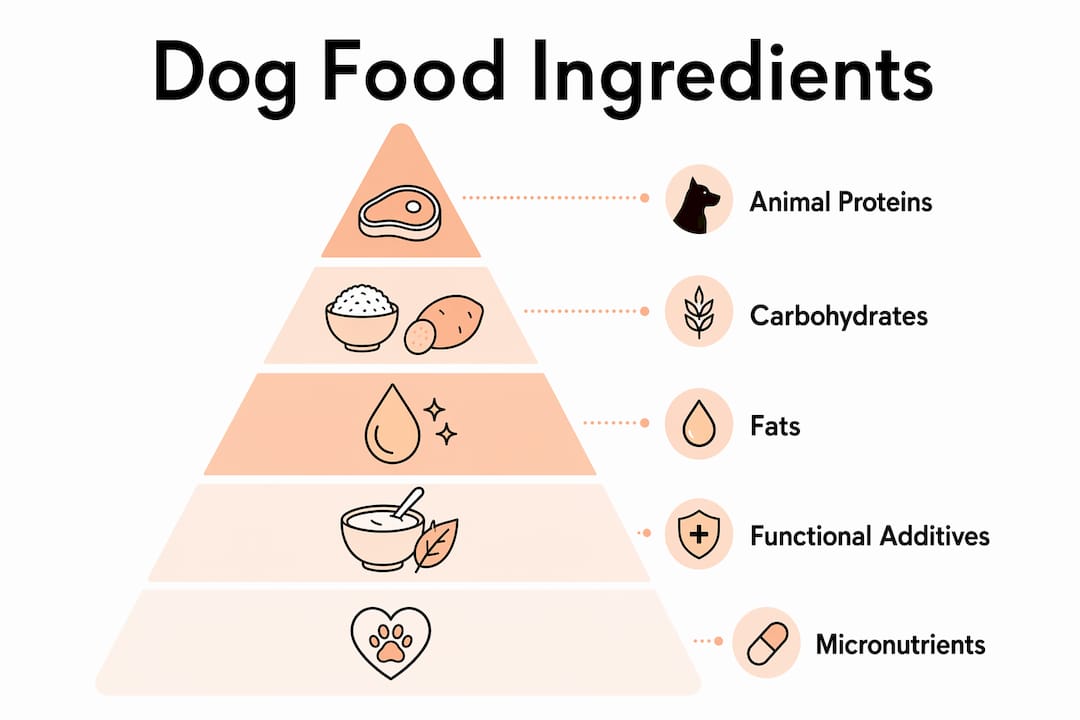
The best dog food components fall into five categories: animal proteins, carbohydrates, fats, functional additives, and vitamins and minerals. Each plays a specific role, and quality within each category varies widely.

Animal proteins: the foundation of every formula
Named animal proteins like deboned chicken, salmon, beef, lamb, and turkey are the gold standard for healthy ingredients for dogs. Species-specific ingredient names yield more consistent nutrition profiles than generic terms like “meat meal” or “animal protein,” which can vary batch to batch. Chicken meal and salmon meal are concentrated, reliable protein sources when the species is named. Generic “meat meal” is a red flag because the source animal can change without notice, making nutritional consistency impossible to guarantee.
Carbohydrates: grains vs. grain-free options
Common carbohydrate sources include brown rice, oats, sweet potato, lentils, and chickpeas. Grain-free dog food options replace traditional grains with legumes or root vegetables, which works well for dogs with specific grain sensitivities. The FDA has investigated a potential link between grain-free diets high in legumes and dilated cardiomyopathy (DCM) in dogs, though a definitive causal relationship has not been confirmed as of 2026. If you choose a grain-free formula, select one from a manufacturer with strong nutritional research backing and an AAFCO feeding trial on record.
Fats, functional additives, and micronutrients
Essential fats like chicken fat and salmon oil supply omega-6 and omega-3 fatty acids that support skin, coat, and brain health. Functional ingredients including fish oil, probiotics, glucosamine, and beet pulp provide targeted benefits: omega-3s reduce inflammation, probiotics support gut health, glucosamine aids joint function, and beet pulp regulates stool consistency. These are natural dog food additives with real research behind them, not marketing filler.
Vitamins and minerals appear near the bottom of the ingredient list but are non-negotiable for complete nutrition. Natural sources like blueberries, spinach, and carrots contribute antioxidants alongside synthetic vitamin and mineral premixes. The premix fills nutritional gaps that whole foods alone cannot consistently cover.
Ingredient category | Primary nutritional role | Quality indicator |
Named animal protein | Muscle maintenance, amino acids | Species named (e.g., “chicken meal”) |
Whole grains or root vegetables | Energy, fiber, digestive support | Recognizable whole food source |
Animal fats and fish oils | Skin, coat, brain, inflammation | Named species source (e.g., “salmon oil”) |
Functional additives | Joint, gut, immune support | Clinically studied forms (e.g., glucosamine HCl) |
Vitamins and minerals | Complete micronutrient profile | AAFCO-compliant premix or whole food source |
How regulations and manufacturing affect ingredient safety
Knowing what’s in dog food is only half the picture. How that food is made determines whether those ingredients are actually safe. The FDA’s Current Good Manufacturing Practices (CGMP) and the Food Safety Modernization Act (FSMA) preventive controls set the baseline for ingredient safety in pet food production. These rules cover ingredient inspection, storage conditions, hazard analysis, and traceability records.
Two products with an identical dog food ingredient list can differ significantly in safety. Traceability records and certificates of analysis are the markers that separate a manufacturer with rigorous quality control from one that simply lists good ingredients on the bag. A certificate of analysis (COA) confirms that each ingredient batch was tested for contaminants before use.
Contaminant risk is real and documented. The Clean Label Project’s 2026 report found elevated heavy metals including arsenic, cadmium, and lead in some top-selling dog foods. That finding means ingredient sourcing geography and manufacturing controls matter as much as the ingredient names themselves. You can learn more about specific risks through Loyalsaintspets’ breakdown of common dog food contaminants.
AAFCO nutritional adequacy statements tell you whether a food meets minimum nutritional standards. “Complete and balanced” means the formula meets AAFCO nutrient profiles, but that designation can be achieved through formulation alone or through a feeding trial. A feeding trial is stronger evidence because it confirms dogs actually absorbed and utilized the nutrients, not just that the formula contains them on paper.
Look for “Animal feeding tests using AAFCO procedures” on the label
Request or search for COA documentation from the manufacturer
Check whether the brand names its ingredient suppliers or sourcing regions
Avoid foods with vague terms like “animal digest” or “meat by-products” without species identification
Use the dog food ingredient checker to flag concerning ingredients quickly
Pro Tip: Go beyond the ingredient panel and look up the manufacturer’s quality assurance page. Brands that publish third-party testing results, sourcing transparency, and FSMA compliance documentation are telling you something important about how seriously they take safety.
Which dog food marketing claims are real and which are not?
Marketing language on dog food packaging is often more creative than accurate. Understanding the difference between regulated and unregulated terms protects you from paying a premium for words that carry no legal weight.
“Natural” is defined by AAFCO as ingredients derived from plant, animal, or mined sources without chemical alteration. That definition is broader than most owners assume. A food labeled “natural” can still contain synthetic vitamins and minerals in its premix. “Human-grade” is a stronger claim because it means every ingredient and the manufacturing facility meet FDA standards for human food production. You can review the human-grade verification process to understand what that standard actually requires.
“Organic” carries real regulatory weight because it requires USDA certification for both ingredients and handling practices. “Superfood” and “premium” carry none. No regulatory body defines either term for pet food, so any brand can use them freely.
The World Small Animal Veterinary Association (WSAVA) recommends that owners prioritize manufacturer transparency about sourcing and quality assurance over marketing buzzwords like “natural” or “premium” when evaluating dog food quality.
Ingredient splitting, mentioned earlier, is another tactic worth watching. When you see peas, pea starch, pea protein, and pea flour all listed separately, add them up mentally. That combined legume fraction may outweigh the named meat protein, turning a “chicken first” food into a legume-dominant formula. The must-haves checklist from Loyalsaintspets walks you through exactly what to look for and what to avoid on any label.
By-products deserve a more nuanced view than their reputation suggests. Chicken by-product meal includes organ meats, which are nutrient-dense. The concern is consistency and quality control, not the concept of using the whole animal. Named by-products from a specific species are far more reliable than generic “poultry by-product meal.”
Key takeaways
The quality of dog food ingredients is determined by protein source specificity, manufacturing controls, and regulatory substantiation, not by marketing language alone.
Point | Details |
Ingredient list order is misleading | Fresh meat ranks high due to water weight but may contribute less protein than meat meals. |
Species-specific names signal quality | “Chicken meal” is more consistent and nutritious than generic “meat meal” or “poultry meal.” |
Manufacturing controls matter as much as ingredients | FSMA preventive controls and COA documentation separate safe foods from risky ones. |
Marketing terms vary in legal weight | “Organic” is USDA-regulated; “natural,” “premium,” and “superfood” are largely unregulated. |
Functional additives have real benefits | Fish oil, probiotics, and glucosamine are backed by studies for inflammation, gut, and joint health. |
Why I think most owners are looking at the wrong part of the label
I’ve spent years reading dog food labels, and the pattern I see most often is this: owners fixate on the first ingredient and stop there. They see “chicken” at the top and feel reassured. But that single data point tells you almost nothing about the food’s actual protein quality, safety record, or nutritional completeness.
What I’ve found actually matters is the combination of the top five ingredients, the guaranteed analysis converted to dry matter basis, and the manufacturer’s quality assurance practices. A food with chicken meal at position two, a named fat source, and a published COA from a FSMA-compliant facility will outperform a food with fresh chicken at position one and no transparency about sourcing or testing.
The grain-free conversation is another area where I think owners get pulled in the wrong direction. Grain-free is not inherently better or worse. It depends entirely on what replaces the grain and whether the manufacturer has done the nutritional research to back the formula. Chasing a trend without checking the AAFCO substantiation method is a real risk.
My honest advice: spend five minutes on the manufacturer’s website looking for feeding trial data, sourcing transparency, and third-party testing results. That five minutes will tell you more about a food’s quality than any front-of-bag claim ever will. And when your dog’s coat is shining and their energy is steady, you’ll know the ingredient list was worth reading carefully.
— Eyo
Why Loyalsaintspets takes dog food ingredients seriously
If reading this article has you rethinking what’s actually in your dog’s bowl, Loyalsaintspets was built for exactly that moment. Every product starts with named animal proteins, whole fruits, and vegetables sourced to human-grade standards, with no fillers, artificial additives, or ingredient splitting to obscure what you’re feeding.

Loyalsaintspets’ freeze-dried formulas meet AAFCO nutritional adequacy standards and are produced under FDA-compliant manufacturing practices, so the ingredient list reflects what your dog actually receives in every serving. Freeze-drying preserves the nutritional integrity of whole ingredients without the heat processing that degrades vitamins and enzymes. Explore the science behind freeze-drying to see why this method protects ingredient quality better than conventional processing. When you’re ready to see the full range, browse the shop and find a formula your dog will love.
FAQ
What does “complete and balanced” mean on dog food?
“Complete and balanced” means the food meets AAFCO minimum nutrient profiles for a specific life stage. Foods substantiated through feeding trials provide stronger evidence of nutritional adequacy than formulation-only claims.
Is chicken meal better than fresh chicken in dog food?
Chicken meal is a more concentrated protein source because it is already rendered and dried, delivering at least 50% crude protein on a dry matter basis. Fresh chicken ranks higher on the label due to water weight but contributes less protein after cooking.
Are grain-free dog food options safe?
Grain-free formulas are safe for most dogs when produced by manufacturers with strong nutritional research and AAFCO feeding trial substantiation. The FDA has investigated a potential link between high-legume grain-free diets and DCM, so choosing a brand with transparent quality controls is especially important.
How do I know if a dog food ingredient is high quality?
Look for species-specific names like “salmon meal” or “deboned beef” rather than generic terms like “meat meal.” Cross-reference the ingredient list with the guaranteed analysis and check whether the manufacturer publishes third-party testing or certificates of analysis.
What are natural dog food additives worth paying for?
Fish oil for omega-3s, probiotics for gut health, glucosamine for joint support, and beet pulp for digestive regularity are all backed by research. These functional ingredients provide measurable health benefits and are worth seeking out in a quality formula.
Recommended
Comments