.png)
Step by Step Pet Diet Transition Guide for Dogs
- wix mentor

- 9 hours ago
- 8 min read
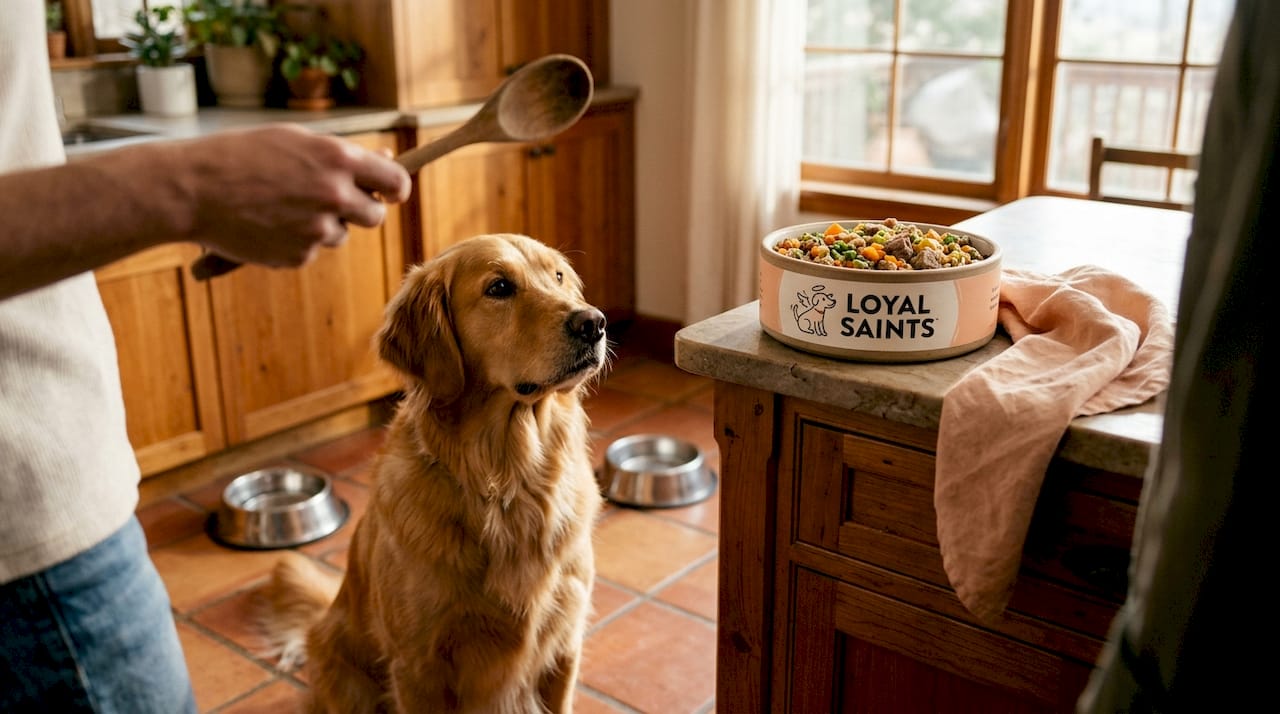
TL;DR:
Switching your dog’s food abruptly can cause digestive issues, but a gradual transition over 7 to 14 days helps prevent these problems. Proper preparation, monitoring stool quality, and maintaining consistent routines are key to a successful diet change. Observing improvements like firmer stools, increased energy, and a healthier coat indicates the transition is effective.
Switching your dog’s food overnight is one of the most common mistakes pet owners make, and the results are predictable: loose stools, vomiting, and a dog who refuses to eat. A proper step by step pet diet transition, what veterinary nutritionists often call a gradual dietary introduction, gives your dog’s digestive system the time it needs to adjust. This guide walks you through exactly how to do it right, from the prep work before day one to reading the signs that tell you the switch is working.
Key takeaways
Point | Details |
Go slow, not fast | Most dogs need 7 to 14 days to adjust to new food without digestive upset. |
Prep before you start | Assess your dog’s health, sensitivities, and current diet before choosing a new food. |
Watch the stool | Stool quality is your clearest signal that the transition is going well or needs to slow down. |
Change one thing at a time | Avoid switching food, timing, and treats simultaneously so problems are easier to identify. |
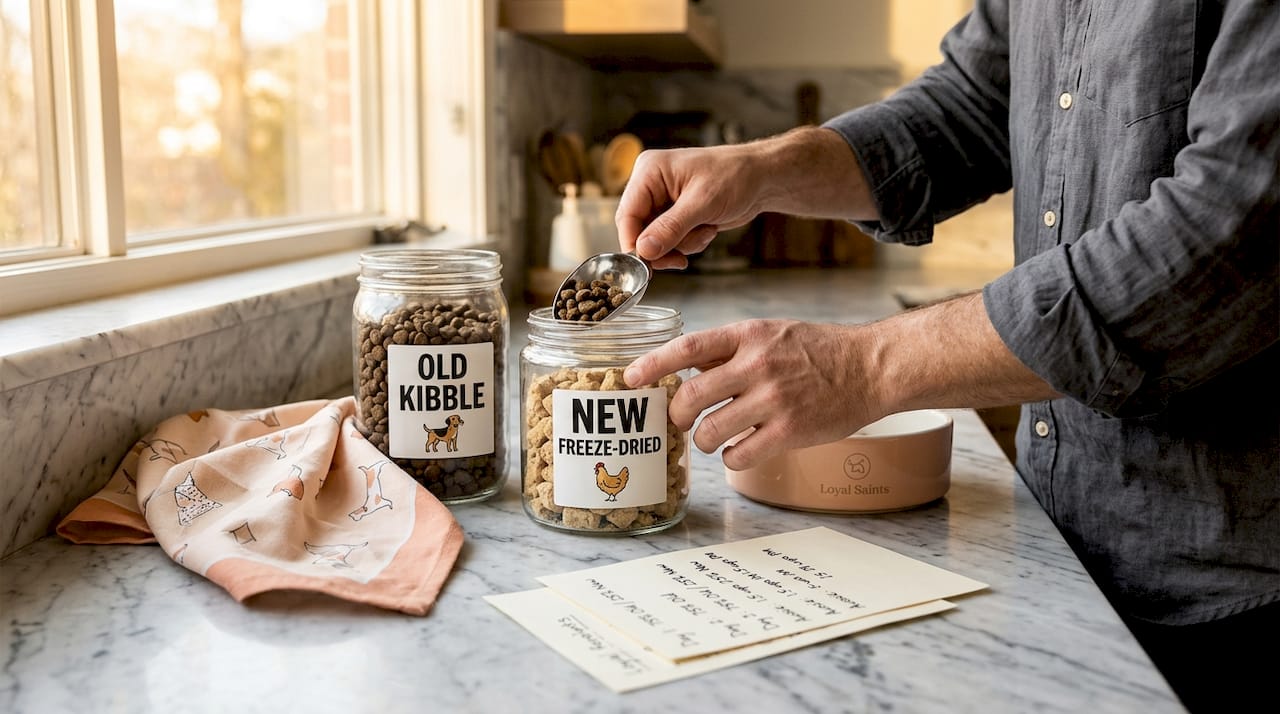
Freeze-dried needs extra care | Moving from kibble to freeze-dried or fresh food takes 10 to 14 days due to higher moisture and nutrient density. |
Step by step pet diet transition: what to do before day one
Before you open a single bag of new food, take a few minutes to honestly assess where your dog is right now. Do they have a sensitive stomach? Any known food allergies or intolerances? Are they on any medication that could interact with a richer diet? These questions matter because they determine how fast you can safely move.
Next, choose your new food type with intention. There is a meaningful difference between switching from one dry kibble to another versus moving to freeze-dried, fresh, or a specialized therapeutic diet. Kibble to fresh or wet food transitions take longer because fresh foods are richer, more bioavailable, and higher in moisture content. Your dog’s gut bacteria need time to shift along with the food.
Here is what to gather before you begin:
A kitchen scale or measuring cup for accurate portioning
Separate storage for both old and new food to avoid cross-contamination
Airtight containers or sealed original bags stored below 80°F
Clean feeding bowls washed with hot water after each meal
A simple notebook or phone note to log daily observations
Proper food storage gets overlooked more than almost anything else during a transition, but it directly affects how well your dog tolerates the new food. Spoiled or improperly stored food can cause symptoms that mimic a bad reaction to the new diet, which sends owners in the wrong direction entirely.
Pro Tip: Keep your dog’s feeding time, bowl location, and treat routine exactly the same during the transition. Changing multiple variables at once makes it nearly impossible to pinpoint the cause if something goes wrong.
The 7 to 14 day transition schedule
This is the part most people want to skip straight to, and that is fair. Here is exactly how to do it.
The standard 7-day schedule
For healthy adult dogs without known sensitivities, the AKC recommends this schedule:
Days 1 and 2: 75% old food, 25% new food
Days 3 and 4: 50% old food, 50% new food
Days 5 and 6: 25% old food, 75% new food
Day 7: 100% new food
Mix the portions thoroughly at each meal so your dog cannot pick around the new food. The goal is a blend that becomes progressively more familiar.
The 10 to 14 day schedule for sensitive dogs
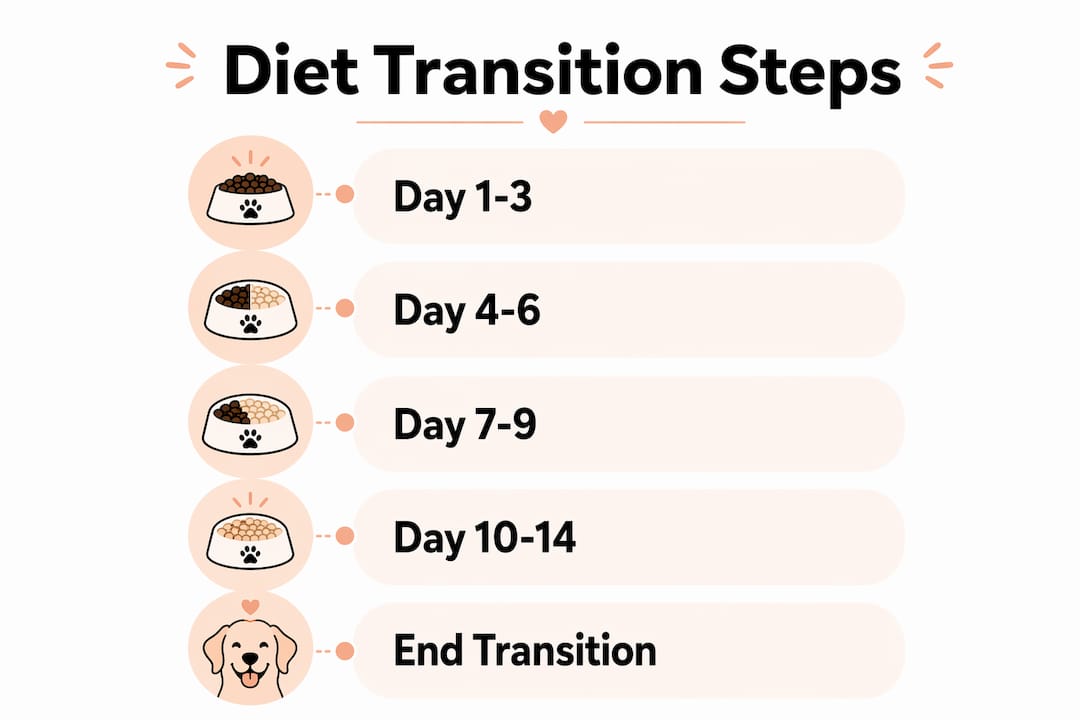
If your dog has a history of stomach issues, you need a slower pace. Dogs with sensitive stomachs benefit from extending each step by one to two additional days and watching carefully before moving forward. A 10 to 14 day timeline is not a setback. It is just good practice for that dog.
The same percentage breakdown applies, but you hold each ratio longer:
Days | Old food | New food |
Days 1 to 3 | 75% | 25% |
Days 4 to 6 | 50% | 50% |
Days 7 to 10 | 25% | 75% |
Days 11 to 14 | 0% | 100% |
Switching from kibble to freeze-dried
This particular switch deserves special attention. Moving to freeze-dried or raw food is richer and more nutrient-dense than most kibble, so the longer 10 to 14 day window is strongly recommended. Start by using the freeze-dried food as a topper mixed into the kibble, then gradually increase its proportion over the full timeline.
Pro Tip: When transitioning to freeze-dried food, rehydrating it with a small amount of warm water during the first week can make the texture closer to what your dog already knows, which helps with acceptance and digestion.
Troubleshooting common issues
Even with the best preparation, things do not always go smoothly. Here is how to handle the most common problems without panicking or giving up on the new diet.
Signs to watch for
Loose stools or diarrhea: The most common sign of moving too fast. Do not abandon the transition. Instead, return to the last tolerated ratio and hold there for two to three more days before advancing again.
Reduced appetite: Some pickiness is normal, especially in the first few days. If your dog skips one meal, that is okay. If they refuse food for more than two days, slow the transition.
Vomiting: One episode may be incidental. Repeated vomiting is a signal to pause completely and consult your vet before continuing.
Increased gas: Common and usually harmless during the first week as gut bacteria adjust. It typically resolves on its own.
If your dog shows persistent vomiting, blood in the stool, or severe lethargy, stop the transition and contact your veterinarian immediately. These are not normal transition symptoms and require professional attention.
One of the most common reasons transitions fail is changing too many things at once. Swapping the food, adjusting feeding times, adding new treats, and moving the bowl to a new spot all at the same time makes it impossible to know what caused a reaction. Change only the food and keep everything else constant.
One more thing worth mentioning: food hygiene. Wash your dog’s bowl with hot soapy water after every meal during the transition period. Residue from the old food mixing with the new food in a dirty bowl can cause mild reactions that get falsely attributed to the new diet itself.
Signs your transition is working
Once you are a week or two into the new diet, you want to see real, measurable improvements. Here is what a successful switch actually looks like:
Firmer, more consistent stools: This is the clearest early indicator. Improved stool consistency after a full transition usually appears within one to two weeks.
Better energy levels: A diet with higher quality protein and fewer fillers often shows up as increased activity and playfulness within the first month.
Healthier coat: Shinier fur and less shedding are common signs that the new food is delivering better nutrition at the cellular level.
Steady appetite: Your dog should be eating with enthusiasm, not hesitating or grazing reluctantly.
No ongoing digestive upset: If everything has settled down and your dog seems comfortable, you made it.
Continue observing for at least 30 days after the full transition is complete. Some benefits, like coat improvement and sustained energy, take a few weeks to become obvious. If you plan to introduce any additional changes, like a new supplement or a rotational diet, wait until your dog has been fully stable on the new food for at least three to four weeks.
A note on grain-free diets specifically: most dog food allergies are reactions to proteins, not grains. Grain-free food is worth considering only when a grain allergy has been confirmed by your vet, not as a default healthy choice.
My honest take on switching dog diets
By Eyo
I have talked with a lot of dog owners about this, and the single biggest mistake I see is impatience. Someone decides their dog deserves better food, buys a premium bag, and pours it straight into the bowl on day one. Three days later, the dog has diarrhea and the owner concludes the new food “didn’t agree” with their dog. In most cases, the food was fine. The speed was the problem.
What I have learned is that the transition schedule is not just about digestion. It is about trust. Your dog is encountering something unfamiliar in their food bowl every single day. Going slowly gives them time to accept it, not just tolerate it.
The other thing I wish more people understood is that loose stools during a transition are almost never a reason to quit. They are a reason to slow down. I have seen dogs with genuinely sensitive stomachs take a full three weeks to complete a transition, and they came out the other side eating better than they ever had. Patience is not weakness here. It is strategy.
Storage hygiene changed everything for one dog I know whose owner was convinced the new food was making him sick. Turned out the bowls were not being properly cleaned and old food residue was the culprit. Clean bowls, a fresh bag properly sealed, and a slower schedule fixed the problem entirely.
Stay observant. Stay flexible. Every dog is a little different, and the schedule is a guide, not a law.
— Eyo
Make the switch easier with Loyalsaintspets
If you are ready to give your dog genuinely better nutrition, Loyalsaintspets makes the process simpler than you might expect. Their freeze-dried dog food is made from human-grade, whole ingredients, with no fillers, no artificial additives, and real protein your dog can actually use. The formulas meet AAFCO nutritional standards and are designed with digestive health in mind, which makes them a natural fit for a thoughtful transition.
You can explore why freeze-dried works for dogs at every life stage, or head straight to the Loyalsaintspets shop to find the right product for your dog. For more guidance on the transition process itself, the Loyalsaintspets blog has detailed posts covering everything from sensitive stomach protocols to the specifics of switching to freeze-dried food. Your dog deserves a diet that works. Loyalsaintspets is here to help you get there.
FAQ
How long should a dog diet transition take?
Most healthy adult dogs need 7 days to transition safely, following a gradual percentage increase of new food. Dogs with sensitive stomachs or those switching to richer food types like freeze-dried or fresh food benefit from a 10 to 14 day timeline.
What if my dog gets diarrhea during the transition?
Loose stools during a transition usually mean you are moving too fast. Return to the previous food ratio for two to three days and advance more slowly once stools normalize. Persistent or severe diarrhea warrants a call to your vet.
Can I switch my dog’s food cold turkey?
Switching abruptly can cause digestive upset, vomiting, and appetite loss. A gradual transition gives gut bacteria time to adapt to the new food and dramatically reduces the risk of GI symptoms.
Is grain-free food better for my dog?
Not necessarily. Most food allergies in dogs are protein-based, not grain-based. Grain-free diets are worth using only when a grain allergy is confirmed, as some research links them to heart disease in certain dogs.
How do I know the new food is working?
Firmer stools, better energy, and a shinier coat are the clearest signs within the first few weeks. Continue monitoring for at least 30 days after the full transition to confirm the diet is a good long-term fit.
Recommended
Comments