.png)
Freeze Dried Food Benefits for Dogs: Real Talk
- wix mentor

- 26 minutes ago
- 8 min read
TL;DR:
Freeze-dried dog food preserves up to 97% of nutrients, supporting digestion, energy, and coat health.
Handling safety is crucial, as it does not eliminate pathogens, so proper hygiene and storage are essential.
Using freeze-dried as a topper offers a nutritious, cost-effective way to enhance your dog’s diet safely.
Freeze dried food benefits for dogs have become a hot topic among pet owners who want to move beyond standard kibble without committing to full raw feeding. Technically called “freeze-dried raw” food, this preservation method has real advantages. It also comes with safety and cost considerations that most articles gloss over. If you’ve been wondering whether freeze-dried food is worth it for your dog, or how to use it safely without breaking the bank, this guide gives you honest, specific answers you can actually act on.
Table of Contents
Key Takeaways
Point | Details |
Nutrient retention is exceptional | Freeze-drying preserves up to 97% of nutrients including heat-sensitive vitamins and enzymes. |
Safety requires careful handling | Freeze-drying does not kill pathogens; treat these products like raw meat every time. |
Cost adds up fast as a full diet | Feeding freeze-dried exclusively can cost over $440 per month for a 50-lb dog. |
Topper use is the smart middle ground | Adding freeze-dried food as a topper balances nutrition, cost, and safety risk. |
AAFCO labeling is non-negotiable | High nutrient retention does not mean nutritional completeness; always verify the label. |
What is freeze-dried dog food?
Freeze-dried dog food starts with raw, whole ingredients — real meat, organs, fruits, and vegetables. Those ingredients go into a vacuum chamber where temperature drops well below freezing. Then the pressure drops, and moisture leaves the food as vapor in a process called sublimation. The result is a shelf-stable product that looks and feels dry but retains the nutritional profile of the original raw food.
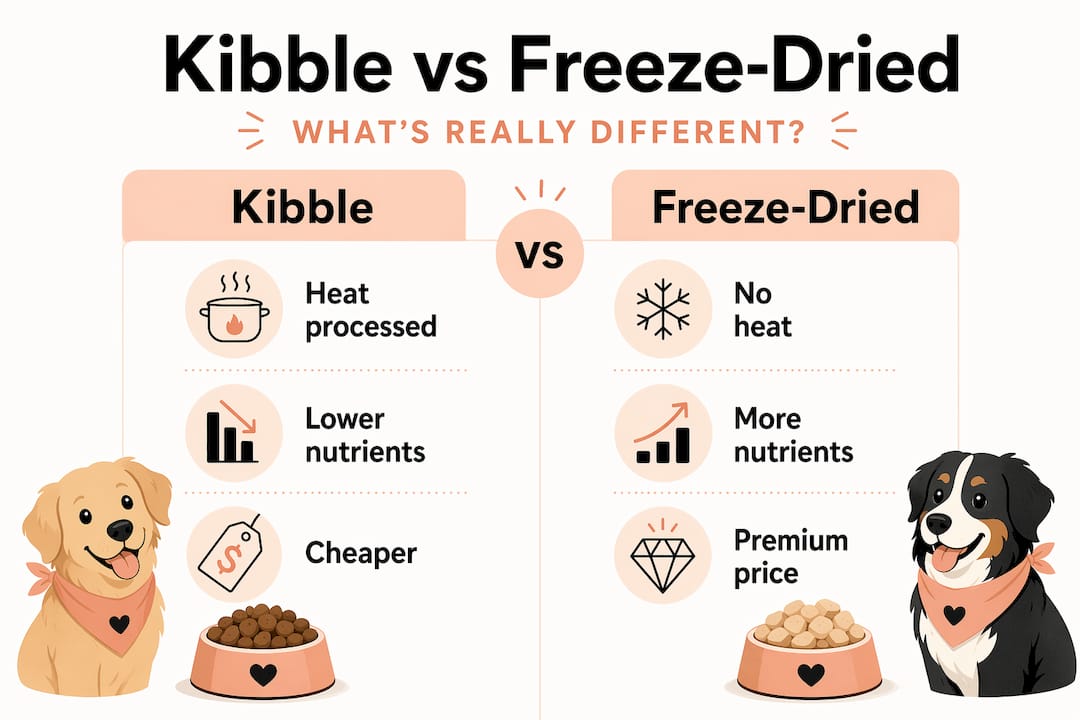
This is fundamentally different from kibble, which is cooked at high heat and pressure. Heat destroys heat-sensitive vitamins like B and C, denatures enzymes, and degrades omega-3 fatty acids. Dehydrated food is similar to freeze-dried in concept but uses low heat instead of cold vacuum processing, which means some nutrient loss still occurs. Freeze-drying removes 95-99% of moisture through sublimation, with nutrient retention reaching as high as 97% for vitamins, enzymes, and omega-3s.
Here’s a quick comparison to help you understand where freeze-dried food sits:
Preservation method | Heat used | Moisture removed | Nutrient retention |
Kibble (extruded) | High (250°F+) | Yes | Moderate to low |
Dehydrated | Low to moderate | Partial | Moderate |
Freeze-dried | None (cold vacuum) | 95-99% | Up to 97% |
Raw frozen | None | No | Highest possible |
Pro Tip: If you see “freeze-dried raw” on packaging, that means the product started as raw meat before the drying process. That distinction matters for both nutrition and safety handling.
Core freeze dried food benefits for dogs
The nutritional value of freeze dried dog food is the main reason owners make the switch. Here is what you can realistically expect when you integrate it correctly.
Nutrient density and bioavailability. Because no heat touches the food, natural enzymes stay intact. Enzymes support digestion at a cellular level, helping your dog break down and absorb protein, fat, and carbohydrates more efficiently. Freeze-dried food is protein-rich with low carbohydrates and fewer fillers than traditional kibble, which directly supports lean muscle mass and sustained energy in active dogs.
Digestive support. Dogs with sensitive stomachs often do better on minimally processed food. When you remove synthetic binders, artificial flavors, and starchy fillers, the digestive system has less to sort through. Many owners report firmer stools, less gas, and reduced signs of food sensitivity after switching or adding freeze-dried food to the bowl.
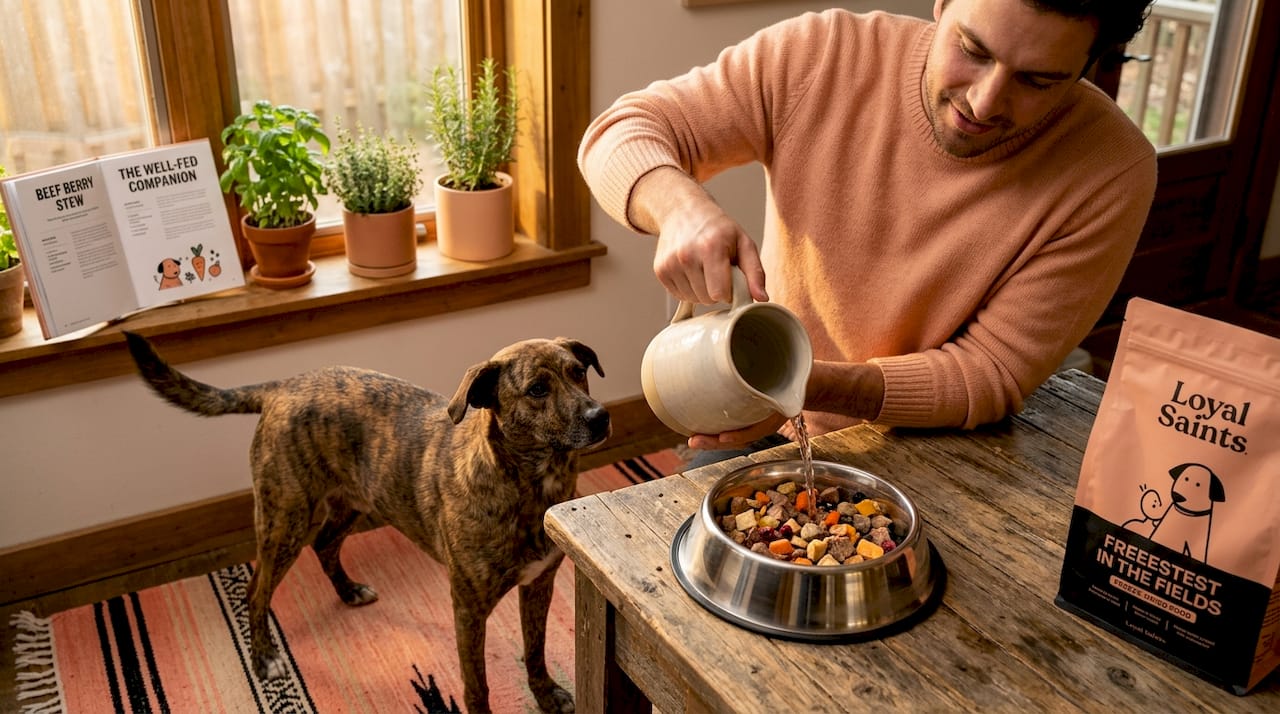
Palatability for picky eaters. The concentrated flavor in freeze-dried food is a genuine advantage. The aroma intensifies when moisture is removed, which is exactly why dogs that ignore their kibble often go wild for freeze-dried toppers. This is not a gimmick. It’s simple food science.
Beyond nutrition, freeze-dried meals for pets offer real practical advantages:
Shelf stability up to 1-2 years unopened, with no refrigeration needed
Lightweight and easy to pack for travel, hiking, or boarding situations
Quick to prepare, especially when used as a topper over kibble or wet food
No messy defrosting or raw meat handling during daily feeding if used in dry form
Pro Tip: Rehydrating freeze-dried food with warm water or unsalted bone broth before serving improves aroma and digestibility, especially for senior dogs or those recovering from illness.
Safety facts every owner should know
This is the section most enthusiastic product pages skip. Freeze-dried food is not cooked and is not sterilized. That means you need to understand the risks before you serve it.
Freeze-drying is not a recognized kill step for pathogens. Bacteria like Salmonella, E. coli, and Listeria can survive the freeze-drying process and remain viable in the finished product. This does not mean freeze-dried food is inherently dangerous. It means you handle it like raw meat, every single time.
Here are the non-negotiable safety practices for any household serving freeze-dried food:
Wash your hands thoroughly with soap and water after handling freeze-dried food or your dog’s bowl.
Sanitize food bowls after every meal with hot soapy water, not just a rinse.
Do not let children, elderly family members, or immunocompromised individuals handle the food or the dog’s bowl without protection.
Store opened packages sealed tightly in a cool, dry location and follow the manufacturer’s use-by window.
Look for brands that use High Pressure Processing (HPP) as an added kill step, since this reduces pathogen load without compromising nutrients.
On the regulatory side, FDA requires raw material quality control, environmental monitoring, and finished product testing for freeze-dried pet food manufacturers. These are preventive controls, not lethality steps, so the burden of safe handling ultimately falls on you at home.
A note for households with puppies, elderly dogs, or dogs on immunosuppressive medications: these animals are more vulnerable to pathogen exposure. Consult your veterinarian before switching to or adding any raw-origin food to their diet.
Cost vs. value: what you’re really paying for
Here’s where the numbers get sobering. Feeding freeze-dried food as a complete diet costs approximately $14.73 per day for a 50-lb dog, adding up to roughly $442 per month or over $5,000 annually. That is ten to fifteen times the cost of premium kibble. For most dog owners, that figure rules out freeze-dried food as a full diet.
Feeding approach | Estimated monthly cost (50-lb dog) | Practical fit |
Premium kibble only | $30-$60 | Budget-friendly, widely available |
Freeze-dried as topper | $30-$80 added to kibble cost | Best balance of cost and nutrition |
Freeze-dried full diet | $400-$450 | High cost, best nutrient profile |
Using freeze-dried food as a topper balances nutrition and cost while significantly lowering pathogen risk. This is what many veterinarians recommend, especially for households with young children or immunocompromised family members. A tablespoon or two of rehydrated freeze-dried food over a quality kibble base gives your dog a real nutrition upgrade without the financial strain of going all-in.
Pro Tip: Buy freeze-dried food in larger bag sizes when possible. Per-ounce cost drops significantly compared to small trial sizes, and the long shelf life means you won’t waste product.
How to integrate freeze-dried food into your dog’s diet
Applying everything you’ve learned only takes a few practical steps. Start here:
Check the label first. Verify AAFCO complete-and-balanced labeling before buying any freeze-dried product intended as a primary food source. High nutrient retention does not automatically mean the formula covers all your dog’s needs.
Rehydrate before serving. Add warm water or unsalted broth and let it sit for two to three minutes. This improves texture, digestion, and palatability.
Store properly to stay safe. Once opened, keep the bag sealed and away from heat. Read our guide on safe storage practices to avoid moisture contamination and maintain freshness.
Transition gradually. Switch from kibble over seven to ten days by starting with a small amount of freeze-dried food and slowly increasing it. This prevents digestive upset caused by sudden dietary changes.
Watch your dog’s response. Monitor stool consistency, energy levels, skin condition, and coat quality over four to six weeks. These are the clearest early indicators that a food change is working.
Talk to your vet. This is especially true for dogs with existing health conditions, weight issues, or those on medication. Your vet can confirm whether freeze-dried food is a good fit given your dog’s specific profile.
You can also learn more about using freeze-dried toppers effectively to get the most out of every serving without overcomplicating your routine.
My honest take on freeze-dried dog food
I’ve seen the freeze-dried food conversation go two ways. Either people are completely sold on it as a miracle diet, or they dismiss it entirely because of the price or the safety headlines. The truth sits somewhere more useful than either extreme.
In my experience, the strongest argument for freeze-dried food is not that it replaces raw feeding. It’s that it makes better nutrition accessible for owners who can’t manage raw feeding’s logistics or cost at full scale. When I recommend freeze-dried food, I almost always suggest starting with a topper approach. It’s lower risk, genuinely affordable, and gives your dog real, whole-ingredient nutrition without asking you to overhaul your entire routine.
What I’ve found is that owners underestimate the safety handling piece more than anything else. Freeze-dried food looks and smells benign. It’s dry. It comes in a nice bag. People forget they are essentially handling raw meat in a different form. The same hygiene discipline you would apply to handling chicken for your own dinner applies here.
The brands worth trusting are transparent about their sourcing, their testing, and whether they use an HPP step. Vague claims about “premium ingredients” without specifics are a red flag. The right product from a quality-conscious brand, handled properly and used as a topper over a balanced base, can genuinely improve your dog’s coat, energy, and digestion over time. That is a real, measurable benefit. It just requires informed decision-making, not blind enthusiasm.
— Eyo
Give your dog the nutrition they deserve
If you’re ready to put these principles into practice, Loyalsaintspets makes it straightforward. Their freeze-dried dog food is crafted from human-grade, whole ingredients, including high-quality proteins, fruits, and vegetables, with no fillers or artificial additives. Every formula meets AAFCO standards for complete and balanced nutrition, so you can feel confident in what’s going into your dog’s bowl. The products work beautifully as toppers or as a full diet, and the shelf-stable convenience means no complicated prep. Visit the why freeze dried page to understand exactly what makes this approach different, then head to the Loyalsaintspets shop to find the right option for your dog’s size, needs, and lifestyle. More tail wags are coming.
FAQ
Is freeze-dried dog food nutritionally complete?
Only if it carries an AAFCO complete-and-balanced statement on the label. High nutrient retention does not automatically mean all vitamins and minerals are present in the right amounts, so always verify the label before using it as a sole diet.
Can freeze-dried food improve my dog’s digestion?
Yes. The minimally processed nature of freeze-dried food, combined with intact enzymes and low filler content, supports easier digestion and can reduce symptoms like gas, loose stools, and food sensitivity reactions in many dogs.
Is freeze-dried dog food safe for puppies?
Puppies have developing immune systems that are more vulnerable to pathogens. Since freeze-drying does not eliminate bacteria like Salmonella, consult your veterinarian before adding freeze-dried raw food to a puppy’s diet.
How does freeze-dried food compare to dehydrated dog food?
Freeze-drying uses cold vacuum processing with no heat, preserving more heat-sensitive nutrients than dehydration. The nutritional value of dehydrated dog food is good but slightly lower than freeze-dried, since low heat is still applied during the dehydration process.
What is the most cost-effective way to use freeze-dried food?
Using freeze-dried food as a topper over quality kibble gives your dog a real nutrition boost at a fraction of the cost of a full freeze-dried diet. Most veterinarians recommend this approach, especially for households with children or immunocompromised family members.
Recommended
Comments