.png)
Step-by-Step Guide to Natural Dog Nutrition Success
- Nick Willkom
- Dec 31, 2025
- 7 min read


Most American city dogs face unique dietary challenges every day, yet only one in three pets receive nutrition tailored to their specific life stage and lifestyle. For health-conscious owners in vibrant urban neighborhoods, especially women devoted to their canine companions, nourishing your dog with premium, natural ingredients is more than a trend. Discover how understanding and addressing your dog’s individual needs can transform their energy, longevity, and overall happiness.
Table of Contents
Quick Summary
Key Insight | Explanation |
1. Assess your dog’s nutritional needs | Understand your dog’s age, breed, and activity level to tailor their diet appropriately. |
2. Choose high-quality ingredients | Prioritize whole food sources and avoid fillers to promote your dog’s health. |
3. Transition to new foods gradually | Introduce new diets slowly over 7 to 10 days to prevent digestive issues. |
4. Monitor health and adjust diet | Track your dog’s weight and overall health frequently to adjust their diet accordingly. |
5. Maintain nutrition long-term | Regularly evaluate and adjust your dog’s diet to meet their changing needs. |
Step 1: Assess your dog’s unique nutritional needs
Understanding your dog’s specific nutritional requirements is like creating a personalized wellness roadmap. Every dog is unique, with dietary needs shaped by factors like age, breed, activity level, and overall health. Nutritional adequacy depends on multiple physiological characteristics that require careful consideration.
To begin your assessment, examine your dog’s current life stage and lifestyle. Puppies require different nutrient profiles compared to senior dogs, while an active working breed needs more protein and calories than a sedentary companion. Consider factors like weight, muscle mass, energy expenditure, and any existing health conditions. Some dogs might need specialized support for digestive health, joint function, or immune system maintenance.
Start by consulting your veterinarian who can perform a comprehensive nutritional evaluation. They can help you understand precise protein requirements, recommended calorie intake, and potential dietary sensitivities specific to your dog’s individual profile. Breed size matters significantly since small and large dogs metabolize nutrients differently and have distinct digestive capabilities.
Pro tip: Keep a detailed log of your dog’s weight, energy levels, and physical condition to track nutritional effectiveness and make informed adjustments over time.
Here’s a summary of how a dog’s life stage influences key nutritional needs:
Life Stage | Protein Requirement | Calorie Needs | Special Considerations |
Puppy | High for growth | Increased for development | Focus on bone and brain health |
Adult | Moderate for maintenance | Balanced for activity level | Support immune and joint health |
Senior | Adjust for age | Lower due to slower metabolism | Digestive support and weight management |
Step 2: Select high-quality natural ingredients
Choosing the right ingredients is crucial for creating a nutritious diet that supports your dog’s overall health and vitality. Natural ingredients formulated for your pet’s specific nutritional needs provide complete and balanced nutrition that promotes optimal wellness.

Start by examining ingredient labels carefully. Look for whole food sources like real meat, fish, or poultry listed as the first ingredients. Avoid products with generic meat byproducts, artificial preservatives, or fillers. Prioritize ingredients that are minimally processed and recognizable as natural whole foods. Consider protein sources that match your dog’s specific dietary requirements proteins like chicken, turkey, salmon, or lamb for dogs with different activity levels and health conditions.
Quality matters more than quantity. Seek out ingredients that are human grade, sourced responsibly, and free from unnecessary additives. Pay attention to protein content, ensuring it aligns with your dog’s age, breed, and activity level. Whole fruits and vegetables can provide essential vitamins and minerals, while natural supplements like omega fatty acids support skin, coat, and overall immune function.
Pro tip: Research ingredient sourcing and manufacturing processes to ensure you are selecting the most nutritious and transparent food options for your furry companion.
The following table compares common natural dog food proteins and their nutritional benefits:
Protein Source | Primary Benefit | Best For |
Chicken | Lean muscle building | Active adult dogs |
Salmon | Omega fatty acids for coat | Skin-sensitive dogs |
Lamb | Gentle on digestion | Dogs with sensitivities |
Turkey | Low fat, high protein | Weight management |
Step 3: Transition to a natural dog food diet
Transitioning your dog to a natural diet requires careful planning and patience. Veterinary experts recommend a gradual approach to minimize digestive disruptions and ensure nutritional balance, allowing your dog’s system to adapt smoothly to the new dietary regime.
Begin the transition by mixing a small percentage of the new natural food with your dog’s current diet. Start with approximately 25% new food mixed with 75% existing food, gradually increasing the proportion of natural food over 7 to 10 days. Watch closely for any signs of digestive upset, changes in appetite, or unusual stool consistency. Some dogs may experience temporary adjustments during dietary transitions, so monitoring their response is crucial. Pay special attention to protein sources, ensuring they align with your dog’s specific nutritional needs and activity level.
Consult with your veterinarian before making significant dietary changes, especially for dogs with preexisting health conditions or sensitive stomachs. When introducing raw or minimally processed foods, follow safe handling practices to reduce potential bacterial risks. Keep detailed records of your dog’s weight, energy levels, and overall health during the transition to track the effectiveness of the new diet.
Pro tip: Keep a daily journal documenting your dog’s response to the new diet, including food intake, energy levels, and any physical changes to help you and your veterinarian make informed nutritional decisions.
Step 4: Monitor health and adjust as needed
Tracking your dog’s nutritional health requires systematic observation and proactive adjustments to ensure their diet continues to meet their evolving needs. Regular monitoring helps catch potential nutritional imbalances before they become significant health concerns.
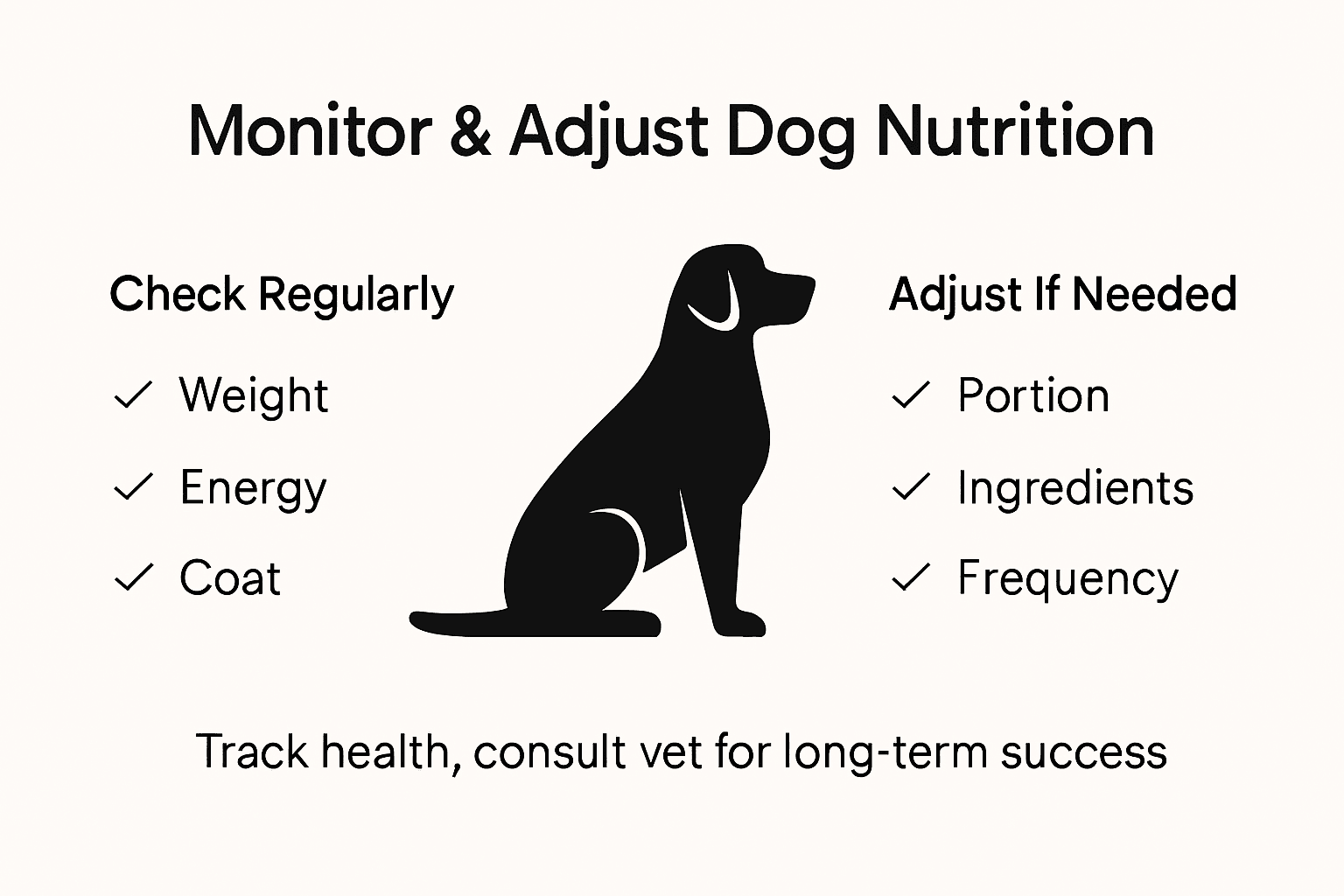
Establish a consistent tracking system by weighing your dog weekly and assessing their body condition score. Pay attention to key indicators like energy levels, coat quality, muscle tone, and digestion. Look for subtle changes such as variations in appetite, stool consistency, or behavioral shifts that might signal nutritional needs. Nutritional experts recommend limiting treats to 10% of total daily calories and maintaining a careful balance of nutrient intake, which means tracking not just food but also supplemental calories.
Schedule regular veterinary checkups to professionally evaluate your dog’s nutritional status. These assessments can help you fine tune dietary requirements based on age, activity level, and overall health. Be prepared to make incremental adjustments to protein levels, calorie intake, and food composition as your dog moves through different life stages or experiences changes in health condition.
Pro tip: Create a digital or physical health journal to track your dog’s weight, diet modifications, and wellness indicators for more informed nutritional management.
Step 5: Maintain optimal nutrition long-term
Long-term nutritional success requires consistent attention and strategic dietary planning that adapts to your dog’s changing health needs. Creating a sustainable nutrition strategy means understanding that your dog’s dietary requirements will evolve throughout their lifetime.
Evaluate your dog’s diet quarterly, paying close attention to their energy levels, weight, muscle tone, and overall vitality. Follow feeding guidelines that correspond precisely to your dog’s specific nutritional requirements, adjusting portion sizes and nutrient ratios as they age. Younger dogs need different nutritional profiles compared to senior dogs, so remain flexible and responsive to their changing metabolic needs. Consider factors like activity level, metabolism, potential health conditions, and seasonal variations that might impact nutritional demands.
Remain proactive about nutrition by staying informed about current veterinary nutritional research and consulting with professionals regularly. Build a supportive network including your veterinarian, who can provide personalized insights into your dog’s specific nutritional journey. Keep detailed records of dietary changes, health markers, and your dog’s response to different nutritional approaches.
Pro tip: Schedule annual comprehensive nutrition consultations with your veterinarian to create a dynamic and responsive long-term nutrition strategy for your dog.
Elevate Your Dog’s Natural Nutrition Journey Today
If you are committed to giving your dog the best nutritional foundation outlined in the step-by-step guide to natural dog nutrition success then choosing the right high-quality ingredients is essential. Many pet owners struggle to find premium options that meet their dog’s unique protein and health needs while avoiding fillers and artificial additives. Loyal Saints Pets offers a carefully curated selection of freeze-dried natural dog foods featuring whole food proteins that support vitality digestion and immune health all crafted to align with AAFCO standards.
Start by exploring our rich assortment of protein-focused options like Chicken | Loyal Saints or combine variety and value through our nutrition-packed Bundles | Loyal Saints. Every product is designed to help you transition your dog to balanced natural foods seamlessly while promoting muscle strength and allergy management. Shop now at Loyal Saints Pets and take the next step towards lasting health and an active joyful life for your loyal companion.
Frequently Asked Questions
How do I assess my dog’s unique nutritional needs?
To assess your dog’s unique nutritional needs, start by examining their age, breed, activity level, and overall health. Schedule a consultation with your veterinarian for a comprehensive nutritional evaluation, focusing on protein requirements, calorie intake, and any dietary sensitivities.
What high-quality natural ingredients should I look for in dog food?
Look for whole food sources such as real meat, fish, or poultry listed as the first ingredients on the label. Avoid ingredients like generic meat byproducts and fillers; prioritize human-grade, minimally processed ingredients to support your dog’s health effectively.
How do I transition my dog to a natural diet?
Begin transitioning your dog to a natural diet by mixing 25% of the new food with 75% of the old food, gradually increasing the new food over 7 to 10 days. Monitor your dog’s response closely for any digestive issues or changes in appetite and consult your veterinarian if needed.
What signs should I monitor to adjust my dog’s nutrition?
Monitor your dog’s weight, energy levels, coat quality, and digestion to assess if their nutrition needs adjusting. Make incremental changes based on visible signs, like variations in appetite or dietary response, and maintain regular communication with your veterinarian for guidance.
How can I maintain my dog’s optimal nutrition long-term?
To maintain long-term nutritional success for your dog, evaluate their diet quarterly and adjust portion sizes and nutrient ratios as needed. Stay informed about nutrition, consult with your veterinarian regularly, and keep detailed health records to adapt to your dog’s evolving needs.
Recommended
Comments