.png)
Minimal processing in pet food: what it means and why it matters
- wix mentor

- 1 day ago
- 8 min read
TL;DR:
Minimal processing in pet food involves gentle techniques that preserve nutrients and keep ingredients close to their natural state.
It significantly improves nutrient retention and digestibility compared to conventional kibble, supporting better dog health.
Safety and transparency are crucial; choose brands with proper processing methods, certifications, and vet-approved quality standards.
Most dog owners assume that slapping a ‘natural’ label on a bag of pet food means it’s automatically healthier. But the truth is more nuanced, and honestly more interesting. The term ‘minimally processed’ has no formal AAFCO definition, which means brands can use it loosely without meeting any specific standard. Understanding what minimal processing actually involves, how it compares to conventional kibble, and what the science says about nutrient retention can help you make smarter, more confident choices for your dog. This article breaks it all down clearly.
Table of Contents
Key Takeaways
Point | Details |
Regulation gap | There is no formal regulation or definition of ‘minimally processed’ pet food in 2026. |
Superior nutrient retention | Minimally processed pet foods preserve up to 90% of nutrients, leading to fewer digestive issues. |
Safety matters most | Choosing premium, vet-approved minimally processed food is crucial for balancing nutrition and safety. |
Freeze-drying advantage | Freeze-dried pet food achieves 95-98% digestibility, unlocking significant health benefits for dogs. |
Informed choices | Asking your vet and reading ingredient labels helps ensure you select the best minimally processed food for your pet. |
Defining minimal processing in pet food
When we talk about minimal processing in pet food, we’re borrowing a concept from human nutrition. The NOVA classification system, originally designed for human food, defines Group 1 minimally processed foods as those that undergo only basic physical or gentle heat treatments, like drying, freezing, pasteurization, or grinding, with no added substances. Applied to pet food, this means ingredients that stay as close to their whole, natural form as possible throughout production.
The challenge is that the term is unregulated in the pet food industry. AAFCO, the organization that sets nutritional standards for pet food in the US, has not formally defined what ‘minimally processed’ means. That leaves the door open for marketing claims that don’t always reflect reality. So as a dog owner, you need to look past the label and understand what’s actually happening to the food before it reaches your dog’s bowl.
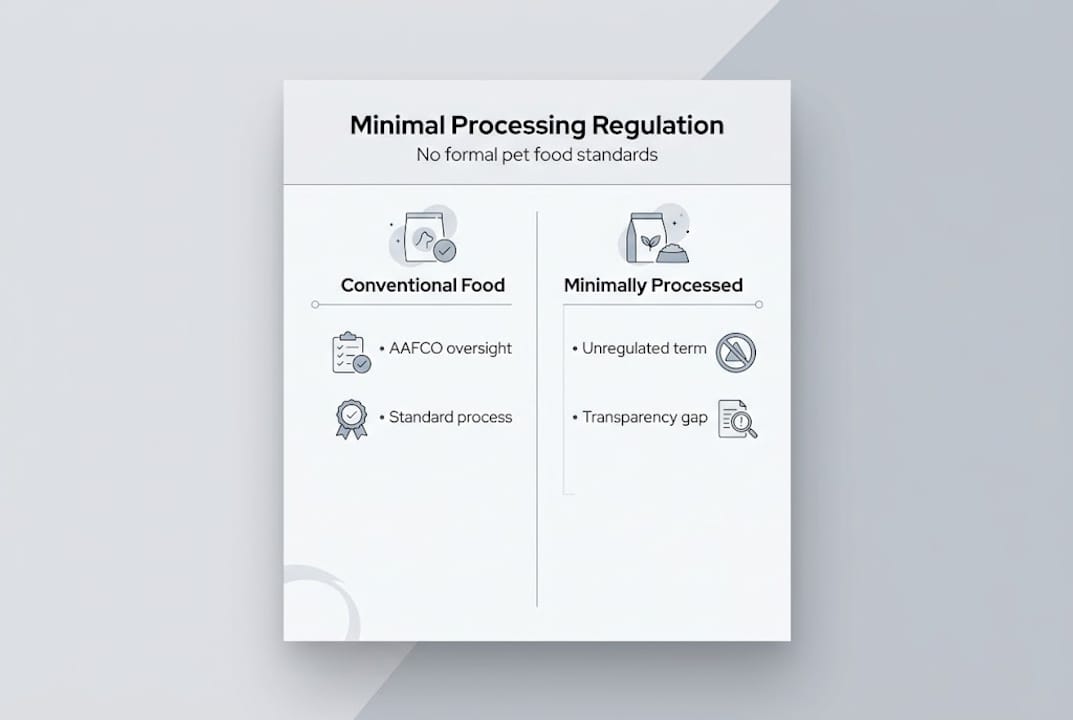
Learning more about minimally processed dog foods gives you a clearer picture of how different methods affect what ends up in your dog’s dish. Here’s a quick breakdown of what separates the categories:
Common processing methods in minimally processed pet food:
Freeze-drying: Removes moisture at low temperatures, preserving nutrients and structure
Air-drying: Uses gentle airflow and low heat to dry ingredients slowly
Gentle cooking: Short, low-temperature cooking that retains more vitamins and enzymes
Grinding and mixing: Physical processing without heat or chemical additives
Pasteurization: Mild heat treatment to reduce pathogens while keeping nutrients intact
Comparison: conventional vs. minimally processed vs. raw
Feature | Conventional kibble | Minimally processed | Raw |
Heat used | High (extrusion) | Low to none | None |
Nutrient retention | ~60% | Up to 90% | High, but variable |
Shelf life | Long | Moderate to long | Short |
Pathogen risk | Low | Low to moderate | Higher without safety steps |
Ingredient transparency | Often low | Usually high | Variable |
This table makes one thing clear: minimal processing sits in a practical sweet spot between raw and conventional kibble, offering strong nutrient retention with manageable safety considerations.
How minimal processing impacts nutrient retention
Once you understand what minimal processing is, the next question is whether it actually makes a measurable difference for your dog. The answer is yes, and the numbers are worth paying attention to.
Minimally processed pet food retains up to 90% of nutrients compared to roughly 60% for conventional kibble. That 30-point gap is significant. It means that when you feed your dog a freeze-dried or gently processed meal, more of the vitamins, minerals, amino acids, and enzymes in those ingredients actually make it into your dog’s body and do their job.
Digestibility is equally important. The freeze-drying process preserves the cellular structure of ingredients, which makes them easier for your dog’s digestive system to break down and absorb. Freeze-dried foods show digestibility rates of 95 to 98%, compared to around 60% for conventional processed foods. That’s not a small difference. It means your dog gets more out of every meal.
Key nutrient and digestibility benchmarks:
Metric | Conventional kibble | Minimally processed | Freeze-dried |
Nutrient retention | ~60% | Up to 90% | Up to 90% |
Digestibility rate | ~60% | 80-90% | 95-98% |
Digestive issues reported | Baseline | Significantly lower | 70% fewer |
The practical outcomes of better nutrient preservation in freeze-dried foods show up in real ways. Dogs on minimally processed diets often show improved coat quality, steadier energy levels, firmer stools, and fewer allergy-related symptoms. These aren’t just marketing claims. They reflect what happens when a dog’s gut receives food it can actually process efficiently.
What better digestibility means for your dog:
Fewer upset stomachs and loose stools
Better absorption of protein for muscle maintenance
More stable energy throughout the day
Reduced gas and bloating
Stronger immune response from better vitamin uptake
The empirical benchmarks are consistent: minimal processing, done right, delivers measurably better nutrition. That’s the foundation for everything else we’ll cover.
Safety, risks, and vet approval: what to look for
Nutrition numbers are compelling, but safety matters just as much. Not all minimally processed foods carry the same level of risk, and understanding the difference helps you choose wisely.
The biggest concern with minimally processed and raw foods is pathogen exposure. Raw pet foods can carry bacteria like Salmonella or E. coli if they haven’t been treated with safety interventions. High-pressure processing, or HPP, is one method that eliminates pathogens without using heat, making it a trusted safety step for raw and minimally processed options. Freeze-drying also reduces microbial activity significantly, though it’s not a sterilization method on its own.
Premium, vet-approved premium dog food is made with human-grade ingredients, cooked individually in USDA-regulated facilities, and processed in ways that optimize both safety and nutrient retention. That level of transparency and oversight is what separates a genuinely premium product from one that just uses the right buzzwords.
The science-backed pet food benefits are real, but they only materialize when the food is produced responsibly. Here’s how to verify that before you buy:
Check for human-grade certification. This means ingredients meet standards fit for human consumption, not just pet-grade byproducts.
Look for named protein sources. ‘Chicken’ is better than ‘poultry meal.’ Specific names signal quality and transparency.
Ask about processing methods. Freeze-dried, air-dried, and gently cooked are all acceptable. Vague terms like ‘natural processing’ are not.
Look for HPP or equivalent safety steps if the food includes raw components.
Confirm AAFCO compliance. Even without a formal definition of minimal processing, the food should meet AAFCO nutritional standards for your dog’s life stage.
Consult your vet. Your vet can help evaluate whether a specific food suits your dog’s health needs, age, and any existing conditions.
Pro Tip: Don’t just read the front of the bag. The ingredient list and guaranteed analysis on the back tell you far more about what’s actually in the food than any marketing claim on the front.
The 2026 pet food benefits landscape is more transparent than ever, with more brands publishing third-party testing results and processing details. Use that information.
How to choose minimally processed pet food for your dog
Knowing the evidence is one thing. Putting it into practice at the store or online is another. Here’s how to make confident, practical decisions when choosing minimally processed food for your dog.
Start with the ingredient list. Premium options use whole, recognizable ingredients: real meat, vegetables, fruits, and natural fats. Individual ingredient cooking optimizes both safety and nutrient retention, so look for brands that describe how each ingredient is handled, not just what’s in the bag.
Think about your dog’s specific needs. A senior dog with joint issues benefits from foods high in omega-3 fatty acids and easily digestible protein. A younger, active dog needs caloric density and muscle-supporting amino acids. Your vet can help you match the nutrient profile to your dog’s life stage and health status.
Actionable shopping steps:
Read the full ingredient list, not just the first three items
Verify the processing method (freeze-dried, air-dried, gently cooked)
Check for AAFCO nutritional adequacy statement on the label
Look for human-grade or USDA facility certifications
Research the brand’s transparency: do they publish testing results?
Ask your vet to review the guaranteed analysis for protein, fat, and fiber levels
Start with a small bag or trial size before committing to a large order
For healthier dog food choices, the key is combining label literacy with vet guidance. These two together give you the most complete picture.
Pro Tip: Ask the brand directly for their digestibility data and nutrient retention figures. Reputable companies will have this information available. If they don’t, that’s a signal worth noting.
The dog food longevity benefits of consistently feeding high-quality, minimally processed food are real and cumulative. Better digestion, stronger immunity, and improved vitality all add up over time to a healthier, happier dog.
Our perspective: why minimal processing is a game-changer, but not a silver bullet
We’ve seen a lot of excitement around minimally processed pet food, and most of it is well-founded. Better nutrient retention, improved digestibility, and fewer additives are genuine advantages backed by real data. The pro and con balance is clear: better nutrient retention and digestion on one side, and real pathogen risks if safety steps are skipped on the other.
But here’s what most articles won’t tell you: the label alone means nothing. We’ve seen ‘minimally processed’ used to describe foods with ingredient lists that would make any nutritionist wince. The term is unregulated, which means the responsibility falls on you as the owner to dig deeper.
Minimal processing unlocks real health gains, but only with science-backed, safety-focused brands.
The owners who get the most out of freeze-dried pet health products are the ones who combine smart label reading with honest conversations with their vet. They don’t chase trends. They follow the evidence, ask hard questions, and choose brands that can back up their claims with data. That’s the standard we hold ourselves to, and it’s the standard we encourage you to apply everywhere you shop.
Find premium minimally processed pet food for your dog
If you’re ready to put this knowledge into action, we’ve done the work to make it easy for you. At Loyal Saints, every product is built around the principles we’ve covered here: whole ingredients, transparent processing, human-grade quality, and real nutritional value your dog can feel.
Our freeze-dried formulas are crafted to preserve the nutrients your dog needs, with none of the fillers or additives that get in the way. Whether you’re new to minimally processed food or looking to upgrade your current routine, you can explore why freeze-dried foods deliver such consistent results, or head straight to our shop premium dog food page to find the right option for your dog’s size, age, and health goals. More tail wags are coming.
Frequently asked questions
Is ‘minimally processed’ pet food regulated in the US?
No, there is currently no formal AAFCO definition for ‘minimally processed’ pet food, which means the term is largely unregulated and can be used freely by brands without meeting a defined standard.
How does minimally processed pet food improve digestion?
Studies show 70% fewer digestive issues and digestibility rates of 95 to 98% in freeze-dried foods, compared to roughly 60% in conventional kibble, meaning your dog absorbs far more nutrition from each meal.
Are there risks to feeding raw, minimally processed dog food?
Raw pet foods can expose dogs to harmful bacteria if not treated with safety interventions like HPP; choosing freeze-dried or gently cooked options from reputable brands significantly reduces those risks.
What should I look for on a minimally processed pet food label?
Prioritize human-grade certifications, named whole protein sources, a clear processing method like freeze-dried or gently cooked, AAFCO compliance, and published digestibility or nutrient retention data from the brand.
Recommended
Comments