.png)
How Fruits Enhance Your Dog's Diet: Benefits, Safety
- wix mentor

- 19 hours ago
- 8 min read

TL;DR:
Fruits provide antioxidants, fiber, and vitamins that support a dog’s health.
Safe fruits must be properly prepared with seeds, pits, and rinds removed.
Fruits are best as supplements, not primary food sources, and portions should be controlled.
Fruits get a confusing reputation in the dog nutrition world. Some owners toss a blueberry to their pup without a second thought, while others worry that any fruit at all is dangerous. The truth sits somewhere more nuanced and more exciting. When you choose the right fruits, prepare them correctly, and serve appropriate amounts, they can meaningfully support your dog’s health in ways that go well beyond a simple snack. This article walks you through the real nutritional value of fruits, which ones are safe, how fiber from fruit supports your dog’s gut, and what experts actually recommend for health-focused pet parents.
Table of Contents
Key Takeaways
Point | Details |
Safe fruit choices | Dogs can eat many fruits safely with proper preparation—removing seeds and rinds is essential. |
Nutritional benefits | Fruits supply antioxidants, fiber, and vitamins that help digestion and support immune health. |
Portion guidance | Keep fruits as treats under 10% of daily calories to avoid digestive issues or excess sugar. |
Fiber and gut health | Fiber from fruits improves gut microbiome and fecal quality according to current studies. |
Expert consensus | Veterinarians recommend fruits as healthy supplements, not main nutrition sources for dogs. |
Understanding the nutritional power of fruits for dogs
Fruits are not just filler or a sweet reward. They carry a real nutritional profile that can complement your dog’s primary diet in meaningful ways. Now that we know why the role of fruits is often misunderstood, let’s explore what they actually add to your dog’s diet.
The three biggest contributions fruits make are antioxidants, fiber, and vitamins. Antioxidants are compounds that protect your dog’s cells from damage caused by free radicals, which are unstable molecules linked to aging and disease. Blueberries, for example, prevent cell damage and rank among the most antioxidant-rich foods available. Fiber supports healthy digestion and GI function, and vitamins like C, A, and B6 show up across a wide range of fruits.
Here is a quick look at what fruits bring to the table:
Antioxidants: Found in blueberries, strawberries, and raspberries. These support dog immunity with antioxidants and help slow cellular aging.
Dietary fiber: Present in apples, pears, and bananas. Supports fiber for digestive health and keeps things moving smoothly through the GI tract.
Vitamins and minerals: Mangoes offer vitamin A, oranges provide vitamin C, and watermelon contains potassium and magnesium.
One thing worth noting: dogs can actually synthesize their own vitamin C, unlike humans. But that does not mean fruit-derived nutrients are redundant. The antioxidant compounds in fruit go beyond vitamin C alone and offer protective effects that a dog’s internal production cannot fully replicate.
“Whole fruits bring a combination of nutrients that work together in ways isolated supplements often cannot match. Think of fruit as a natural delivery system for multiple health benefits at once.”
If you want a broader picture of which safe human foods for dogs fit into a premium diet, it helps to understand fruits as one piece of a thoughtfully designed nutrition plan rather than an occasional accident.
Safe fruits for dogs: What, how much, and preparation tips
Having covered the nutritional benefits, let’s look at which fruits are truly dog-safe, how much to feed, and key preparation tips.
Not every fruit that is healthy for you is healthy for your dog. Grapes and raisins, for example, are toxic to dogs and should never be offered. Avocados contain persin, which can cause vomiting and diarrhea. But the list of safe, beneficial fruits is genuinely long and varied.
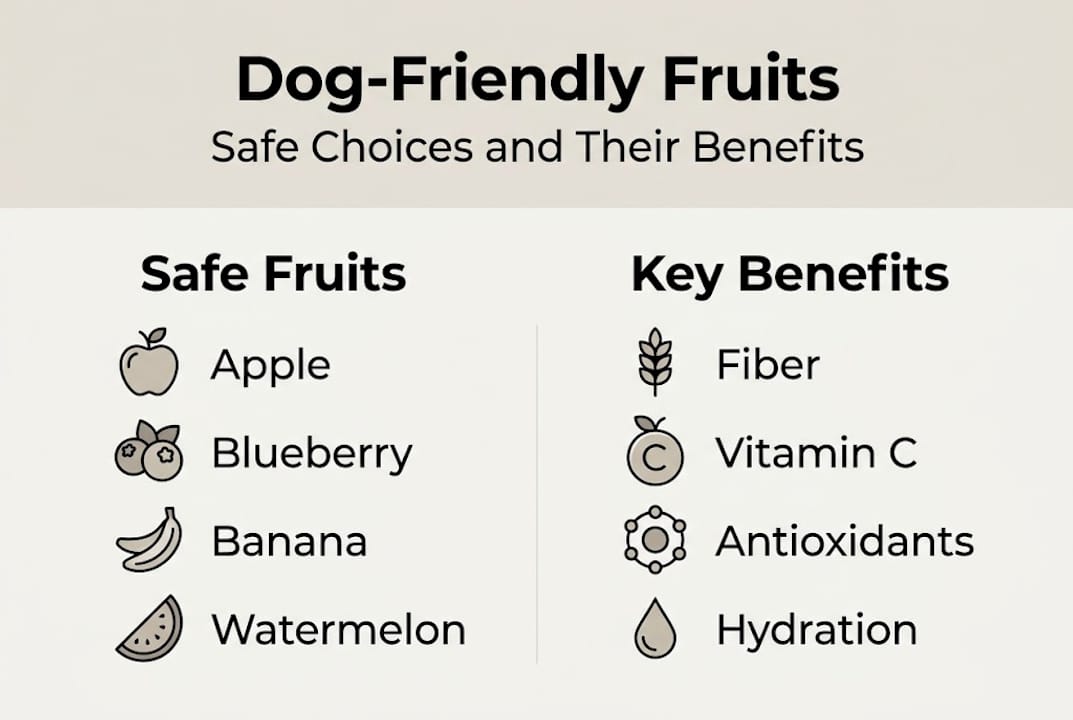
Dog-safe fruits include apples, blueberries, bananas, strawberries, raspberries, watermelon, cantaloupe, oranges, pineapple, mango, and pears. The key is proper preparation: always remove seeds, pits, and rinds before serving.
Fruit | Safe part | Remove | Benefit |
Apple | Flesh | Seeds, core | Fiber, vitamin C |
Watermelon | Flesh | Seeds, rind | Hydration, potassium |
Mango | Flesh | Pit, skin | Vitamin A, B6 |
Blueberries | Whole berry | Nothing | Antioxidants |
Banana | Flesh | Peel | Potassium, magnesium |
Pear | Flesh | Seeds, core | Fiber, copper |
Serving size matters just as much as fruit choice. Fruit treats should be less than 10% of your dog’s daily calorie intake. Going over that threshold can lead to sugar overload, digestive upset, and weight gain over time. For a medium-sized dog, that translates to roughly 1 to 2 apple slices or 4 to 6 blueberries per day.
Common mistakes owners make:
Feeding too much at once, especially with high-sugar fruits like mango or banana
Skipping seed and pit removal, which can cause choking or toxicity
Offering canned or dried fruits with added sugar or preservatives
Introducing multiple new fruits at the same time, making it hard to spot reactions
Pro Tip: Start with one new fruit at a time and wait 48 hours before adding another. This makes it easy to identify any digestive sensitivity before it becomes a bigger issue. For more inspiration on what makes a good reward, check out these healthy dog treat examples.
Always refer to a trusted safe foods guide when you are unsure about a specific fruit or preparation method. When in doubt, ask your vet before introducing something new.
How fruit-derived fiber supports canine gut health and digestion
Beyond vitamins and antioxidants, fiber from fruits is a game-changer for digestion. Here’s how it works.

Fiber is not just about keeping your dog regular. It plays a much larger role in overall gut health, including how the gut microbiome functions and how nutrients are absorbed. Research shows that fiber-enriched diets improve fecal scores and microbiota in dogs, meaning better stool quality and a healthier balance of gut bacteria.
Here is how fiber works step by step in your dog’s digestive system:
Fermentation: Soluble fiber from fruits like apples and pears ferments in the large intestine, feeding beneficial bacteria.
Short-chain fatty acid (SCFA) production: As bacteria break down fiber, they produce SCFAs, which fuel the cells lining the gut wall and reduce inflammation.
Microbiome balance: A fiber-rich environment supports diverse, healthy gut bacteria, which connects to immunity, mood, and nutrient absorption.
Fecal quality: Dogs on fiber-enriched diets tend to produce firmer, more consistent stools, which is a practical sign of better GI health.
Fiber type | Found in | Primary benefit |
Soluble fiber | Apples, pears, bananas | Feeds gut bacteria, supports SCFA production |
Insoluble fiber | Raspberries, strawberries | Adds bulk, speeds transit time |
“A well-fed gut microbiome does not just improve digestion. It supports the immune system, reduces inflammation, and even influences your dog’s energy levels and mood.”
For a deeper look at how this works, the connection between fiber and gut microbiome is worth exploring. You can also read more about what a dog gut health study found about fiber’s measurable impact. Understanding the gut microbiome in dog nutrition helps you see why what your dog eats today shapes how they feel tomorrow.
Expert perspectives: Do fruits belong as staples or supplements in canine diets?
Knowing the science, let’s turn to expert views and clear guidance on how fruits fit best in your dog’s overall nutrition.
Veterinarians and canine nutrition researchers are largely aligned on this: fruits are excellent supplements but should not serve as dietary staples. Your dog’s core nutrition needs to come from a complete, balanced diet that meets AAFCO standards. Fruits are a smart addition on top of that foundation, not a replacement for it.
Research supports the value of plant-based carbohydrates and fiber in canine health. Carbs and fiber from plants support health and cardiac function in dogs, which challenges the older idea that dogs have no use for plant-based foods at all. That said, the evidence is clearest for fiber specifically, not for fruit as a broad category.
Key takeaways from expert consensus:
Fruits work best as treats or toppers, not as a primary food source
The 10% daily calorie rule applies across all treat types, including fruit
Dogs with diabetes, kidney disease, or obesity need vet guidance before adding fruit
Expert views on fruit supplementation note there are no large randomized controlled trials on fruit specifically, but fiber research strongly supports the benefits
Pro Tip: If your dog is managing weight, fruits like blueberries and raspberries are lower in sugar and calories compared to mango or banana. They still deliver antioxidants and fiber without the extra sugar load. Fiber also plays a role in fiber for healthy weight management, making it a smart choice for dogs prone to gaining extra pounds.
The practical recommendation is simple: prioritize a complete, high-quality diet and use fruits as intentional, well-chosen supplements. Understanding fiber and nutrient absorption in dogs can help you make smarter choices about which fruits to include and when.
Our take: Rethinking fruits in your dog’s menu—what matters most
After weighing guidelines and expert views, here is what really matters when you are serving fruits to your dog.
Most owners fall into one of two camps. They either toss fruit to their dog randomly without thinking about preparation or portion, or they avoid it entirely out of fear. Both approaches miss the point. Intentional fruit use, backed by evidence and good preparation habits, is where the real value lives.
We have seen that the owners who get the most out of adding fruit to their dog’s diet are the ones who treat it like a deliberate nutrition choice rather than a casual snack. They pick fruits with purpose, prepare them properly, and keep portions in check. That approach consistently leads to better digestion, more energy, and a happier dog overall.
The ingredient list on your dog’s food matters, but so does what you add on top of it. A few well-chosen examples of healthy dog treats, including fruit-based options, can genuinely elevate a premium diet. Preparation and portion discipline will always matter more than chasing the trendiest superfood.
Discover premium natural nutrition for your dog
If this article has you thinking more carefully about what goes into your dog’s bowl, you are already ahead of the curve. At Loyal Saints Pets, we build our products around exactly this kind of intentional, evidence-backed nutrition thinking.

Our freeze-dried foods are crafted from human-grade, whole ingredients, including real fruits and vegetables that deliver the antioxidants and fiber your dog benefits from. No fillers, no artificial additives, just clean nutrition your dog can actually use. Learn more about freeze dried nutrition and why it preserves more of what matters. Browse our full shop dog treats selection to find options that fit your dog’s needs. For everything we offer, visit Loyal Saints Pets and take the next step toward better nutrition for your pup.
Frequently asked questions
Which fruits are absolutely safe for dogs to eat?
Apples, blueberries, bananas, strawberries, raspberries, watermelon, cantaloupe, oranges, pineapple, mango, and pears are all safe for dogs as long as you remove seeds, pits, and rinds before serving.
How much fruit should I give to my dog per day?
Fruit should make up less than 10% of daily calories, which works out to about 1 to 2 apple slices or 4 to 6 blueberries for a medium-sized dog.
Can fruits replace commercial dog food?
Fruits are supplements, not replacements. A complete, balanced diet should always provide the foundation of your dog’s nutrition, with fruits added on top.
What are the health benefits of fruits for dogs?
Fruits deliver antioxidants, fiber, and vitamins that support gut health, immune function, and healthy cell protection in dogs.
Are there risks in feeding fruits to dogs?
Yes. Overfeeding causes sugar overload and digestive upset, and improper preparation, like leaving in seeds or pits, can be hazardous. Always prep carefully and keep portions small.
Recommended
Comments