.png)
How to Choose Natural Dog Food for Optimal Pet Health
- Nick Willkom
- Dec 29, 2025
- 8 min read


Choosing premium nutrition for your dog can feel daunting when over 80 percent of American health-conscious pet owners say ingredient transparency is a top priority. With your dog’s vitality and longevity at stake, understanding what truly supports their unique health profile becomes essential. This guide walks you through every step to help you confidently evaluate natural freeze-dried food options and empower you to make the best choices for your companion’s wellness.
Table of Contents
Quick Summary
Key Point | Explanation |
1. Assess your dog’s specific needs | Consider your dog’s breed, age, size, and health to choose suitable nutrition. |
2. Choose high-quality ingredients | Prioritize whole meat proteins and avoid fillers or artificial additives. |
3. Check nutritional adequacy labels | Look for AAFCO certification and guaranteed analysis to ensure balanced nutrition. |
4. Compare different brands | Evaluate ingredients and sourcing practices to find the best nutritional fit. |
5. Monitor health during diet changes | Track your dog’s well-being and consult a vet after transitioning diets. |
Step 1: Evaluate Your Dog’s Unique Nutritional Needs
Understanding your dog’s specific nutritional requirements is crucial for maintaining optimal health and supporting their individual wellness journey. Every dog has unique dietary needs influenced by factors like breed, age, size, activity level, and overall health status.
To effectively assess your dog’s nutrition needs, start by considering key personal characteristics. Young puppies, active adult dogs, senior companions, and dogs with medical conditions all require different nutritional approaches. Size matters significantly too smaller breeds metabolize food differently compared to large breed dogs, which means their protein, fat, and calorie requirements can vary substantially.
Work closely with your veterinarian to conduct a comprehensive nutritional assessment. They can help you analyze your dog’s current weight, body condition, muscle mass, energy levels, and potential health risks. Blood work and physical examinations provide critical insights into potential nutritional gaps or specific dietary requirements. This personalized approach ensures you choose a diet that truly supports your dog’s unique physiological needs.
Pro tip: Keep a detailed food and health journal tracking your dog’s weight, energy, coat quality, and digestion to help your veterinarian make precise nutritional recommendations.
Here’s how age, breed size, and health status affect a dog’s nutritional priorities:
Factor | Impact on Nutrition | Key Considerations |
Puppy | High protein, calorie dense | Growth and development support |
Senior Dog | Moderate calories, joint care | Weight control, joint nutrition |
Small Breed | Fast metabolism, small kibble | Energy requirements, portion size |
Large Breed | Joint support, protein balance | Controlled growth rate |
Step 2: Identify High-Quality Natural Ingredients
Selecting top-tier natural ingredients is fundamental to supporting your dog’s nutritional health and vitality. Natural ingredient verification requires careful examination of protein sources, whole food components, and overall nutritional profile.
Prioritize whole meat proteins as the primary ingredient such as chicken, beef, turkey, or fish. Look for specific meat names rather than generic terms like “meat meal” or “animal byproducts.” Quality natural ingredients should also include wholesome fruits and vegetables that provide essential vitamins, minerals, and antioxidants. Blueberries, sweet potatoes, spinach, and carrots are excellent nutrient-dense additions that support immune function and overall wellness.

Read ingredient labels thoroughly and avoid artificial preservatives, colors, and fillers. Seek out foods with minimally processed ingredients and clear sourcing information. Scientifically validated research emphasizes that health-conscious pet owners are increasingly demanding transparency in pet food ingredients, which means manufacturers are becoming more accountable for the nutritional quality of their products.
Pro tip: Always consult the ingredient list in order of weight percentage and aim for foods where named animal proteins appear within the first three ingredients.
Step 3: Assess Product Labels and Certifications
Understanding nutritional adequacy statements is crucial when selecting the right natural dog food. These labels provide critical insights into whether a product meets your dog’s complete nutritional requirements.
Carefully examine the guaranteed analysis section on dog food labels, which lists minimum percentages of protein, fat, and maximum percentages of fiber and moisture. Look for specific nutritional certifications from reputable organizations like the Association of American Feed Control Officials (AAFCO), which verify that the food provides balanced nutrition for your dog’s life stage. Pay close attention to statements like “complete and balanced” or “meets AAFCO nutritional standards,” as these indicate the food has undergone rigorous nutritional testing.
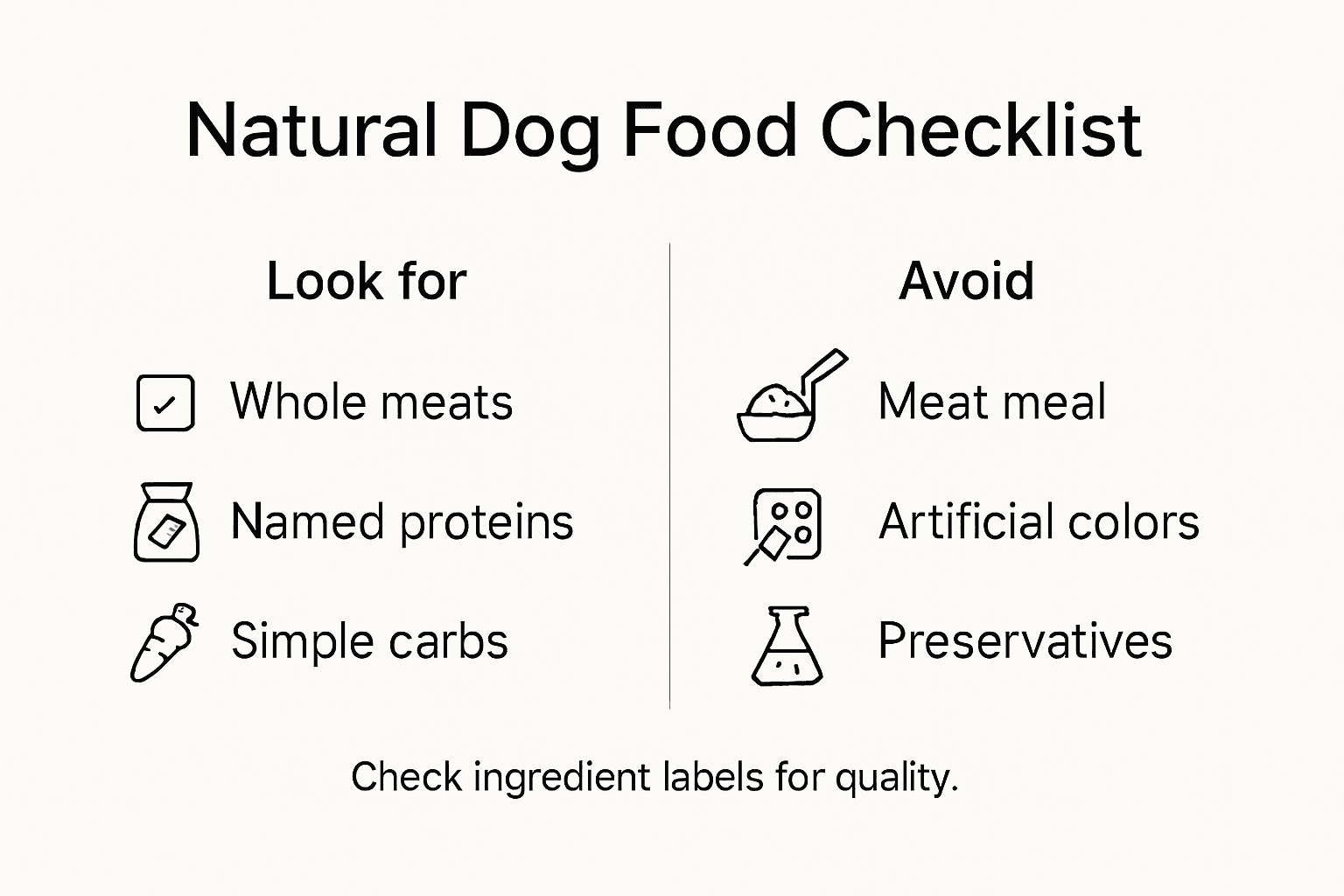
Beyond basic nutritional information, investigate additional certifications that signal higher quality standards. Organic, non-GMO, human-grade, or responsibly sourced labels can provide additional confidence in the product’s overall nutritional integrity. European pet food guidelines emphasize the importance of transparent nutritional information and stringent quality control processes that help pet owners make informed choices about their dog’s diet.
Pro tip: Keep a magnifying glass in your pantry to help read those tiny ingredient labels more easily, ensuring you never miss important nutritional details.
A quick comparison of reputable dog food certifications and what they guarantee:
Certification | Verifies | Common Label Phrases |
AAFCO Nutritional Standard | Complete, balanced diet | “Meets AAFCO standards” |
Organic Certification | No artificial additives | “Certified organic ingredients” |
Non-GMO Seal | Contains no GMOs | “Non-GMO verified” |
Human-Grade Label | Meets human food standards | “Human-grade ingredients” |
Step 4: Compare Leading Brands and Formulations
Evaluating dog food brands requires a comprehensive approach to understanding nutritional quality and ingredient sourcing. Your goal is to identify formulations that provide balanced nutrition tailored to your dog’s specific health requirements.
Create a comparison matrix that assesses key factors across different brands. Focus on protein sources, with whole meats listed first in ingredients, and examine the balance of nutrients including proteins, fats, carbohydrates, vitamins, and minerals. Check for life stage specific formulations that match your dog’s age and activity level. Pay attention to brands that invest in scientific research and have transparent sourcing practices, which often indicate higher quality standards and nutritional expertise.
Consider beyond just ingredients by investigating each brand’s manufacturing processes, veterinary consultation in product development, and commitment to animal welfare. Expert nutritional guidelines emphasize the importance of product testing and regulatory compliance when selecting dog food, so prioritize brands that demonstrate rigorous quality control and adhere to industry standards. Look for additional certifications such as organic, non-GMO, or human-grade ingredients that can provide extra assurance of nutritional integrity.
Pro tip: Photograph ingredient labels with your smartphone to easily compare brands side by side and track nutritional details during your research.
Step 5: Verify Ingredient Transparency and Brand Claims
Ingredient transparency demands a critical and investigative approach to understanding pet food manufacturing practices. Your mission is to decode the marketing language and uncover the real nutritional value behind brand claims.
Start by scrutinizing ingredient lists and sourcing information with a detective’s eye. Look beyond glossy packaging and marketing claims to understand the actual origin of ingredients. Pay special attention to vague terms like “meat meal” or “animal byproducts” which can mask low quality protein sources. Seek out brands that provide specific details about meat origins, such as “grass fed beef” or “wild caught salmon,” and those that clearly outline their sourcing and processing methods.
Veterinary and nutritional experts recommend researching brands that demonstrate scientific rigor in their product development. Contact manufacturers directly with specific questions about ingredient sourcing, nutritional testing, and quality control processes. Request documentation that validates their nutritional claims, such as third party laboratory testing results or veterinary nutrition consultation records. Watch for red flags like resistance to transparency or inability to provide detailed ingredient information.
Pro tip: Create a spreadsheet to track and compare ingredient details across different brands, making your research more systematic and thorough.
Step 6: Monitor Your Dog’s Health After Switching
Global veterinary nutrition guidelines emphasize the critical importance of carefully tracking your dog’s health during dietary transitions. This monitoring phase is crucial to ensuring your pet’s successful adaptation to their new diet.
Establish a comprehensive health tracking system that evaluates multiple indicators including appetite, energy levels, coat condition, weight, and digestive performance. Document daily observations such as stool consistency, eating patterns, and overall behavior. Watch for subtle changes that might signal digestive discomfort or nutritional imbalance. Pay special attention to your dog’s enthusiasm during meals, frequency of bathroom visits, and any shifts in their typical energy patterns.
Pet health experts recommend a systematic approach to diet transitions that prioritizes gradual changes and attentive observation. Schedule a follow-up veterinary consultation within 4-6 weeks of switching foods to conduct a professional health assessment. During this check-up, discuss any observations, request blood work if necessary, and confirm that the new diet meets your dog’s nutritional requirements. Be prepared to make adjustments based on your veterinarian’s professional recommendations.
Pro tip: Create a dedicated health journal with dated entries tracking your dog’s diet transition, making it easier to identify patterns and communicate effectively with your veterinarian.
Discover Premium Natural Nutrition Tailored for Your Dog’s Health
Choosing the right natural dog food can feel overwhelming when juggling your pet’s unique nutritional needs and deciphering ingredient transparency. This article highlights the importance of identifying high-quality proteins, understanding AAFCO standards, and closely monitoring health after dietary changes—all challenges that pet parents often face when seeking optimal pet health. Loyal Saints Pets offers a reliable solution with freeze-dried, human-grade foods crafted from whole ingredients designed to support vitality, muscle strength, and digestive wellness.
Explore our carefully curated Chicken and Beef selections, featuring the named protein sources essential for balanced nutrition. For convenience and variety, consider our Bundles to meet your dog’s life stage needs.

Elevate your dog’s diet with health-focused, minimally processed foods that meet rigorous nutritional standards. Visit Loyal Saints Pets today to find your perfect natural dog food solution. Act now to provide the nourishment your furry family member deserves for a longer, happier life.
Frequently Asked Questions
How can I evaluate my dog’s unique nutritional needs?
To evaluate your dog’s unique nutritional needs, consider factors like breed, age, size, activity level, and health status. Work with your veterinarian to assess your dog’s current weight and overall health to ensure you choose an appropriate diet.
What ingredients should I look for in natural dog food?
Look for whole meat proteins as the primary ingredient, such as chicken or fish, and avoid vague terms like “meat meal.” Additionally, opt for foods that include wholesome fruits and vegetables to provide essential nutrients and antioxidants.
How can I determine if a dog food brand meets nutritional standards?
Check the nutritional adequacy statements on the label, focusing on phrases like “complete and balanced” or “meets AAFCO nutritional standards.” This ensures the food provides essential nutrition for your dog’s life stage and has undergone rigorous testing.
What factors should I compare when evaluating different dog food brands?
When comparing dog food brands, assess the source and quality of protein, the balance of nutrients, and any life stage specific formulations. Create a comparison matrix to track these factors for better decision-making.
How should I monitor my dog’s health after switching to a new diet?
Monitor your dog’s health by observing their appetite, energy levels, coat condition, and digestive performance. Document daily changes and schedule a veterinary check-up within 4–6 weeks to ensure the new diet meets their nutritional needs.
What steps can I take to ensure ingredient transparency from dog food brands?
To ensure ingredient transparency, scrutinize ingredient lists and sourcing information, looking for specifics about meat origins and avoiding vague terms. Consider reaching out to the manufacturer for detailed information regarding their ingredient sourcing and quality control processes.
Recommended
Comments