.png)
Why Feed Dogs Whole Ingredients for Vitality
- Towanda Brunson
- Feb 16
- 7 min read

Standing in the pet food aisle of your favorite city boutique, you may find yourself questioning what truly sets one formula apart from another. For dedicated American dog owners who want the best for their companions, understanding whole ingredients is a game changer for canine nutrition. Minimally processed, natural foods deliver more bioavailable nutrients for better digestion, vitality, and long-term health compared to heavily processed alternatives, empowering you to support your dog’s wellness at every life stage.
Table of Contents
Key Takeaways
Point | Details |
Whole Ingredients Are Essential | Prioritize dog food with whole ingredients for superior nutritional quality and better absorption of nutrients. |
Maintaining Nutritional Integrity | Whole ingredients preserve essential nutrients, supporting overall canine health and wellness effectively. |
Impact on Digestion | Whole ingredients can help manage digestive health and reduce food sensitivities in dogs due to their minimal processing. |
Long-Term Health Benefits | High-quality whole ingredient diets can potentially enhance lifespan and reduce chronic disease risks in dogs. |
Defining Whole Ingredients in Dog Nutrition
Understanding whole ingredients represents a critical component of premium canine nutrition. Whole food ingredients consist of minimally processed, recognizable food components derived directly from animals or plants that retain their natural nutritional profile.
Whole ingredients differ fundamentally from processed or synthetic alternatives by maintaining their original nutrient density and structural integrity. These ingredients typically include:
Fresh, unprocessed meats
Whole vegetables
Unrefined grains
Natural fruits
Minimally processed protein sources
The Association of American Feed Control Officials (AAFCO) establishes rigorous standards defining whole ingredients, ensuring they meet specific nutritional requirements for canine diets. This means each ingredient must provide demonstrable nutritional value without unnecessary chemical modifications or excessive processing.
Nutritionists emphasize that whole ingredients offer superior bioavailability, meaning dogs can more effectively absorb and utilize nutrients compared to heavily refined alternatives. The natural composition allows for better digestion, enhanced nutrient absorption, and more comprehensive nutritional support.
Whole ingredients preserve the intricate balance of nutrients nature originally designed, supporting optimal canine health from the cellular level.
Pro tip: When selecting dog food, scan ingredient labels and prioritize products where whole, recognizable ingredients appear first, indicating higher nutritional quality and minimal processing.
Nutritional Value: Retaining Essential Nutrients
Preserving the nutritional integrity of ingredients plays a crucial role in supporting canine health and wellness. Whole food ingredients contribute significantly to maintaining essential nutrients that dogs require for optimal functioning, offering a more comprehensive nutritional profile compared to heavily processed alternatives.
The retention of key nutritional components is fundamental to understanding whole ingredient benefits. These critical nutrients include:
Complete amino acid profiles
Essential fatty acids
Naturally occurring vitamins
Mineral complexes
Unrefined fiber content
Nutritionists emphasize that minimal processing helps preserve the natural structures of these nutrients, ensuring maximum bioavailability. The European Pet Food Industry Federation’s Nutritional Guidelines highlight the importance of maintaining nutrient levels throughout food preparation, demonstrating how whole ingredients support comprehensive nutritional requirements across different life stages.
By maintaining the original molecular structures of proteins, vitamins, and minerals, whole ingredients enable more efficient nutrient absorption. This means dogs can more effectively utilize the nutritional content, supporting everything from metabolic processes to immune system function, skin health, and overall vitality.

Below is a reference table outlining key nutrients from whole ingredients and their primary benefits for dogs:
Nutrient Type | Example Source | Major Benefit |
Amino Acids | Fresh meats | Muscle growth, tissue repair |
Essential Fatty Acids | Fish, eggs | Skin, coat, brain health |
Vitamins (Natural) | Vegetables, fruits | Immune support, metabolism |
Minerals | Unrefined grains | Bone, nerve function support |
Dietary Fiber | Whole veggies | Digestive regularity, gut health |
Nutrient retention is not just about quantity, but about preserving the complex, interconnected nutritional profile that nature designed.
Pro tip: Rotate protein sources in your dog’s diet to ensure a diverse range of nutrients and support comprehensive nutritional intake.
Impact on Digestion and Food Sensitivities
Whole food ingredients play a critical role in managing digestive health and addressing potential food sensitivities in dogs. Food allergies and immune reactions represent complex challenges that require careful nutritional consideration and individualized dietary approaches.
Dogs experiencing digestive issues or food sensitivities often benefit from whole ingredient diets that minimize potential inflammatory responses. Key advantages include:
Reduced processing-related irritants
More recognizable protein structures
Lower likelihood of artificial additive interactions
Enhanced digestive enzyme compatibility
Simplified ingredient profiles
Understanding individual canine digestive responses is crucial. Some dogs might have specific protein or carbohydrate sensitivities that require novel dietary strategies. Minimal processing helps maintain natural food structures, potentially reducing adverse immunological reactions that can compromise digestive wellness.
Nutritionists emphasize the importance of gradual dietary transitions and careful observation when addressing food sensitivities. The molecular integrity of whole ingredients allows for more predictable digestive responses, enabling pet owners to identify and manage potential nutritional triggers more effectively.
Digestive health is not about eliminating ingredients, but about understanding and supporting your dog’s unique nutritional needs.
Pro tip: Maintain a detailed food diary when introducing new ingredients to track your dog’s digestive responses and identify potential sensitivities.
Comparing Whole vs. Processed Ingredients
The fundamental difference between whole and processed ingredients lies in their nutritional integrity and potential health impact for dogs. Independent testing reveals critical distinctions in the quality and safety of food components that directly influence canine wellness.
Whole ingredients maintain their natural characteristics, offering superior nutritional benefits compared to processed alternatives. Key differences include:
Minimal chemical manipulation
Preserved natural nutrient profiles
Lower contamination risks
Higher bioavailability of nutrients
Reduced artificial additive exposure
Processed ingredients undergo significant transformations that can compromise their nutritional value. High-heat treatments and chemical processes often strip away essential vitamins, minerals, and beneficial compounds, replacing them with artificial preservatives and synthetic nutrients that may be less effective for canine metabolism.
Nutrition science consistently demonstrates that whole food diets support better metabolic function, reduce inflammation, and provide more comprehensive nutritional support. The molecular structure of whole ingredients allows for more efficient absorption and utilization of nutrients, directly impacting a dog’s overall health and vitality.
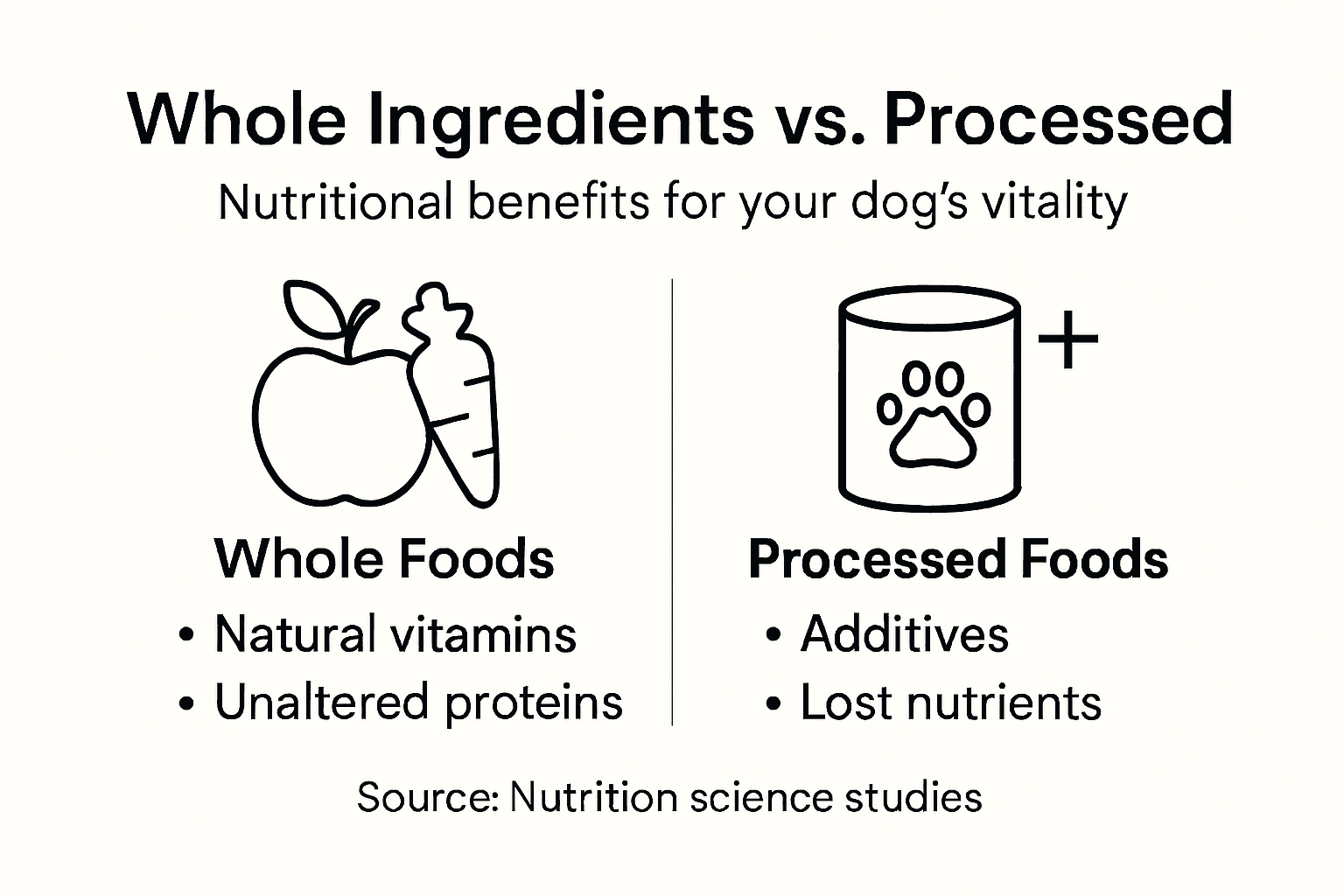
Here’s a summary of how whole ingredients compare to processed ingredients in dog nutrition:
Aspect | Whole Ingredients | Processed Ingredients |
Nutrient Retention | Natural levels preserved | Often reduced by processing |
Digestibility | Enhanced for most dogs | Can be harder to digest |
Additives | Rarely used | Often added for preservation |
Allergen Risk | Typically lower | Often higher due to additives |
Bioavailability | High nutrient absorption | Frequently diminished |
The quality of ingredients determines the quality of nutrition, not the quantity of food consumed.
Pro tip: When selecting dog food, prioritize products where whole, recognizable ingredients are listed first on the label.
Long-Term Health Outcomes and Longevity
Canine nutrition plays a pivotal role in determining overall health and potential lifespan. Groundbreaking research from the Dog Aging Project demonstrates that dietary practices significantly influence long-term wellness and potential longevity for dogs.
Whole ingredient diets contribute to sustained health through multiple critical mechanisms:
Reduced chronic disease risk
Enhanced metabolic efficiency
Stronger immune system function
Better weight management
Improved organ system support
Minimized inflammation markers
Nutritional science increasingly confirms that high-quality whole ingredients can mitigate age-related health challenges. The molecular composition of minimally processed foods supports cellular health, potentially slowing degenerative processes and maintaining physiological resilience throughout a dog’s life stages.
Veterinary guidelines consistently emphasize that nutritionally complete diets formulated with whole ingredients can prevent premature aging, support critical bodily functions, and potentially extend a dog’s active, healthy years. The cumulative impact of consistent, high-quality nutrition extends far beyond immediate dietary needs.
Nutrition is not just about feeding, but about investing in your dog’s future health and vitality.
Pro tip: Consult with a veterinary nutritionist to develop a personalized dietary plan tailored to your dog’s specific age, breed, and health requirements.
Unlock Your Dog’s Vitality with Whole Ingredients from Loyal Saints Pets
Feeding your dog whole ingredients is essential to maintaining their health, digestion, and long-term vitality as highlighted in the article. If you want to address common challenges like food sensitivities, nutrient retention, and improved digestion, consider switching to premium, minimally processed foods that support natural canine nutrition. Loyal Saints Pets specializes in freeze-dried dog food crafted from human-grade whole ingredients like fresh meats and wholesome vegetables to maximize nutrient bioavailability and promote lasting vitality.

Experience the difference that balanced nutrition with no additives or fillers can make in your dog’s life. Explore our selection of Beef | Loyal Saints and Chicken | Loyal Saints recipes designed to support muscle strength, allergy management, and digestive health. Take the first step toward enhancing your pet’s well-being by visiting Loyal Saints Pets today and find the perfect whole food solution to fuel your dog’s active and healthy lifestyle.
Frequently Asked Questions
What are whole ingredients in dog food?
Whole ingredients are minimally processed, recognizable food components derived directly from animals or plants that retain their natural nutritional profile, such as fresh meats, whole vegetables, unrefined grains, natural fruits, and minimally processed protein sources.
How do whole ingredients benefit my dog’s nutrition?
Whole ingredients offer superior bioavailability, allowing dogs to more effectively absorb and utilize nutrients. They maintain their original nutrient density and structural integrity, supporting optimal health and digestion compared to heavily processed alternatives.
Why should I avoid processed ingredients in dog food?
Processed ingredients often undergo significant transformations that can strip away essential vitamins and minerals, replacing them with artificial preservatives and synthetic nutrients, which may be less effective for digestion and overall health.
How can I choose the best dog food for my pet’s health?
Look for dog foods that list whole, recognizable ingredients at the top of the ingredient list, indicating higher nutritional quality. Also, consult with a veterinary nutritionist to develop a personalized dietary plan tailored to your dog’s specific age, breed, and health requirements.
Recommended
Comments