.png)
Why Choose Natural Dog Food for Healthier Dogs
- Nick Willkom
- Dec 7, 2025
- 8 min read


Over 60 percent of American pet owners report that ingredient lists are the top factor when choosing dog food. The push for healthier options shows just how much people care about what goes into their dogs’ bowls. Understanding the core principles, ingredient standards, and health implications of natural dog food helps you make truly informed choices for your dog. Discover what sets these foods apart and why a growing number of American families are turning to them for better pet well-being.
Table of Contents
Key Takeaways
Point | Details |
Natural Ingredients | Natural dog food must consist of whole, identifiable ingredients without artificial additives, supporting a dog’s optimal health. |
Nutritional Integrity | Processing methods like freeze-drying are essential for maintaining the nutritional value of dog food, preserving essential nutrients without harmful additives. |
Veterinarian Guidance | Professional veterinary advice is crucial for selecting appropriate diets that meet specific nutritional needs and align with AAFCO standards. |
Long-Term Health Benefits | Investing in quality natural dog food can lead to reduced veterinary costs over time due to improved overall health and well-being. |
Defining Natural Dog Food and Core Principles
Understanding natural dog food requires a comprehensive look at its foundational principles and nutritional standards. The Association of American Feed Control Officials (AAFCO) provides a critical definition that establishes the core framework for what constitutes natural nutrition for dogs. According to their guidelines, natural dog food must originate exclusively from plant, animal, or mined sources, processed through minimally invasive methods that preserve nutritional integrity.
At its core, natural dog food represents a commitment to pure, unprocessed ingredients that closely mirror a dog’s ancestral diet. Natural ingredients are distinguished by their absence of chemically synthetic additives, artificial preservatives, colors, and flavors. The American Kennel Club emphasizes that these foods should contain only ingredients produced through natural processing techniques, ensuring that every component contributes directly to your dog’s nutritional needs without unnecessary chemical interventions.
The key principles of natural dog food extend beyond ingredient sourcing to include comprehensive nutritional balance. This means selecting whole food ingredients that provide complete protein profiles, essential vitamins, and minerals. Whole proteins from high-quality meat sources, minimally processed fruits and vegetables, and natural supplements form the foundation of a truly natural diet. By prioritizing ingredients that are recognizable, traceable, and as close to their original state as possible, dog owners can support their pets’ overall health, enhance digestibility, and promote long-term wellness through nutrition that respects their biological needs.
Key characteristics of natural dog food include:
Sourced from whole, identifiable ingredients
Free from artificial synthetic additives
Minimally processed to retain nutritional value
Balanced to meet complete nutritional requirements
Transparent ingredient sourcing and manufacturing processes
Key Ingredients and Processing Methods Explained
Navigating the world of natural dog food requires a deep understanding of its core ingredients and sophisticated processing methods. Nutritional processing techniques play a crucial role in preserving the integrity and nutritional value of dog food. According to PetMD, natural dog foods are carefully crafted using ingredients sourced exclusively from plant, animal, and mineral origins, with processing methods strategically designed to maintain nutrient density without introducing synthetic additives.
The core ingredients in high-quality natural dog food represent a carefully curated selection of whole food components. Premium protein sources form the foundation, typically including whole meats like chicken, beef, lamb, and fish, which provide essential amino acids and support muscle development. Complementing these proteins are nutrient-dense vegetables, fruits, and minerals that deliver comprehensive nutritional support. Each ingredient undergoes meticulous selection to ensure it meets stringent natural food standards, avoiding artificial preservatives, colors, and synthetic additives that could compromise nutritional quality.

Processing methods are equally critical in maintaining the nutritional integrity of natural dog food. Freeze-drying techniques have emerged as a superior preservation method, allowing manufacturers to lock in nutrients while eliminating harmful bacteria. This process involves rapidly freezing ingredients and then removing moisture through a specialized vacuum process, which preserves the food’s original nutritional profile and flavor without requiring high-heat treatments that can degrade essential nutrients.
Key elements of natural dog food ingredient selection and processing include:
Whole meat proteins as primary ingredients
Minimally processed fruits and vegetables
No artificial preservatives or synthetic additives
Careful temperature control during processing
Transparent sourcing of all ingredients
Nutritional testing to ensure complete dietary balance
Why Veterinarian Approval and AAFCO Standards Matter
Choosing the right dog food goes far beyond simple nutrition - it requires understanding complex quality standards and expert recommendations. Veterinarian-approved pet diets represent a critical benchmark in ensuring your dog receives optimal nutritional support. Professional veterinary guidance helps pet owners navigate the complex landscape of canine nutrition, providing scientifically validated insights into dietary requirements that support long-term health and wellness.
Nutritional standards play a pivotal role in determining food quality and safety. The Association of American Feed Control Officials (AAFCO) establishes rigorous guidelines that serve as the gold standard for pet food manufacturing. AAFCO protein standards ensure that commercial dog foods meet comprehensive nutritional profiles, guaranteeing that every meal provides a balanced combination of proteins, vitamins, minerals, and essential nutrients necessary for optimal canine development.
Veterinary professionals evaluate dog food through multiple critical lenses, including ingredient quality, nutritional completeness, and potential health impacts. They assess factors like protein sources, mineral balances, and potential allergens to recommend diets that support specific health needs. Some dogs require specialized nutrition due to age, breed, weight, or existing health conditions, making professional guidance invaluable in selecting the most appropriate dietary approach.
Key considerations in veterinarian-approved dog nutrition include:
Comprehensive nutritional assessment
Breed and age-specific dietary requirements
Protein quality and digestibility
Potential allergen identification
Long-term health impact evaluation
Alignment with AAFCO nutritional standards
Health Benefits: Digestion, Allergies, and Vitality
Natural dog food offers a transformative approach to canine health, delivering comprehensive benefits that extend far beyond basic nutrition. Gut health research demonstrates that whole food ingredients can significantly impact a dog’s overall well-being. According to scientific studies, natural diets rich in minimally processed ingredients can dramatically improve digestive function, reduce allergic responses, and enhance overall vitality.
Digestive health stands at the core of canine wellness, with nutrient absorption playing a critical role in maintaining optimal bodily functions. Digestive enzyme interactions reveal that natural dog foods provide more bioavailable nutrients, allowing dogs to extract maximum nutritional value from each meal. Research published in medical journals indicates that whole food ingredients can reduce inflammatory responses, support intestinal microbiome balance, and minimize digestive stress that often accompanies processed commercial diets.
Allergy management represents another significant advantage of natural dog food. By eliminating artificial additives, synthetic preservatives, and potential allergen triggers, these diets offer a cleaner, more targeted nutritional approach. Dogs with sensitive systems often experience reduced skin irritations, improved coat quality, and decreased gastrointestinal discomfort when transitioning to carefully selected natural food options. The elimination of unnecessary chemical additives allows the dog’s immune system to function more efficiently, potentially reducing chronic inflammatory responses and supporting long-term health.
Key health benefits of natural dog food include:
Enhanced digestive enzyme function
Reduced allergic reaction potential
Improved nutrient absorption
Stronger immune system response
Decreased inflammatory markers
More stable energy levels
Comparing Regular Kibble and Conventional Pet Foods
The landscape of dog nutrition reveals stark differences between natural foods and conventional kibble, with significant implications for canine health. Comparative diet studies demonstrate profound nutritional variations that can impact a dog’s overall wellness. Research in Veterinary Science highlights that conventional kibble often contains processed byproducts and artificial additives, whereas natural diets prioritize whole, minimally processed ingredients that more closely align with a dog’s biological nutritional needs.
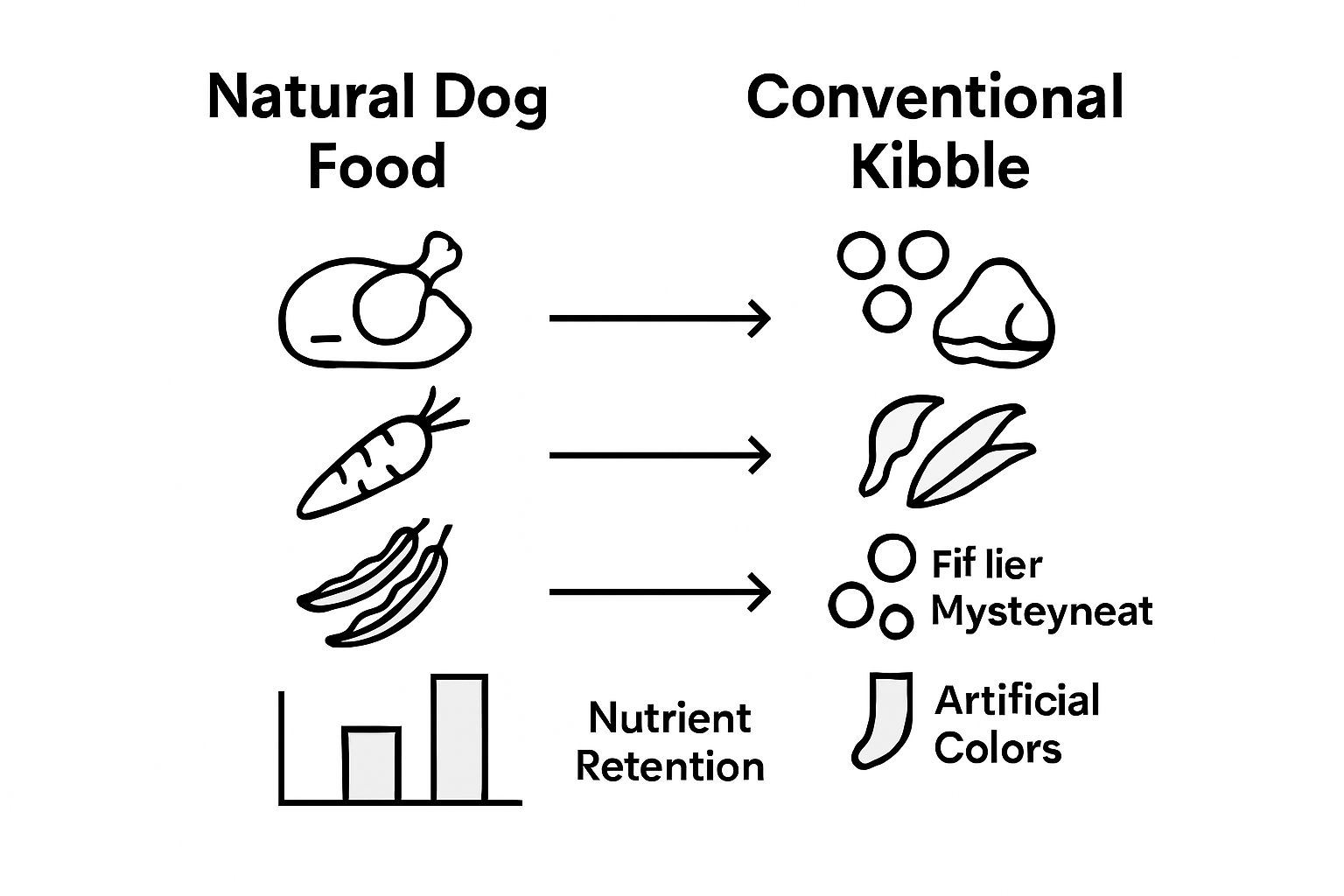
Nutritional composition represents the most critical distinguishing factor between natural foods and conventional kibble. Conventional pet foods typically rely on synthetic preservatives, bulk fillers, and chemically modified proteins that provide minimal nutritional value. In contrast, natural dog foods feature high-quality, identifiable protein sources, whole food ingredients, and nutrient-dense components that support optimal metabolic function. These differences translate into tangible health outcomes, with natural diets potentially offering improved digestibility, better nutrient absorption, and more consistent energy levels.
Processing methods further underscore the fundamental differences between these dietary approaches. Conventional kibble undergoes extensive heat processing that can degrade essential nutrients, reduce protein bioavailability, and introduce potentially harmful compounds. Natural dog food processing techniques, such as freeze-drying, maintain nutritional integrity by preserving enzyme structures and preventing nutrient degradation. This approach ensures that dogs receive more bioactive nutrients, supporting their immune system, maintaining healthier coat and skin conditions, and potentially reducing long-term health risks associated with heavily processed foods.
Key differences between kibble and natural dog food include:
Ingredient quality and sourcing
Nutrient density and bioavailability
Processing methods and nutritional preservation
Presence of artificial additives
Digestibility and nutrient absorption
Long-term health implications
Cost, Common Pitfalls, and Making Smart Choices
Navigating the landscape of natural dog food requires a strategic approach that balances quality, cost, and nutritional needs. Veterinarian-approved nutrition guides emphasize that while natural dog foods often come with a higher price point, the long-term health benefits can offset initial expenses. Pet owners must carefully evaluate the true value of their dog’s diet, considering factors beyond the immediate cost, such as potential reduced veterinary expenses and improved overall health.
Ingredient transparency emerges as a critical factor in making informed nutritional choices. Many pet food manufacturers use misleading marketing terminology that can confuse consumers about the true nature of their products. The American Kennel Club advises pet owners to scrutinize ingredient lists carefully, understanding that terms like “natural” do not automatically guarantee high-quality nutrition. Verifying that products meet AAFCO standards becomes essential, as not all foods marketed as natural actually comply with rigorous nutritional guidelines.
Common pitfalls in selecting natural dog food include falling for marketing hype, overlooking critical nutritional requirements, and assuming higher price automatically indicates superior quality. Successful pet nutrition strategies involve consulting with veterinarians, understanding your dog’s specific dietary needs, and conducting thorough research. Budget-conscious owners can optimize their approach by purchasing high-quality foods in bulk, exploring subscription services, and balancing premium ingredients with cost-effective options that still meet comprehensive nutritional standards.
Key considerations for smart natural dog food selection include:
Verify AAFCO nutritional compliance
Understand your dog’s specific dietary requirements
Compare ingredient lists carefully
Consider long-term health benefits
Consult with veterinary professionals
Balance quality with budget constraints
Look for transparent sourcing information
Give Your Dog the Natural Nutrition They Deserve
If you are looking to elevate your dog’s health with truly natural dog food that supports digestion, allergy management, and overall vitality, Loyal Saints Pets has the perfect solution. The article highlights the importance of ingredient transparency, veterinarian approval, and AAFCO standards — principles we build into every product to give your furry family member a healthier, longer life. Discover our finely crafted options made from premium proteins like chicken and beef combined with whole fruits and vegetables, freeze-dried to lock in nutrients and flavor.
Make the switch to a balanced, minimally processed diet that honors your dog’s natural needs. Visit Loyal Saints Pets today and explore our bundles for convenient, cost-effective ways to provide your dog with the nutrition they crave. Act now to support your dog’s wellbeing with natural, veterinarian-approved pet food designed for a lifetime of health and happiness.
Frequently Asked Questions
What is natural dog food?
Natural dog food is defined as food sourced exclusively from plant, animal, or mineral origins and processed using minimally invasive methods to retain nutritional integrity. It excludes synthetic additives and emphasizes whole, recognizable ingredients.
What are the health benefits of natural dog food?
Natural dog food can enhance digestion, reduce allergic reactions, and improve overall vitality. These diets contain whole, minimally processed ingredients that support better nutrient absorption and a stronger immune system, contributing to long-term health.
How does natural dog food compare to conventional kibble?
Natural dog food typically uses high-quality, identifiable ingredients and avoids synthetic preservatives and fillers, resulting in better nutrient density and digestibility. In contrast, conventional kibble may contain processed byproducts and artificial additives that could undermine a dog’s health.
Why is veterinarian approval important for dog food?
Veterinarian approval ensures that the dog food meets comprehensive nutritional standards and is tailored to support specific health needs. This professional guidance helps pet owners select diets that promote optimal health and well-being for their dogs.
Recommended
Comments