.png)
Why avoid pet food additives? Science, risks, and smart choices
- wix mentor

- 1 day ago
- 8 min read
TL;DR:
Approved pet food additives are generally safe within regulatory limits, but contamination risks remain.
Heavy metals from raw ingredients pose long-term health risks and are not listed on labels.
Choosing transparent brands with natural preservatives and whole ingredients benefits pet health.
If you’ve ever stood in the pet food aisle trying to decode an ingredient panel, you’re not alone. Many dog owners are genuinely concerned about what’s hiding in their dog’s bowl, and for good reason. Some studies flag toxic metal contamination across commercial pet foods, while major scientific reviews find no measurable harm from approved additives within regulatory limits. So which is it? The truth sits somewhere in between, and understanding it clearly can help you make smarter, more confident nutrition choices for your dog.
Table of Contents
Key Takeaways
Point | Details |
Most additives are regulated | Evidence shows additives used within regulatory limits are generally safe for dogs. |
Contaminants pose hidden risks | Toxic metal contamination is widespread and not always reflected on pet food labels. |
Premium diets increase vitality | Feeding natural, additive-free foods boosts your dog’s long-term health and energy. |
Ingredient transparency matters | Choosing brands with named ingredients and clear sourcing is safer than just avoiding ‘additives’ in general. |
Smart choices protect pets | Reading labels, selecting natural preservatives, and exploring minimally processed foods helps minimize risks. |
What pet food additives are and why they’re used
With confusion about additives mounting, it helps to first understand what they are and why they’re used in pet foods. The word “additive” covers a wide range of substances, and not all of them work the same way or carry the same risk.
Here’s a quick breakdown of the main types of additives found in commercial dog food:
Preservatives: Chemicals like BHA, BHT, and ethoxyquin that extend shelf life by preventing fats from going rancid
Artificial colors: Dyes that make kibble look more appealing to the owner (not the dog, who doesn’t care about color)
Flavor enhancers: Compounds added to make food more palatable, especially when nutrient-dense whole proteins are absent
Texturizers and binders: Ingredients like carrageenan used to hold wet food together or give it a specific consistency
Antioxidants: Both natural (tocopherols, rosemary) and synthetic versions used to prevent oxidation
Manufacturers use these additives primarily to prolong shelf life, maintain safety during transit and storage, and make products look or taste more appealing. The additives science explained behind each additive type varies considerably, and some have more evidence behind them than others.
It’s also important to separate intentional additives from incidental contaminants. Additives are added on purpose. Contaminants like heavy metals sneak in through raw ingredients, soil, water, or manufacturing processes. As pet food additive evidence from veterinary sources shows, both categories deserve attention. The FDA and AAFCO (Association of American Feed Control Officials) regulate approved additives, but contamination is a different and often less controlled issue.
What the science really says about pet food additives
Once you know why additives are present, it’s vital to separate myth from science regarding their actual risks. The evidence here is genuinely mixed, and that’s exactly what makes this topic so confusing for caring pet parents.
A major systematic review covering 121 studies found no evidence of harm from approved additives and preservatives when used within AAFCO limits. That’s a meaningful finding. Regulators set those limits based on toxicology research, and most commercial foods fall within them.
At the same time, widespread toxic metal contamination in commercial pet foods, including chromium, arsenic, and mercury across all sampled products, points to a separate and less regulated risk. That’s a distinction worth holding onto.
Here’s a side-by-side look at the science:
Risk Type | What Studies Show | Regulatory Oversight |
Approved chemical additives | No harm at AAFCO limits (121-study review) | FDA and AAFCO regulated |
Synthetic preservatives (BHA, BHT) | Tumor links in rodents at high doses; canine response may differ | Monitored with set limits |
Heavy metal contaminants | Found in all sampled products; linked to organ and cancer risk | Less controlled, not label-listed |
Natural preservatives | Generally well-tolerated; no major harm evidence | Preferred in premium foods |
“The health effects of additives within regulatory limits appear minimal based on current evidence, yet contamination risks from metals remain a legitimate concern that regulation hasn’t fully addressed.”
The takeaway here is nuanced. Approved additives, when within limits, pose little documented risk. But dog food contaminants like arsenic and chromium are a real and ongoing concern that ingredient labels simply don’t capture.
The risks behind the labels: What’s hiding in your dog’s food
With science sometimes minimizing additive danger, it helps to look more closely at what’s not listed on pet food labels. This is where things get more practical and, honestly, a little more unsettling.
Heavy metals like chromium, arsenic, and mercury enter pet food through raw ingredients grown in contaminated soil, fish sourced from polluted waters, or manufacturing equipment. These aren’t things any brand intentionally adds. They accumulate quietly. And because they aren’t regulated the same way intentional additives are, they don’t appear on ingredient panels at all.

Chronic toxic metal exposure in dogs can lead to organ damage, nervous system effects, and increased cancer risk over time. The danger isn’t usually a single meal. It’s the cumulative load of eating the same food every day for years.
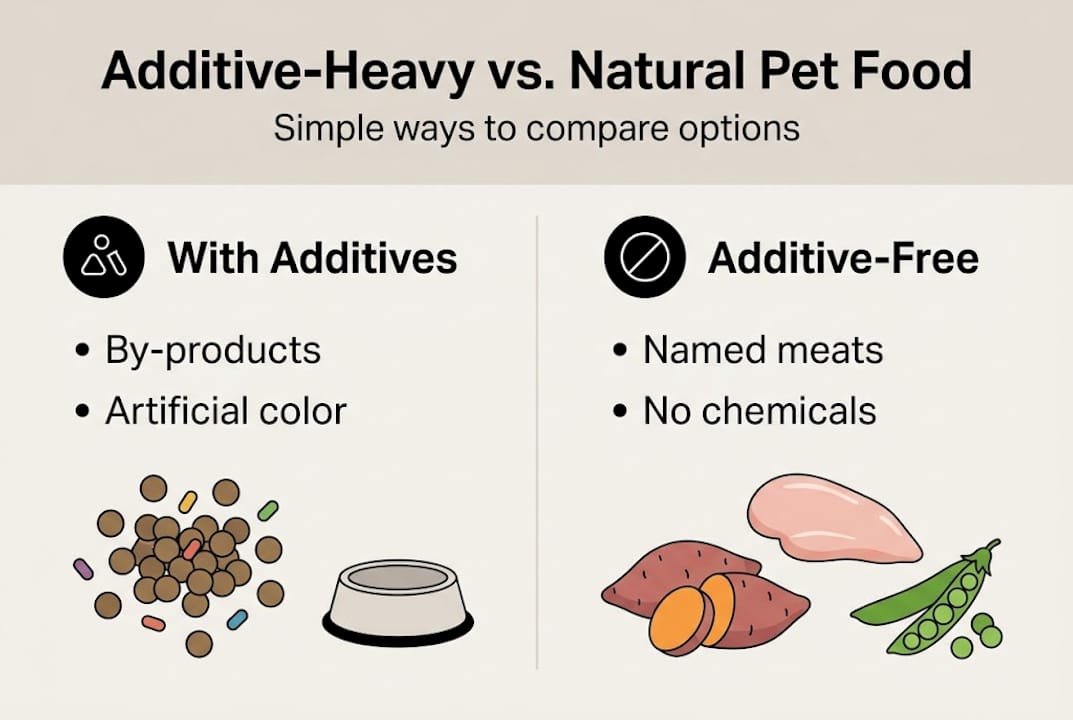
Here’s how natural and additive-heavy foods typically compare on the label:
Feature | Additive-Heavy Food | Natural or Premium Food |
Protein sources | By-products, unnamed meats | Named proteins (e.g., chicken, salmon) |
Preservatives | BHA, BHT, ethoxyquin | Tocopherols, rosemary extract |
Colors and flavors | Artificial dyes, flavor chemicals | None or minimal natural sources |
Fillers | Corn syrup, wheat gluten | Whole vegetables, fruits |
Transparency | Limited sourcing info | Clear sourcing, third-party tested |
Pro Tip: Even if a food looks “natural” on the front of the bag, always flip to the ingredient panel. If you see unnamed meat by-products, artificial colors, or synthetic preservatives in the first five ingredients, put it back.
Choosing foods with fewer ingredients and clearer sourcing is one of the most practical ways to reduce your dog’s exposure to both additives and common dog food contaminants. The natural nutrition benefits of doing so are real and measurable over time.
How to choose safer, additive-free pet food
Awareness of risk empowers you to shop smarter. Here’s how health-conscious pet parents can make better choices. The good news is that with a little know-how, finding genuinely cleaner food for your dog isn’t as hard as it seems.
Read the ingredient panel first. Named proteins like “deboned chicken” or “wild-caught salmon” should appear at the top. Vague terms like “meat meal” or “animal digest” are red flags.
Look for natural preservatives. Mixed tocopherols (a form of vitamin E) and rosemary extract are effective and far less concerning than BHA or BHT.
Avoid artificial colors and flavors. They serve the owner’s eye, not the dog’s health. High-quality food doesn’t need them.
Skip the fillers. Corn syrup, wheat gluten, and soy isolates bulk up food cheaply without offering meaningful nutrition.
Consider minimally processed formats. Freeze-dried food benefits include retaining nutrients from whole ingredients without requiring synthetic preservatives.
Seek transparency. Brands that share sourcing details, conduct third-party testing, and disclose their supply chain are the ones worth trusting.
When you’re researching your options, resources on choosing premium pet food and what makes pet food premium can help you compare brands against clear, meaningful standards.
Pro Tip: Third-party testing is the gold standard. If a brand has been tested by an independent lab for heavy metals and contaminants and publishes those results, that’s a genuine sign of commitment to your dog’s safety.
As veterinary and meta-analysis sources suggest, choosing named ingredients and natural preservatives is a practical and evidence-aligned approach for owners who want the best for their dogs. And the additive evidence from vet sources reinforces why being selective matters even when regulatory approval exists.
Premium diets and the real benefits of going additive-free
Choosing wisely goes beyond avoiding harm. Premium nutrition pays everyday dividends for your dog’s vitality. When you feed your dog whole, minimally processed ingredients without synthetic additives, you’re giving their body what it actually needs to function well and age gracefully.
Here’s what dog owners consistently see when they make the switch to premium, additive-free diets:
Improved coat and skin: Whole proteins, healthy fats, and real vegetables provide nutrients that support coat shine and reduce itching
Better digestion: Fewer fillers and artificial ingredients mean less gut irritation and more consistent stools
Higher energy levels: Real nutrition fuels muscle function and daily activity better than calorie-padded, filler-heavy foods
Reduced allergy symptoms: Eliminating artificial colors, synthetic preservatives, and common fillers often reduces food sensitivity reactions
Longer, healthier life: High-quality pet foods that use fresh, natural ingredients instead of artificial additives actively support longevity
Cheap, additive-heavy foods aren’t just lower quality. They carry a cumulative risk from both the fillers and the contaminants that often accompany lower-grade ingredients. When you invest in a premium diet, you’re reducing that burden over the long term.
The premium dog nutrition trends point in one clear direction: more brands are moving toward whole-food formulations, and more pet owners are demanding them. Pairing those diets with a balanced nutrition approach gives your dog the best possible foundation for a long, tail-wagging life.
A fresh perspective: The real story behind the pet food additive debate
After examining the evidence and practical steps, it’s worth reframing what really defines premium, healthful pet nutrition. Here’s our honest take: the word “additive-free” on a bag doesn’t automatically mean healthier. Ingredient source and brand transparency matter far more.
Regulatory limits do reduce most chemical risks from approved additives. But those limits say nothing about nutritional quality, ingredient sourcing, or contamination levels. A food can be fully compliant with every FDA and AAFCO rule and still be loaded with cheap fillers and metal contamination from low-grade raw materials.
What actually counts is choosing brands that commit to whole foods, minimal processing, clear sourcing, and third-party testing. Fear of a specific additive is less useful than building trust in a brand’s full process.
Understanding the additive debate means recognizing that contrasting studies will always create confusion. The smart response isn’t to chase every fear or every trend. It’s to find brands that are genuinely transparent, minimally processed, and honest about what’s in the bag. That’s the real standard worth holding.
Ready to feed your dog better? Discover trusted additive-free options
If you’re ready to take the next step toward safer, additive-free nutrition for your dog, here’s what to explore. At Loyal Saints, we believe your dog deserves food that’s clean, honest, and genuinely nourishing from the first ingredient to the last.
Our freeze-dried formulas are crafted from human-grade, whole ingredients with no synthetic preservatives, no artificial colors, and no fillers. Learn more about the benefits of freeze-dried food and why this format preserves both nutrition and safety better than conventional processing. We’re also committed to doing good beyond the bowl. Visit our positive impact page to see how every purchase supports a healthier world for pets and people. Your dog’s best years are ahead.
Frequently asked questions
Are all pet food additives harmful to dogs?
Most approved additives are considered safe within regulatory limits, but risks can arise from contamination or excessive, long-term exposure. The key is distinguishing between regulated additives and unregulated contaminants like heavy metals.
How can I check if my dog’s food contains harmful additives or contaminants?
Read ingredient panels for artificial names and seek brands with third-party testing. Toxic metals like chromium and arsenic aren’t listed on labels, so brand transparency and independent testing are your best tools.
Why do some veterinarians recommend avoiding additives despite regulatory approval?
Some vets prioritize precaution and long-term well-being over short-term regulatory safety margins. As contrasting nutrition views show, choosing named ingredients and natural preservatives is often recommended even when approved additives are technically within safe limits.
What are safer alternatives to artificial additives in pet food?
Natural preservatives like tocopherols and rosemary extract are effective and well-tolerated. Freeze-dried processing is one of the best ways to maintain freshness and nutritional value without any synthetic additives.
Recommended
Comments