.png)
Dog nutrition transition guide: 7-10 days to success
- wix mentor

- 10 hours ago
- 8 min read
TL;DR:
Gradual food transitions help protect dogs’ gut health and prevent digestive upset.
Monitoring stool, appetite, and symptoms is essential for a successful switch.
Properly done, freeze-dried diets support long-term vitality, better digestion, and overall wellness.
Switching your dog’s food feels simple until your pup spends the night with an upset stomach. Abrupt diet changes are more disruptive than most owners expect, with up to 60% of dogs experiencing loose stool, gas, or vomiting when food changes happen too fast. The good news is that a careful, gradual approach protects your dog’s gut and makes the whole process much smoother. This guide walks you through every step, from gathering supplies to spotting early warning signs, so you and your dog can enjoy the real rewards of premium freeze-dried nutrition.
Table of Contents
Key Takeaways
Point | Details |
Gradual transition is essential | Switching dog food slowly over 7-14 days minimizes digestive upset and ensures smoother adaptation. |
Monitor digestive signs | Watch for stool, appetite, and GI symptoms to catch problems early and adjust transition pace as needed. |
Special care for sensitive dogs | Puppies, seniors, and dogs with sensitive stomachs need extra time and careful monitoring during nutrition changes. |
Benefits of freeze-dried diets | Freeze-dried nutrition supports optimal health, better digestion, and long-term wellness in dogs. |
What you need before starting: Transition essentials
Preparation is what separates a smooth transition from a stressful one. Before you open that first bag of freeze-dried food, take a few minutes to gather the right supplies and honestly assess where your dog is right now.
Essential supplies checklist:
Measuring cups or a kitchen scale for accurate portioning
Two separate bowls if you prefer to mix foods side by side
Your new freeze-dried dog food and your dog’s current food
A simple log or notebook to track daily reactions
Probiotic supplement (optional but helpful for sensitive dogs)
Beyond supplies, check your dog’s current health. Is your dog eating well, with normal stools and steady energy? If yes, you are ready to start. If your dog is already showing digestive symptoms, talk to your vet before making any changes.
Comparison: Standard vs. sensitive transition timelines
Dog type | Recommended timeline |
Healthy adult dog | 7 to 10 days |
Puppy or senior dog | 10 to 14 days |
Dog with sensitive stomach | 10 to 14 days or longer |
Emergency switch only | Smallest possible amount, vet guidance |
Puppies, seniors, and dogs with sensitive stomachs need extra time because their digestive systems are either still developing or less resilient. As puppylongevity.com notes, edge cases like these benefit from a 10 to 14 day window, and a quick switch should only happen in true emergencies with very small amounts.
The AKC food transition advice reinforces why slow transitions are the standard: your dog’s gut microbiome, the community of beneficial bacteria in the digestive tract, needs time to adapt to new proteins and ingredients. Rushing that process is what causes most of the digestive trouble owners want to avoid.
Pro Tip: Weigh your dog before starting and note their energy level and stool consistency. This gives you a clear baseline to compare against as the transition progresses.
Step-by-step transition process: Gradual mixing for optimal health
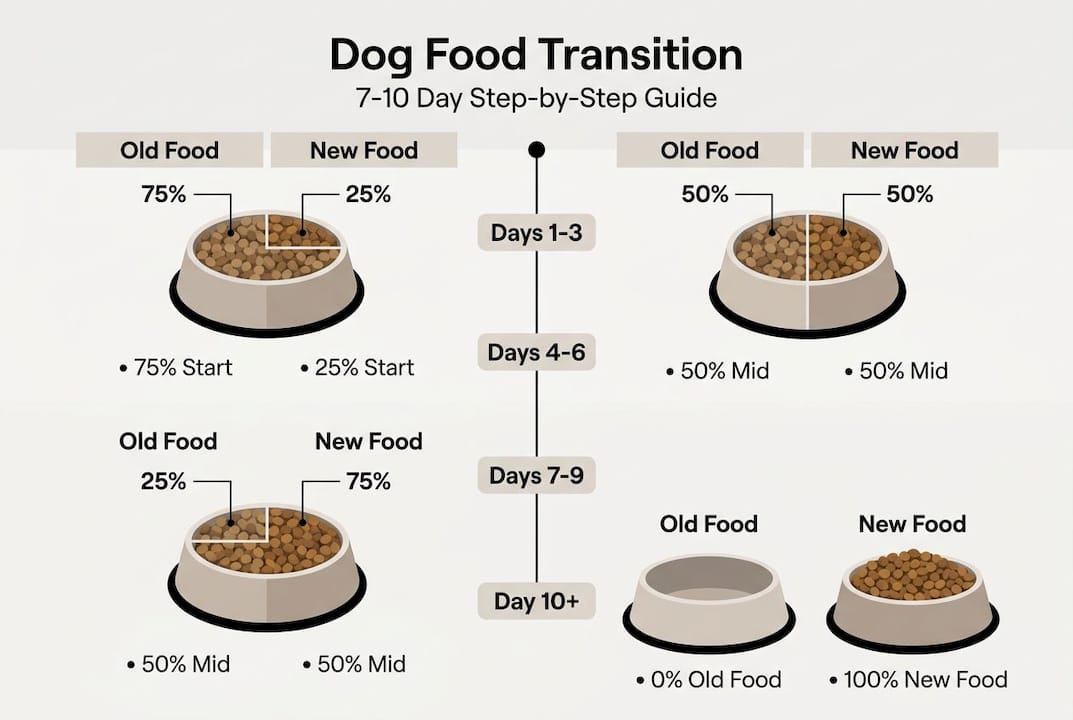
Once you have everything ready, the actual transition is straightforward. The key is patience and consistency. The standard 7 to 10 day process starts with 25% new food mixed with 75% old food, then increases incrementally until your dog is eating 100% freeze-dried.
Transition schedule:
Days 1 to 2: Mix 25% freeze-dried food with 75% current food.
Days 3 to 4: Move to 50% freeze-dried and 50% current food.
Days 5 to 6: Shift to 75% freeze-dried and 25% current food.
Days 7 to 10: Feed 100% freeze-dried food.
Days 10 to 14 (if needed): Hold at any stage longer if your dog shows sensitivity.
Mixing ratios at a glance:
Day range | New freeze-dried food | Old food |
Days 1 to 2 | 25% | 75% |
Days 3 to 4 | 50% | 50% |
Days 5 to 6 | 75% | 25% |
Days 7 to 10 | 100% | 0% |
These percentages are not random. Each jump gives your dog’s digestive enzymes and gut bacteria time to adjust to new proteins, fats, and fiber levels. Skipping steps is tempting when your dog seems to love the new food, but the gut needs the full window even when outward signs look fine.
If your dog shows mild symptoms like slightly softer stools, simply hold at the current ratio for an extra day or two before moving forward. You can learn more about how to transition dog food naturally or review detailed raw freeze-dried food steps if you want to go deeper on the specifics.

Pro Tip: Rehydrate freeze-dried food with a small amount of warm water during the first week. The added moisture makes it easier on your dog’s stomach and often makes the new food even more appealing.
How to monitor and troubleshoot digestive issues
Even with a careful plan, some dogs hit a rough patch. Knowing what to watch for makes all the difference between a minor setback and a prolonged problem.
Key signs to monitor daily:
Stool consistency (firm is good; loose or watery signals trouble)
Appetite changes (eating less or refusing meals)
Vomiting or excessive drooling
Bloating or visible stomach discomfort
Unusual lethargy or restlessness
Excessive gas
The AKC recommends pausing and reverting to the previous ratio if any of these signs appear. Do not push through significant symptoms hoping they will resolve on their own. Reverting for a few days and then trying again is always the smarter move.
“Patience during a nutrition transition is not a sign of failure. It is a sign that you are listening to your dog.”
For dogs with ongoing sensitivity, a probiotic supplement can support the gut microbiome during the adjustment period. Ask your vet about options before adding anything new. You can also explore our digestive health improvement guide for practical strategies, or review studies on dog digestive issues to understand what the research says.
According to digestive health experts, a healthy gut is foundational to overall wellness, which is exactly why protecting it during a food transition matters so much. If symptoms are severe, persistent, or include blood in the stool, contact your vet right away. Do not wait and see in those situations.
Pro Tip: Keep a simple daily log with three columns: food ratio, stool quality (rate 1 to 5), and any symptoms. This makes it easy to spot patterns and share useful information with your vet if needed.
For more guidance on navigating digestive issues during transitions, several trusted resources offer breed-specific and age-specific advice worth reviewing.
Expected outcomes and long-term success
Sticking with the gradual process pays off in ways you will notice quickly. Most owners report visible improvements within the first two to four weeks after completing the transition.
Positive signs to look for after transition:
Firmer, less odorous stools
Improved energy and enthusiasm for walks or play
Shinier, softer coat
Healthier appetite and excitement at mealtimes
Reduced gas and bloating
Fewer allergy-related symptoms like itching or paw licking
These changes happen because freeze-dried food delivers nutrition in a minimally processed form. The ingredients retain more of their natural enzymes, vitamins, and proteins compared to heavily cooked or extruded kibble. Your dog’s body simply uses the nutrition more efficiently.
Statistic callout: While veterinary consensus does not yet cite one universal upset rate from large-scale studies, experts consistently prioritize gradual transitions over quick switches to protect the gut microbiome and support long-term digestive health.
Over the long term, dogs on high-quality freeze-dried diets often show improvements in muscle tone, immune function, and overall vitality. These are not small gains. They add up to more active years and more quality time together. Our vet-approved transitions guide covers what to expect at each life stage, and our breakdown of kibble vs freeze-dried transition explains why the digestive benefits are especially significant when switching from processed food.
The PetMD transition guide also confirms that dogs who complete a proper gradual switch settle into their new diet with fewer long-term issues than those who switch abruptly. The investment of 10 to 14 days upfront protects years of health down the road.
Our perspective: What most guides don’t tell you about dog nutrition transitions
Most transition guides hand you a chart and send you on your way. What they skip is the real-world messiness of the process. Dogs do not read schedules. Some will breeze through in five days. Others will stall at 50% for two weeks. Both are normal.
The biggest mistake we see owners make is treating the timeline as a deadline rather than a guideline. When a dog shows hesitation or mild symptoms, the instinct is to push through. Slow down instead. Your dog’s daily behavior is more reliable than any chart.
All major sources, including PetMD, AKC, and others, agree on gradual transitions to avoid microbiome disruption, but none of them tell you to log your dog’s reactions daily. That single habit changes everything. It turns a vague process into a clear, manageable record that helps you make smarter decisions at every step.
We also believe the freeze dried food transition is one of the best investments you can make in your dog’s long-term health. Done right, it is not just a food change. It is a foundation for a longer, happier life together.
Next steps: Shop freeze-dried dog nutrition with expert support
You now have everything you need to make this transition with confidence. The next step is finding the right freeze-dried food to start with.
At Loyal Saints Pets, every product is crafted from human-grade, whole ingredients with no fillers, no artificial additives, and full AAFCO-balanced nutrition. Our formulas are veterinarian approved and designed to support digestive health, coat quality, energy, and longevity. Explore why freeze-dried nutrition is the gold standard for dog health, then browse our full selection and shop freeze-dried dog food to find the right fit for your dog’s age, size, and needs. Your dog deserves the best, and we are here to help you get there.
Frequently asked questions
How long does it take to transition my dog to freeze-dried food?
Most dogs complete the switch in 7 to 10 days, while puppies, seniors, and dogs with sensitive stomachs often need 10 to 14 days or more for a comfortable adjustment.
What signs should I watch for if my dog has digestive trouble?
Watch for loose stools, vomiting, reduced appetite, and excessive gas. If any of these appear, pause and revert to the previous food ratio before moving forward again.
Can I switch my dog’s food quickly if necessary?
A quick switch is only appropriate in true emergencies and should involve very small amounts with close monitoring and veterinary guidance to minimize digestive stress.
What are the main benefits of freeze-dried dog food?
Freeze-dried food preserves natural enzymes, vitamins, and proteins better than heavily processed options, supporting improved digestibility and better long-term health outcomes for your dog.
Recommended
Comments