.png)
Whole Ingredients in Pet Food: Real Benefits for Dogs
- Towanda Brunson
- Feb 17
- 7 min read

Finding truly nutritious pet food can feel like a challenge for American dog owners who want only the best for their companions. Premium freeze-dried diets often feature whole ingredients, which are chosen for their natural origins and minimal processing. This approach protects the nutritional integrity dogs need for long-term health and energy. Discover how whole ingredients offer a smarter path to supporting your dog’s vitality and enhancing their well-being.
Table of Contents
Key Takeaways
Point | Details |
Whole Ingredients Defined | Whole ingredients are minimally processed food components sourced from recognizable plant, animal, or mineral origins that preserve their nutritional integrity. |
Benefits of Whole Foods | Whole-food diets support improved digestive health, immune function, and overall canine wellness by providing nutrients in their most bioavailable form. |
Ingredient Labeling Tips | Look for named meats and whole grains at the top of ingredient lists, and avoid vague terms like ‘by-product’ or ‘animal protein’ to ensure nutritional quality. |
Avoid Processed Fillers | Processed ingredients often reduce nutritional value and can introduce health risks; prioritize whole ingredients for optimal canine nutrition. |
What Are Whole Ingredients in Pet Food
Whole ingredients in pet food represent minimally processed, natural food components that closely resemble their original state. Unlike highly refined or synthetic additives, whole ingredients are sourced directly from recognizable plant, animal, or mineral origins. Whole food ingredients are typically unaltered or minimally transformed to preserve their inherent nutritional profile and biological integrity.
According to regulatory standards, whole ingredients must meet specific criteria that distinguish them from heavily processed alternatives. These ingredients are characterized by their:
Direct sourcing from natural origins
Minimal chemical processing
Recognizable physical structure
Retention of original nutritional compounds
Absence of artificial synthetic additives
The primary categories of whole ingredients in dog nutrition include:
Whole Proteins: Fresh meats, fish, and eggs with visible muscle fibers and natural protein structures
Whole Grains: Intact grain kernels with bran, germ, and endosperm
Whole Vegetables: Fresh, unprocessed produce with visible cellular structures
Whole Fruits: Raw or minimally processed fruit components with intact fiber and nutrient content
Nutritional integrity is the core philosophy behind whole ingredient selection. These food components provide complete nutrient profiles that work synergistically, delivering vitamins, minerals, and bioactive compounds in their most natural form. Unlike isolated or synthetic nutrients, whole ingredients offer a comprehensive nutritional package that supports optimal canine health.
Pro tip: Always review ingredient labels and prioritize foods listing whole, identifiable ingredients at the top of their composition list.
Types of Whole Ingredients Used for Dogs
Whole ingredients for dogs encompass a diverse range of nutrient-rich food sources carefully selected to provide comprehensive nutrition. Common whole food ingredients include high-quality proteins, fresh produce, and minimally processed animal and plant components that deliver essential nutrients in their most natural form.
The primary types of whole ingredients used in premium dog nutrition can be categorized into several key groups:
Whole Protein Sources:
Fresh chicken muscle meat
Whole fish with intact bones and organs
Beef cuts with natural fat content
Lamb muscle tissue
Eggs with complete protein structures
Whole Plant-Based Ingredients:
Sweet potatoes with skin intact
Whole green vegetables
Berries with seeds and fiber
Pumpkin with pulp and seeds
Quinoa with complete grain structure
Nutritional Composition plays a critical role in selecting whole ingredients. Each component brings unique nutritional profiles that work synergistically to support canine health. Whole ingredients differ from processed alternatives by maintaining their original cellular structures, which preserves critical enzymes, vitamins, and mineral content.
Whole ingredients represent nature’s most complete nutritional package, delivering nutrients in their most bioavailable and recognizable form for dogs.
Beyond basic nutrition, whole ingredients offer additional benefits like improved digestibility, enhanced nutrient absorption, and natural antioxidant protection. Ingredient selection standards ensure that each component meets rigorous quality and safety requirements, guaranteeing optimal nutritional value for canine diets.

Pro tip: When evaluating dog food, prioritize brands that list whole, identifiable ingredients as their first three components to ensure maximum nutritional quality.
Nutritional Benefits of Whole-Food Pet Diets
Whole-food pet diets represent a revolutionary approach to canine nutrition, delivering comprehensive health benefits through minimally processed, natural ingredients. Whole ingredient nutrition supports comprehensive health by providing essential nutrients in their most bioavailable and natural forms, promoting optimal physical performance and long-term wellness.
The key nutritional benefits of whole-food diets include:
Enhanced Digestive Health:
Improved nutrient absorption
Natural fiber content
Reduced digestive stress
Better gut microbiome balance
Immune System Support:
Natural antioxidants
Comprehensive vitamin profiles
Mineral-rich ingredients
Enhanced cellular protection
Protein Quality stands as a cornerstone of whole-food nutrition. Unlike processed alternatives, whole protein sources provide complete amino acid profiles that support muscle development, tissue repair, and metabolic functions. These proteins maintain their original cellular structures, ensuring maximum nutrient retention and biological effectiveness.
Whole ingredients deliver nutrients exactly as nature intended, creating a nutritional blueprint that supports complete canine health and vitality.
Additionally, whole-food ingredients contribute to improved energy levels, healthier skin and coat, and more stable weight management. By minimizing synthetic additives and maximizing natural nutrient density, whole-food diets offer a holistic approach to supporting your dog’s overall well-being and longevity.
Pro tip: Gradually transition to whole-food diets by mixing new foods with current diet, allowing your dog’s digestive system to adapt smoothly and comfortably.
How to Identify Whole Ingredients on Labels
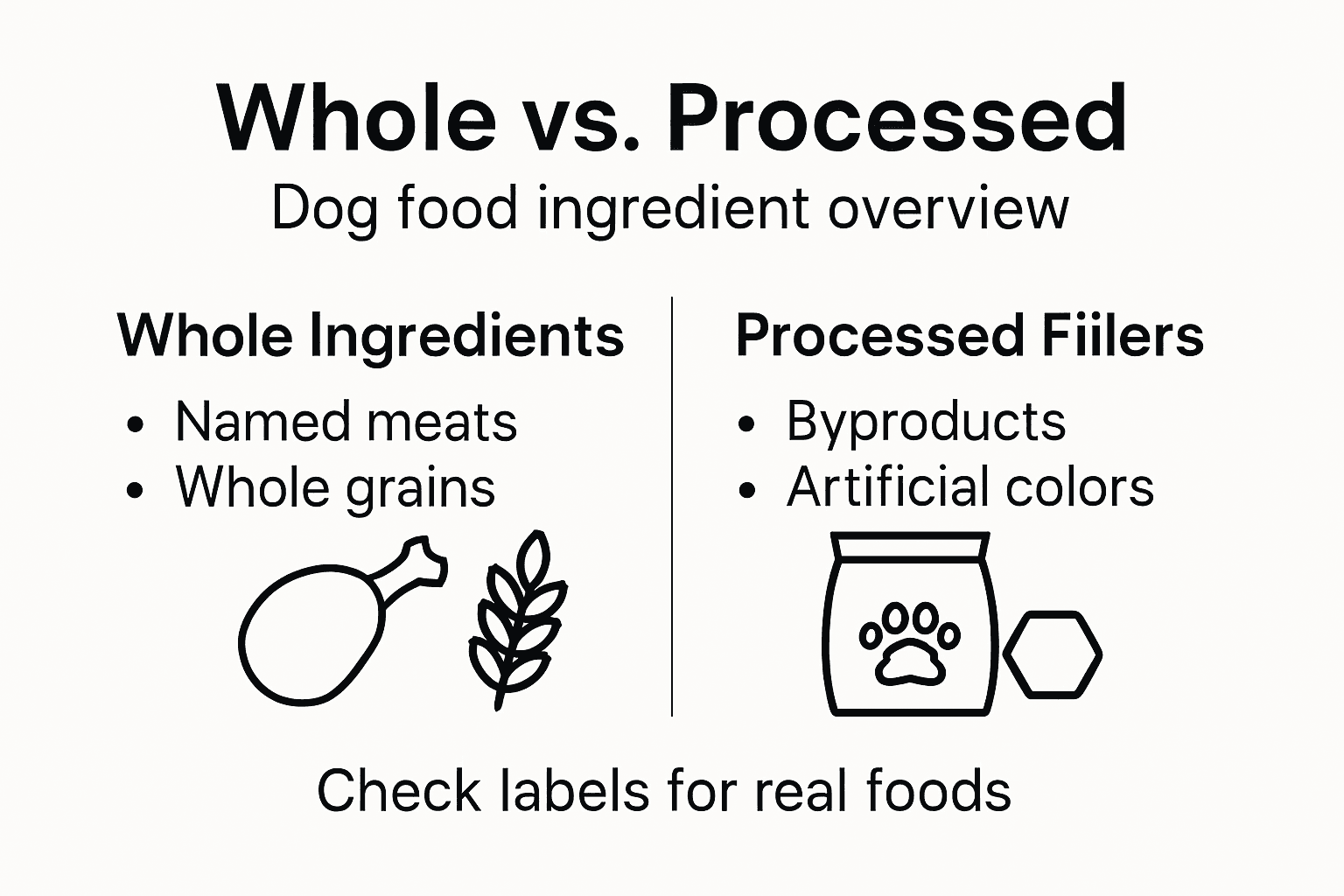
Deciphering dog food labels requires a strategic approach to understanding ingredient quality and nutritional value. Ingredient list regulations mandate that manufacturers list components in descending order by weight, providing a roadmap for evaluating whole food content in pet nutrition.
Key strategies for identifying whole ingredients include:
Recognizable Ingredient Names:
Specific meat sources (chicken, beef, lamb)
Whole grains (brown rice, quinoa)
Named vegetables and fruits
Identifiable protein sources with clear origin
Red Flags to Avoid:
Vague terms like “meat by-product”
Generic “animal protein” listings
Unspecified “animal fat”
Excessive chemical-sounding additives
Ingredient Positioning matters significantly in label interpretation. The first three ingredients typically represent the majority of the food’s composition. Whole ingredients should appear at the top of the list, indicating higher nutritional prominence and quality.
Whole ingredients are nature’s nutrition blueprint - the closer to their original form, the more nutritional value they provide.
Pet food ingredient identification requires understanding both primary and supplemental components. While whole ingredients form the nutritional foundation, minor additions like vitamins and minerals play crucial supporting roles in creating a balanced diet.
Pro tip: Carry a smartphone while shopping to quickly research unfamiliar ingredients and verify their nutritional contributions to your dog’s diet.
The following table summarizes label reading tips for dog food selection:
Label Clue | What It Means | Action for Pet Owners |
Named meats/grains | Specific, whole sources listed | Prefer these on ingredient lists |
Vague protein terms | “By-product” or “animal protein” | Avoid these as main ingredients |
Ingredient order | First three are most dominant | Look for whole-food sources first |
Chemical additives | Unusual or long names present | Research safety and necessity |
Fruit/veg visibility | Named produce types | Value diverse, whole ingredients |
Pitfalls of Processed Ingredients and Fillers
Processed ingredients and fillers represent significant nutritional compromises in commercial dog food, often masquerading as legitimate nutritional components. Ingredient processing techniques can dramatically reduce nutritional value, replacing essential nutrients with cheap, non-nutritive substances that provide minimal health benefits.
Common problematic ingredients include:
Empty Calorie Sources:
Corn and wheat gluten
Generic meat by-products
Artificial preservatives
Excessive grain fillers
Chemical flavor enhancers
Potential Health Risks:
Digestive system inflammation
Reduced nutrient absorption
Potential allergic reactions
Weight management challenges
Compromised immune response
Chemical Additives often replace natural nutritional complexity, creating a nutritionally inferior product. These synthetic components can trigger inflammatory responses and disrupt metabolic processes, potentially leading to long-term health complications for dogs.
Here’s a concise comparison of whole vs. processed ingredients in pet food:
Aspect | Whole Ingredients | Processed Ingredients |
Nutritional Density | High, minimally altered nutrients | Reduced nutrient quality |
Digestibility | Easy for dogs to digest | May cause digestive issues |
Ingredient Origin | Clear, recognizable sources | Often vague or unspecified |
Additives | Free from artificial chemicals | Contains synthetic preservatives |
Health Impact | Supports overall canine wellness | Potential for allergic reactions |
Processed ingredients are nutritional imposters - they fill space but fail to deliver genuine health value.
Natural ingredient definitions reveal that not all ingredients marketed as “natural” are truly beneficial. Consumers must carefully scrutinize labels, understanding that processing can strip away critical nutritional elements and introduce potentially harmful synthetic compounds.
Pro tip: Always read beyond the front packaging and examine the complete ingredient list to identify potential nutritional compromises in dog food.
Discover the Power of Whole Ingredients with Loyal Saints
The challenge of finding truly nutritious, minimally processed dog food is real. Many pet owners struggle with confusing labels full of fillers and artificial additives that do not deliver the natural nourishment dogs need. This article highlights the importance of whole ingredients that preserve original nutritional value and support digestive health, muscle strength, and immune function. If you want your dog to thrive on nature’s most complete nutritional package using ingredients you can recognize and trust, Loyal Saints Pets offers exactly that.
Experience the difference with our premium, freeze-dried dog foods crafted from whole proteins like fresh beef and chicken, plus wholesome vegetables and fruits. Each recipe is carefully formulated to support vitality and longevity without fillers or synthetic chemicals. Explore our Beef collection for nutrient-rich proteins and check out our Bundles | Loyal Saints that make it easy to provide balanced nutrition. Learn more about our complete range on the All Products | Loyal Saints page.

Give your dog the gift of health with real whole ingredients from Loyal Saints Pets. Start your journey today to a happier, more active pet by choosing foods that truly deliver on the promise of natural, wholesome nutrition. Shop now to enjoy free shipping on eligible orders and take the next step toward better canine wellness.
Frequently Asked Questions
What are whole ingredients in pet food?
Whole ingredients in pet food are minimally processed, natural components sourced directly from identifiable plant, animal, or mineral origins, preserving their nutritional profile and biological integrity.
What are the nutritional benefits of whole food diets for dogs?
Whole food diets enhance digestive health, support immune system function, improve energy levels, and promote healthier skin and coats, thanks to their natural nutrient density and absence of synthetic additives.
How can I identify whole ingredients on dog food labels?
To identify whole ingredients, look for recognizable ingredient names such as specific meats, whole grains, and named fruits or vegetables. Avoid vague labels like “meat by-product” or “animal fat.”
Why should I avoid processed ingredients and fillers in pet food?
Processed ingredients and fillers are often low in nutritional value and can cause digestive issues, allergic reactions, and weight management challenges for dogs due to their reduced nutrient quality and the presence of synthetic additives.
Recommended
Comments