.png)
What is limited ingredient dog food and why it matters
- wix mentor

- Mar 22
- 9 min read

You’ve probably heard that switching dog foods can solve allergy problems, but many pet parents don’t realize the issue often isn’t the food itself, it’s the sheer number of ingredients their dog’s system struggles to process. Limited ingredient dog food simplifies nutrition by reducing components that trigger reactions. This approach helps you identify problem ingredients while supporting your dog’s digestive health and overall vitality. Understanding what limited ingredient formulas offer can transform how you manage your dog’s nutrition and wellbeing.
Table of Contents
Key Takeaways
Point | Details |
Definition and scope | Limited ingredient dog foods reduce the number of components to lower allergy triggers and emphasize single protein sources paired with one or two simple carbohydrate options. |
Allergen reduction | They help identify problem ingredients, support digestion, and can improve skin and coat as reactions decline. |
Choosing the right formula | When choosing a formula look for a single animal protein and limited ingredients with no common allergens such as wheat corn soy dairy or beef and ensure it meets AAFCO standards. |
Comparison with regular foods | Limited ingredient foods offer a cleaner nutritional profile and lower risk of cross contamination compared with regular foods that use many ingredients. |
What is limited ingredient dog food?
Limited ingredient dog food contains fewer components to reduce allergy triggers and simplify your dog’s diet. These formulas typically include 8 to 12 ingredients compared to 30 or more in standard commercial foods. The focus shifts from variety to quality, using single animal protein sources like duck, turkey, or salmon paired with one or two carbohydrate sources such as sweet potatoes or peas.
Manufacturers design these foods to eliminate common allergens that cause reactions in sensitive dogs. You won’t find wheat, corn, soy, dairy, or beef in most limited ingredient formulas. These proteins and grains account for the majority of food sensitivities in dogs. By removing them, limited ingredient diets for allergies create a cleaner baseline for your dog’s nutrition.
The simplified approach offers several practical advantages:
Easier identification of problem ingredients if reactions occur
Reduced strain on digestive systems processing fewer components
Lower risk of cross contamination from multiple protein sources
Clearer nutritional profile for monitoring your dog’s intake
Fewer ingredients doesn’t mean incomplete nutrition. Reputable brands formulate these foods to meet AAFCO standards, ensuring your dog receives all essential nutrients from high quality sources. The ingredients present work harder, delivering concentrated nutrition without fillers or unnecessary additives that provide no health benefits.
Think of limited ingredient dog food as a reset button for your dog’s digestive system. When dogs struggle with chronic itching, digestive upset, or low energy, their bodies often signal ingredient overload. Stripping away excess components allows their systems to process food more efficiently. This targeted approach particularly benefits dogs with confirmed allergies or those showing signs of sensitivity like ear infections, hot spots, or irregular stools.
Benefits of limited ingredient dog food for allergic and sensitive dogs
Limited ingredient diets help manage and reduce allergic reactions by minimizing exposure to potential triggers. When your dog consumes 30+ ingredients daily, pinpointing the culprit behind itching or digestive issues becomes nearly impossible. Simplified formulas create a controlled nutritional environment where you can monitor responses clearly.

Skin health improves dramatically when allergen exposure decreases. Dogs suffering from constant scratching, red patches, or hair loss often show visible improvement within weeks of switching to limited ingredient foods. Their immune systems stop overreacting to problematic proteins, allowing skin to heal and coat quality to restore. You’ll notice reduced hot spots, less paw licking, and a shinier, fuller coat as inflammation subsides.
Digestive benefits extend beyond just reducing upset stomachs. Simpler formulas allow your dog’s gut to absorb nutrients more effectively. When the digestive system isn’t fighting inflammatory responses to multiple ingredients, it processes food more efficiently. This translates to firmer stools, less gas, and better nutrient utilization. Many owners report their dogs maintain healthier weights and show increased energy levels after transitioning.
The concentrated nutrition in quality limited ingredient foods supports overall vitality:
Higher protein density from single, premium sources
Better amino acid profiles for muscle maintenance
Improved vitamin and mineral absorption
Enhanced immune function from reduced inflammatory stress
Pro Tip: Keep a daily journal during the first month after switching to limited ingredient food. Note changes in energy levels, stool quality, scratching frequency, and coat condition. This documentation helps you track improvements and provides valuable information if you need to adjust formulas or consult your veterinarian about persistent issues.
Natural approaches to dog allergies work best when combined with limited ingredient nutrition. The simplified diet reduces internal triggers while you address external factors like environmental allergens. This comprehensive strategy gives your dog the best chance at long term relief rather than just masking symptoms with medications.
Sensitive dogs thrive on predictability. Limited ingredient formulas provide consistent nutrition day after day, allowing their bodies to establish healthy baselines. This stability proves especially valuable for dogs with inflammatory bowel disease, pancreatitis history, or chronic digestive sensitivity. Their systems handle the same high quality ingredients better than constantly adapting to varied complex formulas.
Comparing limited ingredient dog food with standard dog food
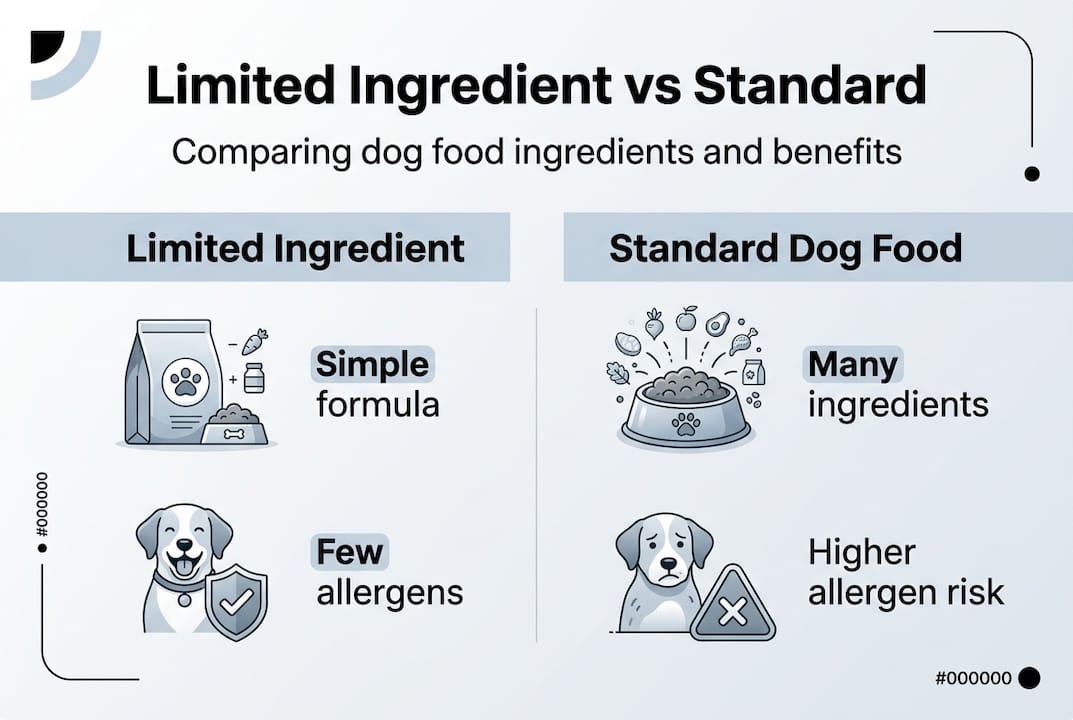
Standard commercial dog foods pack 30 to 50 ingredients into each bag, creating complex formulas that appeal to human perceptions of variety. Limited ingredient foods focus on simplified formulas compared to standard complex blends, prioritizing digestibility over diversity. This fundamental difference affects everything from allergen risk to nutritional density.
Feature | Limited ingredient dog food | Standard dog food |
Ingredient count | 8 to 12 components | 30 to 50+ components |
Protein sources | Single animal protein | Multiple proteins mixed |
Common allergens | Typically excluded | Often present |
Carbohydrate variety | 1 to 2 simple sources | Multiple grain and vegetable blends |
Additives and fillers | Minimal or none | Common for texture and cost |
Price point | Generally higher per pound | Wide range, often lower |
Allergen risk differs significantly between these approaches. Standard foods containing chicken, beef, lamb, and fish in one formula expose your dog to multiple potential triggers simultaneously. If reactions occur, identifying the specific problem ingredient becomes detective work. Limited ingredient formulas eliminate this guessing game by using single proteins, making cause and effect relationships clear.
Nutritional completeness doesn’t require ingredient quantity. Both food types can meet AAFCO standards, but they achieve balance differently. Standard foods spread nutrition across many ingredients, while limited formulas concentrate it in fewer, higher quality sources. A premium limited ingredient food using human grade turkey and sweet potatoes delivers complete nutrition more efficiently than a standard food bulked with corn, wheat middlings, and multiple meat byproducts.
Key differences in formulation philosophy:
Standard foods prioritize palatability through flavor variety
Limited ingredient foods emphasize digestibility and tolerance
Standard formulas often include cost reducing fillers
Limited options focus on nutrient density per ingredient
Choosing between these types depends on your dog’s specific needs. Healthy dogs without sensitivities may thrive on quality standard foods offering varied nutrition. However, dogs showing any signs of food intolerance, chronic inflammation, or digestive inconsistency benefit more from limited ingredient approaches. The simplified formula reduces variables while supporting optimal nutrient absorption.
Choosing healthy dog food requires understanding your individual dog’s requirements rather than following general trends. Some dogs handle ingredient variety well, while others need simplified nutrition to maintain health. Watch your dog’s responses to current food, noting energy levels, coat quality, stool consistency, and any signs of discomfort. These observations guide better decisions than marketing claims or ingredient lists alone.
Price differences reflect ingredient quality and sourcing. Limited ingredient foods cost more per pound because they use premium proteins and exclude cheap fillers. However, improved digestibility often means smaller serving sizes, potentially offsetting the higher cost. Your dog extracts more nutrition from each cup, requiring less food to maintain healthy weight and energy.
How to choose and transition your dog to limited ingredient food
Proper transition to limited ingredient diets prevents digestive upset and allows your dog’s system to adapt gradually. Rushing the change causes unnecessary stress and may trigger the very symptoms you’re trying to eliminate. A methodical approach ensures success and helps you accurately assess how your dog responds to the new formula.
Follow this transition schedule for best results:
Days 1 to 3: Mix 25% new food with 75% current food
Days 4 to 6: Increase to 50% new food, 50% current food
Days 7 to 9: Shift to 75% new food, 25% current food
Day 10 onward: Feed 100% new limited ingredient food
Watch for these positive signs during transition:
Improved stool consistency and regularity
Reduced scratching or skin irritation
Increased energy and playfulness
Better appetite and meal enthusiasm
Shinier coat and healthier skin appearance
Evaluating quality limited ingredient foods requires looking beyond marketing claims. Check the first five ingredients, which comprise the majority of the formula. You want named animal proteins like turkey, duck, or salmon listed first, not generic terms like poultry meal or meat byproducts. The carbohydrate source should be whole foods like sweet potatoes or peas rather than grain fragments or fillers.
Critical quality indicators include:
AAFCO certification for complete and balanced nutrition
Named single protein source as the first ingredient
No artificial colors, flavors, or preservatives
Minimal ingredient list with recognizable whole foods
Manufacturing standards including safety testing
Pro Tip: Start the transition during a calm period when your household routine is stable. Avoid switching foods right before travel, holidays, or other disruptions that add stress. Your dog’s digestive system adapts better when other variables remain consistent, giving you clearer feedback about how the new food affects their health.
Transitioning dogs with sensitive stomachs may require extending the schedule beyond 10 days. If you notice loose stools or reluctance to eat during any phase, slow down and spend extra days at that ratio before progressing. Some dogs need three weeks for complete transition, especially if they’ve eaten the same food for years.
Monitor water intake throughout the transition period. Some dogs drink more when adjusting to new foods, particularly if switching from wet to dry formulas or vice versa. Ensure fresh water stays available at all times. Changes in thirst patterns usually normalize within two weeks as your dog’s system adapts.
Consider protein novelty when selecting your first limited ingredient food. If your dog has eaten chicken based foods for years, starting with duck or turkey provides a fresh protein their system hasn’t developed sensitivities toward. This clean slate approach often produces faster, more noticeable improvements than switching to another chicken formula, even if it contains fewer ingredients.
Feeding picky dogs vet approved foods becomes easier with limited ingredient options because the concentrated flavors often appeal more than diluted standard formulas. The single protein source provides a stronger, more consistent taste profile that many dogs prefer once they adjust to the change.
Explore high-quality limited ingredient dog food options
Now that you understand how limited ingredient nutrition supports your dog’s health, finding the right formula becomes your next step. Quality matters significantly when choosing simplified diets because each ingredient carries more nutritional responsibility.

Loyal Saints Pets offers premium freeze dried dog food formulated with limited, human grade ingredients designed specifically for dogs with sensitivities. Our formulas exclude common allergens while delivering complete, balanced nutrition that meets AAFCO standards. Each recipe features single protein sources paired with nutrient dense fruits and vegetables, providing your dog concentrated nutrition without unnecessary fillers or additives.
The benefits of freeze dried dog food extend beyond ingredient simplicity. This gentle preservation method maintains nutritional integrity while creating highly digestible meals that sensitive stomachs handle easily. You’ll find detailed ingredient lists and nutritional information on each product page, helping you make informed decisions based on your dog’s specific needs.
Explore our selection at Loyal Saints Pets and discover how premium limited ingredient nutrition can transform your dog’s health and vitality. Every purchase supports the Pawsitive Impact program, helping dogs in need while you care for your own family member.
Frequently asked questions
What are common ingredients in limited ingredient dog foods?
Typical proteins include turkey, duck, salmon, or lamb as single animal sources. Carbohydrates come from sweet potatoes, peas, or lentils. These formulas actively avoid common allergens like wheat, corn, soy, dairy, and beef that trigger most food sensitivities in dogs.
Can limited ingredient dog food help dogs without allergies?
Yes, simplified nutrition may improve digestion and nutrient absorption for any dog. The concentrated, high quality ingredients often deliver better nutritional value than complex formulas with fillers. However, healthy dogs without sensitivities don’t necessarily need limited ingredient foods and may thrive on quality standard options.
How long does it take to see results after switching to limited ingredient dog food?
Most dogs show noticeable improvements within 4 to 6 weeks of consistent feeding. Skin conditions and digestive issues typically improve first, followed by coat quality and energy levels. Consistency matters significantly, so avoid treats or table scraps containing potential allergens during this evaluation period to get accurate results.
Are limited ingredient foods nutritionally complete?
Reputable brands formulate limited ingredient foods to provide complete, balanced nutrition despite fewer components. Look for AAFCO certification confirming the food meets nutritional standards for your dog’s life stage. Quality limited ingredient foods concentrate essential nutrients in fewer, premium sources rather than spreading them across many lower quality ingredients.
Recommended
Comments