.png)
Top healthy pet diet trends for premium dog nutrition
- wix mentor

- 3 days ago
- 10 min read

You might think premium dog food is just marketing hype, but emerging science tells a different story. Human-grade fresh foods deliver measurable metabolic improvements in senior dogs, while functional ingredients now target specific health concerns with clinical precision. As pet parents increasingly view their dogs as family members deserving the same nutritional care humans receive, 2025 brings transformative diet trends that go far beyond basic kibble. Understanding these evidence-backed approaches empowers you to make informed choices that genuinely enhance your dog’s vitality, longevity, and quality of life.
Table of Contents
Key Takeaways
Point | Details |
Human grade benefits | Senior dogs fed human grade fresh diets show improved branched chain amino acid metabolism, better blood glucose regulation, and reduced inflammatory markers, supporting energy, healthier weight management, and potentially longer lifespans. |
Targeted health benefits | Functional ingredients target gut microbiome health, joint mobility, immune function, cognitive performance, and stress management with clinically informed precision. |
Plant based monitoring | Plant based diets require vet monitoring but show potential for health and longevity when appropriately supervised. |
Personalization and sustainability | Personalization and sustainability are major trends reshaping premium pet foods and how owners choose diets for their dogs. |
Premium and minimally processed pet foods: redefining quality nutrition
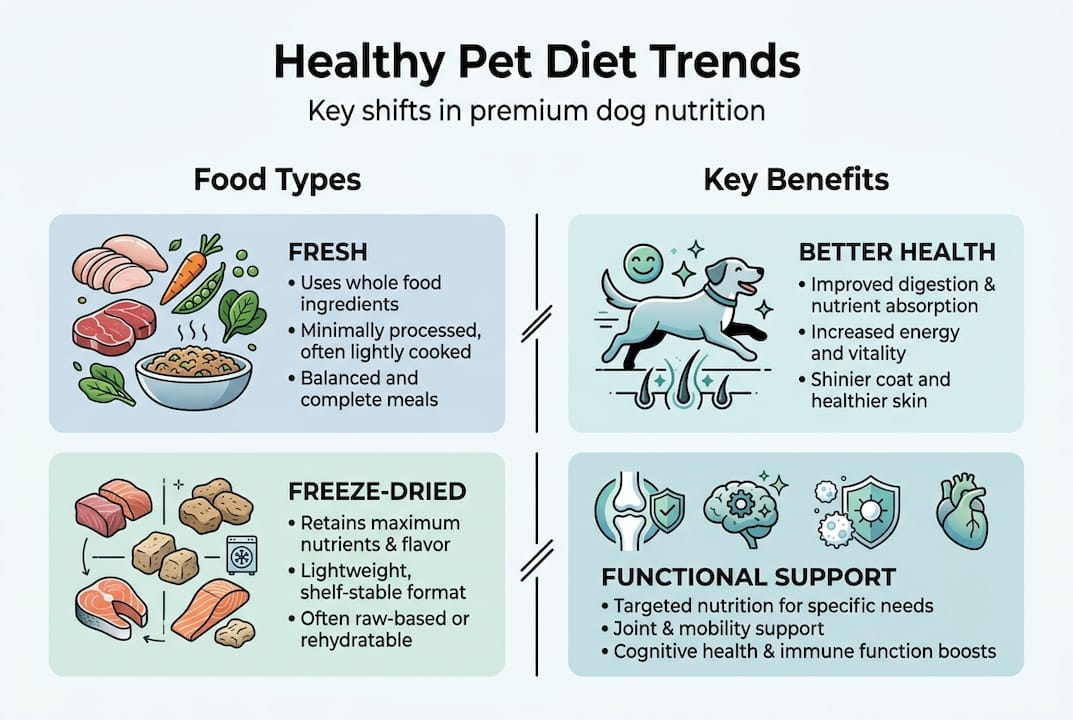
The premium pet food revolution centers on human-grade fresh and minimally processed options that mirror the whole food movement in human nutrition. These products use ingredients meeting USDA standards for human consumption, manufactured in facilities approved for human food production, and processed minimally to preserve nutritional integrity. Unlike conventional kibble subjected to high-heat extrusion that degrades nutrients and creates potentially harmful compounds, premium fresh foods retain bioavailable vitamins, enzymes, and proteins.
The market validates this shift dramatically. US pet food sales reached $65.8 billion in 2024, with fresh food segments experiencing explosive growth as owners prioritize quality over convenience. Clinical research backs the enthusiasm. Senior dogs fed human-grade fresh diets show significantly improved branched-chain amino acid metabolism, better blood glucose regulation, and reduced inflammatory markers compared to those eating traditional kibble. These metabolic advantages translate to sustained energy, healthier weight management, and potentially extended lifespans.
The benefits extend beyond metabolism:
Superior nutrient absorption from whole food sources without synthetic vitamin fortification
Reduced advanced glycation end products that accelerate aging and inflammation
Better digestibility leading to smaller, firmer stools and less waste
Enhanced palatability encouraging consistent eating in picky or senior dogs
Lower contamination risk from simplified ingredient lists and stricter quality controls
Pro Tip: Verify human-grade claims by checking if the manufacturer states products are “edible for humans” and produced in USDA-inspected facilities. Generic terms like “human-quality” or “restaurant-grade” lack regulatory meaning and may not deliver the same benefits of minimally processed pet food.
The nutritional differences become clear when comparing fresh versus traditional approaches:
Nutritional Factor | Fresh Human-Grade Food | Traditional Kibble |
Protein bioavailability | 85-95% digestible | 65-75% digestible |
Enzyme activity | Preserved through gentle processing | Destroyed by high-heat extrusion |
Moisture content | 60-80% (natural hydration) | 8-12% (requires water intake) |
Advanced glycation end products | Minimal formation | Elevated from high-heat processing |
Synthetic vitamin needs | Minimal (nutrients intact) | Heavy fortification required |
Transitioning to human-grade pet food requires gradual introduction over 7-10 days to prevent digestive upset. Start with 25% fresh food mixed with current diet, increasing by 25% every two days. Monitor stool consistency and energy levels throughout the transition. Most dogs adapt quickly, showing increased enthusiasm at mealtimes and improved coat condition within weeks.
Functional ingredients transforming pet health
Functional ingredients represent targeted nutritional compounds added specifically to address health concerns beyond basic sustenance. These science-backed additives support gut microbiome health, joint mobility, immune function, cognitive performance, and stress management. The approach mirrors personalized human supplementation, recognizing that individual dogs face unique health challenges requiring specialized nutritional support.
Owner adoption rates confirm mainstream acceptance. 45-46% of pet parents now prioritize functional pet food, seeking products that deliver wellness benefits beyond calories and macronutrients. Joint supplements lead the category with 129% growth since 2018, driven by aging pet populations and increased awareness of arthritis prevention. Probiotics, omega fatty acids, and adaptogens follow closely as owners recognize connections between gut health, inflammation, and overall vitality.
The most impactful functional ingredient categories include:
Joint support compounds like glucosamine, chondroitin, MSM, and green-lipped mussel for cartilage health and mobility
Probiotics and prebiotics establishing beneficial gut bacteria that improve digestion and immune response
Omega-3 fatty acids from fish oil reducing inflammation and supporting brain, heart, and skin health
Antioxidants including blueberries, turmeric, and vitamin E combating oxidative stress and cellular aging
Adaptogens such as ashwagandha and L-theanine managing stress and promoting calm behavior
Cognitive support nutrients like DHA, phosphatidylserine, and medium-chain triglycerides for senior brain function
Evidence supports these applications when ingredients reach therapeutic dosages. Studies show glucosamine and chondroitin combinations reduce arthritis pain and improve mobility scores in dogs with degenerative joint disease. Probiotic strains like Lactobacillus and Bifidobacterium species enhance digestive health and may reduce allergic responses. Omega-3 supplementation demonstrably lowers inflammatory markers and improves coat quality. The key lies in appropriate dosing based on body weight and specific health needs.
Pro Tip: Introduce functional ingredients one at a time with 2-3 week intervals to accurately assess individual responses and identify any sensitivities. Work with your veterinarian to determine appropriate dosages, as over-supplementation can cause imbalances. Choosing premium pet food with built-in functional ingredients often provides better absorption than standalone supplements added to meals.
Integrating functional nutrition requires understanding your dog’s specific needs. Senior dogs benefit most from joint support and cognitive enhancers. Active working dogs need anti-inflammatory omega-3s and adaptogens for recovery. Dogs with sensitive digestion respond well to probiotic-rich foods. Anxious pets show improvement with calming compounds. Balanced pet diets incorporating appropriate functional ingredients create comprehensive wellness strategies addressing individual health profiles rather than generic nutritional adequacy.

Plant-based and alternative diets: benefits and precautions
Plant-based canine diets generate intense debate within veterinary and nutritional communities. While dogs evolved as facultative carnivores capable of digesting both animal and plant materials, questions persist about long-term health outcomes from entirely plant-sourced nutrition. Proponents cite environmental sustainability, ethical considerations, and potential benefits for dogs with specific protein allergies. Skeptics worry about nutritional adequacy, amino acid profiles, and increased processing required to create complete plant-based formulas.
Research provides nuanced answers. Dogs can remain healthy on well-formulated plant-based diets when properly supplemented with essential nutrients like taurine, L-carnitine, vitamin B12, and balanced amino acids. However, no commercial plant-based diet currently meets all AAFCO guidelines without synthetic supplementation, raising questions about bioavailability and long-term sufficiency. The FDA warns about DCM risk with grain-free and legume-heavy formulas, many of which overlap with plant-based products using peas, lentils, and chickpeas as primary protein sources.
Critical supplements for plant-based canine diets include:
Taurine for heart and eye health, as plant sources provide inadequate amounts
L-carnitine supporting fat metabolism and cardiac function
Vitamin B12 found exclusively in animal products, requiring synthetic supplementation
Complete amino acid profiles ensuring adequate methionine, lysine, and tryptophan
Calcium and phosphorus in proper ratios for bone health
Vitamin D3 for calcium absorption and immune function
DHA and EPA omega-3s from algae sources for brain and anti-inflammatory support
Veterinary monitoring becomes essential for dogs eating plant-based diets. Schedule bloodwork every 6 months initially, checking taurine levels, cardiac markers, complete blood counts, and organ function panels. Annual echocardiograms screen for dilated cardiomyopathy, the heart condition linked to certain diet formulations. Watch for signs of deficiency including lethargy, poor coat quality, muscle wasting, or exercise intolerance.
Diet Type | Primary Protein | Supplementation Needs | Monitoring Requirements | Best For |
Conventional animal-based | Whole meat sources | Minimal if balanced | Annual wellness exams | Most dogs, proven track record |
Plant-based complete | Legumes, grains, vegetables | Extensive synthetic additions | Biannual bloodwork, cardiac screening | Dogs with severe protein allergies |
Hybrid flexitarian | Mix of animal and plant | Moderate, depends on ratio | Annual exams, occasional labs | Environmentally conscious owners |
The hybrid approach offers middle ground, incorporating plant-based meals 2-3 times weekly while maintaining animal protein as the dietary foundation. This strategy reduces environmental impact and food costs while minimizing nutritional risk. Rotate between high-quality animal-based and carefully formulated plant-based options, ensuring overall protein quality remains high and essential nutrients stay adequate.
Transitioning to alternative diets requires patience and observation. Introduce new proteins gradually over 10-14 days, monitoring digestive responses and stool quality. Some dogs adapt easily while others experience gas, loose stools, or reduced appetite. Premium dog food selection should prioritize AAFCO feeding trial certification over formulation-only approval, indicating real dogs thrived on the diet during testing rather than meeting theoretical nutrient profiles on paper.
Personalization, sustainability, and tech innovations in pet nutrition
Personalized nutrition tailors dietary recommendations to individual dogs based on age, breed, activity level, health conditions, genetic markers, and even gut microbiome composition. This precision approach replaces one-size-fits-all feeding guidelines with customized meal plans optimizing nutrient ratios for specific needs. Companies now offer DNA testing revealing breed-specific nutritional requirements and disease predispositions, while microbiome analysis identifies beneficial and harmful bacterial populations suggesting probiotic interventions.
Sustainability practices address pet food’s environmental footprint through responsible sourcing, alternative proteins, and eco-friendly packaging. The pet food industry consumes significant agricultural resources, with meat production generating substantial greenhouse emissions. Forward-thinking brands source proteins from regenerative farms, incorporate insect-based ingredients providing complete amino acids with minimal environmental impact, and use recyclable or compostable packaging. Transparency in supply chains allows conscious consumers to align purchasing decisions with environmental values.
Technology integration revolutionizes feeding management and health monitoring. Smart feeders and connected devices enable precise portion control, scheduled meals for multiple pets, and real-time consumption tracking. Apps analyze eating patterns, identifying appetite changes signaling health issues before obvious symptoms appear. Some systems integrate with veterinary records, alerting professionals to concerning trends and facilitating early intervention.
Implementing personalized, sustainable, and tech-enhanced nutrition:
Complete a comprehensive health assessment with your veterinarian, discussing current diet, health concerns, activity levels, and wellness goals to establish baseline needs
Consider DNA or microbiome testing if your dog has chronic health issues, unexplained symptoms, or breed-specific disease risks requiring tailored nutrition
Research brands with transparent sustainability practices, including ingredient sourcing, manufacturing processes, and environmental commitments aligned with your values
Evaluate smart feeding technology based on your household needs, such as portion control for weight management or scheduled feeding for multiple pets
Start with one personalized element, whether custom meal plans, sustainable brand switching, or smart feeder adoption, allowing adaptation before adding complexity
Monitor and adjust regularly, tracking health markers, body condition, energy levels, and coat quality to assess whether personalized approaches deliver expected benefits
Maintain open communication with your veterinary team, sharing data from apps or devices and collaborating on nutrition adjustments as needs evolve
Pro Tip: Technology enhances but shouldn’t replace human observation and intuition. Smart feeders provide valuable data, yet you know your dog’s normal behavior best. Use tech insights to identify patterns worth investigating, then combine digital information with hands-on assessment and professional veterinary guidance for optimal decision making.
Personalization extends beyond ingredients to feeding schedules, portion sizes, and treat allowances. Large breed puppies require carefully controlled growth rates preventing joint problems, while senior dogs benefit from smaller, more frequent meals supporting slower metabolism. Active working dogs need higher caloric density than sedentary companions. Understanding human-grade pet nutrition within personalized frameworks ensures dietary choices match individual requirements rather than generic recommendations.
The convergence of personalization, sustainability, and technology creates comprehensive nutrition management systems. Imagine feeding plans automatically adjusting for seasonal activity changes, ingredient sourcing verified through blockchain transparency, and health alerts generated from subtle eating pattern shifts. These innovations transform pet nutrition from guesswork into precision wellness, empowering owners to provide truly optimized care.
Explore premium fresh and freeze dried pet foods at Loyal Saints
The healthy diet trends reshaping pet nutrition in 2025 share common themes: quality ingredients, minimal processing, functional benefits, and personalized approaches. Loyal Saints embodies these principles through carefully curated premium dog food options emphasizing human-grade whole ingredients, freeze-dried freshness, and veterinarian-approved formulations. Our products align perfectly with the movement toward minimally processed, nutrient-dense foods delivering measurable health improvements.

Explore our freeze dried dog food collection featuring single-ingredient proteins, complete balanced meals, and functional treat options supporting the wellness goals discussed throughout this guide. Each product meets AAFCO standards while delivering the superior bioavailability and nutrient preservation that distinguish premium nutrition from conventional alternatives. Whether you’re transitioning to human-grade fresh foods, adding functional ingredients, or seeking sustainable options, Loyal Saints provides the quality your family member deserves. Free shipping on qualifying orders makes premium nutrition accessible and convenient.
Frequently asked questions
What are the main benefits of feeding human-grade pet food?
Human-grade pet food provides superior nutrient bioavailability because ingredients meet human consumption standards and undergo minimal processing that preserves natural vitamins, enzymes, and proteins. Clinical studies show senior dogs eating human-grade fresh diets demonstrate improved metabolic markers, better amino acid metabolism, and reduced inflammatory compounds compared to traditional kibble. These advantages translate to sustained energy, healthier digestion, improved coat quality, and potentially extended lifespans through reduced cellular aging.
How can functional ingredients help my dog’s health?
Functional ingredients target specific health concerns beyond basic nutrition, offering therapeutic benefits for gut health, joint mobility, immune function, cognitive performance, and stress management. Compounds like glucosamine support cartilage health in arthritic dogs, probiotics enhance digestive function and immune response, omega-3 fatty acids reduce inflammation throughout the body, and adaptogens promote calm behavior in anxious pets. When choosing premium pet food with appropriate functional ingredients at therapeutic dosages, you create personalized wellness strategies addressing your dog’s individual health profile rather than generic nutritional adequacy.
Are plant-based diets safe for dogs?
Plant-based diets can support canine health when properly formulated with essential supplements including taurine, L-carnitine, vitamin B12, complete amino acids, and omega-3 fatty acids from algae sources. However, they require veterinary monitoring with biannual bloodwork checking taurine levels, cardiac markers, and organ function, plus periodic echocardiograms screening for dilated cardiomyopathy. Not all dogs tolerate plant-based nutrition equally, and no commercial formula currently meets AAFCO guidelines without synthetic supplementation. Premium dog food selection should prioritize AAFCO feeding trial certification over formulation-only approval, confirming real dogs thrived during testing.
What technology trends improve pet feeding in 2025?
Smart feeders enable precise portion control, scheduled meals for multiple pets, and real-time consumption tracking that identifies appetite changes signaling health issues before obvious symptoms appear. Connected apps analyze eating patterns over time, integrate with veterinary records, and generate alerts for concerning trends facilitating early intervention. Some systems combine feeding management with activity monitoring and weight tracking, creating comprehensive wellness dashboards. When integrated with human-grade pet nutrition and veterinary guidance, these technologies transform pet care from reactive problem-solving into proactive health optimization through data-driven insights and personalized adjustments.
Recommended
Comments