.png)
Limited Ingredient Diets for Dogs: What the Evidence Shows
- wix mentor

- 2 hours ago
- 9 min read

TL;DR:
Most dog itching is caused by environmental triggers rather than food, making dietary changes less effective.
Limited ingredient diets are helpful for some dogs with confirmed food allergies but are not a universal solution and should be chosen carefully with veterinary guidance.
Your dog is scratching constantly, and someone at the dog park suggests switching to a limited ingredient diet. It sounds reasonable. But here’s the surprising part: most dog itching is not caused by food at all. Environmental allergens, fleas, and skin infections are far more common triggers than anything in your dog’s bowl. Limited ingredient diets, often called LIDs, are genuinely helpful for some dogs, but they are not the universal fix many pet owners expect. This guide breaks down the real science, when these diets work, when they fall short, and how to use them correctly.
Table of Contents
Key Takeaways
Point | Details |
Food allergies are rare | Most dog skin and digestive issues are not caused by food allergies, so LIDs are often unnecessary. |
Ingredient control matters | Prescription diets are much more reliable for allergy trials than over-the-counter LID foods. |
Elimination process is key | Proper elimination diet trials should last 8-12 weeks and be managed carefully. |
Consult your vet first | Veterinary guidance helps identify real allergy sources and avoid wasted effort. |
Shop quality foods | Choose foods with clear sourcing and minimal ingredients to reduce allergy risks. |
Understanding food allergies and digestive sensitivities in dogs
Food allergies and environmental allergies look almost identical from the outside. Both cause itchy skin, ear infections, and general discomfort. That’s exactly why so many dog owners end up chasing food solutions when the real problem is something like pollen, dust mites, or mold. Understanding the difference is the first step toward actually helping your dog feel better.
A true food allergy happens when your dog’s immune system mistakenly identifies a specific protein as a threat and mounts a defensive response every time that protein is eaten. This is different from a food intolerance, which involves digestive upset without an immune reaction, and very different from environmental allergies, which are triggered by inhaled or contact allergens. The symptoms can overlap, which makes diagnosis genuinely tricky without proper testing.
Food allergies account for only 10-15% of allergic dermatitis cases in dogs, with some estimates reaching up to 20%. That means the vast majority of itchy, uncomfortable dogs are reacting to something in their environment rather than their food. Jumping to a limited ingredient diet before ruling out environmental causes can waste months of your time and your dog’s comfort.
That said, food allergies and digestive sensitivities do affect a meaningful number of dogs, and when they are the real issue, diet changes make a significant difference. Common signs that food may genuinely be the problem include:
Chronic ear infections that keep coming back despite treatment
Gastrointestinal symptoms like loose stools, vomiting, or excessive gas
Itching that persists year-round rather than seasonally
Skin problems concentrated around the face, paws, and belly
Symptoms that began shortly after introducing a new food
Understanding what LID means and when it applies to your specific dog’s situation is essential before making any dietary changes. A clear picture of symptoms and history gives you and your vet a much better starting point.
If your dog’s itching follows a seasonal pattern, worsening in spring or fall, environmental allergens are almost certainly the primary cause rather than food. Talk to your vet before investing in a dietary overhaul.
What makes a diet ‘limited ingredient’?
The phrase “limited ingredient diet” sounds straightforward, but it covers a wide range of products with very different actual formulations. At its core, a LID is designed to minimize the number of protein and carbohydrate sources in a food, reducing the chances of triggering an immune response if a specific ingredient is the culprit.
Most LIDs are built around a single novel protein, meaning a protein source your dog has not eaten before, such as duck, venison, rabbit, or salmon. They pair that with a single carbohydrate source, often something like sweet potato, peas, or lentils. The logic is simple: fewer ingredients means fewer potential triggers, and it also means it’s easier to identify exactly what caused a reaction if one occurs.
The ingredients most commonly avoided in LID formulas include:
Beef and beef by-products (one of the most common dog allergens)
Dairy products including cheese and yogurt
Chicken and chicken meal, despite being popular in standard dog foods
Wheat, corn, and soy, which appear frequently in conventional formulas
Eggs, which are sometimes reactive for sensitive dogs
Artificial additives, preservatives, and fillers that can complicate sensitivity tracking
Reading the ingredient list carefully is non-negotiable when choosing a LID. The front of the bag might say “single protein” while the ingredient panel reveals multiple protein meals hiding further down the list. This is surprisingly common in the pet food market.
Knowing how to choose genuinely allergy-friendly foods comes down to reading beyond the marketing language and understanding what is actually in the formula. Short, clear ingredient lists with named protein sources and recognizable whole foods are what you are looking for.
Pro Tip: When evaluating a LID, count the number of distinct protein sources listed anywhere in the ingredients, including in vitamins and supplements added to the food. Some dogs react to even trace amounts of hidden proteins in those added nutrients.
Reliability issues: Prescription vs. over-the-counter LID foods
Here is where things get genuinely important, and where many well-meaning dog owners run into trouble. Not all limited ingredient diets are created equal, and the gap in quality between prescription formulas and over-the-counter options is significant.

Prescription hydrolyzed protein diets, such as Hill’s z/d or Royal Canin HP, work differently from standard LIDs. Rather than simply reducing the number of ingredients, these diets break proteins down into tiny molecular fragments that are too small for the immune system to recognize as a threat. This is called hydrolysis, and it essentially neutralizes the allergenic potential of the protein entirely. These formulas are also manufactured under strict controls specifically designed to prevent cross-contamination with other protein sources.
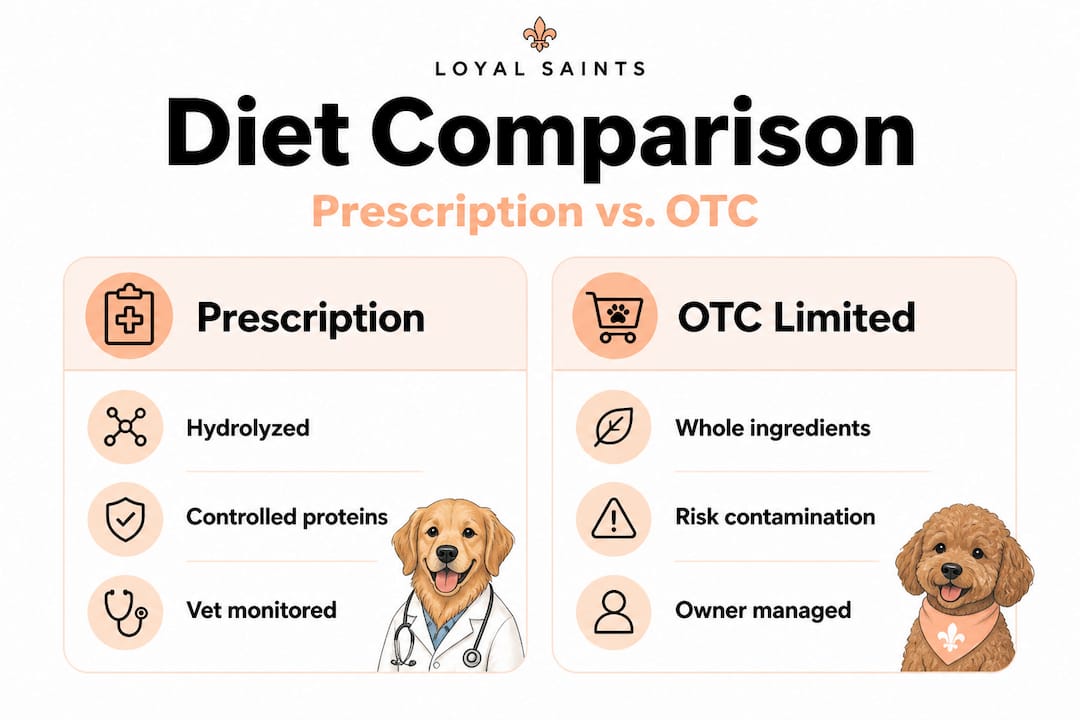
Over-the-counter LIDs, on the other hand, are often produced on shared manufacturing lines alongside conventional pet foods. This creates a real risk of cross-contamination with proteins that are not listed on the label. Studies show significant contamination in many OTC LID products, meaning a food labeled as “salmon and sweet potato” may also contain detectable levels of chicken, beef, or other proteins from a previous batch run on the same equipment.
Here is a clear comparison of the two options:
Feature | Prescription hydrolyzed diets | OTC limited ingredient diets |
Protein modification | Hydrolyzed to tiny fragments | Whole or lightly processed |
Cross-contamination risk | Very low, strict controls | Moderate to high |
Diagnostic reliability | High | Lower |
Veterinary oversight needed | Yes | Not always required |
Cost | Higher | Lower |
Best use | Allergy diagnosis and management | General sensitivity support |
Empirical data supports the efficacy of hydrolyzed diets and highlights the real limitations of OTC options. Hydrolyzed diets consistently show higher success rates in formal elimination diet trials compared to their over-the-counter counterparts.
This does not mean OTC LIDs have no value. For dogs with mild sensitivities or as a long-term maintenance diet after a confirmed food allergy has been identified, a high-quality OTC LID from a reputable manufacturer can be very effective. The issue is using an OTC LID as a diagnostic tool, because contamination can muddy the results and leave you with no clear answer after weeks of effort.
Following a clear plan for allergy management steps and using the right type of diet for the right purpose makes the entire process more productive. Your vet can guide you on whether a prescription or OTC option is the right starting point for your specific dog.
Applying elimination diets for diagnosis and management
An elimination diet is the most reliable way to confirm a food allergy in dogs. The process requires patience, consistency, and a willingness to be strict for a sustained period. Here is a practical step-by-step approach:
Start with your vet. Before changing your dog’s food, get a professional assessment to rule out environmental allergies, infections, or other causes that wouldn’t respond to dietary changes anyway.
Choose an appropriate LID or hydrolyzed diet. For diagnostic purposes, a prescription hydrolyzed diet offers the most reliable results, as it minimizes the chance of accidental allergen exposure.
Feed only the chosen food for 8-12 weeks. This timeline is critical. Many owners stop too early. Immune responses can take weeks to fully settle, so shorter trials often produce false negatives.
Eliminate all other food sources. This includes treats, chews, flavored supplements, table scraps, and even flavored toothpaste. Any hidden protein source can invalidate the entire trial.
Track symptoms weekly. Keep a simple log of your dog’s scratching frequency, stool quality, ear condition, and energy levels. This gives you objective data to share with your vet.
Reintroduce previous foods after the trial. If symptoms improved, reintroducing the old food and watching for a return of symptoms confirms the food allergy diagnosis.
The most common reason elimination diets fail is that owners are not strict enough about eliminating all other food sources. One beef-flavored treat per day can be enough to keep a beef-allergic dog reacting throughout the entire eight-week trial. Studies on prescription diets consistently highlight that trial integrity is just as important as diet choice when it comes to getting accurate results.
For persistent symptoms or failed elimination trials, your vet may recommend allergy testing or referral to a veterinary dermatologist. There are also excellent resources available for managing food allergies and finding proven allergy solutions that work for real dogs in real households.
Pro Tip: Use a plain notebook or phone app to photograph your dog’s skin and ears weekly during the elimination trial. Visual documentation makes it much easier to see gradual improvement that you might otherwise miss day to day.
Why conventional wisdom on limited ingredient diets needs updating
Here is an honest perspective worth sharing: the limited ingredient diet market has grown far faster than the science supporting it. Walk into any pet store and you’ll find dozens of products with “limited ingredient” on the label, many of them from brands that prioritize marketing over manufacturing controls. The result is that well-meaning dog owners spend significant money on products that may not deliver what’s promised.
The uncomfortable truth is that most dogs dealing with itching, skin issues, or digestive complaints are not food-allergic dogs. Hydrolyzed diets are more reliable for actual diagnosis, but even they cannot help a dog whose symptoms come from seasonal pollen or dust mites. The industry has done a good job of making food allergies feel like the obvious culprit when a dog is uncomfortable, because food is something owners feel they can control and change.
What we believe is that allergy-free nutrition requires both smart food choices and smart diagnosis. A high-quality food with clean, transparent ingredients matters enormously, but it is one part of a larger picture. The real shift in thinking is moving away from “let’s change the food and see what happens” toward “let’s figure out what’s actually causing this and then choose the right food purposefully.”
LIDs are a genuine tool with real value. They just need to be used correctly, with realistic expectations, and with veterinary guidance when symptoms are significant. Stricter manufacturing standards across the OTC LID category would help enormously, and this is something the pet food industry needs to prioritize as more families turn to these products.
Find high-quality, allergy-friendly dog food options
If your dog is dealing with sensitivities and you want a food that starts with truly clean, transparent ingredients, we’ve got something worth exploring.

At Loyal Saints Pets, our freeze-dried dog food is crafted from human-grade whole proteins, fruits, and vegetables with no fillers, no artificial additives, and no hidden ingredients. Explore the freeze-dried food benefits that make our formula a trusted choice for dogs with sensitivities, including minimal processing that preserves nutrients and a short, honest ingredient list you can actually read and understand. When you are ready to take the next step, shop allergy-friendly foods and find an option that supports your dog’s health from the inside out. More tail wags are coming.
Frequently asked questions
Are limited ingredient diets effective for all dog allergies?
No. LIDs are most helpful for confirmed food allergies, which cause only 10-20% of allergic skin conditions in dogs. They offer no benefit for environmental allergies.
How do I know if my dog needs a limited ingredient diet?
Suspect a food allergy if your dog has chronic digestive issues or year-round itching that does not respond to standard treatments. Always consult your vet before switching foods.
What are the risks with over-the-counter LID dog foods?
OTC LIDs risk undeclared protein contamination from shared manufacturing lines, which can make them unreliable for diagnosing food allergies even when used correctly.
How long should an elimination diet last for allergy testing in dogs?
Most veterinarians recommend running an elimination diet trial for 8-12 weeks to get accurate results, since immune reactions take time to fully resolve.
Are prescription diets better for allergy diagnosis in dogs?
Yes. Prescription hydrolyzed diets are more reliable for diagnosis than OTC LIDs and show higher success rates in studies because they eliminate contamination risk and fully neutralize protein allergens.
Recommended
Comments