.png)
Home Pet Food Preparation Workflow: A Dog Owner's Guide
- wix mentor
- 1 day ago
- 8 min read

TL;DR:
A home pet food preparation workflow involves careful ingredient measurement, vet-approved recipes, proper cooking, and structured storage to ensure nutritionally complete meals for dogs. Many homemade diets fail to meet basic nutritional standards, requiring tools like a kitchen scale, thermometer, and formulation software, along with veterinary guidance. Consistent routine, precise supplementation, and professional validation are essential for maintaining your dog’s health with home-cooked meals.
A home pet food preparation workflow is a systematic process involving carefully measured ingredients, vet-approved recipes, precise cooking, and meticulous storage to ensure your dog receives safe, balanced, and nutritious meals every day. Known in veterinary nutrition circles as “home-prepared diet management,” this approach demands more than good intentions. Research shows only about 6% of owner-prepared homemade dog diets meet basic nutritional adequacy criteria when rigorously assessed. That number should stop you in your tracks. It means the gap between a loving effort and a genuinely complete meal is wide, and closing it requires structure, tools like BalanceIT formulation software, and regular input from a board-certified veterinary nutritionist.
What tools do you need before starting your home pet food preparation workflow?
Getting your kitchen ready before you cook a single batch is the step most dog owners skip. The right equipment makes your pet food meal prep repeatable, accurate, and safe.
Core equipment you need:
A digital kitchen scale accurate to 1 gram (not measuring cups, which introduce volume errors)
A food thermometer to verify internal cooking temperatures
Airtight glass or BPA-free plastic containers for refrigerator storage
Freezer-safe bags or silicone molds for portioning frozen batches
Large mixing bowls and a dedicated cutting board used only for pet food prep
Beyond hardware, ingredient quality matters just as much. Use human-grade proteins, whole vegetables, and grains sourced from reputable suppliers. Vet-approved recipes are non-negotiable. A recipe printed from a random blog is not the same as one formulated by a professional using AAFCO or NRC standards. You can use the dog food ingredient analyzer at Loyalsaintspets to evaluate nutrient completeness before you ever turn on the stove.
Tool | Function |
Digital kitchen scale | Gram-level accuracy for every ingredient |
Food thermometer | Confirms safe internal cooking temperatures |
Airtight containers | Prevents oxidation and bacterial growth during refrigeration |
Freezer-safe molds | Portions individual meals for clean, waste-free thawing |
BalanceIT software | Formulates and validates nutrient completeness in recipes |
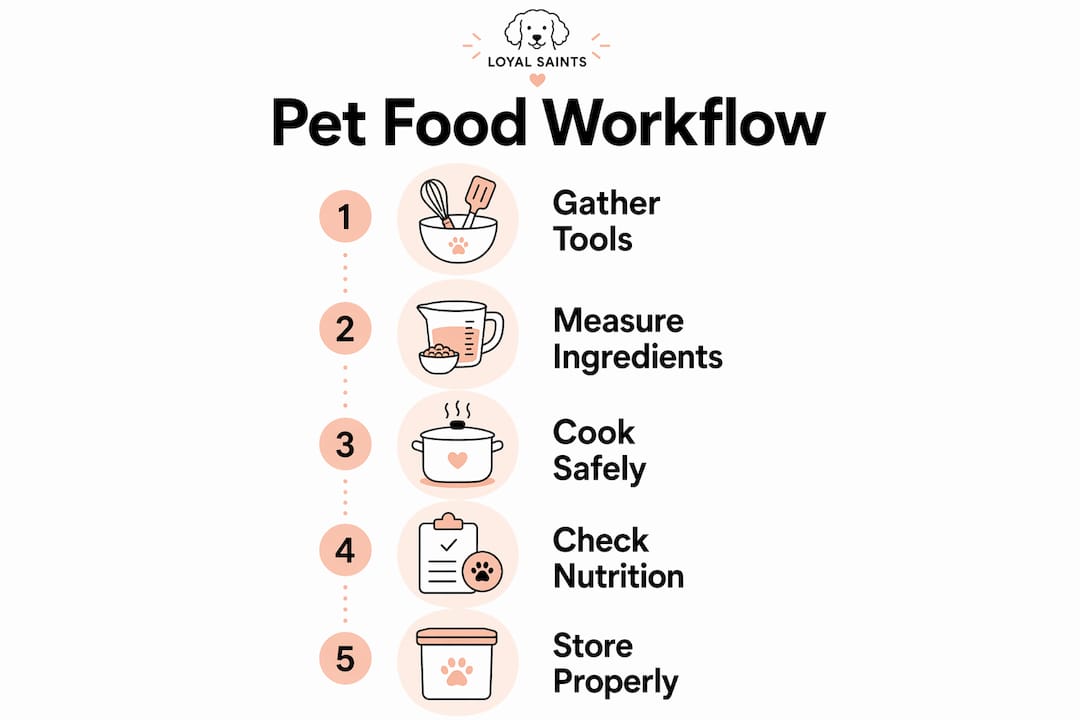
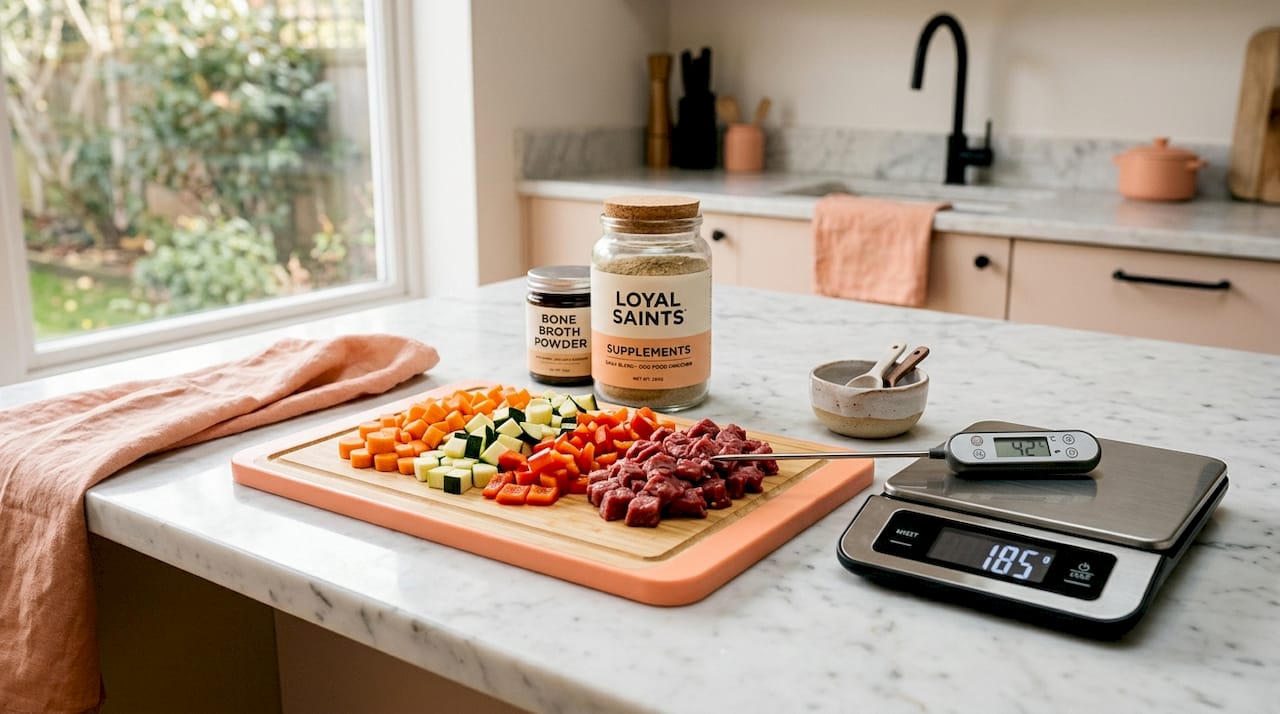
Pro Tip: Never substitute measuring cups for a kitchen scale when preparing homemade pet food. Even small measurement deviations can transform a complete diet into a nutritionally incomplete one over time.
How to plan and batch cook homemade pet food safely
Batch cooking is the engine of an efficient dog food preparation workflow. The goal is to cook enough food for one to two weeks, portion it correctly, and store it safely without losing nutritional value.
Step-by-step batch cooking process:
Calculate your dog’s weekly food intake based on body weight and activity level. A 30-pound moderately active dog typically needs around 1.5 to 2 cups of food per day, but your vet can give you a precise Resting Energy Requirement figure.
Weigh every ingredient on your kitchen scale before cooking. Do not eyeball proteins, carbohydrates, or vegetables.
Cook all poultry to an internal temperature of 165°F to eliminate pathogens like Salmonella. This is FDA-backed guidance and applies to chicken, turkey, and duck in homemade pet food recipes.
Cook carbohydrates like brown rice or sweet potato until fully soft. Dogs digest cooked starches far more efficiently than raw ones.
Steam or lightly cook vegetables. Avoid onions, garlic, grapes, and raisins, which are toxic to dogs.
Allow the batch to cool completely before adding supplements or portioning.
Common preparation mistakes to avoid:
Skipping the cool-down step before adding heat-sensitive supplements
Using the same cutting board for raw meat and cooked food
Cooking in bulk without labeling containers with the date
Forgetting to add the supplement blend after cooking
“Food safety principles used in human cooking apply directly to homemade pet food. The FDA’s July 2025 H5N1 advisory reinforces the importance of hygienic food handling, surface washing, and proper freezing and thawing protocols when preparing pet meals at home.”
Pro Tip: Prepare a printed recipe card for every batch and check off each ingredient as you add it. This prevents recipe drift, the single most common cause of nutritional imbalance in homemade diets.
How do you ensure nutritional completeness in homemade dog food?
Nutritional completeness is where most homemade pet food recipes fall apart. Most homemade recipes fail to meet AAFCO or NRC minimums due to mineral imbalances and vague supplementation guidance. Good intentions alone do not guarantee nutrition.
The most common nutrient gaps in home-prepared diets include calcium, zinc, iodine, vitamin D, and vitamin E. Of these, calcium is the most critical failure point. Muscle meat is high in phosphorus but contains almost no calcium. Feed a diet of muscle meat without a precise calcium source and your dog risks metabolic bone disease over time. This is not a theoretical risk. Veterinary clinicians emphasize calcium balance as a known choke point in home-prepared diet workflows.
What to include in your supplementation plan:
A dog-specific vitamin and mineral supplement, not a human multivitamin
A measurable calcium source such as bone meal, eggshell powder, or a product like BalanceIT Canine
Omega-3 fatty acids from fish oil if your recipe is low in fatty fish
Iodine from kelp powder or a formulated supplement if you are not using iodized salt
Nutrient | Common Gap Source | Recommended Supplement |
Calcium | Muscle meat only diets | Bone meal or eggshell powder |
Vitamin D | Low-fat recipes | Dog-specific vitamin D supplement |
Zinc | Grain-heavy recipes | Zinc chelate in a canine blend |
Iodine | No seafood or iodized salt | Kelp powder or formulated blend |
Omega-3 | Lean protein recipes | Fish oil (EPA/DHA) |
Using formulation software like BalanceIT or consulting a board-certified veterinary nutritionist is the only reliable way to confirm your recipe hits every target. You can also benchmark your recipe against AAFCO standards to understand where it stands before you serve it.
Pro Tip: Never use a human multivitamin as a substitute for a dog-specific supplement blend. Human formulas often contain iron levels that are toxic to dogs and miss nutrients dogs need in specific ratios.
What are the best practices for storing and freezing homemade pet food?
Proper storage is what separates a safe, nutritious batch from a wasted one. The American Kennel Club recommends portioning cooked food into meal-sized portions before freezing, then thawing only what your dog will eat within three to four days.
Batch-cooked homemade dog food lasts three to four days in the refrigerator and up to a year frozen if stored properly. For practical nutrition quality, aim to use frozen portions within six months. Beyond that, oxidation and freezer burn begin to degrade fat-soluble vitamins. Vacuum sealing your portions significantly extends shelf life by limiting air exposure.
Thawing protocol matters as much as freezing. Always thaw in the refrigerator overnight. Room temperature thawing allows bacterial growth in the outer layers of food while the center remains frozen. Never microwave thaw unless you plan to serve the food immediately and check the temperature throughout.
Storage do’s and don’ts:
Do label every container with the batch date and recipe name
Do freeze in individual meal-sized silicone molds or bags
Do vacuum seal when possible to reduce oxidation
Don’t refreeze food that has already been thawed
Don’t leave thawed food at room temperature for more than two hours
Don’t store raw and cooked pet food in the same container
For more detailed guidance on portion sizing by dog weight, the raw dog food portion planner at Loyalsaintspets gives you a clear starting point for calculating batch sizes.
Common workflow mistakes and how to fix them
Even experienced home cooks make predictable errors when preparing dog food. Knowing what they are puts you ahead of the curve.
Substituting ingredients without recalculating. Swapping chicken thighs for chicken breast changes the fat and calorie content of the entire recipe. Recipe drift is one of the most cited causes of nutritional imbalance in homemade diets. Always recalculate with your formulation tool before making any change.
Undercooking proteins. Poultry cooked below 165°F carries real pathogen risk. Use a thermometer every single batch, not just the first time.
Skipping batch dating. Without a date on the container, you cannot track freshness. Use masking tape and a permanent marker on every container before it goes in the fridge or freezer.
Using inconsistent portion sizes. Eyeballing portions leads to overfeeding or underfeeding over time. Weigh each portion on your kitchen scale before storing.
Going months without a vet check-in. Your dog’s nutritional needs change with age, weight, and health status. A recipe that was complete for a two-year-old dog may not be adequate for a seven-year-old one.
Pro Tip: Schedule a veterinary nutrition review every six months. Bring your written recipe and supplement list. This one habit catches problems before they become health issues.
Key takeaways
A reliable home pet food preparation workflow requires precise measurement, vet-validated recipes, safe cooking temperatures, and structured storage protocols to deliver genuinely complete nutrition.
Point | Details |
Precision over estimation | Weigh every ingredient in grams; measurement errors create nutrient gaps. |
Cook poultry to 165°F | Internal temperature verification is non-negotiable for food safety. |
Supplement with dog-specific blends | Human multivitamins miss key canine nutrients and can cause toxicity. |
Freeze in meal-sized portions | Thaw only what is needed to minimize bacterial risk and food waste. |
Validate recipes with a professional | BalanceIT or a veterinary nutritionist confirms AAFCO compliance before feeding. |
Why I think most home-cooked dog diets fail before they start
I have seen a lot of dog owners put genuine love and effort into homemade meals, only to discover months later that their dog was quietly developing a deficiency. The problem is almost never laziness. It is the assumption that a recipe from a trusted-looking website is nutritionally complete.
The discipline that makes a home pet food preparation workflow actually work is not complicated, but it is unforgiving. Gram-level accuracy, a validated recipe, and a dog-specific supplement blend are the three things that separate a healthy homemade diet from one that looks good but falls short. Skipping any one of them is where things go wrong.
What I have found is that the owners who succeed long-term treat their prep day like a professional kitchen shift. They print the recipe, check off each ingredient, use a thermometer, and label everything. They also check in with their vet twice a year and update the recipe when their dog’s needs change. That level of consistency sounds demanding, but once the routine is set, it takes no more time than any other weekly cooking habit. The payoff in your dog’s energy, coat condition, and overall vitality is worth every minute of it. There are a lot of tail wags coming when you get this right.
— Eyo
How Loyalsaintspets can support your home cooking routine

Building a nutritionally complete homemade diet takes real commitment, and Loyalsaintspets is here to make that easier. The freeze-dried options at Loyalsaintspets are crafted from human-grade, whole ingredients with no fillers or additives, and they meet AAFCO standards out of the bag. They work perfectly as a nutritional complement to your home-cooked batches on busy weeks when you do not have time to prep a full batch. You can also browse the full product range for storage solutions and premium nutrition products designed to support dogs at every life stage. When your dog is a member of the family, their meals deserve the same care and quality you give your own.
FAQ
What is a home pet food preparation workflow?
A home pet food preparation workflow is a structured process for batch-cooking, portioning, and storing nutritionally complete meals for your dog. It includes ingredient weighing, safe cooking temperatures, supplementation, and proper freezer storage protocols.
How do I know if my homemade dog food is nutritionally complete?
Use formulation software like BalanceIT or consult a board-certified veterinary nutritionist. Only about 6% of home-prepared dog diets meet basic nutritional adequacy criteria without professional validation.
How long does homemade dog food last in the freezer?
Homemade dog food stored in airtight, meal-sized portions lasts up to a year frozen, though using it within six months preserves the best nutritional quality. Refrigerated portions should be used within three to four days.
Can I use human vitamins in my dog’s homemade food?
No. Human multivitamins often contain iron levels that are toxic to dogs and lack the specific calcium, zinc, and iodine ratios dogs require. Always use a dog-specific supplement blend formulated for homemade diets.
How often should I update my dog’s homemade food recipe?
Review your recipe with a veterinarian every six months or whenever your dog’s weight, age, or health status changes. Nutritional needs shift over a dog’s life, and a recipe that was adequate at two years old may not meet the needs of a senior dog.
Recommended