.png)
Dog allergy management: proven strategies for real relief
- wix mentor

- 5 hours ago
- 9 min read

TL;DR:
Effective dog allergy management focuses on control, not cure, through diagnosis, avoidance, treatment, and immunotherapy.
Proper diagnosis involves ruling out parasites and infections, followed by elimination diets and targeted testing.
Long-term success relies on consistent, informed collaboration with a veterinarian, rather than searching for a quick fix.
If you’ve ever watched your dog scratch relentlessly and wished there was one simple fix, you’re not alone. Many owners try a new shampoo, switch foods, or buy a supplement, and then feel defeated when the itching comes back. The truth is, dog allergies rarely respond to a single solution. What actually works is a layered, ongoing strategy that combines the right diagnosis, targeted treatments, and smart daily choices. This article walks you through exactly that, separating fact from marketing noise so you can give your dog real, lasting comfort.
Table of Contents
Key Takeaways
Point | Details |
No cure, but control | Dog allergies can be managed effectively with a layered, multimodal approach focused on long-term relief. |
Diagnostic process matters | Proper diagnosis—ruling out infections and food allergies—is essential for effective, personalized treatment. |
Combine treatments for success | Combining medications, immunotherapy, and proven diets produces the best allergy outcomes for dogs. |
Freeze-dried diet risks | Freeze-dried and raw dog foods carry contamination risks and do not replace veterinary-recommended hypoallergenic diets. |
What is allergy management in dogs?
Let’s start by clarifying exactly what allergy management means for dogs and why the “one magic solution” idea often leads to frustration.
Allergy management is not about finding a cure. It’s about consistently controlling your dog’s symptoms, reducing how often flares happen, and protecting your dog’s quality of life over time. That distinction matters enormously. Owners who expect a single product or treatment to eliminate allergies permanently often cycle through options, spending time and money without a real plan. Understanding that the goal is control, not cure, puts you in a much stronger position.
Dog allergies generally fall into three categories: environmental allergies (like pollen, dust mites, and mold), food allergies (most often to proteins like chicken or beef), and flea allergy dermatitis. Each type can cause itching, skin inflammation, ear infections, and digestive upset. Chasing symptoms without identifying the type is one of the most common mistakes owners make.
A well-built allergy management plan typically addresses four key areas:
Diagnostics: Identifying the actual trigger through elimination diets or veterinary testing
Avoidance: Reducing your dog’s exposure to known allergens as much as possible
Symptom control: Using medications or therapies to ease discomfort during flares
Immunotherapy: Gradually retraining the immune system for lasting tolerance
The 2023 AAHA management of allergic skin diseases guidelines are clear: a multimodal approach is key because no single treatment cures allergies. Combining diagnostics, avoidance, symptom control, and immunotherapy produces the best long-term outcomes.
“The best allergy management plan is one built with your veterinarian, adjusted over time, and never based on a single product’s promises.”
You can also get a helpful head start by reviewing our guide to pet food allergy management, which explains how dietary choices fit into a broader strategy. The bottom line: managing your dog’s allergies successfully is a team effort and a long-term commitment, not a one-time purchase.
Diagnosing dog allergies: steps, costs, and pitfalls
After understanding the purpose of allergy management, the next critical phase is proper diagnosis, which is often misunderstood or skipped entirely.
Many owners skip straight to treatment based on something they read online or a recommendation from a friend. That approach almost always leads to wasted money and a frustrated dog. Proper diagnosis starts with ruling out the most straightforward possibilities first, then moving to more specialized testing if needed.
Here’s the standard stepwise diagnostic approach veterinarians use:
Rule out parasites and infections first. Fleas, mites, bacterial infections, and yeast overgrowth can all mimic allergy symptoms. Your vet will often take skin scrapings or perform cytology (microscopic examination of skin cells) to rule these out.
Conduct a strict dietary elimination trial. If a food allergy is suspected, your dog eats a novel protein or hydrolyzed protein diet for 8 to 12 weeks, with no treats, flavored medications, or table scraps. This is the only reliable way to diagnose a food allergy.
Consider environmental allergy testing only if immunotherapy is planned. Blood or skin tests don’t confirm whether a dog has environmental allergies. They’re used specifically to identify which allergens to include in an immunotherapy formula.
One of the most important things to understand is that allergy testing only guides immunotherapy planning, not diagnosis itself. Atopy (environmental allergies) is a diagnosis of exclusion, meaning your vet rules out other causes first.
Diagnostic step | Approximate cost | Purpose |
Skin cytology | $50 to $100 | Rule out infection |
Food elimination trial | $100 to $300 (food cost) | Identify food triggers |
Intradermal allergy testing | $200 to $400 | Guide immunotherapy |
Blood allergy panel | $150 to $300 | Guide immunotherapy |
Pro Tip: Keep a symptom journal during your dog’s elimination diet. Note what your dog eats, when symptoms flare, and any environmental changes. This record is invaluable when you bring your dog back to the vet for follow-up appointments.
Two common pitfalls trip up a lot of owners. First, concurrent secondary infections from bacteria or yeast are frequently missed, which means your dog stays itchy even when the allergy itself is being treated. Second, owners confuse seasonal allergies with food allergies because symptoms overlap. Environmental allergies often worsen in spring and fall, while food allergies tend to be consistent year-round. Tracking that pattern carefully, with your vet’s help, makes a real difference. You can find more practical guidance in our dog food allergy guide to help you navigate the dietary side of diagnosis.
Treatment options: medications, immunotherapy, and dietary roles
With a diagnosis in hand, owners face a spectrum of treatments, each with unique benefits and trade-offs.
Medications are usually the first line of response because they work fast. Here’s how the main options compare:
Treatment | How fast it works | Best for | Limitations |
Apoquel (oclacitinib) | 4 hours | Daily itch control | Long-term immune suppression risk |
Cytopoint injection | 1 to 2 days | Monthly itch relief | Requires vet visit |
Steroids (prednisone) | 24 to 48 hours | Severe flare control | Side effects with long-term use |
Cyclosporine | 4 to 6 weeks | Chronic management | Slower onset |
Medicated shampoos | During bath | Skin barrier support | Not standalone |
Omega-3 supplements | Weeks to months | Inflammation support | Supportive role only |
According to the AAHA decoding dog allergies resource, symptomatic treatments include Apoquel for rapid itch relief, Cytopoint injections, steroids, cyclosporine, medicated shampoos, and omega-3 supplements. Each has its place depending on the severity of your dog’s symptoms and how often flares occur.

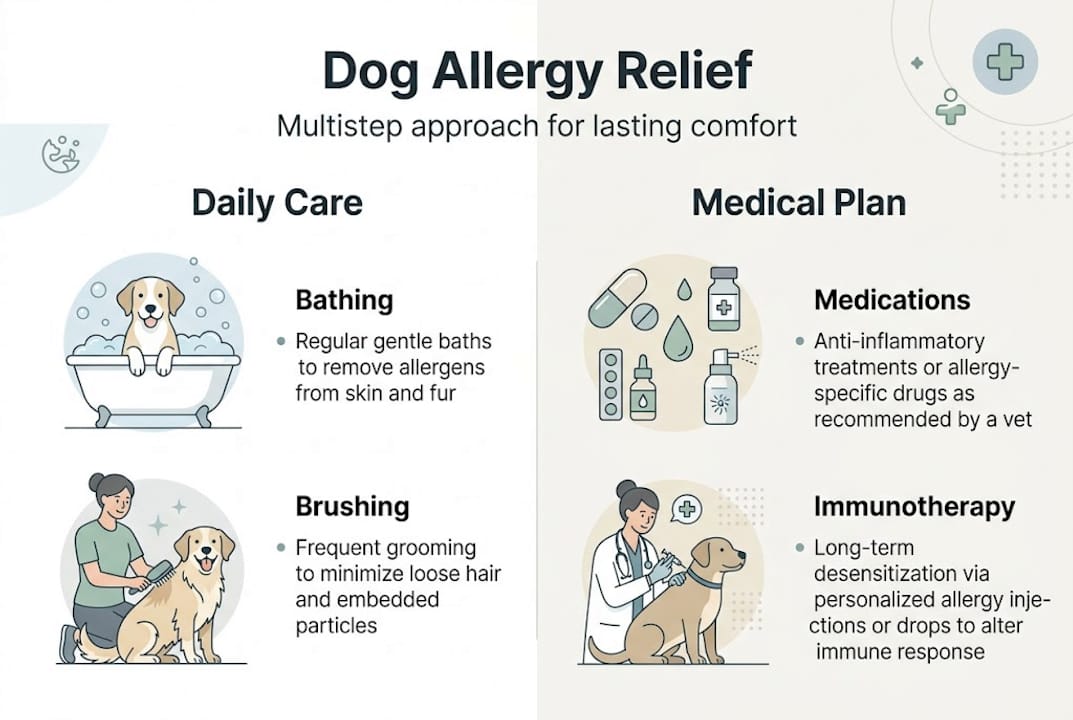
For dogs with environmental allergies, allergen-specific immunotherapy (ASIT) is the only treatment that actually targets the root cause rather than just suppressing symptoms. ASIT works by exposing the immune system to tiny, gradually increasing amounts of the allergens your dog reacts to, training it to tolerate them over time. It’s available as injections you can give at home or as sublingual drops placed under the tongue.
The success rate for ASIT is 60 to 70% after 6 to 12 months of treatment. That’s genuinely encouraging, but it requires patience. Most owners see early improvements around the 3 to 6 month mark, with the best results coming after a full year.
Diet plays a supporting role in most allergy plans. The right food can reduce overall inflammation, support the skin barrier, and help your dog stay comfortable between flares. It won’t replace medications or immunotherapy for environmental allergies, but it absolutely matters. Our guide to pet food choices for allergies breaks down how to find the right fit, and we also cover how diet helps ease seasonal allergies in more detail if your dog’s symptoms follow a seasonal pattern.
Pro Tip: If your dog is on Apoquel or steroids and you’re seeing improvement, don’t stop medications abruptly once you start immunotherapy. Discuss a gradual tapering plan with your vet as the ASIT begins to take effect.
Diet and allergy management: myths, science, and freeze-dried food risks
Nutrition shapes every allergy plan, but marketing and anecdote often muddy the science considerably.
Freeze-dried and raw diets have grown enormously popular in recent years. The appeal is understandable. They’re minimally processed, made from whole ingredients, and marketed as being closer to what dogs ate before commercial pet food existed. For general wellness, high-quality freeze-dried foods made from whole proteins, fruits, and vegetables can be a genuinely nourishing choice for many healthy dogs.
However, when it comes to allergy management specifically, the picture gets more complicated. There are several important points every allergy-conscious owner should know:
Freeze-dried foods are not inherently hypoallergenic. A dog allergic to chicken will react to freeze-dried chicken just as readily as kibble with chicken. The processing method doesn’t change the protein structure that triggers the immune response.
Novel protein is what matters, not the format. A new protein your dog has never eaten before is what reduces allergic reactions during an elimination trial. Whether it’s freeze-dried, canned, or fresh matters less than the protein being truly novel.
Raw and freeze-dried diets carry bacterial risks. Cornell’s Riney Canine Health Center notes that natural freeze-dried foods are not recommended for allergy management due to bacterial and parasite risks, including antibiotic-resistant bacteria in roughly 10% of raw products and Salmonella in about one-third of samples tested.
Veterinary hydrolyzed diets remain the gold standard for diagnosing and managing food allergies because the proteins are broken into fragments too small for the immune system to recognize as threats.
“The word ‘natural’ on a pet food label tells you about marketing, not about safety or allergen content. For allergic dogs, what’s inside the formula matters far more than how the food was processed.”
That said, the conversation around freeze-dried vs. kibble is nuanced and worth exploring for dogs without confirmed allergies. And if you’re curious about natural diet approaches in a broader context, we cover that in depth as well. For allergy management specifically, work closely with your vet to choose a diet that’s appropriate for your dog’s confirmed triggers, not just one that sounds healthy. You might also be surprised by what our breakdown of freeze-dried food and long-term costs reveals about the financial picture over time.
Our perspective: what most owners miss about allergy management
Despite having access to the right information, many owners still feel lost, disappointed, or even burned out by the process of managing their dog’s allergies. In our experience, the problem usually isn’t a lack of effort. It’s a mismatch between expectations and reality.
The search for a single miracle cure is genuinely understandable. Nobody wants to think about giving their dog medication indefinitely or waiting a year for immunotherapy to kick in. But that search often leads owners to cycle through trending diets, supplements, and products without a real plan, which wastes time and can delay real relief for their dog.
What actually builds results is a mindset shift: treating allergy management like a partnership with your veterinarian rather than a solo project. Track your dog’s symptoms consistently. Communicate changes clearly. Adjust the plan when something isn’t working. Explore immune-boosting diets as a complement to your vet’s overall strategy, not a replacement for it.
The dogs who do best aren’t the ones whose owners found the “perfect” product. They’re the ones whose owners stayed consistent, asked good questions, and kept realistic expectations throughout the process. That kind of steady, informed commitment is what puts more tail wags in your future.
Help your dog feel their best with informed choices
If you’re ready to put this guidance into action, the next step is choosing food and support you can trust.

At Loyal Saints Pets, we believe that what goes in your dog’s bowl matters deeply, and so does the knowledge behind every choice you make. Our products are crafted from human-grade, whole ingredients and meet AAFCO standards for complete, balanced nutrition. We’re also transparent about where freeze-dried nutrition fits into an allergy plan and where it doesn’t. Explore why freeze-dried food can support your dog’s overall health and vitality, or browse our full lineup of thoughtfully formulated options when you shop healthy dog foods that your dog will genuinely love. We’re here to help you make choices that stick.
Frequently asked questions
What are the most effective treatments for dog allergies?
The most effective treatments combine symptom control medications, allergen avoidance, and immunotherapy for lasting relief, since no single treatment cures allergies on its own.
Is freeze-dried dog food good for allergy management?
Natural freeze-dried foods are not recommended for allergy management specifically, as they pose bacterial and parasite risks and don’t offer proven hypoallergenic benefits over veterinary hydrolyzed diets.
How long does dog allergy immunotherapy take to work?
Allergy immunotherapy typically shows meaningful improvement after 6 to 12 months of treatment, with success in roughly 60 to 70% of dogs who complete the full course.
Can dog allergies be cured completely?
Dog allergies generally cannot be cured but can be controlled effectively long-term through a consistent, multimodal management plan built with your veterinarian.
Recommended
Comments