.png)
Digestive Health Improvement Guide for Happy, Healthy Dogs
- Nick Willkom
- Jan 29
- 7 min read


Finding the best way to support your dog’s digestive health can feel confusing in a busy American city. For many pet owners, subtle signs like changes in stool consistency or appetite spark concern and show how closely digestive wellness connects to overall vitality. This guide highlights the most effective steps for choosing natural freeze-dried foods and monitoring digestive changes, empowering you to make confident choices for your dog’s health.
Table of Contents
Quick Summary
Key Point | Explanation |
1. Monitor Your Dog’s Digestive Health | Regularly assess stool consistency, appetite, hydration, and behavior for signs of digestive issues. |
2. Choose Quality Freeze-Dried Foods | Select nutritionally dense freeze-dried foods with high-quality proteins and minimal ingredients for better digestion. |
3. Transition to Wholesome Ingredients Gradually | Gradually change your dog’s diet to natural foods to prevent digestive upset and ensure balanced nutrition. |
4. Incorporate Probiotics and Fiber | Add probiotics and fiber to support gut health and enhance digestion in your dog. |
5. Keep Track of Digestive Changes | Maintain a weekly health journal to monitor your dog’s digestive health and address issues promptly. |
Step 1: Assess Your Dog’s Current Digestive Health
Understanding your dog’s digestive health is crucial for maintaining overall wellness and catching potential issues early. By learning how to assess your dog’s digestive system, you’ll become proactive in monitoring their well-being and addressing any concerns before they escalate.
To effectively evaluate your dog’s digestive health, you’ll want to examine several key indicators. Digestive system anatomy plays a critical role in understanding what’s normal for your furry friend. Here are the primary assessment methods:
Stool Consistency: Check your dog’s feces for color, shape, and texture
Appetite Patterns: Monitor eating habits and any sudden changes
Hydration Levels: Observe water intake and energy
Behavior Observations: Watch for signs of discomfort or unusual symptoms
Pay special attention to warning signs like persistent diarrhea symptoms that might indicate a more serious digestive issue. Mild occasional irregularities can be normal, but consistent problems require veterinary consultation.
A healthy digestive system is the foundation of your dog’s overall health and vitality.
Pro tip: Keep a weekly log of your dog’s digestive patterns to help identify any subtle changes that might signal underlying health concerns.

Step 2: Select Premium Freeze-Dried Foods for Digestive Support
Selecting the right freeze-dried food can transform your dog’s digestive health and overall well-being. Your goal is to choose a nutritionally dense, easily digestible diet that supports your dog’s unique nutritional needs and minimizes gastrointestinal stress.
Freeze-dried dog food preserves essential nutrients that traditional processing methods often destroy, making it an excellent choice for dogs with sensitive digestion. When shopping for premium options, focus on these key characteristics:
Protein Quality: Look for single-source, high-quality animal proteins
Ingredient Transparency: Seek foods with minimal, recognizable ingredients
Digestibility: Choose foods with easily absorbed nutrients
Allergen Considerations: Avoid common trigger ingredients
Consult with your veterinarian to select appropriate foods for sensitive stomachs, as they can provide personalized recommendations based on your dog’s specific health profile.
Compare traditional kibble and freeze-dried dog food for digestive wellness:
Food Type | Nutrient Retention | Digestibility | Typical Ingredients |
Freeze-Dried | Excellent | High | Minimal, natural |
Traditional Kibble | Moderate | Variable | Processed, complex |
Premium freeze-dried foods are not just meals - they’re a targeted nutritional strategy for your dog’s digestive wellness.
Pro tip: Introduce new foods gradually, mixing small amounts with current diet to minimize digestive disruption and monitor your dog’s response carefully.
Step 3: Switch Gradually to Natural, Wholesome Ingredients
Transitioning your dog to a diet of natural, wholesome ingredients requires careful planning and patience. Your ultimate goal is to improve digestive health while ensuring your dog receives balanced nutrition throughout the process.
Gradual food switching reduces digestive upset by allowing your dog’s digestive system to adapt smoothly. Follow these essential steps for a successful nutritional transformation:
Mixing Ratios: Start with 75% current food, 25% new food
Observation: Monitor your dog’s response closely
Incremental Changes: Slowly increase new food proportion
Hydration: Ensure constant access to fresh water
Consult a veterinary nutritionist to design a balanced natural diet tailored to your dog’s specific age, breed, and health requirements. This personalized approach helps prevent potential nutritional deficiencies.
A thoughtful transition is the key to successful dietary improvements for your dog’s long-term health.
Pro tip: Keep a daily food transition journal to track your dog’s digestion, energy levels, and overall response to the new diet.
Step 4: Incorporate Supplemental Probiotics and Fiber
Adding probiotics and fiber to your dog’s diet can transform their digestive health and boost overall wellness. These powerful nutritional supplements work together to support a balanced gut microbiome and optimize digestive function.
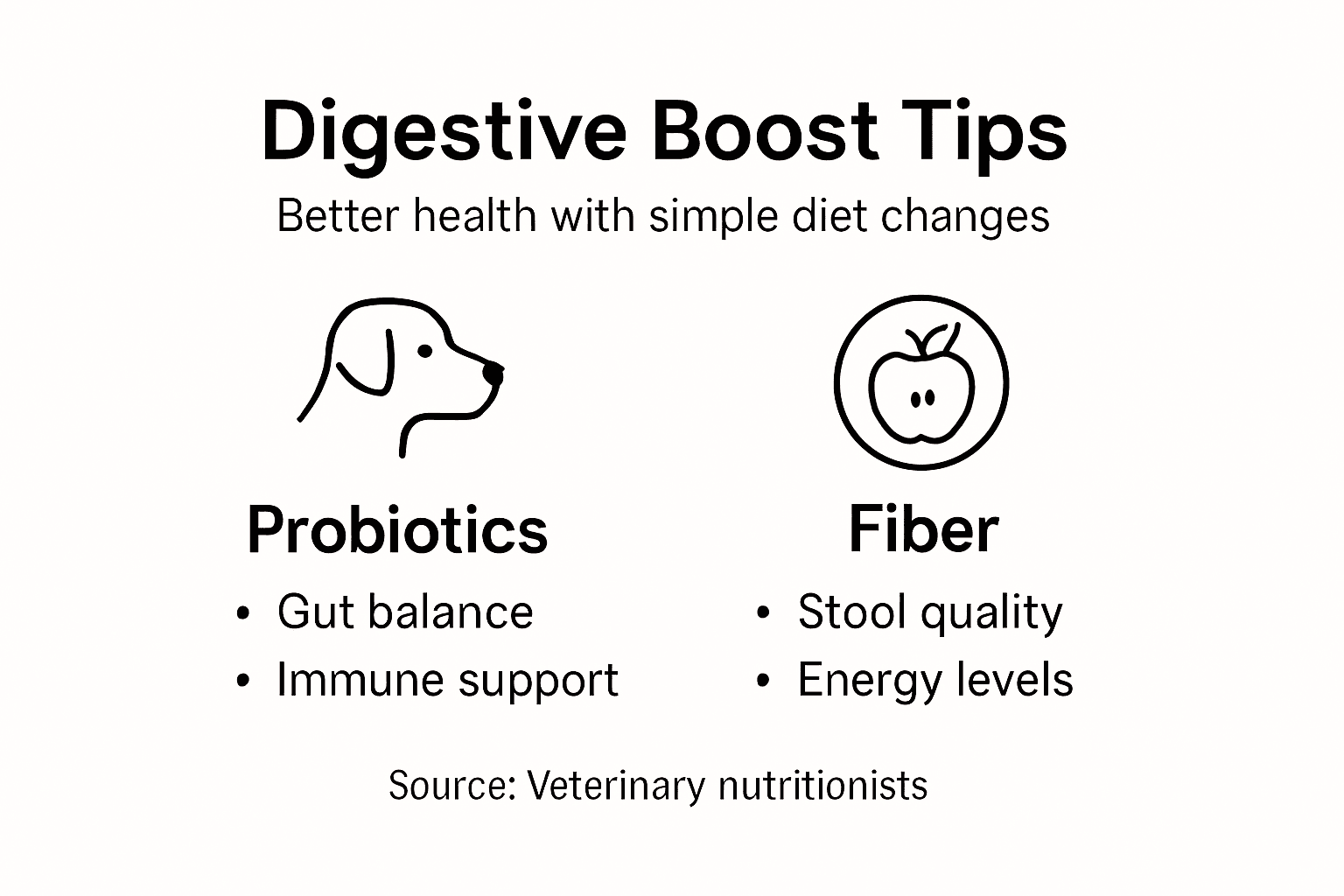
Probiotics enhance gut microbiome balance by introducing beneficial microorganisms that support digestive and immune health. Consider these strategies for successful supplementation:
Here’s how common digestive supplements support canine gut health:
Supplement Type | Key Benefit | Typical Sources |
Probiotics | Improves gut microbiome balance | Specialized foods, powders |
Soluble Fiber | Regulates stool, supports bacteria | Pumpkin, sweet potato |
Prebiotics | Feeds beneficial gut bacteria | Inulin, chicory root |
Digestive Enzymes | Enhances nutrient absorption | Pineapple, specialized blends |
Probiotic Forms: Choose powders, capsules, or specialized dog foods
Fiber Sources: Include pumpkin, sweet potato, or veterinarian-recommended supplements
Dosage: Start with small amounts and monitor your dog’s response
Consistency: Maintain regular supplementation for best results
Consult with your veterinarian to understand microbiota modulation strategies tailored to your dog’s specific health needs. Each dog’s microbiome is unique, requiring personalized nutritional approaches.
Probiotics and fiber are not just supplements - they’re essential tools for supporting your dog’s digestive wellness.
Pro tip: Introduce new supplements gradually and watch for any changes in your dog’s digestion, energy levels, and overall health.
Step 5: Monitor Digestive Changes and Adjust as Needed
Tracking your dog’s digestive health is an ongoing process that requires keen observation and proactive management. Your goal is to identify subtle shifts in your dog’s nutrition and quickly respond to maintain optimal digestive wellness.
Nutritional assessment helps track digestive health by providing critical insights into your dog’s overall well-being. Pay attention to these key indicators:
Stool Consistency: Check color, firmness, and regularity
Appetite Patterns: Monitor eating habits and enthusiasm
Weight Changes: Track fluctuations in body weight
Energy Levels: Note shifts in activity and vitality
Remember that diet transitions require careful monitoring to prevent potential digestive complications. Any persistent symptoms warrant a veterinary consultation to rule out underlying health issues.
Small, consistent observations can reveal significant insights about your dog’s digestive health.
Pro tip: Create a weekly health journal to document your dog’s digestive patterns, making it easier to identify trends and discuss concerns with your veterinarian.
Boost Your Dog’s Digestive Health with Natural Nutrition from Loyal Saints Pets
Digestive health challenges require more than just awareness they call for targeted solutions that support your dog’s gut and overall vitality. If you want to help your dog thrive with balanced nutrition crafted from premium, natural ingredients then explore what Loyal Saints Pets offers. Their freeze-dried dog foods are specially made to preserve essential nutrients and promote digestive wellness with no additives or fillers, aligning perfectly with the guide’s focus on gentle dietary transitions and probiotic support.
Give your dog the gift of improved digestion, enhanced energy, and long-lasting health today by choosing wholesome, veterinarian-approved formulas at Loyal Saints Pets. Start your journey to a happier healthier pet by visiting the homepage now and discover how premium freeze-dried dog food can make a real difference. Act now to enjoy natural nourishment that supports smooth diet transitions and gut microbiome balance just as recommended in the guide.
Frequently Asked Questions
How can I assess my dog’s digestive health?
To assess your dog’s digestive health, monitor their stool consistency, appetite patterns, hydration levels, and overall behavior. Check for changes over a week and look for warning signs like persistent diarrhea that may need veterinary attention.
What should I look for when selecting freeze-dried foods for my dog?
When selecting freeze-dried foods, focus on high-quality single-source proteins, minimal and recognizable ingredients, and good digestibility. Aim for options with ingredients that your dog can easily absorb to support their digestive health.
How do I transition my dog to a natural diet smoothly?
To transition your dog to a natural diet, mix 75% of their current food with 25% of the new food, gradually increasing the new food’s proportion. Observe your dog’s reaction closely during this process, which typically takes around 7 to 10 days for a seamless adjustment.
What role do probiotics and fiber play in my dog’s diet?
Probiotics and fiber help balance your dog’s gut microbiome and improve their digestive health. Incorporate these supplements consistently, starting with small amounts, to ensure your dog benefits from a well-functioning digestive system.
How can I track my dog’s digestive health over time?
To track your dog’s digestive health effectively, keep a daily journal noting their stool consistency, appetite, weight changes, and energy levels. Review this journal weekly to identify patterns and address any concerns promptly.
When should I consult a veterinarian about my dog’s digestive issues?
Consult a veterinarian if you notice persistent symptoms like diarrhea, vomiting, or significant changes in appetite or weight. Addressing these issues quickly can help prevent further health complications for your dog.
Recommended
Comments