.png)
Benefits of Minimally Processed Dog Food for Longevity
- Nick Willkom
- Jan 14
- 7 min read


More than 60 percent of American pet owners believe that premium, minimally processed food makes a measurable difference in their dogs’ vitality. In today’s fast-paced urban environment, health-conscious women are searching for options that provide whole nutrition without chemical additives. Choosing minimally processed dog food offers a way to support longevity, improve digestion, and maintain radiant skin and coat—all while delivering nutrition that closely mimics nature’s intent.
Table of Contents
Key Takeaways
Point | Details |
Minimally Processed Quality | Choose dog foods that use gentle preservation methods, ensuring the nutritional integrity of whole food ingredients. |
Health Benefits | Minimally processed dog food can reduce inflammation and enhance overall health, supporting better digestion and immunity. |
Freeze-Drying Advantage | Freeze-drying preserves essential nutrients effectively, extending shelf life while maintaining natural flavor and texture. |
AAFCO Standards | Opt for AAFCO-approved natural dog foods that adhere to strict quality and transparency standards for optimal nutritional support. |
Defining Minimally Processed Dog Food Quality
Minimally processed dog food represents a nutritional approach that preserves the fundamental integrity of ingredients through gentle preservation techniques. According to FDA regulatory standards, these foods undergo minimal alterations that maintain the natural nutritional profile while ensuring safety and digestibility.
At its core, minimally processed dog food involves basic preservation methods such as washing, drying, freezing, or fermenting without extensive heat treatments or chemical modifications. These techniques aim to improve food safety and nutrient retention while preventing significant structural changes to the original ingredients. The goal is to create a product that closely resembles whole food nutrition.
The quality of minimally processed dog food can be evaluated through several key criteria:
Ingredient sourcing from high-quality, whole food sources
Limited processing techniques that preserve nutritional integrity
Absence of artificial preservatives, colors, or synthetic additives
Transparent manufacturing practices
Maintenance of original nutrient profiles
Pro tip: When selecting minimally processed dog food, always review the ingredient list and look for whole protein sources listed as the first ingredients, indicating higher nutritional quality and minimal processing.
Key Nutritional Benefits for Canine Health
Minimally processed dog foods provide profound nutritional advantages that directly impact canine health and longevity. Research from veterinary nutrition experts demonstrates these diets can significantly reduce inflammation, enhance vital health markers, and support overall metabolic function.
The nutritional profile of minimally processed foods offers several critical health benefits. Systematic reviews of pet nutrition indicate these diets preserve nutrient integrity, minimize harmful additives, and support optimal digestive and immune system performance. By maintaining the natural structure of ingredients, these foods provide more bioavailable nutrients that can be more efficiently absorbed by a dog’s body.
Key nutritional benefits include:
Enhanced nutrient retention
Reduced inflammatory responses
Improved digestive efficiency
Stronger immune system function
More stable energy metabolism
Better weight management
Potential reduction in age-related health complications
These nutritional advantages translate into tangible health outcomes, supporting dogs’ overall vitality and potentially extending their healthy lifespan through targeted, high-quality nutrition.
Pro tip: Consult with your veterinarian to develop a personalized nutrition plan that incorporates minimally processed foods tailored to your dog’s specific age, breed, and health requirements.
How Freeze-Drying Preserves Essential Nutrients
Freeze-drying represents a revolutionary preservation technique that maintains the nutritional integrity of dog food with remarkable precision. Low-temperature dehydration techniques allow for water removal without compromising the delicate structure of proteins, vitamins, and essential enzymes that are critical for canine health.
The freeze-drying process works through a sophisticated method of removing moisture while maintaining the food’s cellular structure. Minimal processing techniques utilize vacuum environments and extremely low temperatures, which prevent nutrient degradation and protect against the formation of harmful compounds like advanced glycation end products (AGEs).
Key advantages of freeze-drying include:
Preservation of original nutritional density
Elimination of harmful bacterial growth
Retention of natural flavor and texture
Extended shelf life without chemical preservatives
Improved nutrient bioavailability
Reduction of inflammatory compounds
By maintaining the food’s molecular structure, freeze-drying ensures that dogs receive nutrition closest to their natural, whole-food dietary requirements, supporting optimal health and potentially extending their longevity.
For quick reference, here are the chief preservation methods and their effects on dog food quality:
Preservation Method | Nutrient Impact | Typical Use in Dog Food |
Freeze-Drying | Excellent retention | Premium, minimally processed |
Dehydration | Moderate retention | Jerky treats, raw diets |
Heat Extrusion | Significant nutrient loss | Conventional kibble |
Freezing | Very high retention | Fresh, raw, and homemade |
Pro tip: Store freeze-dried dog food in a cool, dry place and seal containers tightly to maintain maximum nutritional integrity and prevent moisture absorption.
Impact on Allergies, Digestion, and Vitality
Minimally processed dog foods represent a game-changing approach to canine nutrition, particularly for dogs struggling with digestive sensitivities and allergic conditions. Research on fresh pet food diets demonstrates significant improvements in gastrointestinal health and reduced inflammatory responses, offering hope for pet owners seeking natural dietary solutions.

The nutritional advantages extend beyond basic sustenance. Veterinary nutrition studies reveal that these diets minimize exposure to heat-modified proteins and artificial preservatives, which are often responsible for triggering allergic reactions and compromising digestive wellness. By eliminating common allergens and maintaining nutrient bioavailability, minimally processed foods support comprehensive canine vitality.
Key health benefits include:
Reduced allergic inflammation
Enhanced digestive function
Improved nutrient absorption
Stronger immune system response
More stable energy levels
Better skin and coat health
Decreased gastrointestinal discomfort
These nutritional strategies work synergistically to support dogs’ overall well-being, potentially mitigating age-related health challenges and promoting a more robust, resilient physiological state.
Pro tip: Monitor your dog’s response to dietary changes by tracking energy levels, coat condition, and digestive comfort during the transition to minimally processed foods.
Comparing Minimally Processed and Conventional Kibble
The nutritional landscape for dog food reveals stark differences between minimally processed options and conventional kibble. Emerging research on pet nutrition demonstrates that high-heat extrusion processes used in traditional kibble production significantly compromise nutritional quality, depleting essential amino acids and generating harmful compounds associated with inflammation and accelerated aging.
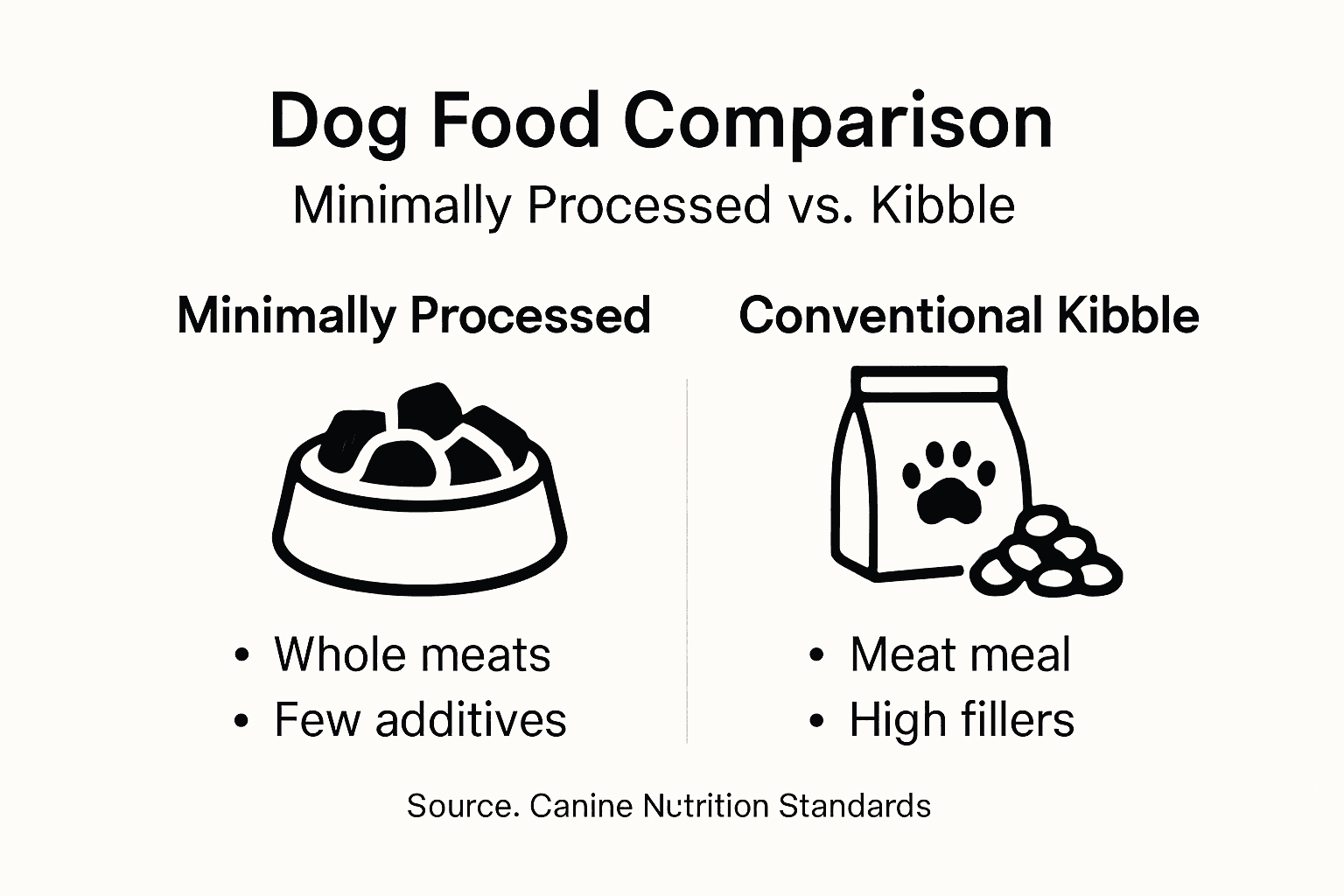
Conventional kibble typically relies on feed-grade ingredients with high carbohydrate content, which can contribute to obesity and chronic health issues. In contrast, minimally processed foods prioritize whole, fresh ingredients that maintain their natural nutritional profile. Consumer-driven nutrition trends reflect a growing understanding that ultra-processed foods may compromise long-term canine health.
Key comparative differences include:
Nutrient preservation
Ingredient quality
Processing methods
Inflammatory potential
Digestibility
Bioavailability of nutrients
Long-term health implications
By choosing minimally processed foods, dog owners can potentially support their pets’ metabolic health, reduce inflammation, and promote more natural nutrition that closely mimics their ancestral diet.
Here’s a side-by-side look at how minimally processed dog food compares to conventional kibble across important factors:
Category | Minimally Processed Dog Food | Conventional Kibble |
Ingredient Sourcing | High-quality, whole foods | Mostly feed-grade ingredients |
Nutrient Retention | Preserves most nutrients | Significant nutrient loss |
Processing Temperature | Gentle, low temperature | High-heat extrusion |
Shelf Life | Moderate, requires careful storage | Long, due to preservatives |
Additives | Rarely used, minimal or natural | Synthetic additives common |
Impact on Digestion | Easy to digest, gentle on stomach | May cause sensitivities |
Allergen Risk | Lower, fewer potential triggers | Higher, more processed agents |
Flavor | Natural, enhanced taste | Often artificial flavors |
Pro tip: Gradually transition your dog to minimally processed foods by mixing increasing proportions with their current diet to allow digestive adaptation and minimize potential gastrointestinal disruption.
Choosing AAFCO-Approved Natural Dog Foods
Navigating the complex world of dog nutrition requires understanding rigorous AAFCO ingredient standards, which establish critical guidelines for natural and human-grade pet foods. These standards ensure that dog food manufacturers adhere to strict quality control processes, prioritizing ingredient transparency and nutritional integrity.
AAFCO-approved natural dog foods must meet comprehensive criteria that go beyond basic nutritional requirements. Federal food safety regulations mandate that these products be produced in FDA-inspected facilities, use human-grade ingredients, and provide clear, verifiable documentation of their manufacturing processes.
Key selection criteria for AAFCO-approved natural dog foods include:
Transparent ingredient sourcing
Human-grade ingredient certification
Production in FDA-inspected facilities
Comprehensive nutritional profile
No artificial preservatives or fillers
Verifiable manufacturing documentation
Adherence to nutritional adequacy standards
By carefully selecting foods that meet these stringent requirements, dog owners can provide their pets with nutrition that supports long-term health, vitality, and potentially extended lifespan.
Pro tip: Always request and review the complete ingredient list and AAFCO nutritional adequacy statement before purchasing dog food to ensure it meets your pet’s specific dietary needs.
Support Your Dog’s Longevity with Minimally Processed Nutrition
The journey to extend your dog’s healthy lifespan starts with nutrition that honors their natural needs. This article highlights the importance of minimally processed dog food in preserving essential nutrients and reducing harmful additives. If you’re looking to combat allergies, enhance digestion, and promote vitality, selecting foods that use gentle preservation techniques such as freeze-drying can make a decisive difference. At Loyal Saints Pets, we understand these challenges and goals, offering premium products crafted from human-grade, whole ingredients that meet strict AAFCO standards.
Explore our carefully selected Chicken and Beef offerings, each freeze-dried to lock in freshness and nutritional integrity. Our Bundles | Loyal Saints provide convenient options to support your dog’s overall health and long-term wellbeing.
Discover how properly balanced, minimally processed meals can transform your pet’s health today. Visit Loyal Saints Pets to shop high-quality freeze-dried dog food designed to fuel vitality, manage allergies, and promote an active lifestyle. Make the choice now to foster more joyful and enduring moments with your beloved dog.
Frequently Asked Questions
What are the primary benefits of minimally processed dog food for my dog’s health?
Minimally processed dog food preserves nutritional integrity, enhances nutrient retention, and reduces harmful additives, leading to improved digestion, a stronger immune system, and better overall vitality for your dog.
How does freeze-drying help maintain the nutrients in dog food?
Freeze-drying removes moisture while preserving the food’s cellular structure, ensuring that proteins, vitamins, and essential enzymes remain intact, which supports optimal canine health and nutrient absorption.
How do minimally processed diets compare to conventional kibble?
Minimally processed diets prioritize high-quality, whole ingredients and maintain their natural nutritional profiles, while conventional kibble often contains feed-grade ingredients and undergoes high-heat processing that compromises nutrient quality and can lead to health issues.
Can minimally processed dog food help with my dog’s allergies and digestion?
Yes, minimally processed dog food can reduce allergic reactions and improve digestion by minimizing exposure to heat-modified proteins and artificial additives, which often trigger sensitivities in dogs.
Recommended
Comments