.png)
Why choose human-grade pet food? 66% better digestibility
- Towanda Brunson
- Mar 4
- 13 min read

Switching your dog to human-grade pet food can reduce fecal output by up to 66%, a clear sign of superior nutrient absorption. This improvement isn’t just about less waste, it reflects dramatically better digestibility that translates directly into enhanced vitality, healthier weight, shinier coats, and reduced allergy risks. Understanding what human-grade truly means, how it compares to traditional pet food, and its measurable health benefits empowers you to make confident choices for your dog’s wellbeing.
Table of Contents
Key takeaways
Point | Details |
Safety standards | Human-grade pet food meets strict human food safety and quality regulations ensuring higher ingredient purity. |
Superior digestibility | Dogs produce 66% less fecal matter on human-grade diets, indicating better nutrient absorption. |
Visible health improvements | Enhanced energy, healthier digestion, optimal weight, and reduced allergy risks appear in dogs fed human-grade foods. |
Fresh ingredients | Human-grade uses minimally processed, fresher ingredients rather than necessarily higher nutrient levels. |
Regulatory clarity | AAFCO standards govern labeling to ensure transparency and prevent misleading marketing claims. |
What does ‘human-grade’ mean in pet food?
Human-grade pet food represents products manufactured under the same stringent safety and quality standards that govern food for people. This designation isn’t marketing fluff. Human-grade pet food is produced under stringent human food safety and quality standards, not just typical pet food regulations, ensuring higher safety and purity.
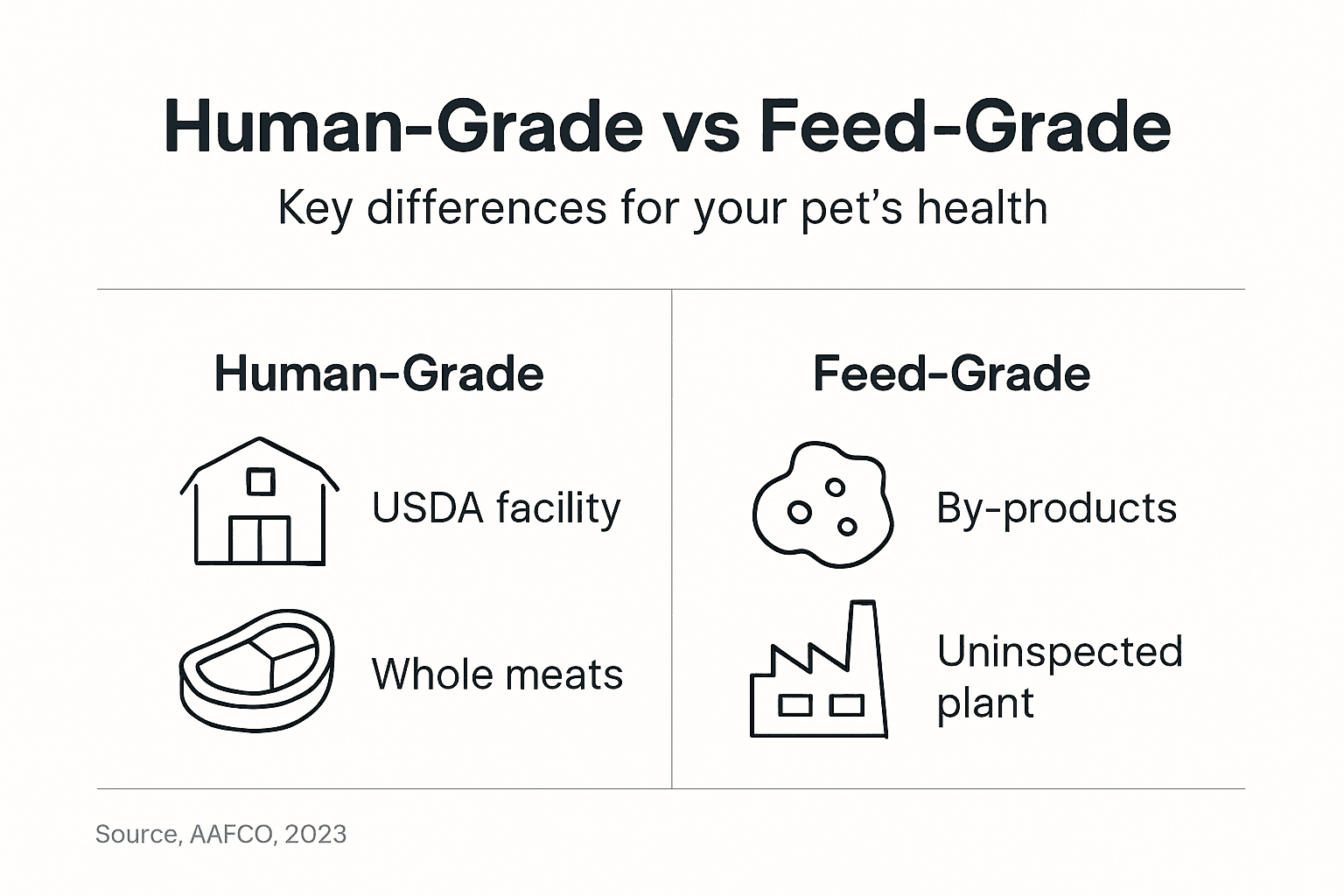
The distinction between human-grade and feed-grade pet food is significant. Feed-grade products follow less rigorous standards that permit ingredients deemed unfit for human consumption, including by-products, expired meats, and materials that failed inspection for human food use. Human-grade facilities operate under USDA inspection protocols identical to those for restaurants and food processing plants.
AAFCO and FDA regulations form the backbone of pet food oversight. These agencies established clear guidelines requiring every ingredient and the finished product to meet human edible standards throughout storage, handling, processing, and transportation. Human-grade pet food manufacturing includes transparency and accountability by adhering to rigorous certification processes, increasing consumer trust.
Many pet owners assume human-grade is merely clever marketing. The reality is different. Certification requires extensive documentation proving ingredient sourcing, facility compliance, and processing methods meet human food standards. This legal framework protects consumers from false claims while giving genuinely compliant brands a verifiable distinction.
Understanding what human-grade pet food means helps you cut through marketing noise. Look beyond appealing packaging to verify AAFCO human-grade standards compliance on labels.
Key regulatory elements include:
USDA facility inspection and approval for human food production
Complete ingredient traceability to human food sources
Processing methods identical to human food manufacturing
Storage and handling under human food safety protocols
Transparent labeling backed by certification documentation
Nutritional and digestibility advantages of human-grade pet food
The quality difference between human-grade and feed-grade ingredients directly impacts how well your dog absorbs nutrients. Human-grade pet foods use ingredients that meet USDA inspection standards for edibility by humans, generally fresher and minimally processed compared to feed-grade ingredients. This freshness translates into measurably better digestibility.
Research reveals a striking advantage. Dogs fed human-grade fresh food produce up to 66% less fecal matter than dogs fed traditional kibble diets due to higher nutrient digestibility. Your dog’s body actually uses more of what it eats rather than passing nutrients through unabsorbed.

Minimal processing preserves natural enzyme activity and protein structures that heavily processed foods destroy through high heat extrusion. These intact nutrients offer superior bioavailability, meaning your dog’s digestive system can break them down and absorb them more efficiently. The amino acid profiles remain closer to their natural state, supporting better muscle development and overall vitality.
Higher digestibility carries practical benefits beyond reduced waste cleanup. Dogs with sensitive stomachs or digestive issues often show dramatic improvement when switched to human-grade diets. The human-grade pet food health impact extends to easier digestion, reduced gas, firmer stools, and less stomach discomfort.
Pro Tip: When transitioning to human-grade food, start with 25% new food mixed with 75% current food for the first three days. Monitor stool consistency as you gradually increase the ratio over 7 to 10 days. Firmer, smaller stools signal improved digestibility.
The advantages of human-grade pet food include:
Enhanced nutrient absorption reducing feeding amounts needed
Better amino acid profiles supporting muscle health
Preserved natural enzymes aiding digestion
Lower waste output indicating efficient nutrient use
Improved digestive comfort for sensitive dogs
Frequent overfeeding happens when owners apply conventional feeding guidelines to human-grade digestibility. The calorie density and bioavailability mean dogs need smaller portions to meet nutritional requirements. Adjust accordingly to maintain optimal weight.
Health benefits for dogs fed human-grade pet food
The superior digestibility and ingredient quality of human-grade pet food manifest in visible, measurable health improvements. Dog owners consistently report increased energy levels within weeks of switching diets. Your dog’s vitality reflects the body’s ability to efficiently convert high-quality nutrients into cellular energy rather than struggling to extract value from highly processed ingredients.
Digestive health shows rapid improvement. Better formed stools, reduced gas, less stomach upset, and more regular bowel movements indicate your dog’s system is working with, not against, the food. This digestive ease supports healthier weight maintenance by ensuring consistent nutrient absorption and reducing inflammation that can trigger weight fluctuations.
Feeding pets with human-grade food can lead to improved vitality, better digestion, healthier weights, shinier coats, and lower risk of allergies and chronic health problems. The ingredient transparency helps identify and eliminate common allergens that hide in conventional pet foods under vague terms like meat by-products or animal digest.
Coat and skin quality offers visible proof of nutritional improvement. Within four to six weeks, most dogs develop noticeably shinier, softer coats with reduced shedding and less dry, flaky skin. These changes reflect the body receiving adequate omega fatty acids, vitamins, and minerals in bioavailable forms that support healthy skin cell turnover and strong hair follicles.
Allergy reduction represents a significant benefit for many dogs. The human-grade dog food benefits include fewer allergic reactions because ingredient sourcing eliminates common contaminants, fillers, and mystery proteins that trigger sensitivities. You know exactly what your dog eats, making it easier to identify and avoid problematic ingredients.
Measurable health improvements include:
Enhanced energy and playfulness throughout the day
Optimal weight maintenance with less effort
Reduced scratching and skin irritation
Shinier coat with healthy texture
Fewer digestive upsets and food sensitivities
Better overall immune function
These collective benefits support longer, healthier lives. Proper nutrition forms the foundation of disease prevention, helping your dog maintain vitality into senior years. The investment in human-grade pet food health benefits often reduces veterinary costs over time by preventing nutrition-related health issues.
Misconceptions about human-grade pet food
Many pet owners mistakenly believe human-grade automatically means higher nutrient content than conventional pet food. Human-grade foods may not always have higher nutrient levels than traditional pet foods, but their ingredients are fresher and less processed, enhancing digestibility and safety, not necessarily nutritional content alone. Nutrient levels depend on formulation and whether the product meets AAFCO nutritional adequacy standards.
The human-grade designation addresses ingredient quality and safety standards, not nutritional superiority. A properly formulated feed-grade food can meet all your dog’s nutritional needs if it follows AAFCO guidelines. The difference lies in ingredient sourcing, processing methods, and what regulators permit in the product, not the final nutrient analysis.
Another common misconception suggests human-grade foods must contain premium cuts of meat you’d find in grocery stores. The reality is more nuanced. Human-grade ingredients must be edible by humans and produced in human food facilities, but this includes organ meats, muscle meat, and other animal proteins perfectly nutritious for dogs even if not commonly eaten by Americans today.
Not every dog requires human-grade food to thrive. Some dogs do well on high-quality conventional diets, particularly if they lack sensitivities or health issues. Your decision should factor in your dog’s individual health status, any dietary sensitivities, your budget constraints, and your personal values regarding food quality and sourcing.
Confusion about FDA and USDA roles complicates understanding. FDA regulates pet food labeling and safety, while USDA oversees meat ingredient inspection and human food facility compliance. Verification of human-grade ingredients requires both agencies’ standards be met throughout production.
Common pitfalls to avoid:
Assuming marketing claims equal nutritional superiority without checking AAFCO statements
Believing all human-grade foods cost excessively more than quality alternatives
Thinking human-grade eliminates the need to check ingredient lists and nutritional adequacy
Expecting immediate dramatic changes rather than gradual improvements over weeks
Overlooking that some dogs need specific therapeutic diets regardless of grade designation
Read expert analysis on human-grade pet food to understand these nuances. Smart purchasing means evaluating the complete package including ingredient quality, nutritional adequacy, your dog’s needs, and verified certifications rather than relying solely on the human-grade label.
Comparison with traditional feed-grade pet food
Understanding the concrete differences between human-grade and feed-grade pet food helps you make informed decisions. The contrast extends beyond marketing to fundamental differences in sourcing, processing, safety standards, and resulting health impacts.
Human-grade pet food production occurs exclusively in USDA-inspected facilities that meet human food manufacturing standards. Every ingredient must pass the same safety inspections required for food sold in grocery stores. Feed-grade production follows FDA pet food regulations, which permit ingredients that failed human food inspection or were never intended for human consumption.
Feed-grade pet food can legally include lower quality ingredients such as by-products, expired meats, and contaminants not suitable for human consumption. These might include meat from diseased animals, expired grocery store meats, restaurant grease, or rendered materials from various sources. While not necessarily harmful in moderate amounts, they represent a lower quality standard.
Digestibility differences prove measurable and significant. The 66% reduction in fecal output with human-grade diets directly reflects superior nutrient bioavailability. Your dog’s body efficiently extracts and uses nutrients rather than passing partially digested material through the system.
Factor | Human-Grade | Feed-Grade |
Production facility | USDA human food facilities | FDA pet food facilities |
Ingredient standards | Human edible, USDA inspected | Feed-grade, lower inspection |
Allowed ingredients | Only human-quality proteins and produce | By-products, 4Ds, expired materials |
Processing | Minimal, preserves nutrients | Often high-heat extrusion |
Digestibility | Up to 66% better nutrient absorption | Standard pet food digestibility |
Transparency | Full ingredient traceability required | Limited disclosure requirements |
Cost | Higher, reflects quality ingredients | Lower, uses economical ingredients |
Health impact | Improved vitality, coat, digestion | Meets basic nutritional needs |
Consumer trust runs higher with human-grade products due to certification requirements and transparent sourcing. You can trace ingredients back to their origins and verify facility compliance with human food safety standards. Feed-grade products offer less visibility into sourcing and processing methods.
The human-grade vs feed-grade pet food differences impact long-term health outcomes:
Human-grade supports better nutrient absorption and utilization
Feed-grade meets minimum nutritional requirements at lower cost
Human-grade ingredients undergo stricter contamination testing
Feed-grade may contain fillers and ingredients of questionable origin
Human-grade offers peace of mind through verified quality standards
Price differences reflect these quality distinctions. Human-grade products cost more because ingredients meeting human safety standards command higher prices, and compliant facilities require significant investment. However, feed-grade pet food explained shows the lower cost comes with tradeoffs in ingredient quality and processing standards.
Your choice depends on balancing quality priorities, budget constraints, and your dog’s individual needs. Both categories can provide complete nutrition when properly formulated, but human-grade offers measurable advantages in ingredient quality, digestibility, and transparency.
Regulatory framework and labeling of human-grade pet food
AAFCO introduced groundbreaking clarity to human-grade labeling in 2023, establishing official definitions and requirements that protect consumers from misleading claims. Prior to these standards, pet food companies used human-grade terminology loosely without regulatory oversight, creating consumer confusion.
AAFCO regulations now define human-grade pet food to require all ingredients and the entire product be stored, handled, processed, and transported according to human edible food standards. This comprehensive approach ensures quality control throughout the entire production chain, not just at select stages.
The regulatory framework demands that pet food companies claiming human-grade status maintain extensive documentation. Facilities must prove USDA inspection approval, ingredient suppliers must provide human food certification, and processing records must demonstrate compliance at every step. Random audits verify ongoing adherence.
Labeling enforcement aims to eliminate deceptive practices. Companies cannot claim human-grade unless they meet every requirement. Partial compliance like using some human-grade ingredients while processing in non-compliant facilities fails to qualify. The product earns the designation only when the complete production process meets human food standards.
Consumers benefit from these clear standards. Before purchasing, verify the label includes explicit human-grade certification backed by AAFCO standards for human-grade pet food. Vague terms like restaurant quality or kitchen crafted don’t guarantee compliance.
Key regulatory requirements include:
Every ingredient must qualify as human edible under USDA standards
Manufacturing must occur in USDA-inspected human food facilities
Storage conditions must meet human food safety protocols
Transportation must prevent contamination using human food standards
Complete chain of custody documentation proving compliance
Regular facility inspections and ingredient testing
Verification requires facility certification and ingredient traceability. Pet food companies must maintain records proving their suppliers source ingredients from human food channels and that every production batch follows proper procedures. These safeguards protect your investment and your dog’s health.
The AAFCO human-grade pet food regulations continue evolving as the industry matures. Staying informed about regulatory updates helps you identify genuinely compliant products and avoid companies making unsupported claims. Look for brands that openly share their certification credentials and facility inspection records.
Practical considerations for feeding human-grade pet food
Successfully transitioning to human-grade pet food requires adjusting your approach to feeding amounts, schedules, and monitoring. The superior digestibility means traditional feeding guidelines often lead to overfeeding. Applying traditional metabolizable energy feeding guidelines designed for lower digestibility pet foods to human-grade dog food risks overfeeding due to its higher nutrient density.
Start with the manufacturer’s recommended portions, then adjust based on your dog’s body condition. Monitor weight weekly during the first month. You should feel your dog’s ribs easily with light pressure but not see them prominently. Reduce portions by 10% if your dog gains unwanted weight, increase by 10% if losing condition.
Transitioning gradually prevents digestive upset. Follow this schedule:
Days 1 to 3: Mix 25% new food with 75% current food
Days 4 to 6: Mix 50% new food with 50% current food
Days 7 to 9: Mix 75% new food with 25% current food
Day 10 onward: Feed 100% new food
Monitor stool consistency throughout, slowing transition if loose stools occur
Budget considerations matter. Human-grade pet food typically costs 50% to 100% more than premium conventional brands. However, smaller portions due to better digestibility partially offset the higher per-pound price. Many owners find the improved health reduces veterinary expenses over time, making the investment worthwhile.
Watch for success indicators during the first six weeks. Positive signs include increased energy and playfulness, shinier coat, better stool consistency, reduced scratching or skin irritation, and improved breath. These changes confirm your dog is thriving on the new diet.
Pro Tip: Take photos of your dog’s coat condition before switching and again at six weeks. The visual comparison often reveals improvements you might miss seeing your dog daily, helping justify the investment.
Source products carefully. Not all brands claiming human-grade status meet certification requirements. Research manufacturers, verify their facility certifications, and read independent reviews. Feeding human-grade pet food successfully depends on choosing genuinely compliant brands.
Additional practical tips:
Store food properly following manufacturer guidelines to maintain freshness
Consider freeze-dried or frozen options for maximum nutrient retention
Supplement only if recommended by your veterinarian after blood work
Maintain consistent feeding times to support healthy digestion
Provide fresh water always as higher protein diets increase hydration needs
Your dog’s individual response guides final decisions. Some dogs show dramatic improvements immediately, others change gradually over months. Follow feeding guidelines for human-grade dog food while remaining flexible enough to adapt portions and schedules based on your dog’s unique needs.
Ethical and environmental benefits of choosing human-grade pet food
Health-conscious pet owners increasingly consider the broader impact of their purchasing decisions beyond their dog’s immediate health. Human-grade pet food often aligns with environmental sustainability and ethical sourcing values that extend your commitment to wellbeing beyond your household.
Human-grade pet food production can have a lower environmental impact through sourcing higher-quality, often local ingredients, and more sustainable production practices. Shorter supply chains reduce transportation emissions, while ingredient quality standards often favor suppliers using more sustainable farming methods.
Transparent supply chains represent a core advantage. Human-grade certification requires complete traceability from farm to bowl. This visibility enables you to verify suppliers follow ethical practices regarding animal welfare, worker conditions, and environmental stewardship. Feed-grade pet food supply chains often lack this transparency.
Ingredient quality standards naturally favor more ethical sourcing. Producers seeking USDA-approved ingredients typically work with suppliers maintaining higher animal welfare standards than those supplying feed-grade materials. While not universal, the correlation between human food standards and better farming practices holds generally true.
Choosing human-grade supports market forces encouraging sustainable agriculture. Your purchasing power signals demand for ethically sourced, environmentally responsible pet food production. As more consumers select certified products, manufacturers invest in better sourcing and production methods to meet regulatory requirements.
Long-term environmental benefits accumulate through several mechanisms. Better digestibility means less waste entering municipal systems and less land needed for waste disposal. Higher-quality protein sources often require fewer resources per gram of bioavailable nutrition than heavily processed alternatives. Sustainable farming practices supported by quality standards protect soil health, water resources, and biodiversity.
Ethical considerations include:
Supporting farms and facilities meeting higher animal welfare standards
Encouraging transparent supply chains that enable informed purchasing
Reducing environmental impact through better digestibility and less waste
Promoting sustainable agriculture through market demand for quality ingredients
Aligning pet care choices with personal values regarding food systems
The ethical and environmental benefits of human-grade pet food extend your commitment to health from your dog to the broader food system. Making choices that support both your pet’s wellbeing and environmental sustainability creates positive impact beyond your immediate household.
Explore premium human-grade options for your dog
Now that you understand human-grade benefits, digestibility advantages, and health impacts, putting this knowledge into action matters. Loyal Saints offers premium freeze-dried dog foods crafted from human-grade ingredients specifically formulated to optimize your dog’s vitality and longevity.

Our freeze-dried processing preserves the nutritional integrity and digestibility advantages discussed throughout this article while offering convenient shelf stability. The combination of human-grade sourcing and freeze-dried preservation delivers maximum nutrient bioavailability in a format that fits your lifestyle.
Explore detailed guides on freeze-dried dog food benefits and how freeze-dried dog food supports pet health to understand why this preservation method pairs perfectly with human-grade ingredients. Then shop premium human-grade dog food options designed specifically for health-conscious dog owners seeking the best nutrition for their family members.
FAQ
What should I look for on a pet food label to confirm it’s truly human-grade?
Verify the label explicitly states human-grade and lists AAFCO compliance along with USDA facility certification. Check that all individual ingredients qualify as human-grade, not just selected ones. Research the manufacturer’s website for facility certifications and third-party verification documentation.
Can human-grade pet food help dogs with allergies or digestive issues?
Yes, many dogs with food sensitivities show significant improvement on human-grade diets due to ingredient transparency and elimination of common contaminants and mystery proteins. The better digestibility also reduces digestive stress. Work with your veterinarian to identify specific allergens and select appropriate formulations.
Is human-grade pet food suitable for all dog breeds and life stages?
Human-grade designation addresses ingredient quality and safety, not life stage formulation. Check the AAFCO nutritional adequacy statement confirming the food meets requirements for your dog’s life stage, whether puppy, adult, senior, or all life stages. Breed size matters less than age and activity level.
How do I transition my dog safely to a human-grade diet?
Gradually mix increasing proportions of new food with current food over 7 to 10 days, starting with 25% new food and progressing to 100%. Monitor stool consistency throughout, slowing the transition if digestive upset occurs. Adjust final portions based on the higher digestibility to avoid overfeeding.
Does human-grade pet food cost significantly more than traditional pet food?
Human-grade products typically cost 50% to 100% more per pound than premium conventional brands due to higher ingredient costs and facility compliance requirements. However, smaller portions due to better digestibility offset some cost difference. Many owners find reduced veterinary expenses justify the premium over time.
Recommended
Comments