.png)
Dog Food Allergy Management: Proven Solutions for Your Pet
- wix mentor

- 6 hours ago
- 10 min read

TL;DR:
Identifying non-seasonal, persistent symptoms helps differentiate food allergies from environmental issues.
The gold-standard diagnosis is an 8-12 week elimination diet trial with novel proteins.
Long-term management relies on strict diet control, transparency, and premium, minimally processed foods.
Your dog keeps scratching, shaking their head, and dealing with upset stomachs despite the food you’ve been carefully choosing. You’ve tried switching brands, reading labels, and cutting out certain snacks, but the symptoms keep coming back. Managing a dog food allergy feels like solving a puzzle with missing pieces. The good news is that a clear, science-backed approach really does work, and this guide gives you exactly that, from identifying symptoms to executing a proper elimination trial and transitioning to a safe, long-term diet your dog can thrive on.
Table of Contents
Key Takeaways
Point | Details |
Elimination trial is essential | A strict 8-12 week elimination diet is the only reliable way to diagnose food allergies in dogs. |
Novel and hydrolyzed proteins work | Using novel or hydrolyzed protein diets is most effective in both trials and long-term allergy management. |
Avoid common allergens | Beef, dairy, chicken, wheat, corn, and soy are the most frequent triggers and should be excluded after diagnosis. |
Freeze-dried diets offer benefits | Premium freeze-dried and limited ingredient diets provide natural nutrition and support allergic dogs’ health. |
Patience and compliance pay off | Strict adherence and patience through the trial and transition phases yield lasting relief for sensitive dogs. |
Recognizing the signs and causes of dog food allergies
Pinpointing a food allergy starts with knowing what to look for. Many dog owners mistake allergy symptoms for seasonal issues or skin conditions, which delays the real solution. Once you recognize the right signs, you can act quickly and confidently.
Common symptoms of dog food allergies include:
Persistent itching, especially around the face, paws, ears, and belly
Recurring ear infections that don’t fully resolve with standard treatment
Hot spots or inflamed skin patches that keep flaring up
Chronic diarrhea or vomiting without an obvious cause
Scooting or anal gland issues that recur frequently
Hair loss or skin thickening in affected areas
These symptoms can look a lot like environmental allergies, which is why your vet’s input matters early on. However, if symptoms appear year-round rather than seasonally, food is often the culprit.
“Food allergies in dogs tend to present as non-seasonal, year-round symptoms, making them distinguishable from environmental triggers once you know what to look for.” This distinction alone can save months of guesswork.
When it comes to the most common triggers, common allergens include beef, dairy, chicken, wheat, corn, and soy, with novel proteins like venison, rabbit, and duck often used in diagnostic trials. Proteins are actually the most frequent offenders because the immune system reacts to specific protein molecules, not carbohydrates or fats. The longer a dog has been eating a particular protein, the more likely they are to develop a sensitivity to it over time.
Common allergen | Prevalence in commercial dog food | Reaction frequency |
Beef | Very high | Most common |
Dairy | High | Second most common |
Chicken | Very high | Third most common |
Wheat | Moderate | Common |
Corn | Moderate | Common |
Soy | Moderate | Common |
Switching to limited ingredient diets using novel proteins is often the first practical step your vet will recommend. These diets reduce the number of potential triggers your dog is exposed to, making it easier to isolate the real problem.
Preparing for an accurate food allergy diagnosis
Before starting any changes, proper preparation sets you and your dog up for diagnostic success. Jumping straight into a new diet without a plan leads to incomplete results and more frustration.
One of the biggest misconceptions in pet allergy care is that blood or saliva tests can pinpoint a food allergy. They cannot. The only reliable diagnostic method for dog food allergies is a strict elimination diet trial lasting 8 to 12 weeks, using either a novel protein or hydrolyzed protein diet, followed by a controlled rechallenge.
Diagnostic method | Reliability | Recommended |
Blood test (IgE panel) | Low, many false positives | No |
Saliva test | Low, not validated | No |
Intradermal skin test | Low for food allergies | No |
Elimination diet trial | High, gold standard | Yes |
Hydrolyzed protein diet | High | Yes (with vet guidance) |
Here’s how to prepare before you begin:
Document your dog’s full diet history. Write down every food, treat, chew, flavored medication, and supplement your dog receives. This list helps your vet identify which proteins your dog has already been exposed to.
Consult your vet before starting. Your vet can rule out underlying infections or other conditions that mimic allergy symptoms, and they can recommend the right novel protein for your dog’s specific history.
Stock up on allergy-safe treats. You need treats that contain only the novel protein you’re trialing. Plain boiled pieces of the selected protein or commercial treats made exclusively with that protein work well.
Educate every family member and dog walker. Compliance is everything. One accidental treat can invalidate weeks of progress.
Set a start date and calendar checkpoints. Mark week four and week eight as review points, and schedule a vet check-in at week eight.
Pro Tip: Keep a daily symptom journal with photos of your dog’s skin, ears, and coat. Symptom changes can be subtle and easy to miss without a visual record to compare against.
Understanding the elimination diet process before you start gives you a realistic picture of what to expect, which helps you stay committed even when progress feels slow.
Step-by-step: Conducting an effective elimination diet trial
Once you’re ready, here’s how to execute the gold-standard elimination trial, a crucial phase in finding the real cause of your dog’s discomfort.
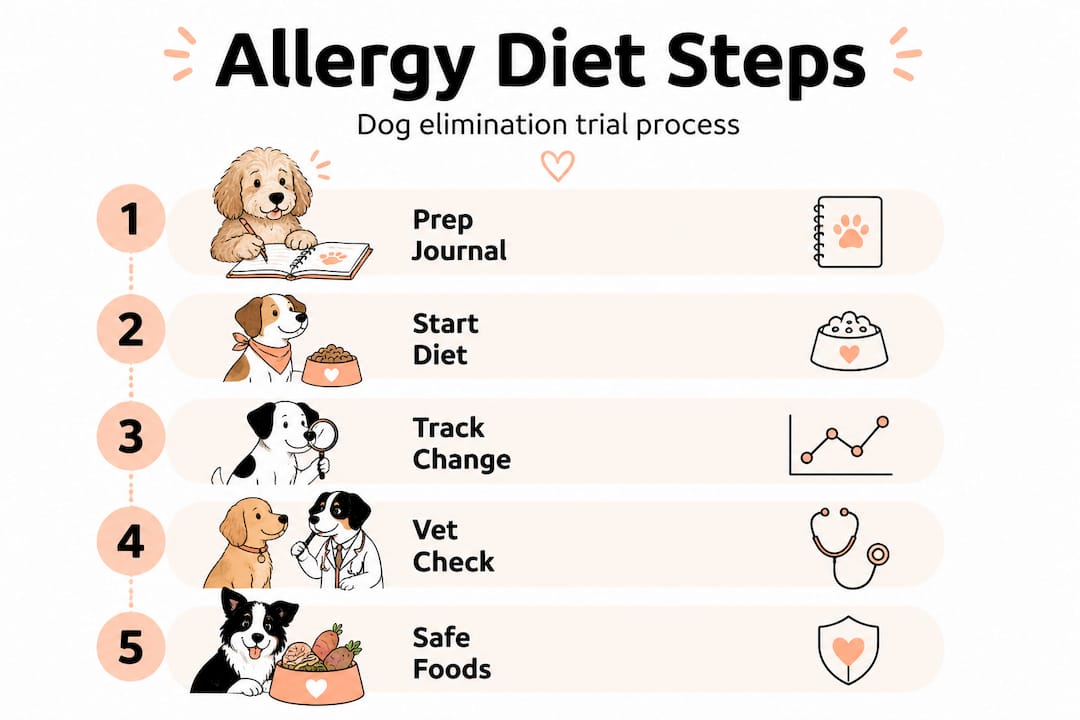
The elimination diet is not just about switching foods. It is a structured diagnostic protocol. Here is how to run it effectively:
Choose a novel protein source your dog has never eaten before. Common options include venison, rabbit, duck, or kangaroo. Your vet may also recommend a hydrolyzed protein diet, where proteins are broken down so small that the immune system doesn’t recognize them.
Remove every previous food from your dog’s diet completely. This includes flavored medications, toothpastes, chews, table scraps, and flavored supplements. Use unflavored versions or switch to novel-protein alternatives.
Feed only the new diet for 8 to 12 weeks. Do not waver. Not even one bite of the old food counts as compliant.
Monitor and log symptoms weekly. Expect some improvement by weeks four to six if food is the primary driver.
Rechallenge after a full symptom-free period. Reintroduce the original food for two weeks to see if symptoms return. If they do, food allergy is confirmed. This step is essential because it rules out coincidental improvement.
Dietary elimination trials remain the reference standard for diagnosis, with approximately 95% of dogs responding by 8 weeks if they are food allergic. That’s a strong success rate when the trial is done correctly.
For dogs managing both food allergies and skin conditions together, the data is encouraging. A clinical study found that hydrolyzed diets show high efficacy in reducing both itch scores and dermatitis severity, with the rechallenge step confirming the diagnosis in most cases.
Pro Tip: If your dog also needs medication during the trial (like antibiotics for an ear infection), ask your vet for unflavored capsule versions or compounded formulas to avoid contaminating the trial with new proteins.
Following these 5 steps to healthier pets alongside the trial gives you a broader framework for supporting your dog’s overall wellness while you work through the diagnostic phase. You can also revisit the detailed elimination diet steps for additional support mid-trial.
Managing complications and common mistakes during allergy trials
During the elimination phase, it is easy to stumble. Even the most dedicated owners run into challenges that can derail the process.
Common mistakes that compromise results:
Giving flavored heartworm preventatives or flea treatments that contain proteins
Allowing your dog to access another pet’s food bowl
Offering “just one” piece of a different treat thinking it won’t matter
Forgetting that some dental chews contain beef or chicken
Using flavored pill pockets that contain ingredients from the dog’s allergy history
“Non-compliance is one of the most common reasons elimination trials fail. A single exposure to the trigger protein can restart the immune response, requiring the entire trial window to reset.” Staying vigilant for the full 8 to 12 weeks is not optional.
Concurrent infections like otitis (ear infections) and pyoderma (skin infections) must be treated during the trial, otherwise symptoms persist regardless of diet changes. GI symptoms may also lag behind skin improvement, which is why some dogs need the full 12 weeks rather than just 8.
If your dog’s symptoms haven’t improved at the 8-week mark, work through this checklist before giving up:
Review every item your dog has ingested since day one of the trial
Rule out secondary infections with a vet exam, since infections mask dietary improvement
Check flavored medications and supplements for hidden protein sources
Consider switching to a hydrolyzed protein diet if the novel protein choice may have been previously consumed without your knowledge
Exploring natural solutions for allergy management can also offer complementary support, especially for dogs dealing with overlapping skin sensitivities that extend beyond food alone.

Long-term management: Transitioning to a safe, natural maintenance diet
After pinpointing triggers, here is how to maintain your dog’s health with safe, nutritious choices for the long haul.
Once the rechallenge confirms a food allergy, long-term management involves avoiding identified allergens, often using limited ingredient diets or hydrolyzed options for ongoing maintenance. This is where the quality of your dog’s food becomes especially important.
Key strategies for long-term allergy management:
Read every label every time because manufacturers change formulas without always updating packaging prominently
Stick to single-source protein foods with clearly named ingredients and no unnamed “meat meals” or “animal derivatives”
Choose foods with short, transparent ingredient lists so you know exactly what your dog is eating
Rotate between two or three safe proteins only after your vet confirms tolerance, to reduce the risk of developing new sensitivities
Monitor quarterly for symptom recurrence, since new sensitivities can develop over time
Premium freeze-dried diets are an excellent maintenance choice for food-allergic dogs because they use whole, minimally processed ingredients with no hidden fillers, artificial flavors, or additives. Freeze-drying preserves the nutritional integrity of proteins, which supports better bioavailability, meaning your dog absorbs more of the nutrients per serving.
Hydrolyzed salmon and hydrolyzed poultry feather diets both significantly reduced itch and dermatitis scores in dogs with confirmed food allergies, with more than 50% of dogs needing over four weeks to show full response. This confirms that patience and consistency with a quality maintenance diet pay off.
Diet type | Allergen risk | Ideal for |
Novel protein freeze-dried | Very low | Post-diagnosis maintenance |
Hydrolyzed protein | Lowest | Severe or multi-allergen cases |
Limited ingredient (2-3 ingredients) | Low | Ongoing management |
Standard commercial kibble | High | Not recommended for allergic dogs |
Pro Tip: Keep a small emergency stash of your dog’s safe food. Running out and having to grab a different brand even temporarily can accidentally expose your dog to a trigger and set back months of progress.
Use this dog owner’s allergy guide as an ongoing reference, and explore the natural approach to food allergies to round out your long-term strategy. For a full breakdown of safe nutritional choices, the allergy-free dog nutrition resource offers deep guidance for ongoing planning.
Why premium diets and patience make all the difference
Here is something that most allergy management articles won’t tell you directly: avoiding a trigger food is only the floor, not the ceiling, of what’s possible for your dog’s health.
Many owners consider the elimination trial a finish line. It is really a starting point. Dogs who have suffered from food allergies often have compromised gut health, reduced nutrient absorption, and immune systems that have been on high alert for months. Simply removing a protein allergen stops the damage, but it doesn’t rebuild what was lost.
This is where clean-label, freeze-dried diets go beyond conventional allergy management. Freeze-dried whole foods retain their natural enzymes, amino acids, and micronutrients without the processing that strips food of its biological value. For a dog whose digestive system has been inflamed and stressed, this bioavailability matters enormously. You’re not just feeding calories. You’re feeding recovery.
We also believe strongly in transparency. The sourcing and processing of your dog’s food should never be a mystery. Short ingredient lists with named proteins and recognizable whole foods are not a marketing trend. They are the baseline your food-allergic dog deserves.
Lasting relief through smart food choices means committing to proactive monitoring, choosing foods you can fully trace and trust, and treating your dog’s diet as a long-term investment in their comfort and vitality. The dogs we hear about most often, the ones whose owners report transformed health and energy, are almost always the ones whose owners went beyond the minimum and chose quality with intention.
Patience is not passive. Staying consistent with a premium, clean diet for weeks and months is one of the most active things you can do for a sensitive dog.
Next steps: Premium allergy-friendly diets for your dog
You’ve done the hard work of understanding what your dog’s body needs. Now it’s time to put that knowledge into action with food that actually delivers.

At Loyal Saints Pets, we formulate our freeze-dried dog food with exactly these dogs in mind. Sensitive stomachs, reactive immune systems, and owners who won’t settle for anything less than whole, human-grade ingredients. Our products are free from fillers, artificial additives, and unnamed proteins, so you always know what your dog is eating. If you’re ready to explore the right option for your dog, learn why choose freeze-dried food and how it supports allergy-prone dogs, or browse our full selection and shop for allergy-friendly dog food built for long-term health and tail wags.
Frequently asked questions
How long does a dog food elimination trial take to show results?
Most dogs respond in about eight weeks, but some may need up to twelve weeks for full improvement, as 95% of food-allergic dogs show response within that window when the trial is done strictly.
Which ingredients are most likely to cause food allergies in dogs?
Beef, dairy, chicken, wheat, corn, and soy are the most common allergens, with common allergens found most frequently in standard commercial dog food formulas.
Are blood or saliva tests useful for diagnosing dog food allergies?
No, blood and saliva tests are unreliable for diagnosing food allergies in dogs, and only a strict elimination diet trial is considered diagnostically valid.
Can freeze-dried dog food help manage food allergies?
Yes, freeze-dried diets using limited or novel proteins can strongly support allergy management once allergens are identified, as long-term management requires consistently avoiding triggers with clearly sourced, clean ingredient foods.
What should I do if my dog’s allergy symptoms don’t improve after a strict trial?
Review all potential accidental exposures and consult your vet, since concurrent infections like otitis or pyoderma can mask dietary improvement and may need to be resolved before progress becomes visible.
Recommended
Comments