.png)
Why avoid additives in pet food? Science-backed reasons
- wix mentor

- 6 days ago
- 9 min read
TL;DR:
Regulatory approval indicates safety at recommended levels but doesn’t guarantee long-term health benefits.
Most additives in dog food serve practical purposes like preservation and appearance, often for cost reasons.
Choosing minimally processed, additive-free foods can reduce exposure to contaminants and support your dog’s overall health.
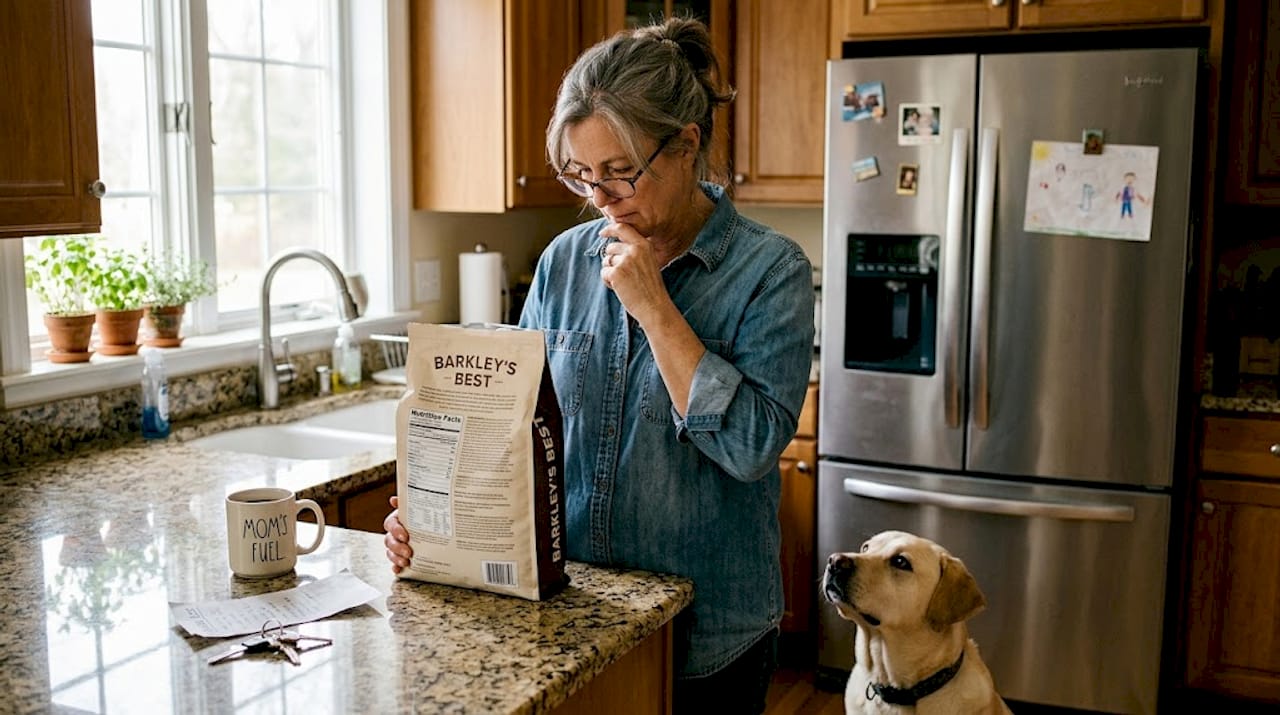
You read the label, see that a dog food is “approved” and assume it must be safe. But regulatory approval and optimal nutrition are two very different things. Most commercial pet foods contain a long list of additives, and while agencies like the FDA and AAFCO (Association of American Feed Control Officials) evaluate these substances, their safety standards are built around avoiding obvious harm, not maximizing your dog’s long-term health. If you’ve ever wondered whether those hard-to-pronounce ingredients are truly fine for your best friend, you’re asking exactly the right question.
Table of Contents
Key Takeaways
Point | Details |
Not all additives harmful | Most approved pet food additives are safe at regulated levels but still may not be optimal for every dog’s health. |
Contaminant risk exists | Additives can co-occur with contaminants like heavy metals, especially in dry pet food. |
Precaution advised | Many veterinarians and owners still recommend additive avoidance for sensitive or chronically ill pets. |
Read labels closely | You can avoid unwanted additives by selecting additive-free, minimally processed, or freeze-dried foods. |
Understanding pet food additives: What are they and why are they used?
Now that we’ve framed the big question, let’s clarify what additives actually are and why they’re in most dog foods.
An additive in pet food is any substance added beyond the core nutritional ingredients. They fall into a few main categories:
Preservatives: Chemicals like BHA (butylated hydroxyanisole) and BHT (butylated hydroxytoluene) that extend shelf life by preventing fat from going rancid.
Artificial colors: Dyes added purely for visual appeal, mainly to attract the human buyer, not the dog.
Flavor enhancers: Synthetic or natural compounds used to make food more palatable, especially when the base ingredients are low quality.
Texturizers and stabilizers: Ingredients that control the thickness and consistency of wet or dry food.
Why do pet food companies include them? Mostly for practical and economic reasons. Preservatives allow food to sit on a shelf for months or even years without spoiling. Artificial colors make kibble look more appealing. Flavor enhancers mask the taste of lower-quality protein sources. These choices often come down to cost and manufacturing convenience, not your dog’s well-being.
From a regulatory standpoint, agencies like the FDA and AAFCO evaluate additives primarily using laboratory data and industry-submitted research. A meta-analysis of 121 studies found no significant adverse effects from approved additives and preservatives in pet food when used within regulatory limits. That sounds reassuring. But it’s worth understanding what those limits are actually based on.
“Regulatory approval means the additive hasn’t been proven harmful at typical doses. It does not mean the additive contributes to your dog’s health.”
Regulatory standards set the floor, not the ceiling. Approval means minimal risk was demonstrated under controlled conditions, often in short-term studies. It doesn’t mean the ingredient is beneficial or even neutral over a lifetime of daily exposure. You can learn more about how additives science explained connects to real-world pet food choices, and why understanding pet food additives matters for every dog owner.
Pro Tip: When you flip a bag of dog food over to read the ingredient list, anything you can’t picture in its natural form is likely an additive worth questioning.
Are additives truly safe? What science tells us
With the basics covered, it’s time to look at what decades of research actually say about additive safety.
The current scientific consensus is moderately reassuring. A large meta-analysis of 121 studies found risk differences near zero for most approved additives when used at regulated levels. In other words, at the doses found in commercial pet food, most approved substances don’t appear to cause measurable harm in the short term.
Here’s a simplified look at how key additives have performed in research:
Additive | Common use | Research findings | Concern level |
BHA | Preservative | Cancer signals in rodent studies | Moderate |
BHT | Preservative | Liver effects in high-dose animal studies | Moderate |
Artificial dyes | Color | Limited pet-specific data | Low to moderate |
Ethoxyquin | Preservative | Restricted in human food; still in some pet food | Higher |
Carrageenan | Texturizer | Intestinal inflammation in animal models | Moderate |
The important caveat: most studies are short-term and conducted on lab rodents, not dogs. There is a meaningful gap between a six-month rodent study and a dog eating the same formula every day for twelve years. Some veterinarians point to additive risks as a reason to favor caution, especially given cancer risk in pets is an active area of nutritional research.
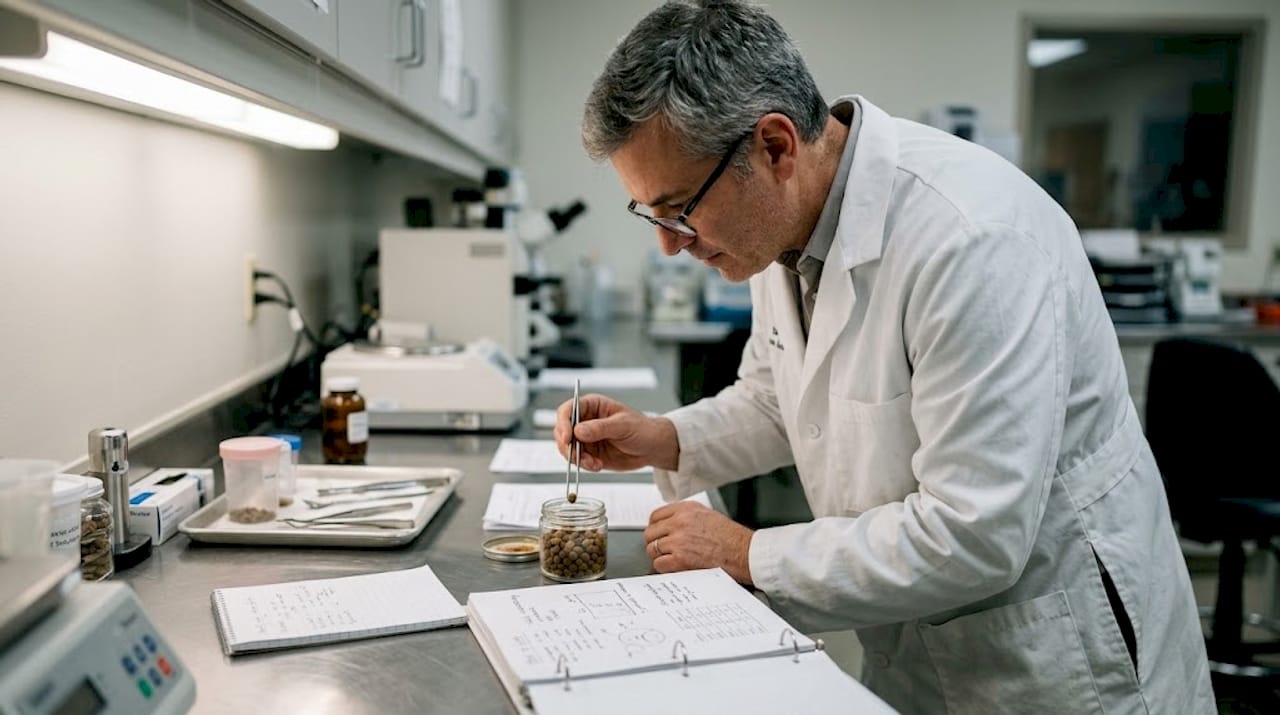
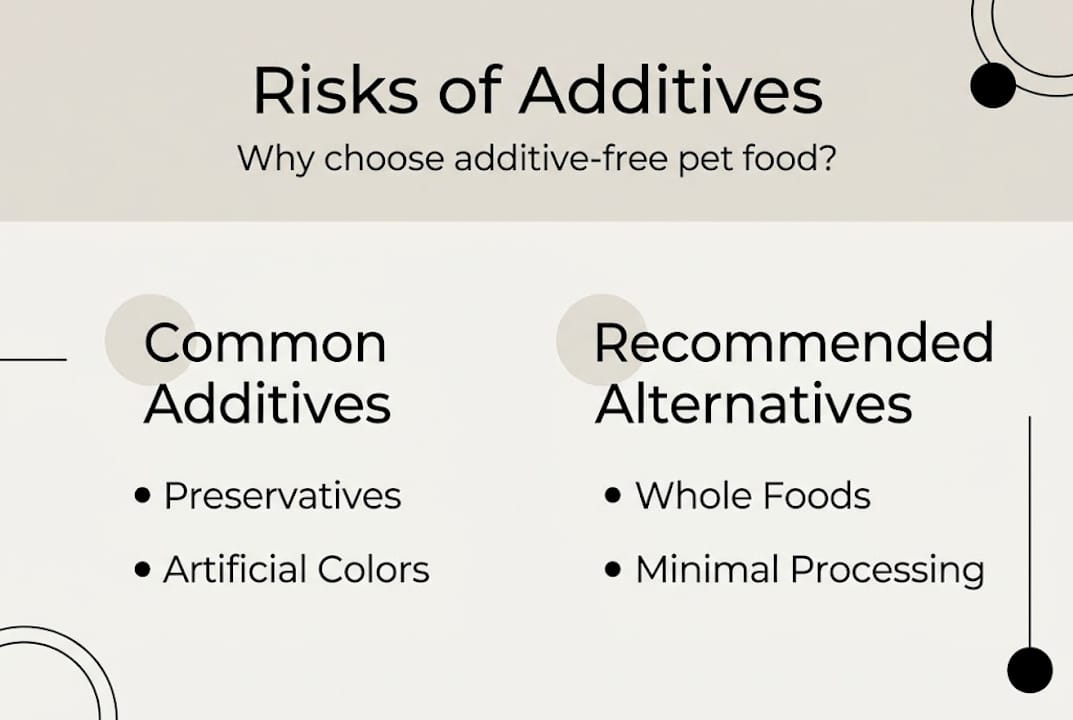
While regulatory bodies deem approved levels safe, precautionary avoidance of synthetics is favored by some veterinarians due to cancer signals in rodents and a recognized need for more pet-specific data.
Pro Tip: If your dog has a sensitive stomach, chronic skin issues, or a breed predisposition to cancer, talking to your vet about switching to additive-free food is a very reasonable first step.
The bottom line is that “no proven harm” is not the same as “confirmed safe for a lifetime.” The data gap is real, and for health-conscious pet owners, that gap is reason enough to look closely at what goes into every bowl.
Hidden dangers: Contaminants and the additive connection
Even with safe additives, another layer of risk often goes unnoticed: contaminants linked to processed foods.
Additives don’t exist in isolation. The manufacturing processes that create heavily processed pet food, especially dry kibble, can introduce or concentrate harmful substances. One of the most serious concerns is heavy metal contamination. Research shows that some pet foods are contaminated with toxic metals including chromium (Cr), arsenic (As), mercury (Hg), and lead (Pb), with dry food showing higher contamination rates and chromium posing the greatest risk.
“Chronic low-level exposure to heavy metals is particularly concerning because it builds up silently over time, with no obvious symptoms until real damage has occurred.”
Here’s how dry and canned food compare on contamination risk:
Risk factor | Dry/kibble food | Canned/wet food |
Heavy metal presence | Higher (especially Cr) | Lower overall |
Processing temperature | High heat (nutrient loss) | Moderate heat |
Preservative use | More common | Less common |
Additive load | Generally higher | Varies widely |
So why does processing matter for pet food contaminants? High-heat manufacturing can concentrate certain minerals and metals found naturally in ingredients, and the additives used to stabilize processed food sometimes interact with these compounds. Choosing minimally processed formats, like freeze-dried food benefits, is one practical way to lower exposure.
Here are simple steps to reduce your dog’s contaminant exposure:
Rotate protein sources so no single metal-accumulating ingredient dominates the diet.
Prioritize freeze-dried or minimally processed food over conventional dry kibble.
Check for third-party testing or certifications on any brand you consider.
Look for brands that publish heavy metal testing results openly.
Avoid foods with vague ingredient terms like “meat meal” or “animal by-product.”
These steps won’t eliminate all risk, but they meaningfully reduce your dog’s chronic exposure to substances that accumulate quietly over years.
Choosing additive-free pet food: Practical steps for dog owners
Knowing the risks, what practical steps can you take to avoid additives and nourish your dog better?
Start with the ingredient label. A clean label is your first filter. If the list is short and every ingredient is something you could find in a kitchen, you’re on the right track. If you see color numbers, chemical preservatives, or terms ending in “-ate” or “-ite,” those are additive red flags.
Here’s a practical checklist for evaluating any dog food:
Count the ingredients. Fewer is usually better. A whole food product might have 10 to 15 recognizable items.
Identify the protein source. It should be named and specific, like “chicken” or “salmon,” not vague terms.
Look for natural preservation. Vitamin E (often listed as mixed tocopherols) and rosemary extract are natural alternatives to BHA and BHT.
Check for added colors. No dog needs their food to be a specific color. If you see dyes, skip it.
Search for third-party verification. Brands that invest in outside testing are more transparent about what’s actually in the bag.
The whole ingredient advantages of feeding recognizable foods go beyond just avoiding additives. Whole foods preserve natural enzymes, antioxidants, and phytonutrients that processing destroys. When choosing premium pet food, look for formats that keep ingredients intact.
Minimally processed pet food is the category that has seen the most growth among health-conscious owners, and for good reason. Freeze-drying in particular preserves nutrition without the need for chemical preservatives. The advantages of freeze-dried dog food include better nutrient retention, no artificial additives, and a longer shelf life achieved through moisture removal rather than chemical intervention.
While most additives are safe at regulated levels, many pet owners and vets choose to avoid them as a precaution, especially for sensitive breeds or pets managing chronic conditions.
Pro Tip: If your dog has recurring ear infections, itchy skin, or digestive issues, an additive in their current food could be a contributing factor. An elimination diet using a single-protein, whole food product often reveals surprising improvements within four to six weeks.
Choosing additive-free food is an investment. It often costs more upfront, but fewer vet visits, better energy, and a longer, healthier life for your dog make it worth every dollar.
Our take: Why ‘safe’ isn’t always best for your dog’s diet
Stepping back from the scientific details, here’s why we believe cautious avoidance makes the most sense for your pet.
Regulatory bodies do valuable work. But their job is to keep things from being overtly dangerous, not to optimize your dog’s vitality. “No proven harm” at standard doses is a low bar when you’re feeding the same formula twice a day for over a decade. The science behind additive avoidance makes it clear that absence of proven harm is not evidence of long-term benefit.
Holistic veterinarians and pet nutritionists consistently report something interesting: dogs switched to cleaner, whole food diets often show noticeable improvements in coat quality, energy, digestion, and behavior, even when their previous food was “within safe limits.” That kind of real-world feedback matters.
The honest truth is that lifetime exposure testing for dogs simply doesn’t exist at scale. We are, in a sense, running that experiment right now on our pets. Given that reality, precaution isn’t paranoia. It’s smart stewardship of a life that depends entirely on your choices. Whole food, additive-free diets don’t just avoid potential negatives. They actively support your dog’s body with the nutrients it was designed to use.
Ready to upgrade your dog’s nutrition?
If you’ve made it this far, you already care more about your dog’s nutrition than most. That matters.
At Loyal Saints, every product we offer is built around one principle: your dog deserves food made from real, whole ingredients with nothing artificial added. No synthetic preservatives. No mystery dyes. Just honest nutrition your dog’s body can actually use. If you want to understand why freeze dried food is one of the best choices you can make for long-term health, we’ve put together everything you need to know. Or, if you’re ready to act, go ahead and browse our shop to find a clean, additive-free option your dog will love. More tail wags are coming.
Frequently asked questions
What are the most common additives found in dog food?
The most common additives include artificial preservatives, colors, flavors, and stabilizers such as BHA, BHT, and ethoxyquin. You can find a breakdown of these approved additives and preservatives and what research says about each.
Do additives cause cancer or chronic diseases in dogs?
Approved additives used at regulated levels show no proven cancer risk in dogs, but precautionary avoidance of synthetics is favored by some veterinarians due to suggestive rodent studies and limited lifetime data.
Can I avoid both additives and contaminants like heavy metals in pet food?
Choosing minimally processed, freeze-dried, or certified whole food products reduces both additive and contaminant risks. Research confirms that some pet foods contain toxic metals more commonly in dry food formats, so switching formats helps.
How do I know if a pet food is additive-free?
Look for short ingredient lists with recognizable foods and products labeled “additive-free,” “whole food,” or “freeze-dried.” Brands that publish third-party testing results offer the highest level of transparency and trust.
Recommended
Comments