.png)
Wholesome Pet Nutrition: Boosting Vitality Naturally
- Towanda Brunson
- Feb 25
- 10 min read

Finding the right dog food in a busy American city can feel like a puzzle when every label promises results but few deliver real nourishment. For urban pet parents who care deeply about their dog’s long-term health, understanding the power of whole, minimally processed ingredients is the key. This guide breaks down what wholesome pet nutrition means, how freeze-dried options preserve natural goodness, and what to look for so your dog thrives with sustained energy and vitality every day.
Table of Contents
Key Takeaways
Point | Details |
Whole Nutrition | Feed dogs a diet based on whole, minimally processed ingredients for optimal health. |
Freeze-Dried Benefits | Freeze-dried dog food maintains nutrient integrity while offering convenience and taste. |
Ingredient Quality | Prioritize high-quality proteins and avoid fillers or unrecognizable additives. |
AAFCO Compliance | Ensure dog food meets AAFCO standards for complete and balanced nutrition tailored to your dog’s life stage. |
Defining wholesome pet nutrition for dogs
Wholesome pet nutrition means feeding your dog a diet built on whole, minimally processed ingredients that deliver real nutritional value. It’s not about trendy marketing labels or filling your dog’s bowl with by-products and fillers. True wholesome nutrition focuses on what actually nourishes your dog’s body.
At its core, wholesome nutrition includes:
High-quality proteins from real meat sources that build and maintain muscle
Healthy fats that support skin, coat, and brain health
Fresh fruits and vegetables providing vitamins, minerals, and natural fiber
Balanced carbohydrates for sustained energy without unnecessary grains
Essential nutrients in bioavailable forms your dog can actually absorb and use
Your dog’s nutritional needs aren’t one-size-fits-all. A 5-year-old Golden Retriever needs different nutrition than a senior Chihuahua or a growing puppy. Age, size, activity level, and health status all shape what your dog requires to thrive. Essential dog food ingredients must be individually tailored to your specific dog.
The quality and sourcing of ingredients matter tremendously. A chicken meal is not the same as real chicken. A synthetic vitamin supplement isn’t identical to nutrients found in whole foods. Your dog’s digestive system recognizes and processes real food far more efficiently than heavily processed alternatives.
Wholesome nutrition adapts to your dog’s life stage and health needs, ensuring they receive complete, balanced nourishment throughout their life.
When shopping for food, you’re looking for whole food ingredients that support lifelong health—not ingredient lists filled with unrecognizable additives. This approach directly impacts whether your dog has energy for those morning walks, maintains a healthy weight, and enjoys good digestion.
Understanding wholesome nutrition also means recognizing that feeding well is an investment in your dog’s longevity. A dog thriving on quality nutrition often enjoys fewer health issues, cleaner teeth, shinier coats, and more vibrant energy throughout their life.
Pro tip: Read your dog’s current food label and compare it to what you’d want to eat yourself—if you wouldn’t recognize or eat the ingredients, your dog probably shouldn’t either.
Types and benefits of freeze-dried dog foods
Freeze-dried dog food has transformed how health-conscious owners feed their pets. It combines the nutritional power of whole ingredients with the convenience of shelf-stable kibble. Understanding what makes freeze-dried nutrition different helps you make the best choice for your dog.
Freeze-drying works by removing moisture from real food while preserving the nutritional integrity, flavor, and texture. Unlike high-heat processing that damages nutrients, this gentle method retains much of the natural nutrients found in raw ingredients. Your dog gets the health benefits of fresh food without the storage challenges.
Types of freeze-dried options include:
Complete meals featuring balanced proteins, vegetables, and fruits in one bowl
Meal toppers that enhance regular kibble with concentrated nutrition
Treats offering freeze-dried single ingredients like chicken or beef
Raw-like diets that closely mimic whole prey feeding patterns
Organ and meat blends combining muscle meat with nutrient-dense organs
The benefits for your dog are substantial and noticeable. Enhanced palatability and nutritional value make freeze-dried food appealing to picky eaters while supporting their health. High-quality proteins, vitamins, and minerals remain intact because minimal heat exposure preserves their bioavailability.
Your dog’s digestive system responds positively to freeze-dried nutrition. These foods rehydrate quickly when mixed with water, supporting easier digestion and nutrient absorption compared to dense kibble. Many owners report improved coat quality, better energy levels, and healthier weight within weeks.
Here’s how freeze-dried dog food stacks up against traditional kibble:
Aspect | Freeze-Dried Dog Food | Traditional Kibble |
Nutrient Preservation | High (minimal heat) | Lower (high heat processing) |
Digestibility | Easier, rehydrates quickly | Often dense, less digestible |
Ingredient Quality | Typically whole foods | Often includes fillers |
Storage | Shelf-stable, compact | Shelf-stable, bulky bags |
Preparation | Add water and serve | Ready to feed out of bag |
Taste Appeal | Enhanced flavor, palatable | May be bland for picky dogs |
Price | Higher | Lower |
Freeze-dried foods offer the convenience of kibble with the nutritional integrity of fresh whole ingredients, giving your dog the best of both worlds.
Storage and handling are incredibly practical. Freeze-dried meals take up minimal space, last longer than fresh or raw options, and require no freezer capacity. Just scoop, add water, and serve within minutes.
When selecting freeze-dried options, verify they meet AAFCO standards for complete and balanced nutrition. This ensures your dog receives all essential nutrients throughout their life stage, whether puppy, adult, or senior.
Pro tip: Start by mixing a small amount of freeze-dried food with your dog’s current diet, gradually increasing the ratio over 7-10 days to allow their digestive system to adjust smoothly.
Key ingredients and balanced formulations
Balanced dog nutrition isn’t about feeding random wholesome ingredients—it’s about understanding how they work together to support your dog’s body. The right formula keeps your dog energized, healthy, and thriving for years to come.
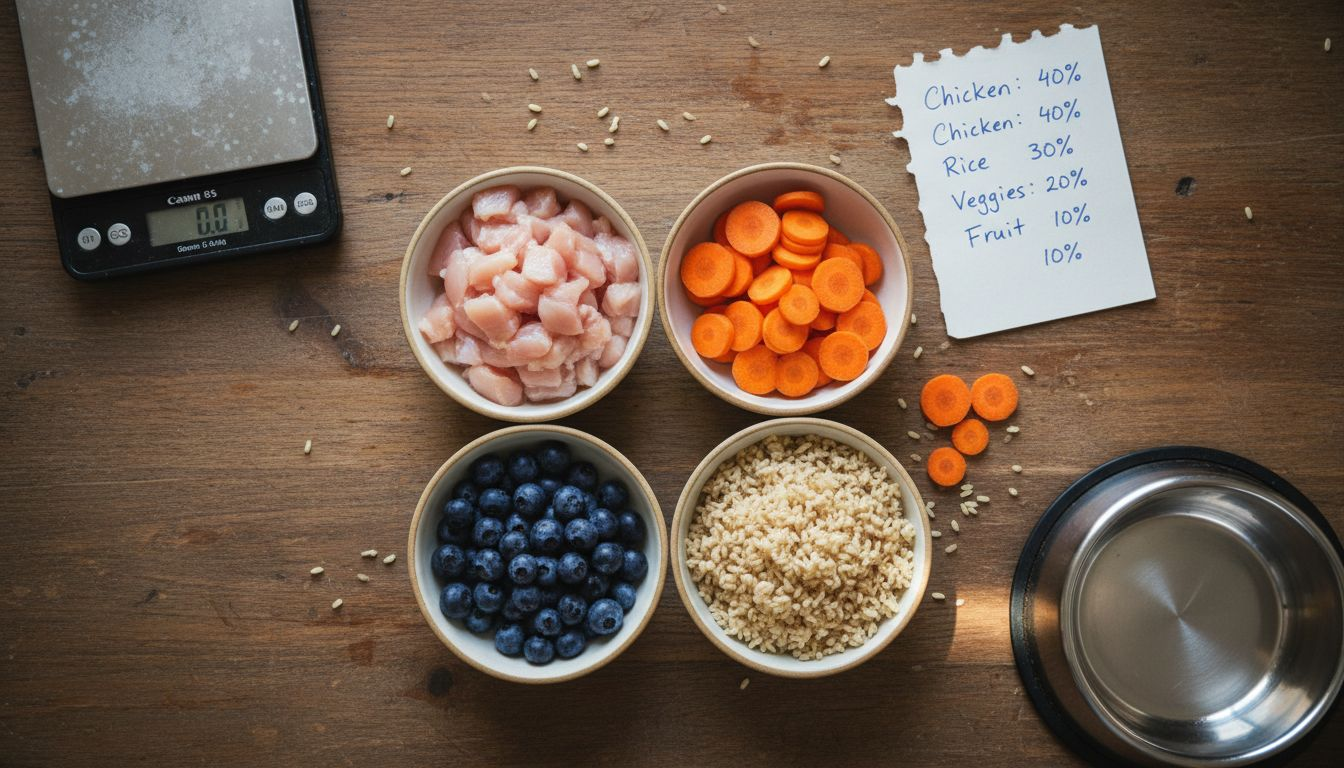
A truly balanced formulation delivers the right amounts of macronutrients—proteins, fats, and carbohydrates—alongside micronutrients like vitamins and minerals. Your dog needs each component in proper ratios to build muscle, maintain energy, support immunity, and keep organs functioning optimally.
Key ingredient categories include:
High-quality animal proteins from real meat, poultry, and fish that build and repair tissue
Healthy fats including omega-3 and omega-6 fatty acids for skin, coat, and brain health
Whole vegetables and fruits providing fiber, antioxidants, and natural vitamins
Essential minerals like calcium and phosphorus for bone strength and metabolic function
Bioavailable vitamins that your dog’s body can actually absorb and utilize
The foundation starts with protein. Quality animal proteins from named meat sources like chicken, beef, or fish should be the primary ingredient, not by-products or mysterious “meal” substances. Your dog thrives on real meat sources their ancestors ate.
Fats matter just as much as protein. Omega-3 and omega-6 fatty acids support skin barrier health, reduce inflammation, and fuel brain function. Dogs on properly balanced formulations often show shinier coats, clearer skin, and sharper mental focus within weeks.
Complete and balanced formulations meeting AAFCO standards ensure your dog receives all essential nutrients throughout their life stage, whether puppy, adult, or senior.
Vegetables and fruits aren’t just filler—they provide fiber for digestive health and antioxidants for cellular protection. Carrots, sweet potatoes, blueberries, and spinach deliver real nutritional value that kibble alone cannot provide.
The ratios matter tremendously. Dogs don’t need grain-based carbohydrates when quality proteins and vegetables provide sustained energy. Appropriate macronutrient ratios support energy production, immune function, and tissue maintenance without empty calories.
When evaluating any dog food, look for ingredient lists that read like actual food. If you cannot identify what something is, your dog probably shouldn’t eat it. Whole ingredients mean better digestion, stronger immunity, and longer vitality.
Pro tip: Check the ingredient label’s first three items—they should be recognizable whole proteins or foods, not generic meals, by-products, or fillers that indicate lower nutritional quality.
AAFCO and FDA nutrition standards in the US
When you’re shopping for dog food in the United States, two organizations are working behind the scenes to protect your pet: AAFCO and the FDA. Understanding what these standards mean helps you make informed choices about what goes in your dog’s bowl.
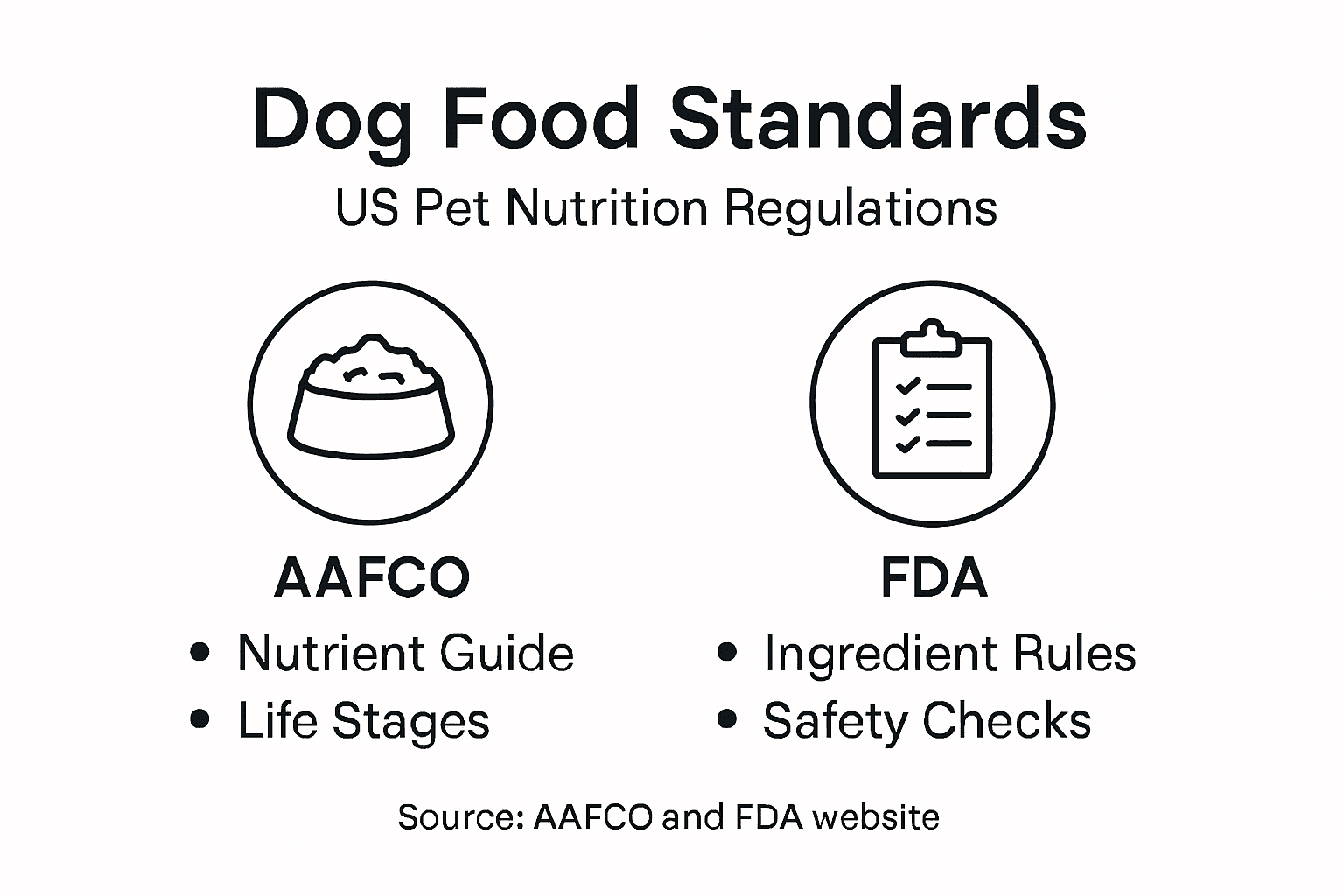
AAFCO stands for the Association of American Feed Control Officials. This organization doesn’t regulate food directly—instead, it establishes the nutritional guidelines and definitions that pet food manufacturers must follow. Think of AAFCO as the rulebook for complete and balanced dog nutrition.
Here’s what AAFCO does:
Sets minimum and maximum nutrient levels for different dog life stages (puppy, adult, senior)
Defines what nutrients dogs actually need to thrive
Creates standards manufacturers must meet to label food as “complete and balanced”
Publishes nutrient profiles that guide formulation across the industry
The FDA (Food and Drug Administration) enforces these standards and oversees safety. Pet food safety regulations include ingredient sourcing, processing methods, and label accuracy. The FDA watches for contamination, misbranding, and unsafe practices that could harm your dog.
When you see “complete and balanced” on a label, it means the food meets AAFCO nutrient profiles or has passed feeding trials proving nutritional adequacy. This is your assurance the food contains the vitamins, minerals, proteins, and fats your dog needs.
Look for the AAFCO statement on your dog’s food label—it’s your guarantee the food meets established nutritional standards for your dog’s life stage.
The FDA’s role extends beyond just nutrients. They enforce regulations covering ingredient quality, manufacturing processes, and honest labeling. This means manufacturers cannot hide poor-quality ingredients behind misleading names or hide contamination risks.
In practical terms, this regulatory framework protects your dog by preventing companies from selling nutritionally incomplete food or products containing harmful contaminants. AAFCO protein standards ensure protein sources meet minimum requirements for muscle maintenance and overall health.
When evaluating any dog food, check three things: the AAFCO statement confirming “complete and balanced” status, the life stage it’s formulated for, and ingredient quality. If a product lacks AAFCO compliance language, it’s likely not formulated to meet your dog’s full nutritional needs.
Here’s a quick reference to AAFCO and FDA roles in pet food standards:
Organization | Main Role | Impact on Dog Food |
AAFCO | Sets nutrient guidelines | Defines ‘complete and balanced’ food |
FDA | Enforces regulations | Ensures safety and label accuracy |
AAFCO Statement | Certification language | Confirms nutritional adequacy |
FDA Oversight | Ingredient quality, labeling | Prevents contamination and misbranding |
Pro tip: Always verify the AAFCO statement matches your dog’s life stage (puppy, adult, or senior), as nutrient requirements vary significantly, and feeding the wrong formula can create health problems over time.
Common mistakes, risks, and safer alternatives
Even well-intentioned dog owners can make feeding mistakes that undermine their pet’s health. Knowing what to avoid and how to do better protects your dog from preventable nutritional problems that accumulate over time.
Common mistakes include:
Feeding unbalanced homemade diets without veterinary guidance or nutritional analysis
Over-relying on treats, which can comprise 25-50% of daily calories and create nutrient imbalances
Ignoring your dog’s life stage and feeding adult food to puppies or senior formulas to young dogs
Switching foods frequently, causing digestive upset and preventing nutritional stability
Adding random human foods without understanding caloric impact or toxicity risks
These mistakes create real consequences. Common nutritional risks include nutrient deficiencies, obesity, digestive problems, and mineral imbalances that surface years later as chronic disease.
A dog fed inconsistent portions and random table scraps may develop obesity by age 5. Calcium-phosphorus imbalances in homemade diets without proper supplementation can cause severe orthopedic problems in growing puppies. Vitamin E or selenium deficiencies manifest as poor coat quality and weakened immunity.
The safer path involves choosing commercially prepared complete diets that meet AAFCO standards. These formulas are formulated by nutritionists, tested for safety, and guaranteed to contain balanced nutrients. Your dog’s digestive system adapts to consistent nutrition, supporting better health outcomes.
Consulting with your veterinarian about your dog’s specific nutritional needs ensures feeding decisions support their individual health profile and life stage.
If you prefer fresh or homemade options, work with a board-certified veterinary nutritionist to ensure formulas are balanced. A proper homemade diet requires specific protein, fat, carbohydrate, vitamin, and mineral ratios tailored to your dog.
Regular nutritional assessments matter too. Monitor your dog’s weight, coat quality, energy levels, and digestion. These visible signs tell you whether current nutrition is working or needs adjustment.
Avoid feeding foods toxic to dogs like chocolate, grapes, raisins, onions, xylitol, and macadamia nuts. These seem like occasional treats but can cause serious harm. When in doubt about a food’s safety, ask your veterinarian before offering it.
Pro tip: Keep a simple feeding log noting what your dog eats daily—this helps your vet identify nutritional patterns and diagnose issues faster if health problems develop.
Elevate Your Dog’s Vitality with Wholesome Nutrition Today
Feeding your dog with whole, carefully balanced ingredients is essential to boost vitality, muscle strength, and digestive health just as “Wholesome Pet Nutrition: Boosting Vitality Naturally” highlights. If you want to avoid common feeding mistakes and provide your furry family member with only the highest quality nutrition, freeze-dried meals made from human-grade proteins, fresh fruits, and vegetables can transform their well-being. At Loyal Saints Pets, we specialize in premium, minimally processed dog foods designed specifically to meet AAFCO standards and support a healthy, active lifestyle for dogs of all life stages.
Discover the power of natural ingredients that nourish like fresh food without the hassle by exploring our freeze-dried selections. Your dog deserves the best nutrition that promotes longer, happier lives and vibrant energy. Make the switch today and see the difference wholesome, veterinarian-approved recipes can bring by visiting Loyal Saints Pets. Experience free shipping on qualifying orders and join countless pet parents who trust us for outstanding, health-focused dog food solutions.
Frequently Asked Questions
What is wholesome pet nutrition?
Wholesome pet nutrition means feeding your dog a diet made from whole, minimally processed ingredients that provide real nutritional value, rather than fillers and by-products.
How does freeze-dried dog food differ from traditional kibble?
Freeze-dried dog food preserves the nutritional integrity of whole ingredients through a low-heat process, allowing for better nutrient retention and digestibility compared to traditional kibble, which often uses high heat that can damage nutrients.
What are key ingredients to look for in dog food?
High-quality animal proteins, healthy fats, whole vegetables and fruits, essential minerals, and bioavailable vitamins should be prioritized in dog food to ensure a balanced and nutritious diet tailored to your dog’s needs.
How can I ensure my dog is receiving balanced nutrition?
Choose commercially prepared dog foods that meet AAFCO standards for complete and balanced nutrition. Additionally, consult with a veterinarian or a veterinary nutritionist to tailor a diet to your dog’s specific needs based on their age, size, and health status.
Recommended
Comments