.png)
Veterinarian-Approved Pet Nutrition and Its Impact
- Towanda Brunson
- 3 days ago
- 8 min read

Finding the right nutrition for your dog can feel overwhelming when every product promises lasting health and happiness. For many American women, a precise and veterinarian-approved approach is more than a trend; it is a commitment to their dog’s longevity and everyday vitality. This guide reveals how a scientifically validated, premium freeze-dried diet—backed by the National Research Council’s evidence-based standards—can help safeguard wellness, offering clarity on what sets truly expert nutrition apart from generic options.
Table of Contents
Key Takeaways
Point | Details |
Veterinarian-Approved Nutrition is Essential | Tailored diets created under professional guidance optimize pet health and prevent deficiencies. |
Types of Diets Address Unique Needs | Various veterinarian-approved diets are designed for specific health conditions and life stages, ensuring proper nutritional support. |
Quality Standards Matter | Adhering to AAFCO guidelines ensures pet foods meet comprehensive nutritional requirements, safeguarding your pet’s health. |
Consultation is Key | Regular consultations with veterinarians help adapt nutritional plans to changing health needs over time. |
Defining Veterinarian-Approved Pet Nutrition
Veterinarian-approved pet nutrition represents a comprehensive, scientifically validated approach to animal dietary health that goes far beyond simple feeding. At its core, this approach involves systematic nutritional assessment and personalized dietary strategies designed to optimize an animal’s overall wellness.
The National Research Council provides foundational standards for what constitutes veterinarian-approved nutrition. According to their authoritative nutrient requirement guidelines, these nutrition plans must meet species-specific nutritional needs while accounting for individual factors like age, weight, activity level, and health status.
Key components of veterinarian-approved pet nutrition include:
Comprehensive body and muscle condition scoring
Individualized dietary recommendations
Evidence-based nutritional standards
Regular nutritional assessments
Consideration of breed-specific metabolic requirements
The American Animal Hospital Association guidelines emphasize that these nutrition plans must be tailored to each pet’s unique physiological needs, avoiding generic, one-size-fits-all dietary approaches. Professional veterinarians evaluate multiple factors to create precise nutritional strategies that support optimal health and prevent potential nutritional deficiencies.
Pro tip: Consult your veterinarian annually to reassess and update your dog’s nutrition plan, as dietary needs change with age and health status.
Types of Veterinarian-Approved Diets Explained
Veterinarian-approved diets represent a sophisticated approach to canine nutrition, carefully designed to meet the unique dietary requirements of dogs at different life stages and health conditions. These meticulously crafted nutrition plans go beyond standard feeding strategies, incorporating scientific research and individualized assessment to support optimal animal wellness.
According to the World Small Animal Veterinary Association guidelines, veterinarian-approved diets can be categorized into several primary types:
Commercial Complete Diets: Nutritionally balanced formulations meeting AAFCO standards
Therapeutic Diets: Specialized nutrition for specific health conditions
Elimination Diets: Used to identify and manage food allergies
Home-Prepared Diets: Customized meals developed under professional veterinary supervision
Life Stage Diets: Nutrition tailored to specific age groups and activity levels
The Pet Nutrition Alliance highlights that each diet type serves a distinct purpose. Veterinary nutritionists carefully evaluate individual pet requirements, considering factors like breed, age, weight, metabolic rate, and potential health challenges when recommending specific dietary approaches.
Here’s a concise comparison of primary veterinarian-approved diet types and their typical applications:
Diet Type | Main Purpose | Typical Use Case |
Commercial Complete | Provide balanced nutrition per standards | Everyday feeding for healthy dogs |
Therapeutic | Manage or treat specific health conditions | Dogs with medical issues |
Elimination | Identify and control food allergies | Dogs with allergy symptoms |
Home-Prepared | Customize nutrition under vet guidance | Unique needs or owner preference |
Life Stage | Tailor nutrients for age/activity | Puppies, seniors, active adults |
Modern veterinarian-approved diets are not one-size-fits-all solutions but precision-engineered nutritional strategies. They incorporate advanced scientific understanding of canine metabolism, nutrient absorption, and breed-specific nutritional needs. Professional veterinarians conduct comprehensive assessments, including body condition scoring, metabolic evaluations, and detailed health histories to develop personalized nutrition plans that support long-term wellness and prevent potential nutritional deficiencies.
Pro tip: Request a comprehensive nutrition consultation with your veterinarian to develop a diet plan uniquely tailored to your dog’s specific health profile and lifestyle needs.
Key Features of Approved Nutrition
Veterinarian-approved nutrition represents a comprehensive approach to canine dietary health that goes well beyond traditional feeding strategies. These sophisticated nutritional plans are meticulously designed to address the intricate and unique dietary requirements of dogs, taking into account multiple complex physiological factors and individual health considerations.
The American Animal Hospital Association guidelines highlight several critical features of approved nutrition:
Individualized Nutritional Assessments: Customized evaluations of each dog’s specific needs
Life-Stage Specific Formulations: Targeted nutrition for puppies, adults, and senior dogs
Evidence-Based Recommendations: Scientifically validated nutritional strategies
Ongoing Health Monitoring: Continuous tracking of body condition and wellness indicators
Nutrient Balance: Precise calibration of protein, fat, carbohydrates, vitamins, and minerals
Professional veterinarians employ comprehensive nutritional strategies that incorporate advanced scientific understanding of canine metabolism. These strategies involve detailed assessments including body condition scoring, metabolic evaluations, and thorough health histories to develop personalized nutrition plans that support optimal wellness and prevent potential nutritional deficiencies.
Veterinarian-approved nutrition is not a one-size-fits-all solution, but a precision-engineered approach to supporting your dog’s unique health requirements.
Modern approved nutrition plans emphasize quality ingredient sourcing, scientific nutrient profiling, and collaborative approaches between veterinary professionals and pet owners. They are designed to be adaptable, addressing chronic health conditions while promoting long-term vitality and supporting the complex nutritional needs of dogs across different life stages and health conditions.

Pro tip: Schedule an annual comprehensive nutrition consultation to ensure your dog’s diet evolves with their changing health and lifestyle needs.
AAFCO Standards and Product Compliance
Veterinarian-approved pet nutrition operates within a complex regulatory landscape designed to ensure the highest standards of dietary quality and safety for companion animals. These standards represent a sophisticated framework that protects pet health by establishing rigorous nutritional guidelines and transparent labeling requirements across the pet food industry.
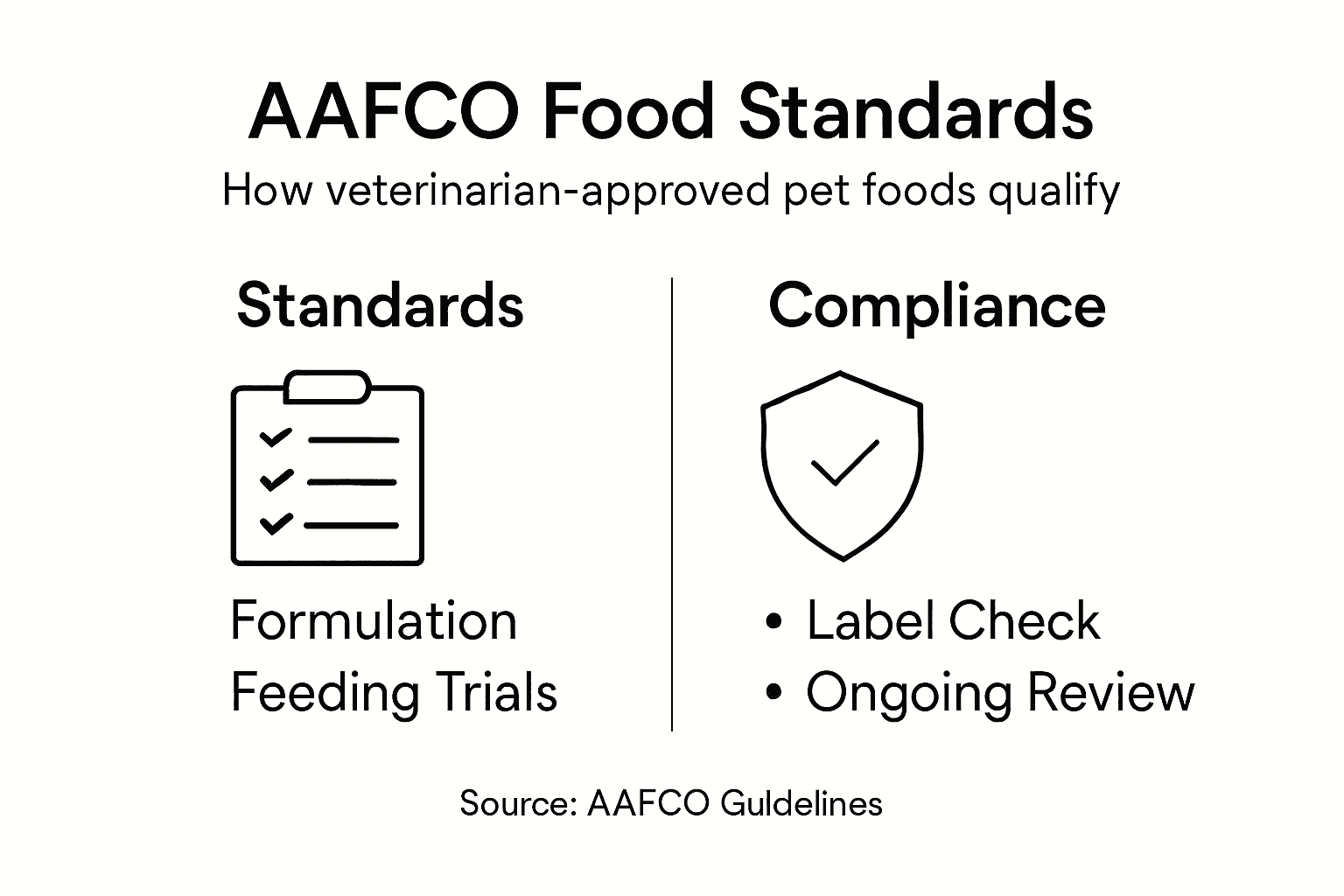
AAFCO nutritional standards provide critical guidelines for pet food manufacturers, establishing comprehensive requirements for nutritional adequacy and product compliance. These standards encompass several key areas:
Nutritional Profiles: Specific nutrient requirements for different species and life stages
Feeding Trials: Empirical testing of nutritional adequacy
Ingredient Quality: Stringent sourcing and safety requirements
Labeling Accuracy: Transparent disclosure of nutritional content
Veterinary Oversight: Alignment with professional nutritional recommendations
Professional veterinarians rely on AAFCO’s regulatory framework to evaluate pet nutrition products. This framework ensures that nutritional claims are scientifically substantiated, providing a critical mechanism for verifying the quality and safety of commercial pet foods through comprehensive nutrient analysis and mandatory labeling standards.
AAFCO standards represent the gold standard in ensuring pet food meets scientifically validated nutritional requirements for optimal animal health.
The compliance process involves multiple layers of scrutiny, including formulation analysis, feeding trials, and ongoing nutritional assessments. These rigorous evaluations help guarantee that veterinarian-approved nutrition products deliver precise nutritional profiles tailored to support dogs’ complex physiological needs across different life stages and health conditions.
Pro tip: Always check for the AAFCO nutritional adequacy statement on pet food packaging to verify the product meets professional dietary standards.
Risks of Non-Veterinarian-Approved Foods
Non-veterinarian-approved pet foods represent a significant potential health risk that extends far beyond simple dietary inconvenience. These unverified nutrition sources can compromise a dog’s long-term health, potentially leading to complex medical complications that might not become apparent until significant damage has already occurred.
Experts at Tufts University highlight that unregulated pet nutrition can result in multiple serious health consequences:
Nutritional Deficiencies: Inadequate vitamin and mineral balance
Obesity Risks: Improper calorie and nutrient distribution
Digestive Complications: Potential gastrointestinal issues
Metabolic Disruptions: Potential long-term hormonal imbalances
Compromised Immune Function: Reduced disease resistance
The potential risks associated with non-veterinarian-approved foods extend beyond immediate nutritional concerns. Unverified dietary sources can introduce significant health challenges, including misleading marketing claims, inferior ingredient quality, and formulations that might exacerbate underlying health conditions.
Non-veterinarian-approved foods can be a silent threat to your dog’s comprehensive health and wellness.
Professional veterinary nutritionists emphasize that comprehensive nutritional assessment goes far beyond basic ingredient listing. These experts conduct rigorous analysis of nutrient profiles, bioavailability, and potential interactions, ensuring that every aspect of dietary intake supports optimal canine health across different life stages and individual physiological requirements.
Pro tip: Consult with a veterinary nutritionist annually to thoroughly review and validate your dog’s current dietary plan, identifying potential nutritional gaps or risks.
Comparing Premium and Conventional Pet Foods
The landscape of pet nutrition is complex, with significant distinctions between premium and conventional pet food options that extend far beyond price point. Understanding these nuanced differences can dramatically impact a dog’s long-term health, metabolic function, and overall quality of life.
According to the World Small Animal Veterinary Association guidelines, key comparison points between premium and conventional pet foods include:
Ingredient Quality: Premium foods often use higher-grade, more traceable protein sources
Manufacturing Standards: More rigorous testing and quality control processes
Nutritional Depth: Enhanced nutrient profiles and bioavailability
Research Investment: More extensive feeding trials and scientific validation
Consistency: More uniform nutritional content across product batches
Veterinary specialists emphasize that premium foods are not universally superior, but they typically offer more sophisticated nutritional engineering. The key is understanding individual pet requirements and selecting foods that align with specific health needs, life stages, and metabolic characteristics.
This summary highlights how premium and conventional pet foods differ in critical areas:
Aspect | Premium Pet Foods | Conventional Pet Foods |
Ingredient Sourcing | Human-grade, traceable sources | Basic food-grade, variable origin |
Quality Control | Frequent, rigorous testing | Standard checks, less frequent |
Scientific Oversight | Formulated by nutritionists | Often formulated in-house |
Batch Consistency | Tight nutritional consistency | Nutrient variability common |
Premium pet foods represent an investment in preventative health, not just a luxury purchase.
While conventional foods might meet basic regulatory standards, premium options often incorporate advanced nutritional science, using higher-quality ingredients and more precise formulation techniques. These foods are developed with deeper understanding of canine metabolism, targeting specific health outcomes and supporting long-term wellness through carefully calibrated nutrient profiles.
Pro tip: Consult your veterinarian to analyze your dog’s specific nutritional needs before selecting between premium and conventional food options.
Elevate Your Dog’s Health with Veterinarian-Approved Nutrition
Understanding the critical importance of personalized, veterinarian-approved diets means recognizing the risks of non-veterinarian-approved foods and the need for premium, scientifically formulated nutrition. Loyal Saints Pets offers freeze-dried, natural dog foods made from human-grade ingredients that align perfectly with these advanced nutritional standards. Whether you are seeking balanced nutrition that supports muscle strength and digestive health or need solutions tailored to allergy management, our products are designed to meet those precise needs.
Experience the benefits of high-quality proteins and wholesome ingredients with options like our Beef | Loyal Saints and Chicken | Loyal Saints selections.
Make the proactive choice to support your dog’s vitality and longevity today. Explore our thoughtfully crafted Bundles | Loyal Saints for complete nutrition solutions that evolve with your pet’s health. Visit Loyal Saints Pets now to invest in veterinarian-approved nutrition that fosters a happier, healthier life for your furry family member.
Frequently Asked Questions
What is veterinarian-approved pet nutrition?
Veterinarian-approved pet nutrition is a scientifically validated approach to creating dietary plans tailored to the specific nutritional needs of pets, focusing on their overall health and wellness.
How can I determine if my dog’s diet is veterinarian-approved?
Look for pet food that meets AAFCO standards and check for nutritional adequacy statements on the packaging, which indicate that the food follows professional veterinary guidelines.
What are the key features of veterinarian-approved diets?
Key features include individualized nutritional assessments, life-stage specific formulations, evidence-based recommendations, ongoing health monitoring, and a balanced nutrient profile for optimal health.
What are the risks of feeding my dog non-veterinarian-approved food?
Non-veterinarian-approved foods can lead to nutritional deficiencies, obesity, digestive complications, metabolic disruptions, and compromised immune function, potentially affecting your dog’s long-term health.
Recommended
Comments