.png)
Veterinarian Approval in Pet Food: Why It Matters
- Towanda Brunson
- Feb 23
- 10 min read
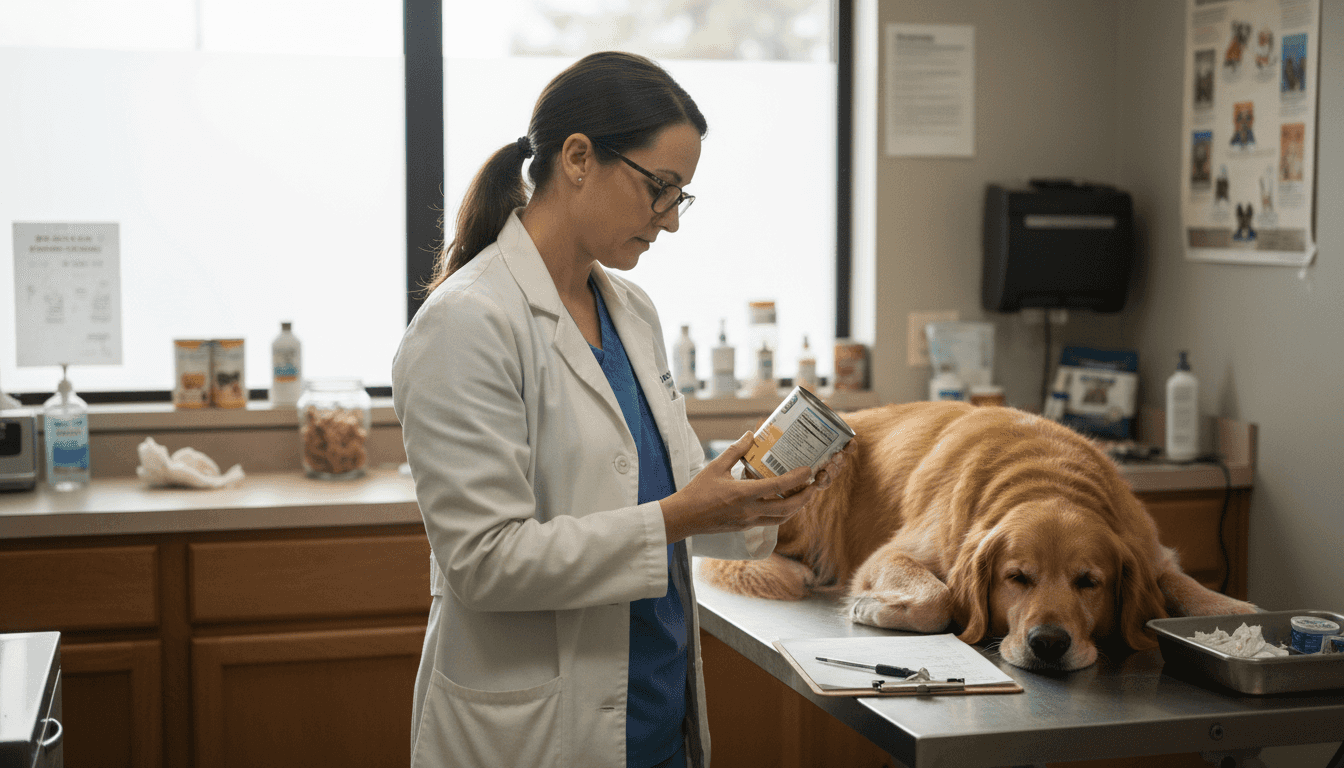
Choosing premium freeze-dried food for your dog in a lively American city means sorting through a maze of labels and bold claims. The phrase “veterinarian approved” might look reassuring, but understanding what it truly means is key to your pet’s well-being and allergy management. This guide breaks down how pet food labels are regulated, what substantiates an endorsement, and how to focus on actual nutritional standards and ingredient quality when shopping for your dog’s next meal.
Table of Contents
Key Takeaways
Point | Details |
Veterinarian Approval Misconception | “Veterinarian approved” claims do not guarantee product testing or endorsement; they may only reflect survey results or nutritional compliance. |
Regulatory Oversight | AAFCO and state regulators do not approve pet foods but require that claims be truthful and substantiated, leading to varying standards across states. |
Consult Your Veterinarian | Individual recommendations from your veterinarian based on your dog’s specific needs offer better assurance than general approval claims on packaging. |
Ingredient Safety Protocols | Quality manufacturers implement thorough safety assessments and third-party certifications to ensure ingredient safety before reaching consumers. |
Defining Veterinarian Approval in Pet Food
When you see “veterinarian approved” on a pet food label, you’re likely interpreting it differently than how the industry actually defines it. The term doesn’t mean a veterinarian has personally tested or certified that specific product.
What the Label Actually Means
Veterinarian approval claims follow AAFCO guidelines for labeling, which permit endorsement statements if they’re truthful and not misleading. However, AAFCO itself doesn’t approve, test, or certify pet foods. The regulatory body leaves enforcement to individual states.
So when a brand claims veterinarian approval, they typically mean one of two things:
A statistically valid survey showed veterinarians recommend the product
The formula meets nutritional standards that veterinarians support
Neither scenario involves hands-on product testing or formal vetting by the veterinary profession as a whole.
The Real Regulatory Picture
The FDA’s Center for Veterinary Medicine oversees pet food safety, regulating ingredients and labeling requirements. But even the FDA doesn’t formally approve individual pet foods or provide veterinarian endorsements. Regulation focuses on ingredient safety and accurate labeling, not subjective product “approval.”
State-level regulators determine the exact criteria for veterinarian endorsement claims. This means what qualifies as “approved” can vary depending on where you live.
What This Means for Your Dog
Veterinarian approval language is marketing language, not a guarantee of quality or suitability for your specific dog. What matters more:
Here’s a quick comparison of veterinarian approval, AAFCO certification, and individual veterinarian recommendations:
Criteria | Veterinarian Approval Label | AAFCO Certification | Recommendation from Your Veterinarian |
Evidence Type | Marketing survey or nutritional claim | Lab-tested nutritional adequacy | Health profile assessment |
Product Testing | Rarely involves hands-on testing | Often includes feeding trials | Considers your dog’s unique needs |
Transparency | Evidence often not public | Standards published and clear | Advice tailored and transparent |
Assurance Level | Low; claim varies by state | Moderate; meets minimum nutrition | High; individualized quality check |
AAFCO certification showing the food meets nutritional standards
Transparent ingredient sourcing and preparation methods
Consultation with your actual veterinarian about your dog’s unique needs
Products made with human-grade, whole ingredients that support digestive health and vitality
The Bottom Line
“Veterinarian approved” doesn’t mean your vet vetted that food. Urban dog owners seeking premium nutrition should look beyond marketing language to actual nutritional standards, ingredient quality, and professional guidance tailored to their dog’s health profile.
Real veterinarian approval comes from your own veterinarian’s recommendation based on your dog’s individual health needs, not from label claims.
Pro tip: Ask your veterinarian specifically which freeze-dried or natural food brands they personally recommend for dogs with your pet’s age, size, and health profile—then verify those brands use human-grade ingredients and meet AAFCO standards.
Requirements for Veterinarian Endorsement Labels
Not every pet food brand can slap “veterinarian approved” on their packaging and call it a day. There are specific requirements manufacturers must meet to legally use veterinarian endorsement language on their labels.
The Core Rule: Truth and Substantiation
AAFCO model regulations require endorsements to be truthful, not deceptive, and substantiated. Before any brand claims veterinarian approval, they must have actual evidence backing that claim. This isn’t optional—it’s the foundation of labeling law.
Manufacturers cannot simply decide their food is “vet approved” based on wishful thinking. They need documented proof.
What Counts as Evidence
The most common way brands substantiate veterinarian endorsement is through statistically valid surveys of veterinarians. However, AAFCO doesn’t specify exactly how many veterinarians need to be surveyed or what methodology they must use.
This creates a gray area. Different states enforce these claims differently, meaning the bar for “approval” can vary:
Some states require rigorous survey standards
Others accept less formal documentation
No federal standard exists for survey methodology
Compliance Varies by Location
State regulators do the actual enforcement of these claims. What’s acceptable in one state might not pass inspection in another. This inconsistency is why the same product might be marketed differently across regions.
Your state’s regulatory authority determines whether a brand’s evidence meets the threshold for using veterinarian endorsement language. Urban pet owners should know their state may have stronger or weaker oversight.
What Manufacturers Must Provide
Brands claiming veterinarian approval typically document:
Survey results from veterinary professionals
Nutritional analysis showing AAFCO compliance
Ingredient sourcing and quality documentation
Any clinical or feeding trial data
The Missing Piece
While regulations require substantiation, they don’t require transparency. A brand can legally claim veterinarian approval based on survey data they never publicly share. You won’t necessarily see the evidence—just the claim.
Veterinarian endorsement requires evidence, but that evidence doesn’t have to be public or independently verified—only truthful and not misleading.
Pro tip: When evaluating veterinarian-approved freeze-dried foods, ask the manufacturer directly for their substantiation documentation and verify the product meets AAFCO standards by checking the nutritional statement on the label.
Pet Food Safety: Ingredient Review Process
When you’re choosing premium freeze-dried dog food, ingredient safety isn’t just a marketing claim—it’s backed by rigorous scientific processes. Understanding how manufacturers verify ingredient safety helps you make informed decisions for your dog.
How Manufacturers Verify Ingredient Safety
Before any ingredient enters a pet food formula, manufacturers must conduct safety assessments demonstrating GRAS status for each ingredient. GRAS stands for “Generally Recognized as Safe,” but that recognition requires scientific evidence, not guesswork.
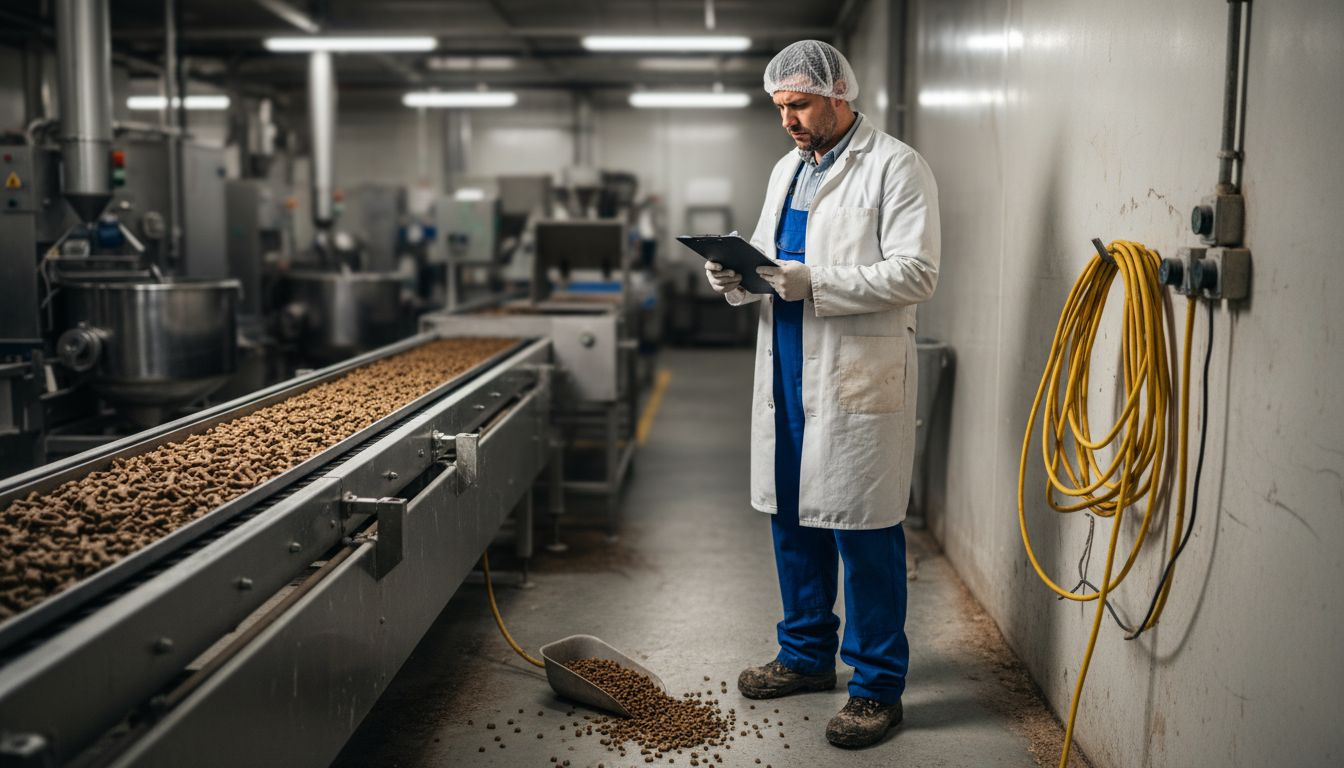
Companies document that each ingredient is safe for dogs at the levels used. This includes proteins, fruits, vegetables, and any supplements.
The Multi-Layer Safety Approach
Quality manufacturers don’t rely on a single verification step. They use comprehensive strategies across their entire supply chain:
Ingredient sourcing from verified suppliers with documented safety records
Pathogen risk assessments identifying potential contamination sources
Independent third-party testing and certification
Batch testing before products reach consumers
Compliance with Safe Quality Food Institute standards
This layered approach catches problems at every stage, from farm to your dog’s bowl.
Third-Party Verification Matters
Independent third-party certification ensures manufacturers follow rigorous food safety standards. This isn’t the company testing itself—it’s external auditors verifying processes and results.
When brands claim premium quality, look for certifications from recognized food safety organizations. This proves they’ve met standards beyond minimum regulatory requirements.
What You Should Know About Risk Assessment
Manufacturers conduct pathogen risk assessments to identify where contamination could occur. They then implement controls to prevent those risks. Common concerns include:
Bacterial contamination during processing
Cross-contamination between ingredients
Storage and handling issues
Packaging integrity
Why This Matters for Your Dog
Rigorous ingredient review protects against foodborne pathogens that could harm your dog’s digestive health. Premium freeze-dried foods with documented safety protocols reduce these risks significantly compared to lower-quality alternatives.
The ingredient review process isn’t optional—it’s how responsible manufacturers ensure every batch meets safety standards before it reaches your pet.
Pro tip: Ask manufacturers for documentation of their third-party certifications and request information about their specific pathogen testing protocols before purchasing veterinarian-approved freeze-dried food.
Regulations Shaping Pet Food Claims in the U.S.
The pet food industry operates within a complex regulatory framework designed to protect your dog’s health. Understanding how these regulations shape marketing claims helps you distinguish between genuine quality and clever wordplay.
AAFCO Sets the Standards
AAFCO model regulations require all pet food claims to be truthful, not misleading, and substantiated by scientific evidence. This applies to nutritional adequacy claims, ingredient lists, and endorsements like “veterinarian recommended.”
Think of AAFCO as the rulebook. States then adopt these model regulations into their own laws, creating a patchwork of enforcement across the country.
How State Regulators Enforce Rules
AFCO doesn’t police pet food companies directly. State feed regulatory officials do. This means enforcement varies by location:
Some states rigorously investigate misleading claims
Others take a lighter-touch approach
Standards differ on what counts as adequate substantiation
Penalties for violations vary significantly
A brand might face enforcement action in one state while marketing the same product unchanged in another.
What “Substantiated” Actually Means
When regulations require claims to be substantiated, manufacturers must have evidence. However, AAFCO clarifies that the regulatory body does not approve pet foods itself. Instead, companies provide documentation to state regulators.
This documentation could include feeding trials, nutritional analysis, or survey data. But the burden falls on the manufacturer to prove their claims are accurate.
The Truth About “Misleading” Claims
Regulations prohibit misleading claims, but determining what’s misleading isn’t always straightforward. A brand might technically tell the truth while implying something false through marketing language.
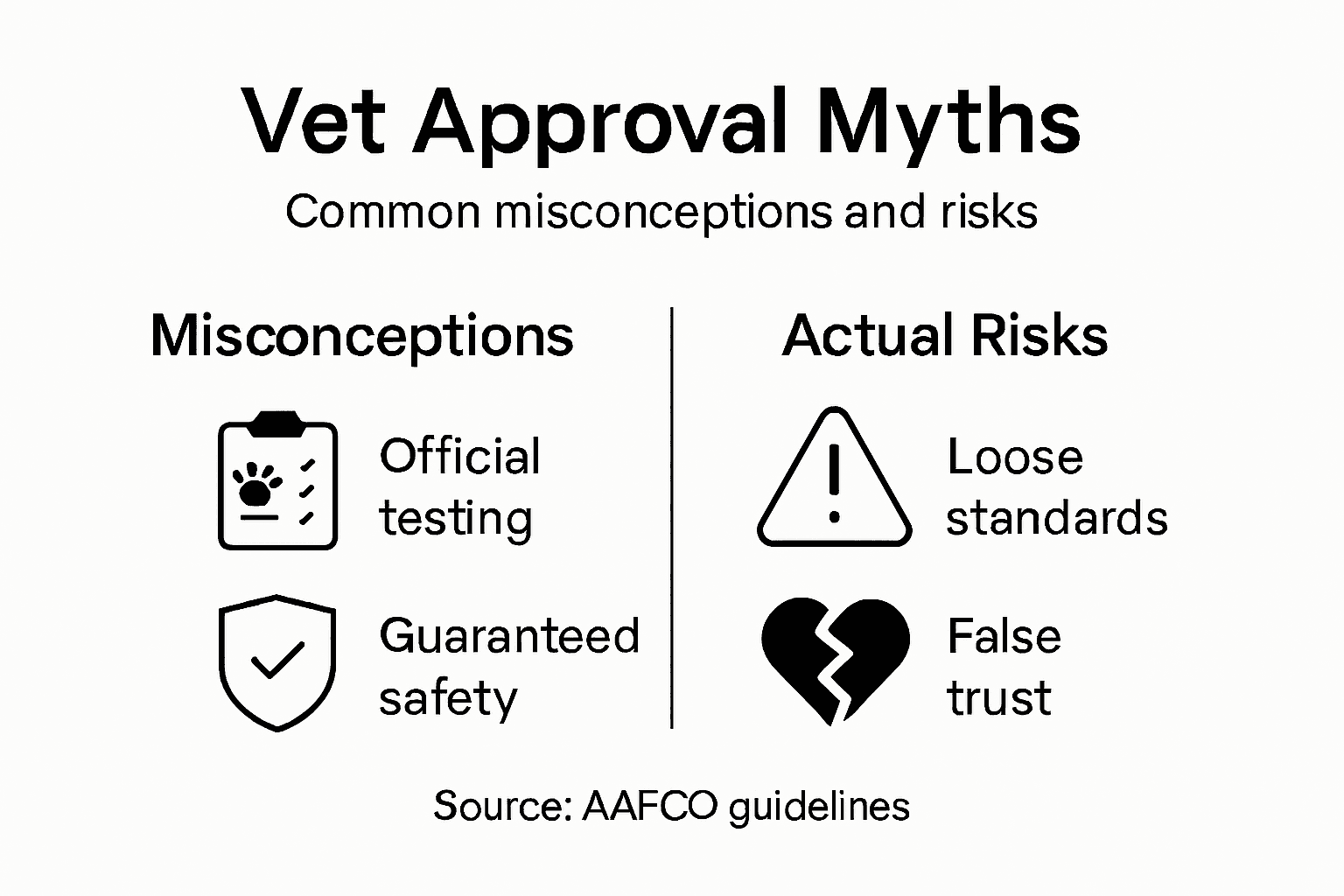
Example: “Recommended by veterinarians” could mean one vet recommended it, or one thousand did. The regulation requires the claim be truthful but doesn’t require transparency about the scope.
Why This Matters for Your Purchase Decisions
Regulations exist to protect consumers, but they’re not foolproof. Misleading claims are subject to enforcement action, yet many get used before regulators catch them. Urban dog owners seeking premium nutrition should look beyond regulatory compliance to actual product quality.
Below is a summary of how state versus federal regulators shape pet food label claims:
Regulator | Area of Oversight | Enforcement Consistency | Impact on Label Claims |
FDA | Ingredient safety and labeling accuracy | Uniform across U.S. | No formal product approvals |
AAFCO | Model regulations for claims | Varies by state adoption | Sets labeling substantiation rules |
State Agencies | Claim substantiation and violations | Highly variable by state | Determines what claims are accepted |
Regulations ensure claims aren’t false, but they don’t guarantee a product is best for your specific dog or superior to alternatives.
Pro tip: Check the manufacturer’s location and your state’s specific pet food regulations, then cross-reference any health claims with your veterinarian’s professional recommendation.
Risks and Misconceptions with Veterinarian Approval
The “veterinarian approved” label creates a false sense of security that can lead urban dog owners to overlook critical factors about their pet’s nutrition. Understanding the real risks behind this claim protects your dog’s health.
The Biggest Misconception
A common misconception is that veterinarian recommended claims imply rigorous official endorsement or product certification. Most dog owners assume the label means a veterinarian has tested the food or verified its quality.
That’s not what it means. The label often lacks stringent criteria, and supporting evidence can be minimal.
How Minimal Can the Evidence Be?
A brand could base a “veterinarian recommended” claim on:
Survey responses from a small number of vets
Informal feedback from veterinary professionals
Meeting nutritional standards without specific product testing
One veterinary endorsement in a particular region
None of these scenarios involves rigorous product certification or hands-on evaluation. Yet the marketing language suggests otherwise.
The Trust Factor Risk
When you see a veterinarian approval claim, your brain shortcuts the evaluation process. You assume someone qualified has already vetted the product. This trust can prevent you from checking ingredient quality, nutritional adequacy, or other factors that actually matter.
It’s a marketing tactic that works because it triggers professional authority in your mind.
AAFCO’s Clear Warning
AAFCO emphasizes it neither approves pet foods nor verifies veterinarian endorsements on packaging. This distinction matters. The regulatory body doesn’t stand behind these claims—manufacturers do.
If an endorsement is false, the brand faces potential enforcement action. But that only happens after misleading marketing has already influenced purchasing decisions.
Real Risks for Your Dog
Relying solely on veterinarian approval labels means:
Overlooking ingredient sourcing and quality issues
Missing signs of allergies or sensitivities until problems develop
Paying premium prices for products that don’t match your dog’s nutritional needs
Skipping conversations with your own veterinarian about appropriate nutrition
What Actually Protects Your Dog
Your individual veterinarian’s recommendation based on your dog’s age, size, health status, and dietary needs beats any generic label claim. Premium freeze-dried foods with transparent ingredient sourcing and third-party testing provide actual assurance.
Veterinarian approval labels feel reassuring, but they’re marketing language, not proof of quality or suitability for your specific dog.
Pro tip: Ignore the veterinarian approval label entirely and instead ask your own veterinarian which specific brands and formulas match your dog’s individual health profile and nutritional requirements.
Choose True Quality Beyond Veterinarian Approval Labels
Many pet owners face confusion when deciding on the best food for their dogs because “veterinarian approved” on labels does not guarantee product quality or suitability. You want transparency, proven nutritional standards, and real health benefits tailored to your dog’s unique needs. That means looking beyond marketing claims and focusing on freeze-dried dog foods made with human-grade whole ingredients, verified nutritional adequacy, and ingredient safety protocols.
Discover premium, natural nutrition designed to support your dog’s vitality, muscle strength, and digestive health at Loyal Saints Pets. Our products meet AAFCO standards and emphasize ingredient transparency so you can trust what goes into your dog’s bowl. Don’t wait to give your beloved animal the wholesome food they deserve. Visit our homepage now and explore how we bring health and happiness to dogs considered family members. Take the next step toward a longer, more loving life together.
Frequently Asked Questions
What does ‘veterinarian approved’ mean on pet food labels?
‘Veterinarian approved’ on pet food labels typically means that the product has either been recommended by a statistically valid survey of veterinarians or meets nutritional standards that veterinarians support. However, it does not mean that the food has been personally tested or certified by a veterinarian.
How is veterinarian approval different from AAFCO certification?
Veterinarian approval often relies on marketing survey results or nutritional claims, while AAFCO certification signifies that the pet food meets established nutritional standards based on feeding trials or lab testing. AAFCO standards are published and clear, whereas veterinarian approval may lack transparency.
What should I consider instead of just looking for veterinarian approval on pet food?
Instead of relying solely on veterinarian approval, focus on factors such as AAFCO certification, ingredient quality, transparency in sourcing, and consultation with your veterinarian. These aspects provide a clearer picture of the food’s nutritional adequacy for your dog.
Are there regulations governing the use of veterinarian approval claims on pet food?
Yes, there are regulations that require veterinarian approval claims to be truthful and substantiated by evidence, such as survey data. However, enforcement of these claims varies by state, leading to inconsistencies in what qualifies as ‘approved’.
Recommended
Comments