.png)
How to Transition Dogs to Freeze Dried Food Naturally
- Nick Willkom
- Nov 30, 2025
- 6 min read


Choosing the best food for your dog is a decision that every american pet owner faces with care. Nearly 60% of american dogs are classified as overweight or obese, highlighting the impact of daily nutrition choices. When considering a transition to freeze dried food, knowing how to evaluate your dog’s unique needs can make all the difference for their health and happiness. This guide gives you practical steps to support a successful and safe transition to freeze dried dog food.
Table of Contents
Quick Summary
Key Takeaway | Explanation |
1. Assess your dog’s current diet | Document your dog’s existing nutritional status and health indicators before making changes. |
2. Choose appropriate freeze dried food | Ensure the selected formula meets your dog’s life stage and health needs using quality ingredients. |
3. Gradually introduce new food | Slowly mix freeze dried food into your dog’s diet to minimize digestive issues, observing their response. |
4. Monitor your dog’s health | Track weight, energy, and coat quality to gauge how well your dog is adapting to the new diet. |
5. Celebrate progress and wellness | Regularly evaluate your dog’s health, noting improvements, and affirm their adaptation with positive reinforcement. |
Step 1: Assess Your Dog’s Current Diet and Needs
Transitioning your dog to freeze dried food starts with a comprehensive evaluation of their current nutritional status. FDA guidelines recommend conducting a thorough nutritional assessment that goes beyond simple calorie counting and considers your dog’s overall health profile.
Begin by documenting your dog’s current diet composition, including protein sources, grain content, and serving sizes. Pay close attention to your dog’s body condition score, muscle tone, and energy levels. ASPCA experts suggest monitoring key indicators like weight, coat quality, and digestive performance. Take detailed notes on your pet’s current food brand, meal frequency, portion sizes, and any observed reactions or health patterns.
Special considerations matter. Puppies, senior dogs, and dogs with specific health conditions require personalized nutrition strategies. Consult with your veterinarian to understand your dog’s unique metabolic needs and potential dietary sensitivities before making significant nutritional changes. A dog nutrition balance analyzer can provide additional insights into creating a tailored feeding plan that supports your dog’s optimal health and vitality.

Step 2: Select the Right Freeze Dried Food Formula
Selecting the perfect freeze dried food for your dog requires careful consideration of multiple nutritional factors. AAHA guidelines emphasize the critical importance of evaluating nutritional adequacy and understanding the manufacturing process before making your selection.
Start by examining the ingredient list and ensuring the formula matches your dog’s specific life stage and health requirements. Look for high-quality protein sources listed first, minimal processing, and a balanced nutritional profile. Animal Wellness Academy recommends consulting with your veterinarian to confirm the formula meets your dog’s unique dietary needs, especially if your pet has any existing health conditions or special nutritional requirements.
Navigating the freeze dried food landscape can feel overwhelming, which is why consulting our checklist for choosing nutrient rich freeze dried food can provide additional guidance. Key factors to consider include protein content, ingredient quality, potential allergens, and how well the formula supports your dog’s current health status and energy levels. Remember that every dog is unique, and finding the right nutritional match may require some patient exploration and professional guidance.
Step 3: Introduce Freeze Dried Food Gradually
AAHA guidelines emphasize the critical importance of a slow and methodical transition when introducing new dog food. Your goal is to minimize digestive disruption and help your dog adapt smoothly to the new freeze dried nutrition plan.
Begin by mixing a small amount of freeze dried food with your dog’s current diet approximately 10% at a time. Animal Wellness Academy recommends monitoring your dog’s appetite and stool quality throughout this process. Over the course of 7 to 10 days, gradually increase the proportion of freeze dried food while decreasing the original diet. Watch for signs of digestive comfort or potential sensitivity.
For additional support during this transition, our guide on transitioning to raw freeze dried food offers comprehensive insights. Every dog responds differently to dietary changes, so patience and careful observation are key. If you notice any persistent digestive issues or changes in your dog’s health, consult your veterinarian to ensure a safe and successful nutritional transition.
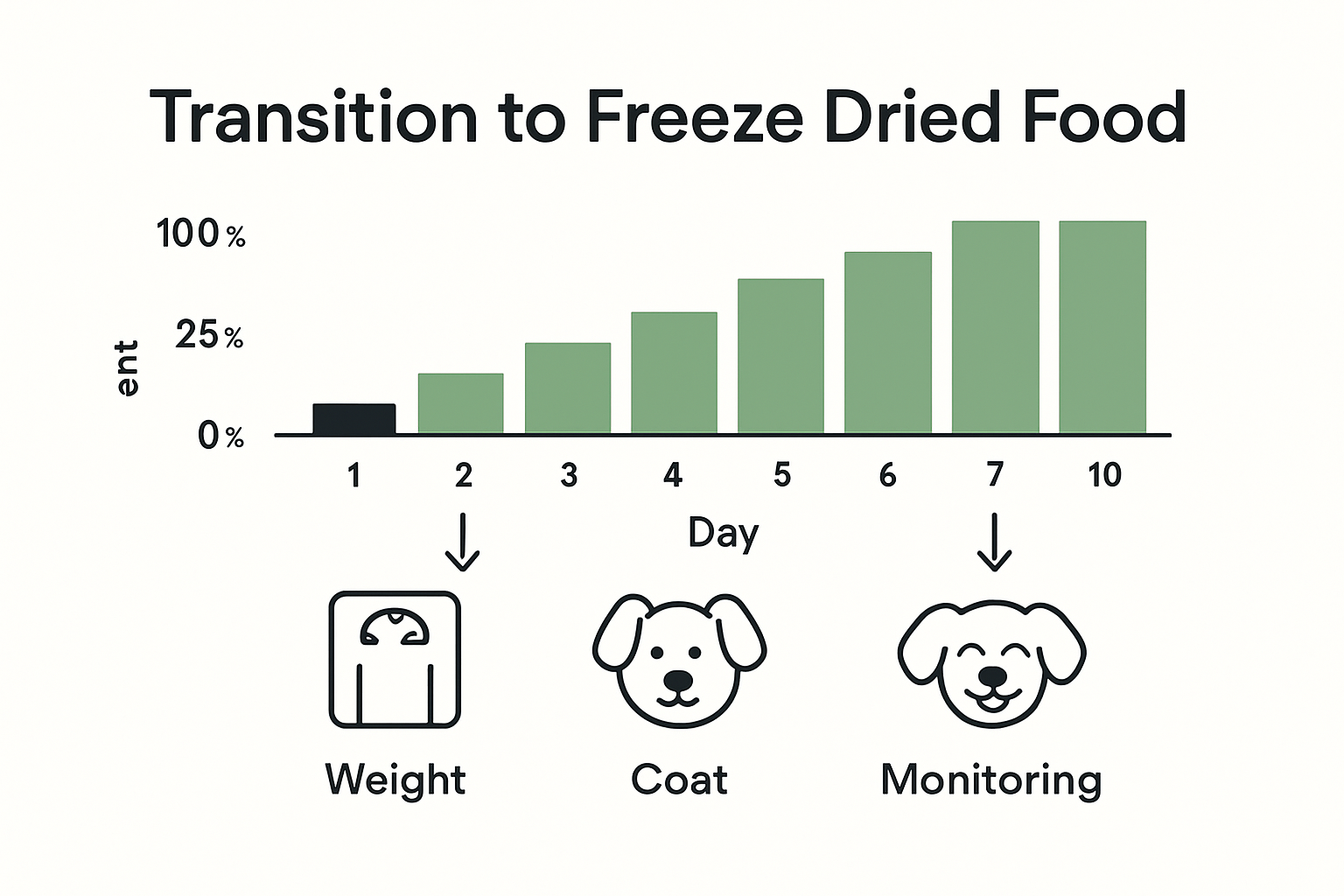
Step 4: Monitor Your Dog’s Response and Adjust Portions
AAHA guidelines highlight the critical importance of ongoing nutritional assessments during dietary transitions. Monitoring your dog’s response to the new freeze dried food requires careful observation of multiple health indicators that provide insights into how well your pet is adapting to the nutritional change.
ASPCA recommends tracking key health markers including weight, energy levels, coat condition, and stool quality during the transition. Weigh your dog weekly and assess their body condition score to ensure they are maintaining a healthy weight. Pay attention to subtle changes in behavior, appetite, and overall vitality that might signal how well they are responding to the new diet.
To help streamline this monitoring process, our dog feeding portion calculator can provide personalized guidance for adjusting meal sizes. Remember that every dog is unique some may require more gradual transitions or slight modifications to portion sizes. If you notice persistent changes in weight, digestive issues, or energy levels, consult your veterinarian to ensure the new diet continues to meet your dog’s specific nutritional needs.
Step 5: Verify Progress and Celebrate Healthier Eating
AAHA recommends regular follow up assessments to track the success of your dog’s new nutritional journey. Verifying progress goes beyond simply observing physical changes and requires a holistic approach to understanding your dog’s overall health and wellness transformation.
ASPCA encourages pet owners to celebrate each milestone in their dog’s nutrition transition. Look for positive indicators such as increased energy levels, improved coat shine, stable weight, and more consistent digestive health. Schedule a comprehensive veterinary check up around 8 to 12 weeks after beginning the new freeze dried food diet to professionally assess your dog’s nutritional adaptation and overall health status.
To document and track your dog’s progress, consider creating a simple health journal noting weekly observations about weight, coat condition, energy levels, and overall mood. Reward your dog with extra playtime or gentle praise during this health transformation. Positive reinforcement not only boosts your dog’s confidence but also strengthens the bond between you as you navigate this important nutritional journey together.
Make the Shift to Natural Freeze Dried Nutrition with Loyal Saints Pets
Transitioning your dog to freeze dried food naturally requires careful choices that respect their unique needs and support their health goals. If you want to minimize digestive upset while boosting vitality, muscle strength, and overall well-being, choosing premium, all-natural formulas is essential. Our Bundles | Loyal Saints offer thoughtfully blended options that make gradual feeding easy and nutritionally balanced for every life stage.
Start your dog’s journey to cleaner eating today with our veterinarian-approved freeze dried meals made from whole, human-grade ingredients. Visit Loyal Saints Pets now to explore our selection including quality proteins like Beef | Loyal Saints or Chicken | Loyal Saints. Act now to enjoy free shipping on orders over a certain amount and give your furry family member the wholesome nutrition they deserve to thrive.
Frequently Asked Questions
How should I start transitioning my dog to freeze dried food?
Begin by assessing your dog’s current diet and health needs. Document their current food, portions, and any health concerns before mixing in a small amount of freeze dried food, starting at about 10% of their meal.
What steps should I take to introduce freeze dried food gradually?
Introduce freeze dried food slowly by mixing it with your dog’s existing food over 7 to 10 days. Gradually increase the amount of freeze dried food while decreasing their original diet, keeping an eye on their appetite and stool quality.
How can I monitor my dog’s health during the transition?
Track your dog’s weight, energy levels, coat condition, and stool quality. Weigh your dog weekly and assess for any changes in behavior or health to ensure they are adapting well to the new diet.
What should I do if my dog shows signs of digestive discomfort?
If your dog experiences digestive issues during the transition, slow down the introduction process. Consider keeping the freeze dried food in their diet at a lower percentage until they adjust, then gradually increase it again.
How will I know if my dog is successfully adapting to freeze dried food?
Look for positive signs such as increased energy, a shiny coat, and stable weight. Schedule a check-up with your veterinarian around 8 to 12 weeks after starting the new diet for an overall health assessment.
What are some key health indicators to watch during this transition?
Monitor your dog’s weight, energy levels, coat quality, and digestive health. Keeping a simple health journal to track these indicators weekly will help you spot improvements or any concerns effectively.
Recommended
Comments