.png)
How to Read Dog Food Labels for Better Pet Nutrition
- Towanda Brunson
- Feb 26
- 8 min read

Finding high-quality dog food in American cities can feel overwhelming, especially when ingredient lists and product claims start to blend together. This matters because your dog’s vitality depends on what goes into every meal—choices that shape their health for years. By learning how to review packaging, identify key ingredients, and check for AAFCO nutritional standards, you gain confidence when comparing freeze-dried options built for longevity and trust.
Table of Contents
Quick Summary
Key Message | Explanation |
1. Collect Multiple Dog Food Packages | Gather different brands and types to compare labeling patterns and ingredient quality effectively. |
2. Focus on Key Ingredients First | Examine the first few ingredients for protein sources and quality; choose whole proteins over vague terms. |
3. Check Nutritional Adequacy and Analysis | Ensure the food meets AAFCO standards for your dog’s life stage by verifying the nutritional adequacy statement and guaranteed analysis. |
4. Evaluate Health Claims Carefully | Assess health claims against ingredient transparency; ascertain that claims are substantiated and not just marketing tactics. |
5. Utilize Comparison Tools | Create charts or digital references to easily compare ingredients and nutritional values across the selected packages. |
Step 1: Gather dog food packaging for review
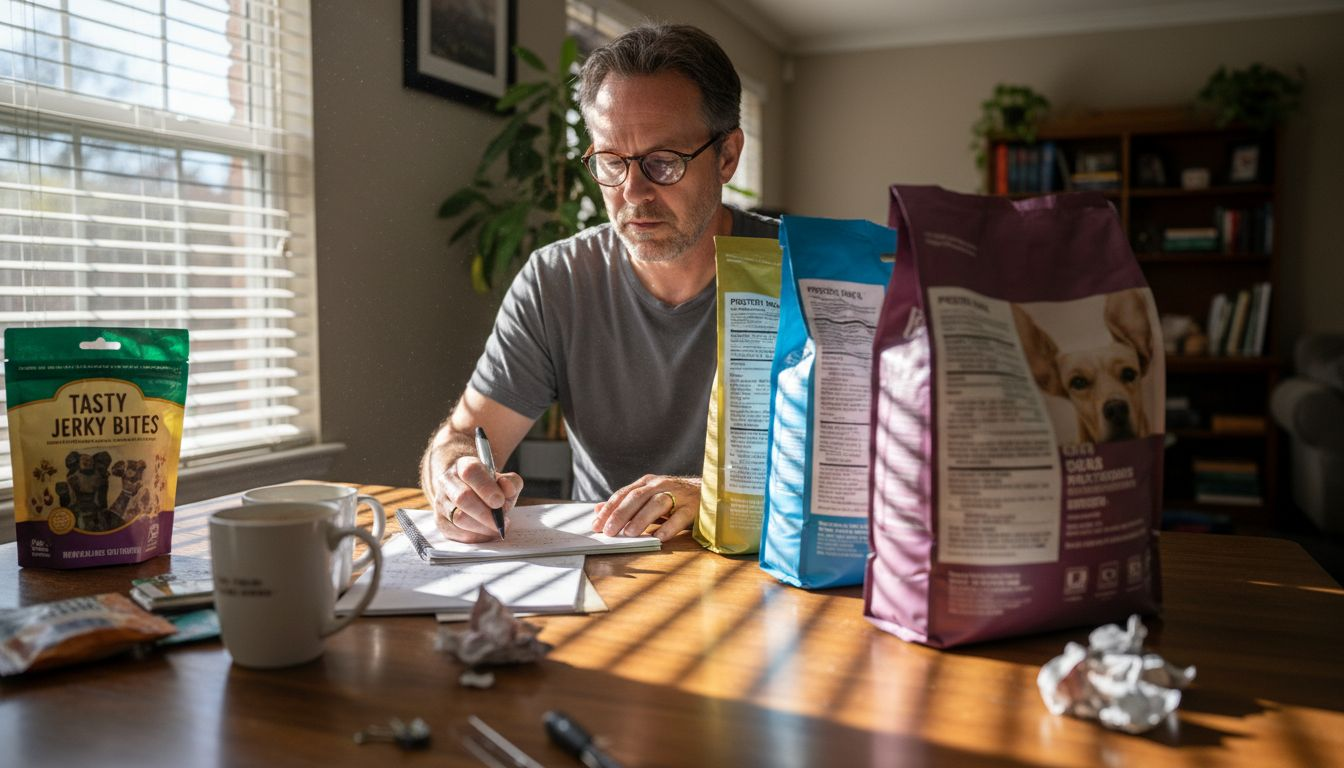
Start by collecting multiple dog food packages from your pantry, local pet stores, or online retailers. You’re building a comparison collection that will help you understand labeling patterns and spot quality differences across brands.
Here’s what to gather:
Your dog’s current food (if you have one)
2-3 premium brands you’re considering
1-2 budget-friendly options for comparison
Any specialty or grain-free formulas you’re curious about
Aim for at least 4-5 different packages so you can see how labeling varies. Different manufacturers organize information differently, so variety helps you recognize what’s standard versus what’s company-specific.
Collecting multiple packages at once saves time and lets you spot patterns you’d miss comparing just one or two.
Don’t worry about buying full bags. Many pet stores let you grab empty packaging from display bins, or you can photograph labels at the store using your phone. You’re looking at labels, not stockpiling food.
Here’s how different types of dog food packaging collection strategies compare:
Method | Accessibility | Effort Required | Best For |
Using pantry items | Immediate, no cost | Very low | Current dog food review |
Empty packages from store | Easy, often allowed | Low | Exploring new brands |
Photographing labels | Widely available | Moderate | Building digital comparisons |
Ordering online samples | Varies by brand | Medium | Specialty or rare formulas |
Pay special attention to freeze-dried options if that’s your focus. Understanding required pet food label information across different product types gives you better insight into what separates premium brands from standard ones. Your urban location likely offers access to specialty brands that larger rural areas don’t carry, so take advantage of that selection.
Once you have your collection, lay everything out on a clean table or counter where you can see multiple labels at once. Good lighting helps you read fine print clearly. You’ll reference these packages throughout the entire label-reading process, so keep them organized and accessible.
Pro tip: Use your phone to photograph each label front and back before leaving the store, creating a digital reference library you can compare at home without needing to carry bulky packages.
Step 2: Identify key ingredients and sources
Now that you have your packaging collection, focus on the ingredient list. This is where you’ll discover what actually goes into your dog’s food and understand the quality of each component.
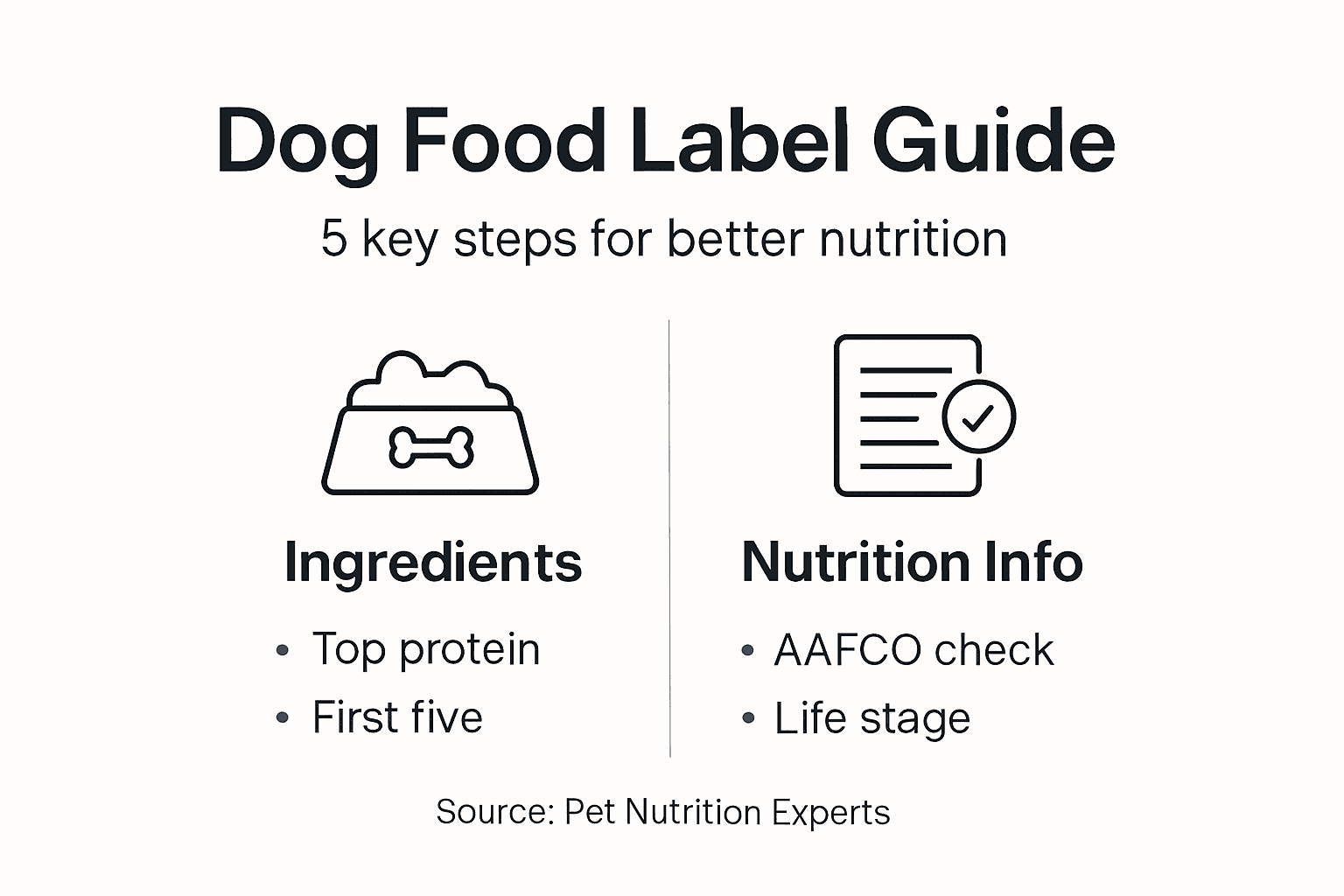
Start by reading the ingredients in order. Pet food labels list ingredients by weight, so the first few items matter most. Look for real protein sources like chicken, beef, fish, or lamb rather than vague terms like “meat meal” or “by-products.”
Here’s what to evaluate:
Protein sources (chicken, beef, fish, or plant-based options)
Fat sources (fish oil, chicken fat, plant oils)
Carbohydrate sources (sweet potatoes, brown rice, peas)
Added vitamins and minerals
Preservatives and additives
Understanding common pet food ingredient standards helps you decode ingredient names and their nutritional roles. For example, “chicken” is a whole protein source, while “chicken meal” is a concentrated protein. Both are legitimate, but they differ in processing and nutrient density.
Premium freeze-dried brands typically lead with whole meat proteins and minimal fillers, making ingredient lists easier to read and trust.
Pay attention to ingredient sourcing. Quality brands often specify where proteins come from, especially if they use human-grade or locally sourced ingredients. This transparency signals a manufacturer invested in quality control.
Compare your 4-5 packages side by side. Notice how ingredient lists differ. Some brands pack their lists with grains while others prioritize proteins. Your urban location gives you access to premium brands that emphasize ingredient transparency, so use that advantage.
Look for consistency across the first five ingredients. If a brand’s ingredient list varies wildly between flavors, that’s worth questioning. Consistent formulations suggest stable quality standards.
Compare how dog food brands approach ingredient transparency:
Brand Type | Ingredient Listing | Protein Source Info | Sourcing Disclosure |
Premium | Lists whole meats first | Specifies animal and origin | Often highlights human-grade origins |
Budget | Mix of meat meals and fillers | May use generic terms | Rarely mentions sourcing |
Specialty/Freeze-dried | Short, clear list | Highlights protein with details | Usually emphasizes local sourcing |
Pro tip: Create a simple comparison chart listing the first five ingredients from each package side by side, making it instantly obvious which brands prioritize protein and which rely on fillers.
Step 3: Evaluate nutrition and AAFCO compliance
This step separates good dog food from great dog food. You’ll verify that each package meets strict nutritional standards and contains appropriate nutrients for your dog’s life stage.
Start by finding the nutritional adequacy statement on each label. This statement confirms the food meets AAFCO standards for specific life stages like adult maintenance, puppy growth, or senior dogs. Look for language like “Complete and balanced nutrition for adult dogs” or “Formulated to meet AAFCO standards.”
Next, examine the guaranteed analysis section. This shows minimum percentages of protein and fat, plus maximum percentages of fiber and moisture. Compare these numbers across your packages.
What to check:
Protein percentage (typically 18% minimum for adults, 22% for puppies)
Fat percentage (typically 5% minimum for adults)
Fiber levels (should be moderate, not excessive)
Moisture content (freeze-dried foods often show lower moisture)
Understanding AAFCO protein standards helps you decode what the numbers actually mean for your dog’s health. Higher protein percentages don’t always indicate better quality, but protein source matters significantly. A food with 25% protein from whole chicken differs from one with 25% from grain-based sources.
AAFCO compliance isn’t optional—it’s a baseline requirement that protects your dog from nutritional imbalances and unsafe formulations.
Look for brands that mention testing methods on the label. Foods tested through AAFCO feeding trials have been evaluated on actual dogs, offering stronger evidence of nutritional adequacy than calculated formulas alone.
Freeze-dried formulas sometimes show different percentages due to moisture removal, so compare the guaranteed analysis specifically across freeze-dried options. The nutritional profile remains complete despite the processing method.
Verify the label includes information for your dog’s specific life stage. A puppy food should say “growth” or “large breed growth,” while adult maintenance formulas support dogs in their prime years.
Pro tip: Check the manufacturer’s website for detailed nutritional information beyond what appears on the label—quality brands often provide amino acid profiles and micronutrient breakdowns that reveal nutritional completeness.
Step 4: Verify health benefits and product claims
Now you’ll evaluate whether the claims on packaging are real or marketing hype. Health claims must be backed by evidence and regulatory standards, not just catchy wording.
Start by distinguishing between types of claims. Nutrient content claims describe the amount of a nutrient (like “high protein” or “low fat”). Health claims suggest a benefit to your dog (like “supports joint health” or “promotes digestion”). The second type requires stronger evidence.
Look for these red flags:
Claims like “cures” or “treats” disease (illegal without FDA approval)
Vague promises like “boosts immunity” without explanation
Claims not supported by ingredient lists
Marketing language that sounds scientific but lacks substance
Understanding regulated pet food label claims helps you separate substantiated benefits from empty promises. AAFCO strictly regulates what manufacturers can claim, requiring evidence before approval.
Legitimate health claims reference specific ingredients with proven benefits, not just aspirational marketing language.
Check whether claims match the ingredient list. If packaging promises “supports healthy digestion” but the formula lacks probiotics or fiber, that’s a red flag. Quality brands explain which ingredients deliver their claimed benefits.
Verify claims through manufacturer transparency. Quality brands provide research or evidence on their websites supporting health claims. They cite veterinary sources and explain the science behind their formulations, not just make promises.
Compare freeze-dried options specifically. Some brands claim superior nutrition from freeze-drying, but freeze-drying preserves nutrients rather than creating them. The quality depends on source ingredients, not the processing method alone.
Look for veterinarian involvement in product development. Brands that explicitly mention veterinary nutritionists or veterinary oversight demonstrate commitment to substantiated claims rather than marketing alone.
Pro tip: Contact manufacturers directly and ask for research studies or clinical evidence supporting their health claims—legitimate brands welcome these questions and provide detailed documentation quickly.
Unlock Premium Nutrition by Understanding Dog Food Labels
Reading dog food labels can be confusing but it is essential to ensure your dog gets the best nutrition possible. The challenge many dog owners face is decoding complicated ingredient lists, verifying AAFCO compliance, and distinguishing real health benefits from marketing claims. When you learn to spot genuine protein sources and balanced nutrition, you empower yourself to make choices that support your dog’s vitality, muscle strength, and digestive health.
At Loyal Saints Pets, we simplify this process by offering premium freeze-dried dog foods made from human-grade whole ingredients with clear, transparent labeling. Our products are carefully crafted to meet AAFCO standards without fillers or additives, giving you confidence in every meal. Experience the difference that honest, natural nutrition brings to your furry family member.
Ready to upgrade your dog’s diet with freeze-dried freshness and trustworthy ingredients? Visit Loyal Saints Pets now and discover wholesome options designed for lasting health and happiness. Act today to support your dog’s best life with nutrition you can truly trust.
Frequently Asked Questions
How can I find important ingredient information on dog food labels?
Reading dog food labels involves closely examining the ingredient list, which is organized by weight. Start with the first five ingredients to spot quality protein sources, such as real meat versus vague terms like ‘meat meal.’ Collect at least 4-5 packages to compare and identify patterns.
What should I look for regarding nutritional adequacy on dog food labels?
The nutritional adequacy statement confirms if the food meets established standards for your dog’s life stage, like ‘complete and balanced for adult dogs.’ Check for phrases indicating compliance with these standards to ensure your dog receives appropriate nutrients.
How do I evaluate protein sources in dog food?
Focus on the first few ingredients listed on the label to assess protein sources. Look for specific names like chicken, beef, or fish, instead of general terms; a food should prioritize whole proteins for optimal nutrition. Make a chart comparing protein sources across different brands for easy reference.
What are red flags to watch for in health claims on dog food packaging?
Be cautious of claims that assert a food can ‘cure’ or ‘treat’ diseases, as these are often misleading without proper backing. Instead, look for claims supported by specific ingredients known for genuine benefits, and assess their credibility by cross-referencing ingredient lists with the claims made.
How can I determine if a dog food is premium quality?
Check if the ingredient list focuses on whole meats and minimal fillers, and look for transparency about sourcing and nutritional testing. Compare several brands to understand their formulations, and look for consistent ingredient quality across different flavors, indicating stable manufacturing.
Why is it important to understand AAFCO compliance in dog food?
AAFCO compliance ensures that dog foods meet necessary nutritional standards to prevent imbalances and maintain safety. Verify that each package includes a statement regarding AAFCO standards, as this helps guarantee that your dog’s dietary needs are properly addressed.
Recommended
Comments