.png)
Freeze-Dried Food for Dogs: Benefits, Safety and Tips
- wix mentor

- 14 hours ago
- 9 min read
TL;DR:
Freeze-dried dog food retains heat-sensitive nutrients and offers a shelf-stable, nutrient-dense diet. It reduces pathogen risk when responsibly manufactured but requires proper handling and rehydration. Choosing products with AAFCO approval, transparent sourcing, and proper storage ensures safe, healthy feeding for dogs.
If you’ve been standing in the pet store aisle staring at a bag of freeze-dried food for dogs and wondering whether it’s actually worth the price or just a trend, you’re not alone. A lot of dog owners feel uncertain about whether it’s safe, nutritious, or just a fancier version of kibble in disguise. The truth is, freeze-dried dog food is one of the most nutrient-dense feeding options available today, and understanding how it works will help you make a genuinely confident choice for your dog’s health.
Table of Contents
Key takeaways
Point | Details |
Nutrient preservation | Freeze-drying retains heat-sensitive vitamins and amino acids that kibble processing destroys. |
Not fully sterile | Freeze-dried food reduces pathogens significantly but still requires safe handling at home. |
AAFCO matters | Always check for an AAFCO nutritional adequacy statement before choosing any freeze-dried formula. |
Rehydration is recommended | Adding water before serving improves palatability, digestion, and helps prevent urinary issues. |
Storage extends shelf life | Unopened freeze-dried food can last 1 to 5 years when stored in cool, dry conditions. |
What freeze-dried food for dogs actually is
Freeze-drying, known scientifically as lyophilization, is a preservation process that removes almost all moisture from food without applying heat. Here is how it works in simple terms.
The food is first frozen solid. Then it moves into a vacuum chamber where the pressure drops dramatically. At that low pressure, the ice crystals in the food convert directly into vapor without passing through a liquid stage. This process is called sublimation. The result is a lightweight, shelf-stable product that looks almost identical to the original raw food but weighs a fraction as much.
Here is what makes this different from other processing methods:
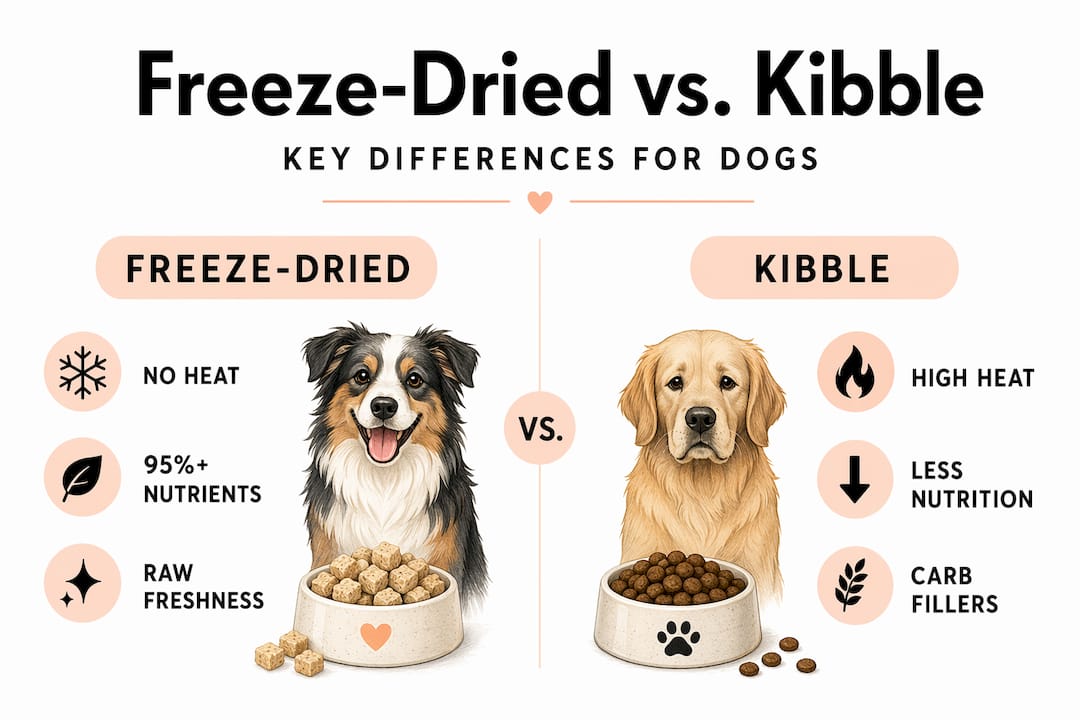
Kibble goes through high-heat extrusion at temperatures up to 300°F, which degrades proteins and destroys heat-sensitive vitamins.
Dehydrated dog food uses warm air to slowly remove moisture, which is gentler than kibble but still applies enough heat to affect some nutrients.
Freeze-dried food removes moisture without heat at all, which means thermolabile nutrients like B vitamins and vitamin C stay intact through processing.
Moisture removal is also what keeps freeze-dried food shelf-stable. When 98 to 99% of moisture is removed, bacteria and mold simply cannot grow during storage. No moisture means no microbial activity.
Pro Tip: Look for freeze-dried foods that list the freeze-drying facility location on the packaging. Domestic production facilities are subject to USDA inspection, which gives you an extra layer of manufacturing oversight.
Nutritional benefits compared to other diets
One of the biggest reasons dog owners switch to freeze-dried food is the nutritional profile. When you compare it head-to-head against the most common feeding options, the differences are real and meaningful.
Diet Type | Heat Used in Processing | Nutrient Retention | Pathogen Risk | Shelf Life |
Kibble | High (extrusion) | Low | Very Low | 12 to 18 months |
Dehydrated dog food | Moderate | Moderate | Low | 1 to 2 years |
Fresh raw | None | Highest | Higher | Days (refrigerated) |
Freeze-dried | None | Very High | Moderate (managed) | 1 to 5 years |
Because freeze-drying skips high-heat processing entirely, your dog gets nutrition close to fresh raw food with much greater convenience and a far longer shelf life. That means the amino acids that support muscle maintenance, the natural fats that fuel energy and coat health, and the enzymes that help digestion all arrive in your dog’s bowl in a form their body can actually use.
Freeze-dried diets can also support dogs with specific health needs. Dogs with food sensitivities often do better on limited-ingredient freeze-dried formulas because there are no starch fillers, artificial binders, or mystery protein meals to trigger reactions. Senior dogs in particular benefit because freeze-dried food’s nutrient density and soft rehydrated texture makes it easier to eat and digest. Working dogs and high-energy breeds love the dense, bioavailable protein that supports recovery and stamina.
Weight management is another area where freeze-dried food has a real edge. Because freeze-dried raw diets contain no starch or sugar fillers, they tend to be lower in carbohydrates than most kibble formulas. That can make a genuine difference for dogs prone to weight gain.
One limitation to keep in mind: not all freeze-dried formulas are complete and balanced on their own. Some are designed as toppers or freeze-dried dog treats, not full meals. Always check the label.
Pro Tip: When you look at the ingredient list, organ meats like liver, kidney, or heart near the top of the list signal a richer micronutrient profile. These whole-food sources provide zinc, iron, and B vitamins that synthetic supplements cannot replicate as effectively.
Safety: what you need to know
This is where a lot of dog owners have questions, and the concerns are fair. Can dogs eat freeze-dried food safely? The short answer is yes, with the right precautions in place.
Freeze-drying reduces bacterial loads by 90% to 99.9% compared to fresh raw food. That is a significant reduction. But it is not a complete kill step. Some pathogens, particularly Salmonella, can survive in a dormant state and become active again once moisture is reintroduced.
Responsible manufacturers address this through High-Pressure Processing, commonly called HPP. HPP applies up to 87,000 psi of pressure to inactivate bacteria without using heat, which is why it works so well alongside freeze-drying. When a brand uses HPP before freeze-drying, the safety profile improves substantially.
Freeze-dried food is not sterile. It is, however, safe when manufactured responsibly and handled correctly at home. The risk is manageable, not reason to avoid this feeding method entirely.
Beyond what happens in the factory, batch testing and environmental monitoring during production are critical to preventing recontamination after the freeze-drying step. When you are evaluating a brand, it is completely reasonable to ask whether they test finished products for pathogens before releasing them to market.
At home, the following habits keep feeding time safe for both your dog and your family:
Wash your hands thoroughly with soap and water before and after handling the food.
Use a dedicated bowl that you wash with hot, soapy water after every meal.
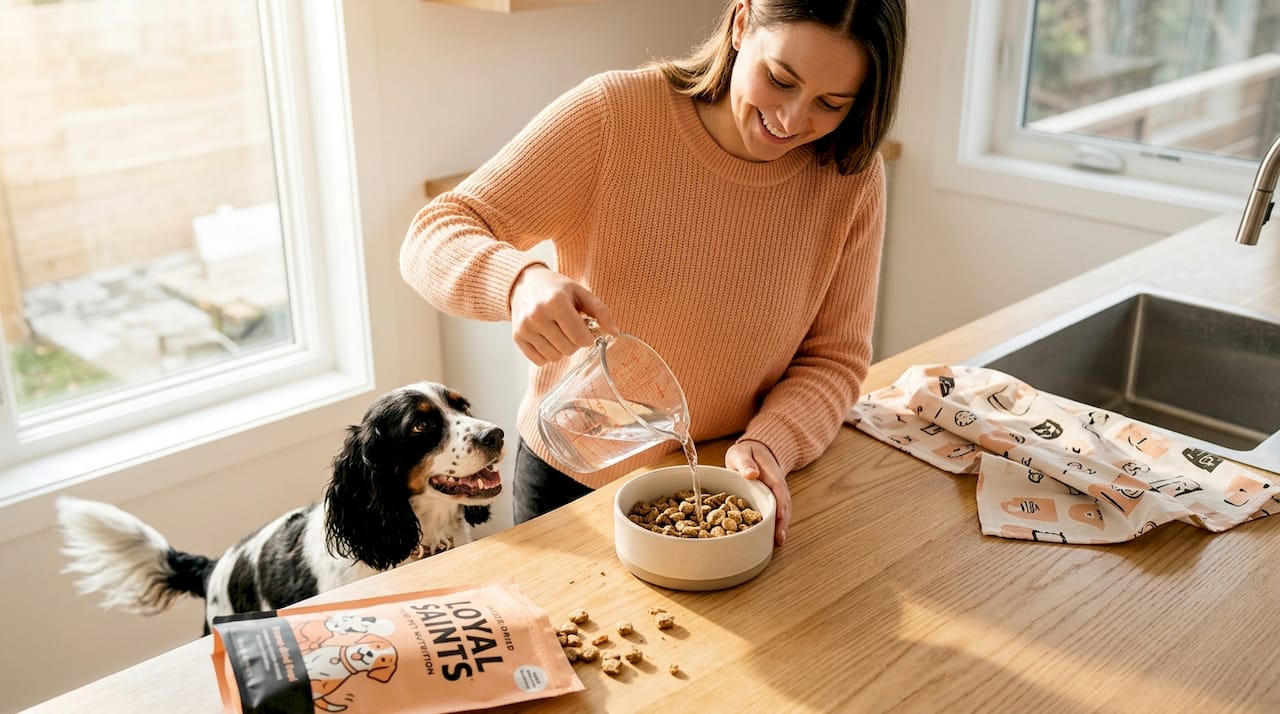
Rehydrate only the portion your dog will eat immediately. Do not let rehydrated food sit out for more than 30 minutes.
Keep rehydrated food refrigerated and use it within 24 hours.
If anyone in your household is immunocompromised, talk to your doctor and your vet before introducing raw-based diets.
How to choose and feed freeze-dried dog food
With dozens of options on the market, knowing what to look for separates the best freeze-dried dog meals from products that simply market well.
Check for an AAFCO statement. Not all freeze-dried foods meet AAFCO nutritional standards, and products validated through feeding trials carry stronger assurance than those that rely only on nutrient analysis. Look for the phrase “complete and balanced” on the label, paired with the life stage your dog is in.
Read the ingredient list top to bottom. The first ingredient should be a whole, named protein source like chicken, beef, or salmon. If you see “meat meal” or unnamed by-products near the top, that is a sign the formula is cutting corners.
Assess protein and fat levels for your dog’s needs. High-fat formulas are great for active breeds but can trigger pancreatitis in dogs with sensitive systems. Know your dog’s history before committing to a formula.
Decide between a complete diet and a topper. If you want freeze-dried food as your dog’s primary meal, choose a formula labeled for that purpose. If you want to upgrade your current kibble, using freeze-dried food as a topper is a cost-effective strategy that still delivers meaningful nutritional benefits. You can explore how freeze-dried vs kibble nutrition compares over the long term to help make that call.
Transition gradually. Start by mixing about 25% freeze-dried food with your dog’s current diet. Over seven to ten days, shift the ratio toward 100% freeze-dried. Rushing the transition can cause digestive upset, even when the food itself is excellent.
Pro Tip: Always rehydrate freeze-dried food with warm water before serving. It improves palatability, helps dogs with kidney concerns stay hydrated, and makes portion sizing more accurate because the food reaches its intended weight.
Storage, shelf life, and common myths
Proper storage is what keeps freeze-dried food safe and fresh between purchases. Here are the basics.
Store unopened bags in a cool, dark, dry location away from direct sunlight and humidity.
Once opened, seal the bag tightly after each use or transfer the contents to an airtight container.
Do not store near heat sources like stoves, dryers, or heating vents.
Follow the guidance on proper storage practices for your specific product, as bag construction and oxygen absorbers vary by brand.
Shelf life is one of the strongest practical arguments for freeze-dried food. An unopened bag can remain fresh for one to five years under ideal conditions. Once opened, most manufacturers recommend using the product within four to six weeks for best quality.
There are also a few myths worth clearing up directly. First, freeze-dried food is not the same as freeze-dried dog treats. Treats formulated for training rewards are often single-ingredient (like freeze-dried liver or chicken hearts) and not designed to serve as a complete diet. Second, freeze-dried is not “just raw food in a bag.” The process reduces pathogen risk meaningfully, which puts it in a different safety category than handling fresh raw meat at home. Third, the cost concern is real but manageable. Using freeze-dried food as a topper three or four times a week over a standard kibble base gives your dog many of the nutritional benefits at a fraction of the full-diet cost.
My honest take after years of recommending freeze-dried feeding
I’ve seen a lot of dog owners abandon freeze-dried food after one bag because they didn’t rehydrate it properly or they chose a product without an AAFCO statement and saw digestive issues. That is frustrating because the category itself is genuinely strong when you approach it with the right information.
In my experience, the biggest mistake people make is treating freeze-dried food as interchangeable with kibble. It is not. It is closer to fresh food in a shelf-stable form, and it deserves the same thoughtful handling you would give fresh meat from your grocery store. That means cleaning bowls, not leaving rehydrated portions out, and washing your hands. Those habits matter.
What I have found actually works well for most dogs is starting with a freeze-dried topper over their regular food for two weeks before deciding if they want to go fully freeze-dried. Dogs who love it make that very obvious. And the ones who thrive on it, particularly seniors and dogs with skin or coat issues, show noticeable changes within a month. Better coat shine, firmer stools, and more consistent energy throughout the day are the things I hear most from owners who stick with it.
The brands I trust most are transparent about sourcing, publish their testing protocols, and use HPP as an additional safety step. If a company cannot tell you where their protein comes from or whether they test finished batches, that is a reason to look elsewhere.
— Eyo
Why Loyalsaintspets is worth exploring for your dog
If you’re ready to make the switch to freeze-dried food, starting with a brand you can trust makes a real difference. Loyalsaintspets was built specifically for dog owners who treat their dogs like family members and want to feed them accordingly.

Every product at Loyalsaintspets is made from human-grade, whole ingredients with no fillers, artificial additives, or mystery protein sources. The formulas are designed to meet AAFCO nutritional standards, so you know what you are feeding is a complete and balanced meal. If you want to understand the science behind why this processing method works so well for dogs, the why behind freeze-dried nutrition is explained clearly on the site. When you are ready to find the right formula for your dog’s life stage, activity level, and health needs, you can browse the full product lineup and find something your dog will genuinely love. More tail wags are coming.
FAQ
Can dogs eat freeze-dried food every day?
Yes, dogs can eat freeze-dried food daily as long as the formula is labeled complete and balanced for their life stage. Always follow portion guidelines and transition gradually from their previous diet.
Is freeze-dried dog food the same as dehydrated dog food?
No. Dehydrated dog food uses low heat to remove moisture, while freeze-drying removes moisture through sublimation with no heat applied. Freeze-drying preserves more heat-sensitive nutrients and generally produces a longer shelf life.
How do I know if a freeze-dried formula is safe?
Look for brands that use High-Pressure Processing as an additional safety step, publish batch testing results, and carry an AAFCO nutritional adequacy statement. Safe handling at home is equally important.
Do freeze-dried dog treats count as a complete meal?
No. Most freeze-dried dog treats are single-ingredient snacks designed for training or reward use, not as a nutritionally complete meal. Check the label to confirm whether a product is a treat or a complete diet.
What is the shelf life of freeze-dried dog food once opened?
Most opened bags of freeze-dried dog food stay fresh for four to six weeks when stored in a cool, dry location in a tightly sealed container. Rehydrated portions should be refrigerated and eaten within 24 hours.
Recommended
Comments