.png)
Freeze Dried Dog Food Benefits for Your Dog's Health
- wix mentor

- 8 hours ago
- 8 min read
TL;DR:
Freeze-dried dog food preserves heat-sensitive nutrients better than kibble, providing a nutritious, shelf-stable option.
While it reduces most bacteria, proper handling, storage, and rehydration are essential for safety, especially for vulnerable individuals.
If you’ve been wondering whether freeze dried dog food benefits are real or just clever marketing, you’re not alone. Most dog owners assume it’s simply raw food in a different package, or maybe a fancier kibble. Neither is quite right. Freeze-dried dog food sits in its own category, one that preserves more nutrition than conventional kibble while being safer and more convenient than fresh raw. This article breaks down exactly what the science says, how to use it properly, and what to watch for so your dog actually gets everything you’re paying for.
Table of Contents
Key takeaways
Point | Details |
Nutrient retention is superior | Freeze-drying preserves heat-sensitive vitamins and amino acids that cooking destroys in kibble and canned food. |
Pathogen risk still exists | Freeze-drying reduces but does not eliminate bacteria, so proper food handling remains necessary. |
Label reading is non-negotiable | AAFCO statements tell you whether a product is a complete diet or just a meal topper. |
Rehydration improves digestion | Adding water before serving supports palatability, hydration, and easier digestion for your dog. |
Ideal for picky or senior dogs | Freeze-dried food is often more appealing to dogs with low appetite, helping them eat consistently. |
Freeze dried dog food benefits start with the process
To understand why freeze-dried food is nutritionally superior to most alternatives, you need to understand what actually happens during processing. Freeze-drying works by first freezing the food solid, then placing it in a vacuum chamber where moisture is removed through sublimation. Ice converts directly to vapor without passing through a liquid phase. The result is a shelf-stable product with less than 5% moisture before rehydration, compared to 8-12% in kibble.
The critical difference is temperature. Kibble manufacturing uses extrusion, which exposes ingredients to temperatures that can exceed 300°F. Canned food goes through retort heating. Both processes trigger the Maillard reaction, which changes protein structure and degrades heat-sensitive nutrients. Freeze-drying avoids all of that. Heat-sensitive vitamins like B1, C, and folate, along with natural enzymes and amino acids, remain largely intact.
Processing Method | Temperature Used | Nutrient Retention | Shelf Life |
Freeze-drying | Below freezing (vacuum) | High | 1-5 years |
Extrusion (kibble) | 250-300°F | Low to moderate | 6-18 months |
Canned food | High heat (retort) | Low | 2-5 years |
Fresh raw | None | Highest | 3-5 days refrigerated |
Fresh raw technically beats freeze-dried on pure nutrient retention, but the margin is smaller than most people think. What freeze-dried gives you is raw diet benefits with far more convenience and a longer shelf life.
Pro Tip: Link freeze-dried food to a detailed resource on the science behind it. If you want to go deeper on the chemistry of nutrient preservation, the team at Loyalsaintspets has a solid breakdown on how freeze-drying preserves nutrients in dog food.
How freeze-dried food affects your dog’s health
This is where freeze-dried feeding benefits become very practical. The nutrient profile of a well-formulated freeze-dried diet aligns more closely with what dogs are biologically built to process. Here is what that translates to in real health outcomes:
Digestive health: Natural enzymes survive the freeze-drying process and support easier digestion. Dogs with sensitive stomachs often respond better to minimally processed food because there are fewer synthetic additives and fillers irritating the gut.
Better protein utilization: Freeze-dried raw food maintains natural protein structure, which means higher bioavailability. Active and working dogs in particular benefit from protein their bodies can actually use efficiently.
Weight management: Because freeze-dried food is low in starch and sugar, it has a lower glycemic impact. A low-glycemic diet helps dogs maintain a healthy weight without the blood sugar spikes associated with carbohydrate-heavy kibble.
Coat and skin condition: Higher quality fat and protein intake tends to show up quickly in coat quality. Dog owners commonly report shinier coats and less shedding within a few weeks of switching.
Immune function and energy: The retention of vitamins, antioxidants, and minerals means your dog’s immune system has better building blocks to work with. Many owners notice increased energy levels, particularly in senior dogs.
Palatability for picky eaters: Freeze-dried food is often more appetizing than kibble, which matters a lot if you have a senior dog or a picky eater who skips meals. Consistent intake is its own health benefit.
Pro Tip: If your dog has been reluctant to eat or has lost weight due to a health condition, adding freeze-dried food as a topper can jumpstart appetite without requiring an immediate full diet overhaul. Check out how to do this effectively with freeze-dried meal toppers.
Safety considerations you need to understand
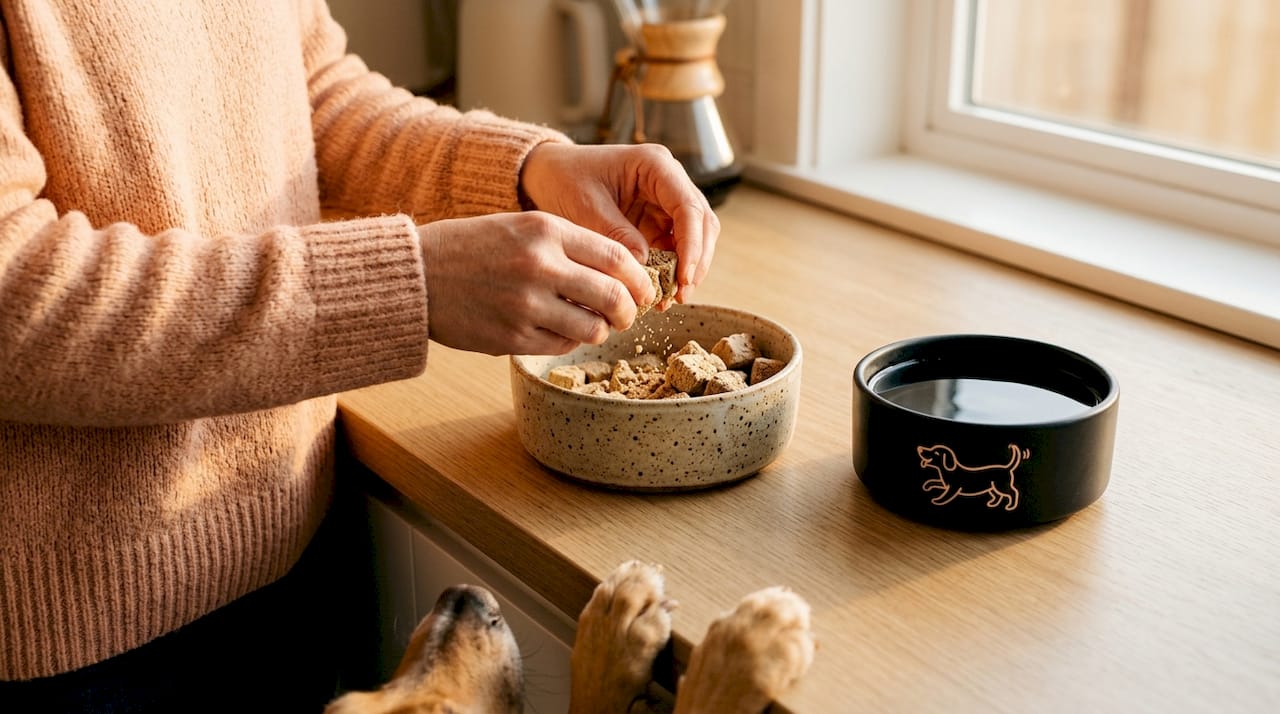
This section does not exist to scare you off freeze-dried food. It exists because informed dog owners make better decisions than scared ones.
Freeze-drying is not a cooking process. There is no heat kill step. That means while the process does reduce bacterial loads by roughly 90% to 99.9% in some cases, it does not achieve sterility. Pathogens like Salmonella can survive. Cornell University’s Riney Canine Health Center specifically notes that freeze-dried products are not cooked and bacteria can survive the drying process. Retail surveillance data shows Salmonella detected in approximately 4.5% of raw meat-based diets, which includes freeze-dried raw options.
Practical safety steps every owner should follow:
Wash your hands thoroughly after handling freeze-dried food, before and after preparation.
Use dedicated bowls and utensils, and wash them with hot water and soap after each meal.
Store opened packages in a cool, dry place and seal them tightly between uses.
If there are immunocompromised people, young children, or elderly family members in your home, take extra precautions and consider consulting your vet about whether freeze-dried raw is the right choice.
Never leave rehydrated freeze-dried food sitting out for more than two hours.
Beyond pathogen awareness, label literacy is your second line of defense. AAFCO statements on packaging tell you whether a product is formulated as a “complete and balanced” diet or intended only as a supplement or topper. Feeding a supplemental product as your dog’s sole food source creates nutritional gaps, regardless of how high-quality the ingredients are. Read the label every time you try a new product.
How to use freeze-dried food effectively
Knowing the freeze dried dog food benefits is only half the picture. Using it correctly is where results actually happen.
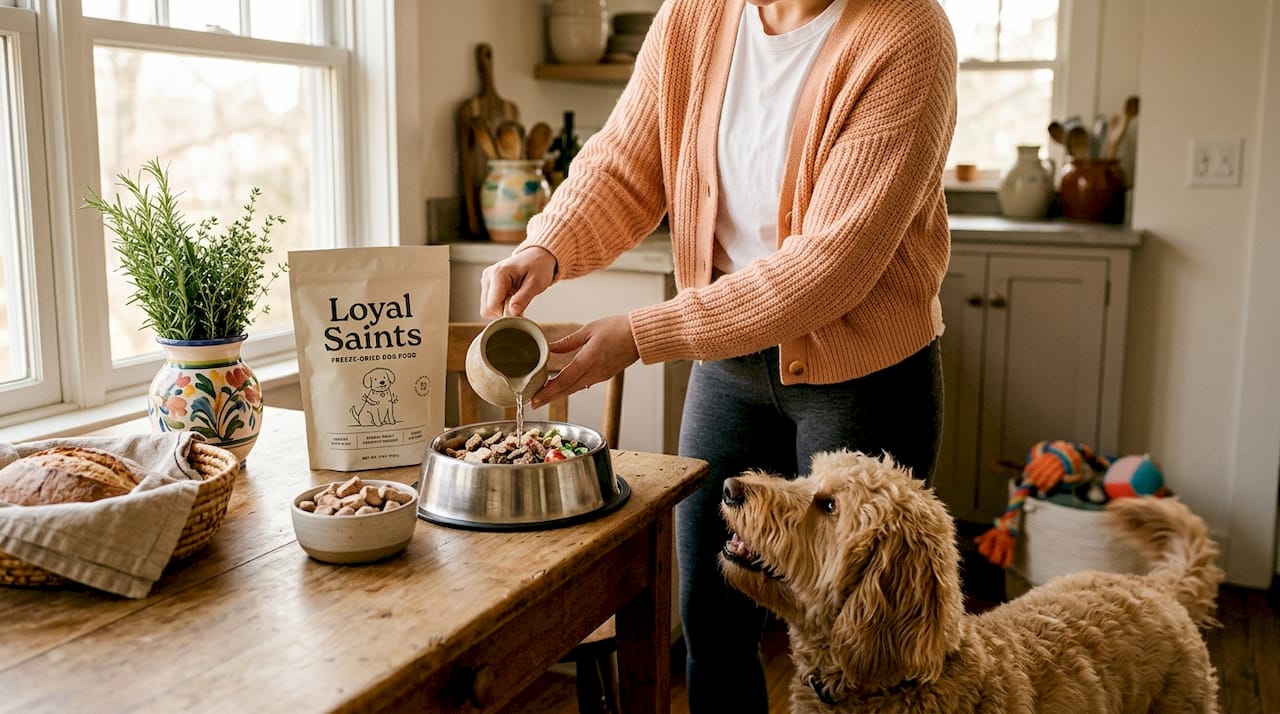
Rehydrate before serving. Add warm water to freeze-dried food and let it sit for 2 to 3 minutes before giving it to your dog. This restores moisture content, improves palatability, and makes digestion easier. It also helps dogs who do not drink enough water get additional hydration through their food.
Decide on your feeding approach. Freeze-dried food can serve as a complete diet, a meal topper, or a training treat. If you are using it as a complete diet, check the AAFCO statement on the package to confirm it meets nutritional requirements. If you are using it as a topper over kibble, no full-diet label is needed.
Transition gradually. If your dog is moving from kibble or canned food to a freeze-dried diet, go slowly. Start by replacing 25% of their current food with freeze-dried, then increase over 10 to 14 days. Sudden switches can cause digestive upset even with a higher quality food.
Adjust portions based on moisture. Freeze-dried food is calorie-dense because most of the water weight has been removed. Read the feeding guidelines carefully and remember that a small volume of freeze-dried food contains more calories than the same volume of kibble. Overfeeding is easy to do if you eyeball portions.
Store it correctly. Keep unopened packages in a cool, dry location away from direct sunlight. Once opened, reseal the bag tightly or transfer contents to an airtight container. Proper storage is what preserves the nutritional advantages you paid for. Loyalsaintspets has practical guidance on freeze-dried food storage if you want more detail.
Freeze-dried food vs other diet types
It helps to see how freeze-dried stacks up directly against the other options on the market.
Diet Type | Nutrition | Convenience | Safety Profile | Cost |
Freeze-dried raw | High, close to raw | High (long shelf life, no refrigeration) | Moderate (pathogen risk reduced, not eliminated) | High |
Fresh raw | Highest | Low (refrigeration, prep time) | Lower (higher pathogen exposure) | High |
Extruded kibble | Low to moderate | Very high | High (cooked, no pathogens) | Low |
Canned/wet food | Moderate | Moderate | High (cooked) | Moderate |
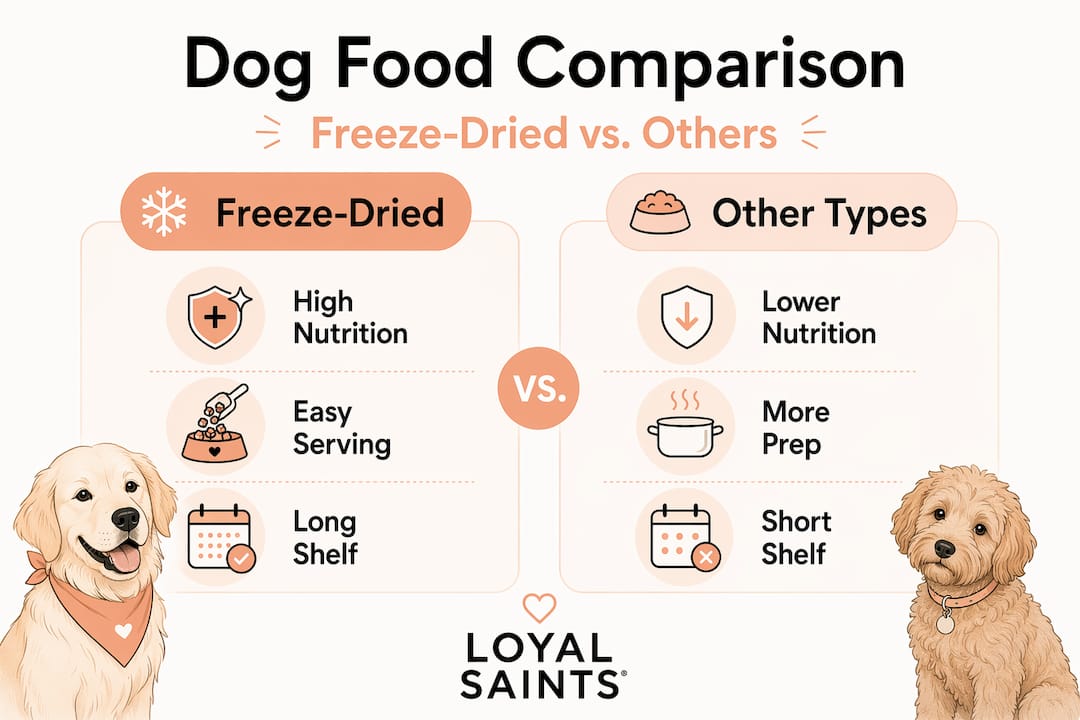
The freeze-dried sweet spot is nutrition plus convenience. You get a product that maintains the nutrient density of a raw diet while being shelf-stable, travel-friendly, and much easier to handle than raw meat. That combination makes freeze-dried food particularly well suited for active families, owners who travel frequently with their dogs, or anyone who wants better nutrition without managing fresh raw meat every day.
The trade-off is cost. Freeze-dried dog food is more expensive per serving than kibble. But when you factor in the potential for fewer vet visits related to poor nutrition, better long-term health outcomes, and the nutritional gap you are closing compared to conventional kibble, many owners find the value calculation changes. You can explore a detailed breakdown of raw versus freeze-dried micronutrients to compare the specifics side by side.
My take on freeze-dried food after years of watching dogs thrive
I’ve watched a lot of dogs change when their diet changes. What I’ve learned is that freeze-dried food works best when owners understand what it actually is, not what they assume it is.
In my experience, freeze-dried raw sits in a genuinely useful middle ground. It gives you most of the benefits of a raw diet without the daily management burden of fresh meat. For busy owners who genuinely want better nutrition for their dogs but cannot commit to handling raw meat every day, this is not a compromise. It is the right choice.
The misconception I correct most often is the idea that freeze-dried food is automatically safe because it looks clean and dry. It is not sterile. Safe handling practices matter as much with freeze-dried food as with fresh raw. That does not make it a bad choice. It makes it a choice that requires responsibility.
What I’ve consistently observed is that dogs on well-formulated freeze-dried diets show improvements in coat condition, energy, and stool quality within a few weeks. Those are not random outcomes. They reflect better protein bioavailability and fewer gut-disrupting additives. Trust the process, read the label, and handle the food properly.
— Eyo
Ready to see what Loyal Saints can do for your dog?
If the freeze dried dog food benefits covered in this article match what you’ve been looking for, Loyalsaintspets is built specifically for dog owners like you. Every product is crafted from human-grade, whole ingredients including high-quality proteins, fruits, and vegetables, with no additives or fillers. Formulas meet AAFCO standards, so you know you are feeding a complete and balanced diet, not just a topper with a premium price tag.
Whether you are switching from kibble, supplementing fresh raw, or just starting your research, Loyalsaintspets makes it easy to find the right product for your dog’s size, age, and activity level. Start by learning why freeze-dried is different, or go straight to the full product collection to find what fits your dog’s needs. Free shipping is available on qualifying orders. More tail wags are coming.
FAQ
What are the main freeze dried dog food benefits?
Freeze-dried dog food preserves heat-sensitive vitamins, enzymes, and amino acids that kibble processing destroys, while providing high protein bioavailability in a shelf-stable, convenient format.
Is freeze-dried dog food safe for all dogs?
Most healthy dogs do well on freeze-dried food, but because freeze-drying does not eliminate pathogens, dogs with compromised immune systems and households with vulnerable humans should consult a vet before making the switch.
Do I need to add water to freeze-dried dog food?
Rehydrating freeze-dried food with warm water before serving improves palatability and digestion, and supports hydration, especially for dogs that do not drink enough water on their own.
How do I know if a freeze-dried food is a complete diet?
Check the AAFCO statement on the package. A product labeled “complete and balanced” meets your dog’s full nutritional requirements, while a supplemental product is designed to be used alongside another food.
Can freeze-dried dog food help with weight management?
Yes. Because freeze-dried raw food is low in starch and sugar, it has a lower glycemic impact than kibble, which helps dogs maintain a healthy weight more consistently.
Recommended
Comments