.png)
Dog food checklist 2026: top freeze-dried picks for health
- Towanda Brunson
- 4 days ago
- 9 min read

Choosing the right freeze-dried dog food feels overwhelming when you’re committed to your pet’s health and vitality. With countless brands claiming premium ingredients and superior nutrition, how do you separate genuine quality from marketing hype? This comprehensive 2026 checklist cuts through the confusion by establishing clear evaluation criteria for freeze-dried dog foods. You’ll discover exactly what to look for in ingredients, protein levels, and processing methods, plus detailed reviews of top options that meet the highest standards for natural, nutrient-rich pet nutrition.
Table of Contents
Key takeaways
Point | Details |
Checklist criteria | Focus on whole-food ingredients, AAFCO-compliant protein levels, and freeze-drying process quality to ensure optimal nutrition |
Brand evaluation | Top freeze-dried options differ in sourcing transparency, supplement additions, and price points requiring careful comparison |
Comparison tools | Side-by-side tables reveal strengths and weaknesses across ingredient quality, protein sources, and added health benefits |
Personalized selection | Match food choices to your dog’s age, activity level, and dietary sensitivities for maximum vitality support |
Essential criteria for your 2026 dog food checklist
Selecting premium freeze-dried dog food starts with understanding what separates exceptional products from mediocre alternatives. Your checklist must prioritize ingredients that mirror what dogs would eat in nature, not laboratory-created substitutes or cheap fillers.
First, examine the ingredient list for whole-food sources like named meats, recognizable fruits, and vegetables. Avoid products listing generic terms such as “meat meal” or “animal by-products” without species identification. Balanced diets with natural ingredients significantly boost pet vitality, making ingredient transparency non-negotiable. Quality freeze-dried foods feature human-grade proteins as the first ingredient, followed by nutrient-dense whole foods that provide vitamins, minerals, and antioxidants naturally.
Protein content deserves special attention because it fuels your dog’s muscle development, immune function, and energy levels. AAFCO standards establish minimum protein requirements, but active dogs often benefit from higher levels. Check that protein comes from identifiable sources like chicken, beef, salmon, or turkey rather than ambiguous protein concentrates. Your dog food ingredient checklist should verify both quantity and quality of protein sources.
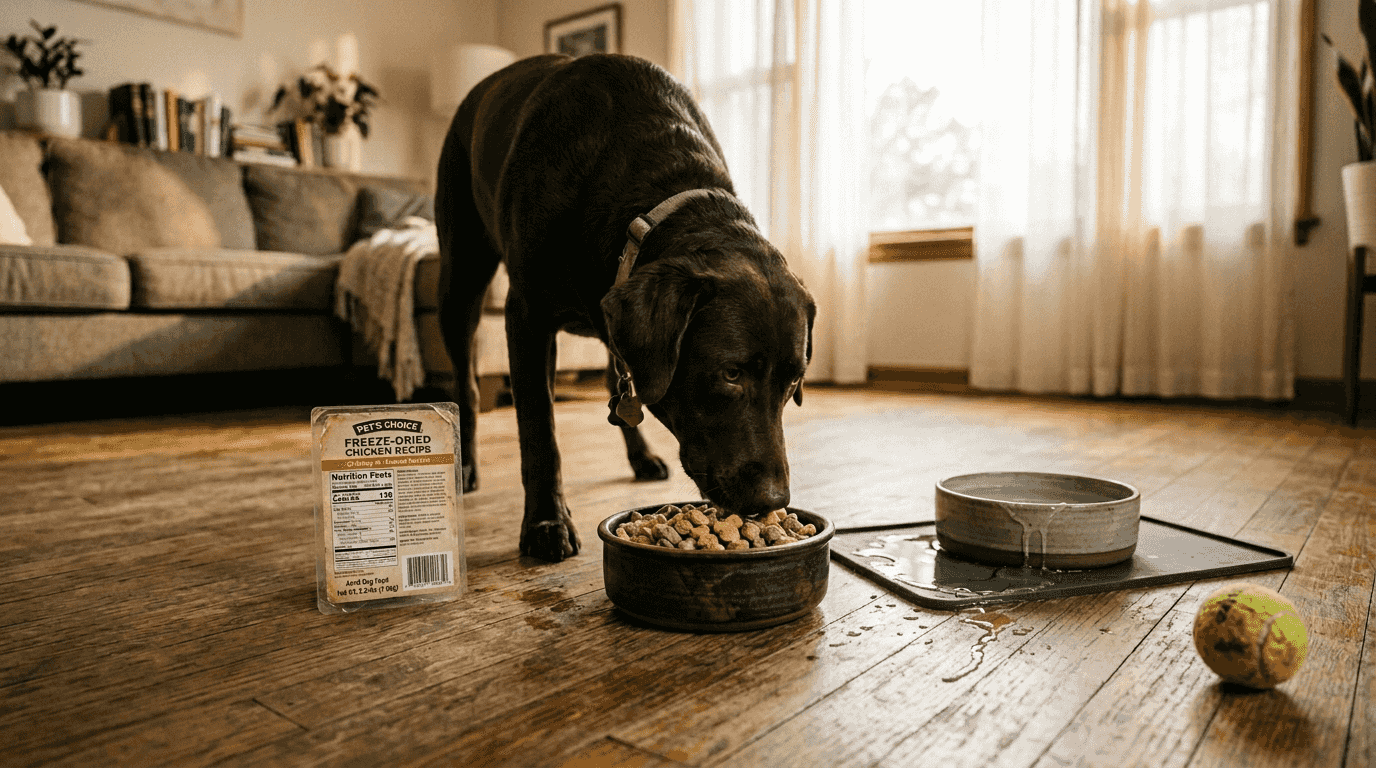
The freeze-drying process itself matters tremendously for nutrient retention. This method removes moisture at low temperatures, preserving enzymes, vitamins, and beneficial bacteria that cooking destroys. Superior brands use flash-freezing before freeze-drying to lock in maximum freshness and nutritional value.
Beyond base ingredients, evaluate added supplements that enhance health outcomes:
Probiotics supporting digestive health and immune function
Omega-3 fatty acids from fish oil promoting coat shine and joint health
Glucosamine and chondroitin for joint support in active or aging dogs
Antioxidants from berries and vegetables protecting against cellular damage
Chelated minerals for better absorption and bioavailability
Red flags include artificial preservatives like BHA, BHT, or ethoxyquin, artificial colors serving no nutritional purpose, and excessive grain fillers that dilute protein density. Corn, wheat, and soy often appear as cheap protein boosters but lack the amino acid profiles dogs need.
Pro Tip: Request a complete nutritional analysis from manufacturers, not just the guaranteed analysis on the label. Reputable brands provide detailed breakdowns showing actual nutrient levels, not just minimums, giving you transparency into what your dog truly receives.
Top freeze-dried dog food brands evaluated for 2026
Applying the checklist criteria reveals which freeze-dried dog foods deliver genuine health benefits versus those relying on clever marketing. These evaluations focus on brands demonstrating ingredient transparency, nutritional excellence, and proven results for health-conscious pet owners.
Stella & Chewy’s stands out for its commitment to raw nutrition principles combined with freeze-dried convenience. Their formulas feature 95% meat, organs, and bone content with added probiotics for digestive support. Freeze-dried processing retains nutrients effectively, making this brand a strong choice for owners prioritizing minimal processing.
Key highlights include:
Grass-fed beef and cage-free poultry sourcing
Added taurine for heart health
No synthetic vitamins or minerals, relying on whole-food nutrition
Multiple protein options accommodating food sensitivities
Potential drawbacks involve higher price points compared to conventional kibble and limited availability in some regions.
Primal Pet Foods emphasizes organic produce and antibiotic-free proteins in their freeze-dried formulas. Their recipes include ground bone for natural calcium and phosphorus, supporting skeletal health without synthetic supplements. The brand offers both complete meals and mixers for flexible feeding approaches.
Notable features:
USDA-certified organic fruits and vegetables
Hormone-free protein sources
Added organic coconut oil for medium-chain triglycerides
Grain-free formulations reducing allergy triggers
Some owners note the texture requires thorough rehydration, and certain dogs prefer other brands’ palatability.
Northwest Naturals provides regionally sourced ingredients with an emphasis on sustainability and traceability. Their freeze-dried nuggets rehydrate quickly and offer complete nutrition meeting AAFCO standards for all life stages.
Strengths include:
Pacific Northwest sourcing reducing transportation carbon footprint
Detailed batch tracking for quality assurance
Lower price point than premium competitors
Simple ingredient lists without unnecessary additives
Limitations involve fewer protein variety options and less widespread retail distribution.
Your checklist for choosing freeze-dried dog food helps evaluate these and other brands systematically, ensuring your selection aligns with your dog’s specific nutritional requirements and your quality standards.
Comparing freeze-dried dog food options in 2026: a detailed table
Side-by-side comparison clarifies the practical differences between top freeze-dried dog food brands, helping you match features to your dog’s unique needs and your budget constraints.
Brand | Protein Source | Protein % | Key Supplements | Price/lb | Ingredient Transparency |
Stella & Chewy’s | Grass-fed beef, cage-free poultry | 42-46% | Probiotics, taurine | $28-32 | Complete sourcing details |
Primal Pet Foods | Organic, antibiotic-free meats | 38-44% | Coconut oil, organic produce | $26-30 | USDA organic certification |
Northwest Naturals | Regional proteins | 40-43% | Basic vitamins, minerals | $22-26 | Regional sourcing info |
Vital Essentials | Whole prey model proteins | 45-50% | No added supplements | $30-35 | Minimal processing focus |
This comparison reveals distinct positioning strategies. Stella & Chewy’s targets owners wanting maximum protein with probiotic support. Primal appeals to organic-focused buyers willing to pay premium prices for certified ingredients. Northwest Naturals serves budget-conscious consumers seeking quality without luxury pricing. Vital Essentials attracts raw feeding enthusiasts preferring whole prey nutrition.
Comparative analysis guides decisions by highlighting trade-offs between protein levels, supplement additions, and cost considerations. Notice that higher protein percentages don’t automatically indicate superior nutrition if the protein source lacks bioavailability or complete amino acid profiles.
Supplement differences matter significantly for dogs with specific health needs. Probiotics benefit dogs with sensitive digestion or those transitioning from conventional kibble. Taurine additions support breeds prone to heart conditions. Omega-3 enrichment helps dogs with inflammatory conditions or coat quality issues.
Price variations reflect ingredient sourcing, processing methods, and brand positioning rather than pure nutritional value. A $35 per pound product isn’t necessarily better than a $25 option if both meet your dog’s nutritional requirements and quality standards. Understanding how to read dog food labels prevents overpaying for marketing claims versus substantive nutritional advantages.
Availability considerations also influence practical choices. Brands with limited distribution require online ordering, potentially adding shipping costs and reducing convenience. Wider retail availability provides flexibility for immediate purchases and easier product trials.
Choosing the right freeze-dried dog food: situational advice
Your dog’s life stage, activity level, and health status dramatically influence which freeze-dried food delivers optimal results. Generic recommendations fail because nutritional needs vary substantially across different situations.
Puppies require higher protein and fat levels supporting rapid growth and development. Look for formulas specifically labeled for growth or all life stages meeting AAFCO puppy standards. Calcium and phosphorus ratios matter critically for large breed puppies to prevent developmental orthopedic diseases. Choose products with controlled mineral levels rather than excessive supplementation.
Adult dogs in maintenance mode need balanced nutrition preventing weight gain while sustaining energy and vitality. Tailoring nutrition to lifestyle optimizes well-being significantly. Active dogs participating in agility, hunting, or intensive exercise benefit from higher protein and fat formulas, while sedentary dogs require calorie-conscious options preventing obesity.
Senior dogs face changing metabolic needs with reduced activity levels but increased requirements for joint support and digestive assistance. Select formulas with added glucosamine, reduced phosphorus protecting kidney function, and easily digestible proteins. Smaller portion sizes with nutrient-dense ingredients prevent undernutrition while managing weight.
Dogs with food sensitivities need limited ingredient formulas featuring novel proteins like venison, duck, or fish. Avoid common allergens including chicken, beef, dairy, wheat, and soy until you identify specific triggers. Single-protein formulas simplify elimination diets when diagnosing food allergies.
Follow this decision process for optimal freeze-dried food selection:
Identify your dog’s life stage and any diagnosed health conditions requiring dietary management
Determine activity level and calculate appropriate daily caloric needs using a portion calculator
List known food sensitivities or ingredients to avoid based on previous reactions
Compare protein sources, percentages, and supplement additions across brands meeting your criteria
Review ingredient sourcing transparency and company quality control practices
Calculate actual cost per feeding rather than per pound to understand true value
Start with small quantities testing palatability and digestive tolerance before bulk purchases
Monitor your dog’s energy, coat quality, stool consistency, and body condition over 4-6 weeks
Adjust portions and timing using a feeding schedule planner for consistent results
Reassess nutritional needs every six months or when health status changes
Pro Tip: Keep a feeding journal tracking your dog’s weight, energy levels, coat condition, and stool quality during the first month on any new food. This documentation helps identify subtle improvements or concerns that gradual changes might mask, ensuring you make evidence-based decisions rather than relying on assumptions.
Explore premium freeze-dried dog foods with Loyal Saints
Now that you understand what separates exceptional freeze-dried dog food from ordinary options, finding products meeting these high standards becomes your next step. Loyal Saints specializes in premium, natural freeze-dried dog foods crafted from human-grade whole ingredients that support your dog’s vitality and longevity.
Every Loyal Saints formula emphasizes nutrient preservation through careful freeze-drying processes, eliminating artificial additives while maintaining complete nutritional profiles meeting AAFCO standards. Our selections feature high-quality proteins, antioxidant-rich fruits and vegetables, and beneficial supplements supporting digestive health, joint function, and immune strength. When you prioritize your dog’s health with natural, minimally processed nutrition, you invest in more vibrant years together filled with energy and joy.
Explore our complete freeze-dried dog food collection featuring options for every life stage and dietary need. Discover why freeze-dried nutrition delivers superior results compared to conventional processing methods, and join pet owners who consider their dogs family members deserving the finest natural nutrition available.
FAQ
How can I tell if freeze-dried dog food is truly natural?
Examine the ingredient list for whole-food sources you recognize, avoiding chemical names or generic terms like “meat meal” without species identification. Truly natural products list specific proteins first, followed by identifiable fruits and vegetables without artificial preservatives, colors, or flavors. Third-party certifications like USDA organic or non-GMO verification provide additional assurance, though not all quality brands pursue certification due to cost considerations. Learning how to read labels effectively prevents falling for misleading natural claims that hide synthetic additives in fine print.
What protein levels should I expect in premium freeze-dried dog food?
Premium freeze-dried formulas typically contain 38-50% protein on a dry matter basis, significantly higher than conventional kibble averaging 20-30%. AAFCO minimum standards require approximately 18% for adult maintenance and 22% for growth, but these represent minimums rather than optimal levels. Active dogs, working breeds, and growing puppies thrive on higher protein percentages, while less active adult dogs maintain health on moderate levels. Protein quality matters as much as quantity, so verify that proteins come from named meat sources providing complete amino acid profiles.
How do I transition my dog to a freeze-dried diet safely?
Start by mixing 25% freeze-dried food with 75% current food for the first 2-3 days, monitoring stool consistency and energy levels closely. Gradually increase the freeze-dried portion to 50% on days 4-6, then 75% on days 7-9, reaching 100% by day 10 if your dog shows no digestive upset. Some dogs with sensitive stomachs need slower transitions extending to 14 days. Use a feeding schedule planner to maintain consistent meal timing during transitions, as routine helps digestive adaptation. If loose stools occur, slow the transition pace and consider adding a probiotic supplement temporarily.
Are freeze-dried dog foods suitable for all breeds and sizes?
Freeze-dried foods work well for all breeds and sizes when you adjust portion sizes appropriately and select formulas matching your dog’s life stage. Large breed puppies need controlled calcium and phosphorus ratios preventing developmental issues, so verify the formula meets large breed growth standards specifically. Small breeds benefit from nutrient-dense freeze-dried options because their faster metabolisms require concentrated nutrition in smaller volumes. Giant breeds appreciate the palatability and digestibility, though costs increase substantially due to larger portion requirements. Calculate feeding costs based on your dog’s weight and activity level before committing to ensure freeze-dried nutrition fits your budget sustainably.
Can I use freeze-dried dog food as a topper instead of complete meals?
Absolutely, many owners use freeze-dried products as toppers adding palatability and nutritional boosts to conventional kibble. This approach reduces costs while still providing natural, minimally processed nutrition benefits. Ensure your base food meets complete and balanced standards, then add freeze-dried toppers at 10-25% of the total meal volume. This strategy works particularly well for picky eaters or dogs needing appetite stimulation during illness recovery. You can also rotate between using freeze-dried as complete meals and as toppers, providing dietary variety while managing expenses. Just maintain consistent total caloric intake regardless of feeding method to prevent unwanted weight changes.
Recommended
Comments