.png)
Dog allergy management guide: Natural steps for healthier pets
- wix mentor

- 15 hours ago
- 9 min read

TL;DR:
Managing canine allergies requires accurate diagnosis through a veterinarian-led elimination diet trial. Consistency and patience over 8 to 12 weeks are essential to identify and confirm food triggers effectively. Proper foundation, record-keeping, and natural diet choices lead to lasting relief and healthier, happier dogs.
Watching your dog scratch relentlessly, chew at their paws, or shake their head in discomfort is one of the most frustrating experiences a pet owner can face. You want to help, but knowing where to start feels overwhelming when there are so many possible causes and conflicting advice online. The good news is that managing canine allergies is absolutely achievable when you follow a clear, evidence-backed plan. This guide walks you through every stage, from identifying what’s triggering your dog’s symptoms to making practical food changes that address root causes and bring lasting relief for pet allergies.
Table of Contents
Understanding dog allergies: Types, causes, and warning signs
Preparing for success: What you need before starting allergy management
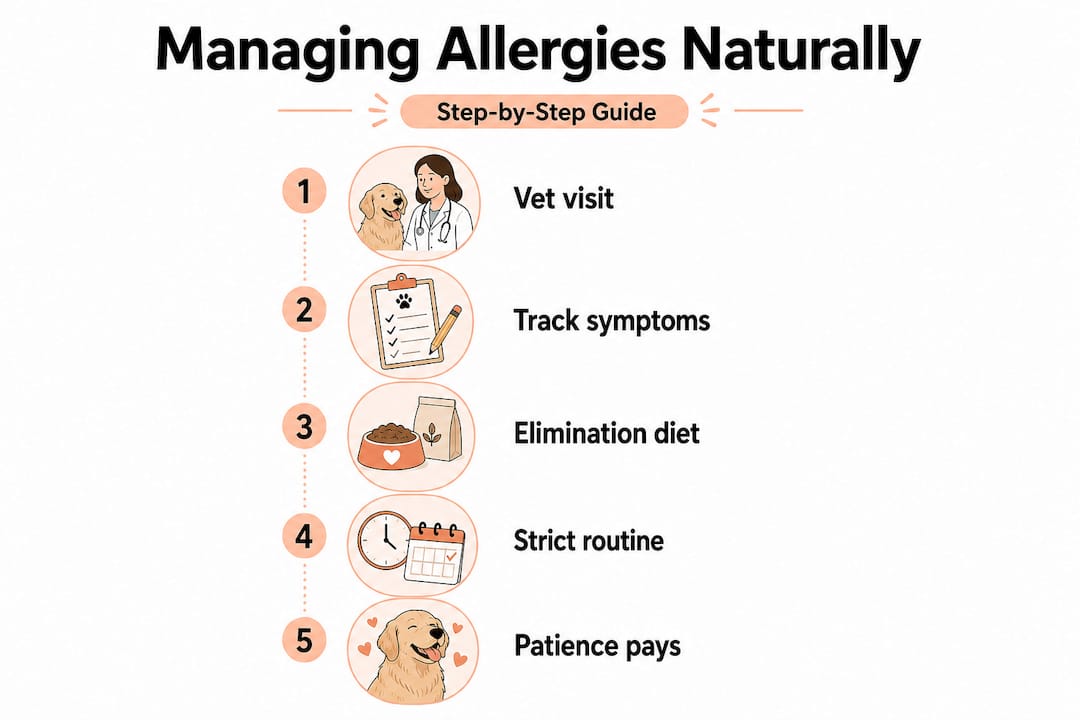
Step-by-step guide: Managing food allergies in dogs naturally
Navigating environmental allergies: Where special diets fit in
Troubleshooting and common mistakes in dog allergy management
Why quick fixes rarely work: Our take on sustainable dog allergy relief
Next steps: Healthy, natural options for your dog’s allergy relief
Key Takeaways
Point | Details |
Identify allergy type | Work with your vet to determine whether your dog’s allergy is food-based, environmental, or both. |
Follow an elimination diet | Implement a strict elimination diet for 8–12 weeks to accurately pinpoint food allergies. |
Support with natural food | For proven relief, combine expert guidance with premium, allergy-friendly natural foods. |
Pair diet and medications | Environmental allergies are best managed with a combination of diet changes and prescribed medications. |
Stay consistent | Careful symptom tracking and patience are essential for lasting results. |
Understanding dog allergies: Types, causes, and warning signs
Now that you know relief is possible, it’s critical to recognize what type of allergy your dog actually has. Not all allergies look the same, and the treatment approach changes significantly depending on the underlying cause.
There are three main categories of allergies in dogs:
Food allergies: Triggered by specific proteins or ingredients in your dog’s diet, such as chicken, beef, dairy, wheat, or eggs. Symptoms often include itchy skin, recurring ear infections, vomiting, and loose stools.
Environmental allergies (atopic dermatitis): Caused by inhaled or contact allergens like pollen, grass, dust mites, mold spores, or certain fabrics. These often follow a seasonal pattern but can also be year-round.
Flea allergy dermatitis: An allergic reaction to flea saliva, causing intense itching and skin inflammation, especially around the tail base and hindquarters.
Common warning signs to watch for in your dog include:
Persistent scratching, rubbing against furniture, or licking paws
Red, inflamed, or flaky skin and hot spots
Recurring ear infections or dark discharge
Watery eyes and nasal discharge
Digestive issues like vomiting, diarrhea, or gas
Hair loss in localized areas
Statistic to know: Studies suggest that up to 10% of all allergic skin disease in dogs is attributed to food hypersensitivity, while environmental factors account for a much larger share of canine atopic dermatitis cases overall.
The AKC notes that treatment depends on the cause and commonly includes veterinarian-prescribed medications such as antihistamines or cortisones and symptom-relief skin care, while food-related allergies require a dietary change or avoidance as the primary strategy. This distinction matters enormously because chasing a food fix for an environmental allergy (or vice versa) wastes time and leaves your dog uncomfortable longer than necessary.
Preparing for success: What you need before starting allergy management
Understanding the cause is only the beginning. You’ll want the right foundation before you start any changes, because jumping into a diet switch without proper preparation almost always leads to confusion and inconclusive results.
Start with a veterinary visit. Before you change a single ingredient in your dog’s bowl, get a professional diagnosis. Your vet can rule out other conditions like mange, ringworm, or secondary infections that mimic allergy symptoms. A formal diagnosis also gives you a baseline to measure improvement against.
Gather your tools. A successful allergy management plan requires more than just a new bag of food. Here’s what to prepare:
Tool | Purpose |
Symptom journal | Track itching frequency, skin condition, stool quality daily |
Hypoallergenic treats | Avoid accidental allergen exposure during the trial |
Medicated shampoo (if prescribed) | Soothe skin flare-ups while dietary changes take effect |
Elimination diet food | Novel protein and carbohydrate source your dog hasn’t eaten before |
Follow-up vet appointments | Verify progress and adjust the plan as needed |
Commit to the timeline. This is where many owners struggle. An elimination diet trial requires real commitment. According to Merck Veterinary Manual guidelines, a reliable food allergy diagnosis requires a strict elimination diet trial followed by a controlled dietary rechallenge, with the elimination phase lasting 8 to 12 weeks. That’s two to three months of discipline, and cutting it short is one of the most common reasons owners don’t see results.
Pro Tip: Write down everything your dog eats for two weeks before starting the elimination diet. This helps your vet identify likely culprits and choose a truly novel protein your dog has never encountered before.
Step-by-step guide: Managing food allergies in dogs naturally
You now have your action plan in place. Here’s how to put it into practice safely and effectively, one step at a time.
1. Choose a novel protein and carbohydrate source. Your dog’s elimination diet should consist of a single protein and a single carbohydrate that are genuinely new to them. Common novel choices include venison with sweet potato, rabbit with pea, or duck with tapioca. The protein must be something your dog has never eaten to ensure there’s no prior sensitization.
2. Remove all current food, treats, and flavored supplements. Every item your dog ingests during the trial must be free from the suspected allergens. This includes flavored chews, dental treats, pill pockets, and even some heartworm medications that contain beef flavoring.
3. Maintain the elimination diet strictly for 8 to 12 weeks. According to Merck Veterinary Manual, the rechallenge phase (where you reintroduce old foods) confirms the allergy by observing a return of symptoms, making the prior elimination phase non-negotiable for accuracy.
4. Track symptoms weekly in your journal. Document itching scores on a scale of 1 to 10, note any new hot spots, ear discharge, or stool changes. Photos are especially useful for skin conditions. This data helps your vet make informed decisions.
5. Begin the rechallenge phase. Once symptoms have improved or resolved, your vet will guide you through reintroducing previous ingredients one at a time, waiting 1 to 2 weeks between each. When symptoms return, you’ve confirmed the trigger.
“The elimination diet followed by rechallenge remains the gold standard for confirming food allergy in dogs. Symptom improvement alone is not enough; rechallenge confirmation is what makes the diagnosis reliable.” — Merck Veterinary Manual
Here’s a quick comparison to help you understand the difference between the two main diagnostic approaches:
Method | Reliability | Time required | Cost | Veterinary supervision needed |
Elimination diet + rechallenge | High (gold standard) | 8 to 12 weeks | Low to moderate | Yes |
Commercial blood or hair panel | Low to unreliable | Days | Moderate to high | Usually not required |
Following the proper dog elimination diet process takes patience, but it gives you real, actionable answers. You can also review additional dog food allergy steps to see how other owners have successfully navigated the process.

Pro Tip: Freeze-dried, single-ingredient foods are excellent for elimination diets because they contain minimal processing, no hidden additives, and a clearly labeled ingredient list. They make it much easier to control exactly what your dog is eating during the trial period.
Navigating environmental allergies: Where special diets fit in
While food is the focus, many dog owners wonder if a special diet will help with other types of allergies as well. It’s a fair question, and the honest answer is nuanced.
Dietary changes are most impactful when food is the confirmed driver of your dog’s allergy symptoms. If your dog has been diagnosed with atopic dermatitis from environmental triggers like grass pollen or dust mites, food changes alone are unlikely to eliminate the problem. That said, nutrition still plays a meaningful role as part of a broader treatment approach.
Here’s how diet fits into environmental allergy management:
Skin barrier support: Omega-3 fatty acids found in fish oil and certain whole-food ingredients can reduce skin inflammation and support the skin’s natural defense barrier, making your dog less reactive to environmental triggers.
Anti-inflammatory ingredients: Foods rich in antioxidants, like blueberries, sweet potatoes, and leafy greens, can help reduce the overall inflammatory burden in your dog’s body.
Gut health: A healthy digestive microbiome is connected to immune system regulation. A clean, whole-food diet supports gut integrity, which may indirectly reduce allergy severity.
Dietary interventions for non-food-induced atopic dermatitis are best understood as adjunctive therapy, meaning they work alongside medications and topical treatments rather than replacing them. Study variability limits definitive claims about individual nutrients, but the general direction of evidence supports diet as a helpful add-on strategy.
For natural allergy solutions and advice on how diet and seasonal allergies intersect, you’ll find useful guidance on what realistic expectations look like and how to build a plan that accounts for both food and environmental factors.
Troubleshooting and common mistakes in dog allergy management
With your strategy in motion, knowing how to avoid common hurdles ensures lasting results and fewer setbacks. Even well-intentioned owners make mistakes that stall progress or give misleading results.
Here are the most common pitfalls to avoid:
Ending the trial too soon: Eight to twelve weeks feels long, but stopping at week four because you haven’t seen dramatic improvement is one of the biggest mistakes owners make. Skin repair takes time, and incomplete trials produce unreliable data.
Relying on commercial allergy tests: Many blood and hair analysis kits are marketed as fast, easy allergy tests for dogs, but the elimination diet remains the gold standard diagnostic method. These commercial panels often produce false positives and lead owners down the wrong treatment path entirely.
Accidental allergen exposure: A single bite of the wrong treat can reset the clock on your elimination diet. Family members, dog sitters, and even well-meaning strangers offering your dog a snack can compromise months of careful work.
Skipping the symptom journal: Memory is unreliable over a two-to-three-month period. Without written records, it’s nearly impossible to see gradual improvement trends or accurately report to your vet.
Not treating secondary infections: Allergy-related scratching often leads to secondary bacterial or yeast skin infections. These need to be treated separately because they continue causing discomfort even after the allergen is removed.
For more guidance on solving dog food allergies and navigating the full pet food allergy management process, those resources walk through real-world scenarios and solutions in detail.
Pro Tip: Set a weekly calendar reminder to update your symptom journal. Consistency in tracking is what separates owners who get clear answers from those who remain stuck in trial-and-error cycles for years.
Why quick fixes rarely work: Our take on sustainable dog allergy relief
After troubleshooting common issues, it’s worth pausing to reflect on what truly works in allergy management, and why so many owners still feel frustrated after trying multiple approaches.
Here’s an uncomfortable truth: the pet industry is full of products that promise rapid allergy relief. Probiotic sprays, specialized shampoos, “immune-boosting” supplements, and multi-ingredient commercial diets all get marketed as solutions. Some of these products have genuine supportive value. But none of them replace the foundational work of proper diagnosis and consistent dietary management.
We’ve seen owners cycle through five or six different commercial diets in three months, hoping one will “click.” What they’re actually doing is accumulating variables that make it impossible to determine what’s helping and what isn’t. True allergy relief comes from simplification, not from adding more products.
The most successful dog allergy management stories we hear share three qualities. First, the owner worked closely with their veterinarian from the start. Second, they committed fully to the elimination diet timeline without shortcuts. Third, they chose clean, whole-food nutrition that eliminated hidden additives, artificial flavors, and fillers that could be quietly perpetuating symptoms.
Proven allergy relief isn’t glamorous or fast. It’s methodical, patient, and rooted in science. But when it works, the change in your dog is remarkable. More energy, healthier skin, fewer ear infections, and a whole lot more tail wags.
The biggest shift in mindset we’d encourage is this: stop thinking of food as just fuel, and start thinking of it as a core part of your dog’s health plan. Premium, minimally processed ingredients are not a luxury. For an allergic dog, they’re a necessity.
Next steps: Healthy, natural options for your dog’s allergy relief
Ready to put proven strategies to work? Choosing the right food is one of the most powerful steps you can take for a dog dealing with allergies. Loyal Saints Pets offers premium freeze-dried dog foods made from human-grade, whole ingredients with no fillers, no artificial additives, and clearly labeled proteins that make elimination diets far more manageable.

Freeze-dried nutrition preserves the nutritional integrity of whole ingredients while keeping preparation simple and ingredients transparent, which is exactly what you need during an allergy trial. Learn more about why freeze-dried food is such a strong choice for sensitive dogs, and when you’re ready to find the right option for your pup, explore our full range of premium allergy-friendly dog foods. Your dog deserves food that’s as thoughtful as the care you put into their health.
Frequently asked questions
What is the most reliable way to diagnose food allergies in dogs?
A strict elimination diet trial, supervised by a veterinarian and followed by a careful rechallenge, is the gold standard diagnostic method for confirming food allergies in dogs. No commercial blood or hair test currently matches its accuracy.
How long does it take to see improvement after starting an elimination diet?
Most dogs show meaningful improvement in allergy symptoms within 8 to 12 weeks after beginning an elimination diet, though close monitoring throughout is essential to recognize gradual progress.
Can a change in diet help with environmental allergies?
Diet changes are most effective for confirmed food allergies. For environmental allergies, specialized diets are adjuncts to anti-inflammatory medications and topical treatments, not a standalone solution.
Are commercial blood or hair allergy tests for dogs reliable?
Most commercial allergy panels are not reliable for diagnosing food allergies in dogs and can produce misleading false positives. Your veterinarian’s elimination diet protocol is the approach that actually delivers confirmed answers.
Recommended
Comments