.png)
Why Whole Ingredients Matter for Your Dog's Health
- wix mentor

- 6 minutes ago
- 9 min read

TL;DR:
Feeding dogs whole ingredients benefits their digestion, energy, coat, and long-term vitality.
Transparency in sourcing and processing is essential to ensure high-quality, minimally processed dog food.
Most dog owners assume that if a food meets basic nutritional standards, it’s good enough. That assumption is costing dogs years of vibrant health. The difference between a dog food made with recognizable, whole ingredients and one packed with ambiguous fillers or heavily processed components is not just a marketing story. It has real consequences for digestion, energy, coat quality, and long-term vitality. This guide breaks down exactly what whole ingredients are, what the science actually supports, and how you can make confident, informed choices for the dog you love.
Table of Contents
Key Takeaways
Point | Details |
Whole ingredients defined | Whole ingredients are minimally processed, easily recognized foods that enhance dog nutrition. |
Processing impacts health | Less processed diets can support better digestion, nutrient absorption, and vitality in dogs. |
Evidence is still emerging | Not all benefits of whole ingredients are conclusively proven; research in pet nutrition is ongoing. |
Choose with confidence | Focus on clear ingredient lists, brand transparency, and vet recommendations when picking dog food. |
What are whole ingredients in dog food?
When you pick up a bag of dog food and read the label, the ingredient list can look either reassuringly clear or confusingly vague. That difference comes down to whether the food is made with whole ingredients or heavily processed alternatives.
Whole ingredients are minimally processed, recognizable components. Think deboned chicken, blueberries, sweet potatoes, salmon, and kale. You can picture each one before it goes into the food. According to raw vs. fresh dog food research, whole and real ingredient positioning is mainly about minimizing processing and avoiding vague or mystery components that consumers cannot identify. That clarity matters because you know exactly what your dog is eating.
Contrast that with ultra-processed ingredients commonly found in standard kibble. These include terms like “animal meal,” “meat by-products,” “poultry digest,” and “corn syrup solids.” These components can originate from parts of animals or plants that most owners would never consciously choose to feed their dog. Understanding the benefits of whole ingredients starts with recognizing what you’re actually putting in your dog’s bowl.
Here is a quick side-by-side look at whole versus processed ingredients:
Whole ingredients:
Deboned chicken or salmon
Whole blueberries and cranberries
Sweet potato or pumpkin
Spinach, kale, or broccoli
Eggs from identified sources
Processed or ambiguous ingredients:
Chicken meal or meat by-product meal
Corn syrup or beet pulp
Artificial colors (Red 40, Yellow 5)
Propylene glycol (a preservative)
Generic “animal fat” with no species named
Ingredient transparency is not just a feel-good concept. It tells you the quality, digestibility, and safety of what your dog consumes every single day. And when you know what’s in the bowl, you can better track how your dog responds to their diet over time.
The health benefits of whole ingredients for dogs
Understanding what whole ingredients are, let’s look at how they can tangibly benefit your dog’s health and day-to-day life.
The most immediate and measurable benefits show up in digestion. Dogs fed diets rich in whole food ingredients often experience firmer stools, less gas, and more consistent digestive patterns. That is because whole proteins and vegetables retain their natural fiber, enzymes, and micronutrients, which support healthy gut function. Research on whole ingredients for vitality shows that these diets help with nutrient absorption and overall energy, which you will likely see reflected in your dog’s coat, muscle tone, and alertness.

Nutrient absorption is a key difference between whole and processed diets. When ingredients are heavily processed at very high temperatures, certain vitamins, amino acids, and antioxidants degrade. Whole ingredients, especially when freeze-dried, retain much more of their original nutritional profile. This matters because dogs need bioavailable nutrients, meaning nutrients their bodies can actually access and use, not just nutrients that appear on a guaranteed analysis label.
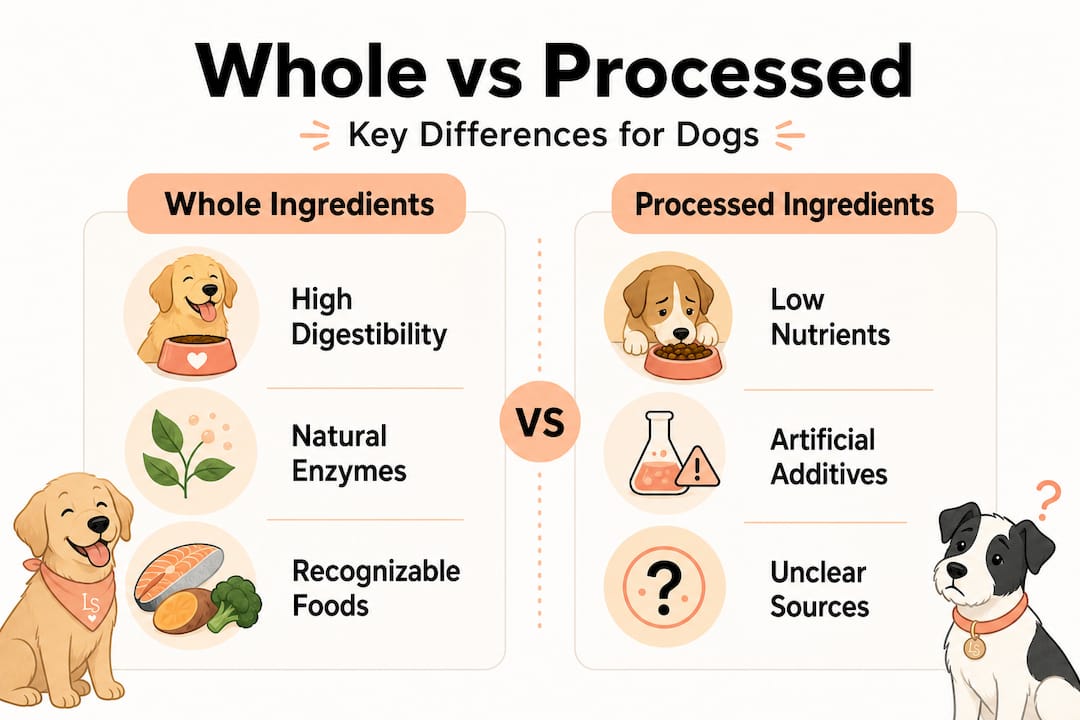
Here is a comparison of how whole and processed ingredients differ across several key health factors:
Health factor | Whole ingredients | Processed ingredients |
Digestibility | High, natural enzymes intact | Variable, often lower |
Nutrient retention | Minimal heat damage | Significant nutrient loss from high heat |
Ingredient clarity | Named, recognizable sources | Often vague or ambiguous |
Allergenic potential | Lower with single proteins | Higher with mixed/unnamed proteins |
Energy levels | Steady, stable energy | Possible spikes from fillers or sugars |
Coat and skin health | Improved omega retention | Reduced due to fat oxidation |
Real-world signs that your dog may be thriving on a whole ingredient diet include a shinier coat, less itching, more consistent energy throughout the day, and smaller, less odorous stools. These are not dramatic overnight changes, but dog owners typically report noticing them within two to four weeks of switching. You can learn more about whole ingredient advantages and how they connect to real daily improvements for your dog.
The minimally processed benefits extend beyond digestion. Dogs eating diets closer to their evolutionary nutritional roots often show stronger immune responses and better weight management, since whole proteins support lean muscle mass more effectively than low-quality alternatives.
Pro Tip: Flip any dog food bag over and scan the first five ingredients. If you cannot picture what those ingredients looked like before they were processed, that’s a red flag. Real, whole food ingredients should be immediately recognizable.
Do all claims about whole ingredients hold up?
While the benefits are compelling, it is crucial to evaluate how much of the whole ingredient messaging is grounded in rigorous science and what is still being investigated.
Here is an honest answer: not every benefit claimed for whole ingredient diets is backed by large, peer-reviewed dog-specific studies. Much of the foundational research on ultra-processed foods and their health impacts comes from human nutrition science. Researchers are still working to determine how directly that data translates to dogs and cats.
A 2026 review published in Frontiers in Veterinary Science made this important point clear:
“Evidence from humans and proposed mechanisms exist, but direct extrapolation to dogs and cats has limitations because pet food processing classification is still evolving.”
This does not mean whole ingredient diets are ineffective. It means the science is still catching up to what many veterinarians and dog owners are already observing in practice. Understanding pet food processing classifications is part of reading marketing claims more critically.
Here is a breakdown of where the evidence currently stands:
Strong evidence: Whole protein digestibility is well-documented. Named animal proteins are more bioavailable than generic meat meals in multiple studies.
Strong evidence: Fresh and minimally processed ingredients retain more heat-sensitive vitamins, particularly B vitamins and vitamin C.
Moderate evidence: Reduced allergenic response in dogs fed limited ingredient, whole food diets. Many veterinarians use elimination diets based on single, whole protein sources to diagnose food sensitivities.
Emerging evidence: Connection between highly processed pet diets and chronic inflammation. This research is still in early stages for companion animals.
Weak or unproven: Specific claims that a dog food is “100% complete” based solely on having whole ingredients. Balance and AAFCO compliance still matter regardless of ingredient quality.
Still debated: Whether the benefits of raw whole ingredients outweigh potential bacterial contamination risks compared to safely freeze-dried alternatives.
What this means for you as a dog owner is that you should look for brands that back their claims with real sourcing transparency, third-party testing, and honest communication rather than buzzwords alone. The science supports being thoughtful and intentional about what you choose. It does not support dismissing all claims either.
How to choose high-quality, real-ingredient dog food
With a more nuanced view of the science, it is time to turn to actionable steps. How can you, as a dog owner, ensure you are feeding your pet real, whole ingredients every day?
Start with the ingredient list, specifically the first five to seven items. These make up the majority of the food by weight. Look for minimally processed dog foods where a specific protein like “deboned turkey” or “wild-caught salmon” leads the list. That named protein should not immediately be followed by three or four forms of the same filler (like “corn flour,” “corn gluten,” and “corn starch”), which is a technique some brands use to hide how grain-heavy a formula really is.
Pet food transparency goes beyond just ingredient lists. It includes knowing where the protein was sourced, whether the food was processed in a certified facility, and what quality testing was done before the food reached your dog’s bowl.
Here is how whole ingredient freeze-dried food compares to common alternatives:
Category | Freeze-dried whole ingredient | Standard dry kibble | Generic canned food |
Processing level | Minimal, cold process | High heat extrusion | High heat retort |
Ingredient clarity | High, named sources | Often mixed or vague | Variable |
Moisture content | Low (add water) | Very low | High |
Nutrient retention | Excellent | Reduced | Moderate |
Shelf life | Long, without additives | Long, uses preservatives | Long, sealed |
AAFCO compliance | Yes (quality brands) | Yes | Yes |
Practical tips for shopping and conversations with your vet:
Ask your vet specifically about whole protein sources for your dog’s age, breed, and health condition.
Check for AAFCO compliance on the label, which confirms the food meets minimum nutritional standards.
Look for named protein first on the ingredient list rather than a grain or by-product.
Avoid vague terms like “animal digest,” “meat by-products,” and unnamed “animal fat.”
Consider freeze-dried options as a practical way to serve whole ingredients with a longer shelf life and no artificial preservatives.
Transition slowly when switching to a new food by mixing old and new over seven to ten days to avoid digestive upset.
Watch for real results in your dog’s coat, energy, and digestion within the first few weeks of a diet change.
According to real ingredient standards, whole and real ingredients are minimally processed and immediately recognizable, which is your clearest guide when reading any label.
Why ingredient transparency matters more than marketing claims
Here is our honest take after years of working in the whole ingredient pet food space: the word “natural” has become almost meaningless on a pet food label. So has “premium,” “wholesome,” and even “whole ingredient” in some cases. These terms can appear on products that still contain ambiguous proteins, undisclosed sourcing, and minimal regulatory scrutiny.
What actually protects your dog is not the word on the front of the bag. It is the specificity of the ingredient list on the back, the willingness of the brand to tell you where each ingredient came from, and whether independent testing confirms what the label says. True ingredient transparency means a brand can answer your questions about sourcing, processing, and quality control without hesitation.
We believe the pet food industry needs dog owners to ask harder questions. When you demand to know the source of the chicken in your dog’s food, whether the sweet potato is whole or processed, and what testing confirms nutrient levels after processing, you push brands toward accountability. That is good for every dog.
Brands that truly stand behind their products will label every ingredient specifically, disclose where proteins are raised or caught, explain their processing method, and welcome questions from pet owners. Consistency in labeling and open communication are the clearest signs of trust. If a brand makes it hard to find that information, that tells you something important.
Pro Tip: Email or call a brand before you buy and ask one specific question: “Where is your [protein] sourced from?” A trustworthy brand will answer clearly and quickly. A vague or evasive response is your sign to look elsewhere.
Looking for truly whole, freeze-dried nutrition?
Ready to put whole ingredient insights into action? If you want to feel confident about every bite your dog takes, freeze-dried nutrition is one of the most practical ways to serve real, whole ingredients without sacrificing convenience or shelf life.

At Loyal Saints, every product is crafted from human-grade, whole ingredients including high-quality proteins, real fruits, and vegetables, with no fillers or artificial additives. Our freeze-dried formulas are vet-approved, AAFCO-compliant, and designed to support your dog’s vitality, muscle strength, digestive health, and long, happy life. Discover why freeze-dried is one of the smartest ways to preserve the integrity of whole ingredients, and explore our full range of options when you shop freeze-dried products. Your dog deserves food you can feel good about every single day.
Frequently asked questions
What does ‘whole ingredients’ mean in dog food?
Whole ingredients are minimally processed, recognizable foods like meats, fruits, and vegetables used in dog food. As pet nutrition research confirms, this positioning is primarily about avoiding vague or mystery components that owners cannot identify.
Are whole ingredient diets always better than processed diets for dogs?
Not always. While they offer meaningful benefits for digestion and nutrient absorption, some specific claims require more research, and direct extrapolation from human data to companion animals is still limited as pet food processing classification continues to evolve.
How can I identify real, whole ingredients on a dog food label?
Look for specific named meats, fruits, and vegetables in the first five ingredients, and avoid vague terms like “meat by-products” or unnamed “animal fat.” Recognizable, minimally processed sources are the clearest sign of a whole ingredient formula.
Is freeze-dried dog food considered made from whole ingredients?
Yes. Most freeze-dried dog foods use minimally processed, whole ingredients because the freeze-drying method preserves nutrition without the high heat that degrades nutrients. This minimal processing approach is one of the key reasons freeze-dried options are growing in popularity among health-focused dog owners.
Recommended
Comments