.png)
Benefits of Human-Grade Dog Food for Vitality
- Nick Willkom
- Jan 12
- 8 min read


Most American dog owners believe their loyal companions deserve the same food safety standards as their families. With rising awareness about human-grade nutrition, the difference between regular kibble and premium ingredients has never mattered more. Studies now show whole, human-grade diets can boost nutrient absorption and overall health for dogs. Discover what truly defines human-grade dog food and why it is transforming how people in American cities feed the dogs they love.
Table of Contents
Key Takeaways
Point | Details |
Human-Grade Standards | Dog food classified as human-grade must meet stringent processing and safety regulations, ensuring ingredients are fit for human consumption. |
Nutritional Benefits | Human-grade dog foods offer enhanced digestibility and nutrient absorption compared to feed-grade options, supporting overall canine health. |
Regulatory Compliance | Both human-grade and feed-grade foods must adhere to AAFCO and FDA regulations, focusing on nutritional adequacy and ingredient safety. |
Cost vs. Quality Misconceptions | Higher prices for human-grade dog food reflect quality sourcing and processing, but do not always guarantee superior nutritional value; careful label examination is essential. |
Defining Human-Grade Dog Food Standards
Human-grade dog food represents a premium nutritional standard that goes far beyond traditional pet nutrition. At its core, this classification means that every ingredient and the final product are processed in facilities licensed for human food production, following stringent human food safety regulations.
The term “human-grade” is not just a marketing buzzword but a specific designation with precise requirements. Unlike standard pet foods, these products must be prepared in USDA-inspected facilities using ingredients deemed fit for human consumption. This means the raw materials and manufacturing process meet the same rigorous standards applied to foods humans eat. However, it’s crucial to understand that “human-grade” does not automatically translate to superior nutritional value for dogs.
To qualify as human-grade, dog food must meet several critical standards. These include sourcing ingredients from human food supply chains, processing in kitchens licensed for human food production, and maintaining transportation and handling protocols equivalent to those for human edible products. Research from the University of Illinois has shown that whole fresh foods following these standards are highly digestible and can offer significant nutritional benefits for dogs.
Pro tip: When selecting human-grade dog food, always verify the manufacturer’s certification and look for transparent documentation about ingredient sourcing and processing standards.
Differences From Feed-Grade Dog Food
The distinction between human-grade and feed-grade dog food is far more complex than a simple label. While feed-grade dog food typically uses ingredients and processing methods that do not meet human consumption standards, human-grade options represent a significantly higher quality nutritional approach. Ingredient sourcing and processing standards create fundamental differences that impact your dog’s overall health and nutrition.
Feed-grade dog foods often incorporate animal by-products, lower-quality protein sources, and fillers that may not provide optimal nutritional value. These ingredients are processed in facilities with less stringent regulations compared to human food production. In contrast, human-grade dog foods must use ingredients that are explicitly approved for human consumption, sourced from high-quality supply chains, and processed in USDA-inspected facilities that maintain rigorous food safety protocols.

Nutritional research provides compelling evidence of these differences. Studies have shown that human-grade foods result in more efficient nutrient absorption, leading to reduced stool production and potentially better overall health outcomes. The key differences extend beyond mere ingredient quality to include how those ingredients are handled, processed, and transformed into a complete nutritional package for dogs.
Pro tip: Always examine the ingredient list and look for transparency in sourcing when comparing human-grade and feed-grade dog food options.
Here’s a quick comparison of human-grade versus feed-grade dog food standards:
Criteria | Human-Grade Dog Food | Feed-Grade Dog Food |
Ingredient Source | USDA-inspected, human supply chain | Animal by-products, feed supply chain |
Production Facility | Licensed for human food | Licensed for animal feed |
Safety Regulations | Follows human food safety | Follows animal feed rules |
Potential Benefit | Enhanced digestibility, nutrient absorption | Basic nutrition, variable digestibility |
AAFCO and US Regulatory Requirements
Understanding the regulatory landscape for dog food is critical for pet owners seeking high-quality nutrition. The Association of American Feed Control Officials (AAFCO) plays a pivotal role in establishing comprehensive food safety guidelines that ensure pet foods meet minimum nutritional standards, regardless of their classification as human-grade or feed-grade.
AAFCO’s regulatory framework is designed to protect pet health by mandating specific nutrient profiles and ingredient quality standards. While the organization defines “human-grade” as food that meets human food storage, handling, and processing regulations, it emphasizes that nutrient adequacy remains the primary concern. This means that all dog foods, whether human-grade or not, must provide complete and balanced nutrition to support canine health.
The Federal Drug Administration (FDA) further strengthens these regulations through the Federal Food, Drug, and Cosmetic Act. This comprehensive regulatory approach ensures that pet food manufacturers adhere to strict guidelines for ingredient safety, including requirements for Generally Recognized as Safe (GRAS) substances. Dog food manufacturing practices must comply with rigorous standards that protect both animal and human health, with additional scrutiny applied to foods marketed as human-grade.
Pro tip: Always check for AAFCO nutritional adequacy statements on dog food packaging to ensure your pet receives balanced and complete nutrition.
Ingredient Quality and Nutritional Impact
The nutritional landscape of human-grade dog food represents a significant advancement in canine dietary science. Minimally processed whole food ingredients provide substantially greater nutritional benefits compared to traditional feed-grade alternatives, offering dogs a more comprehensive and bioavailable nutrient profile.
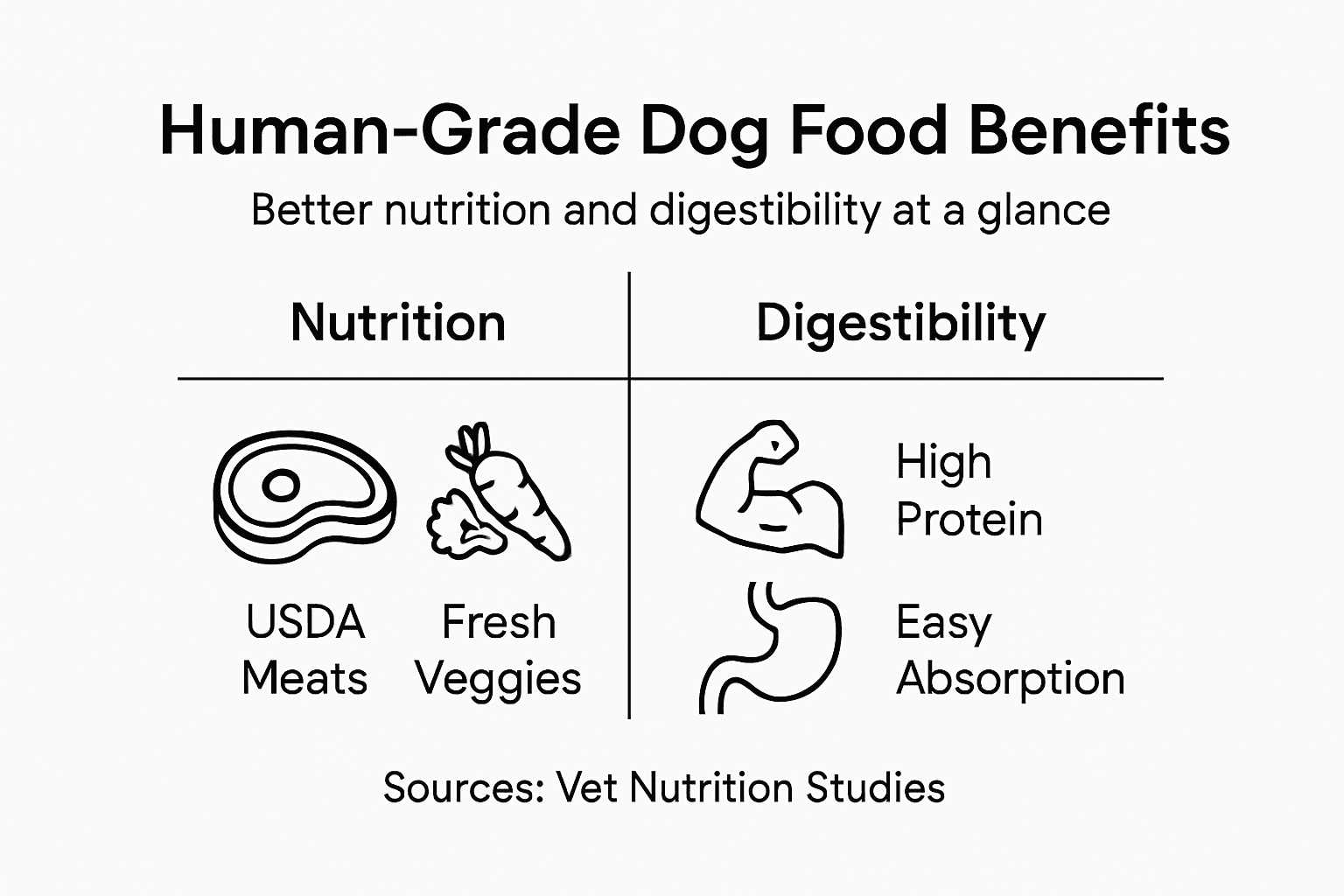
Research demonstrates that human-grade dog foods utilize USDA-certified meats, fresh vegetables, and high-quality vitamin and mineral supplements that mirror human food standards. These carefully selected ingredients are not just about meeting basic nutritional requirements but about optimizing nutrient absorption and supporting overall canine health. The precision in ingredient selection means that dogs receive proteins, minerals, and essential nutrients in their most natural and easily digestible forms.
Nutritional studies have revealed remarkable digestibility rates for human-grade dog foods, with protein and amino acid absorption often exceeding 85 to 90%. Nutrient digestibility research indicates that these high-quality ingredients contribute to more efficient metabolic processes, potentially reducing the quantity of food required to meet a dog’s nutritional needs while simultaneously supporting muscle development, immune function, and long-term vitality.
Pro tip: When evaluating dog food, prioritize brands that provide transparent information about ingredient sourcing, USDA certification, and specific nutrient profiles.
Real Health Benefits for Dogs
Human-grade dog food offers profound health benefits that extend far beyond basic nutrition. Mildly cooked human-grade diets have demonstrated remarkable improvements in dogs’ overall physiological functioning, particularly in areas of immune response and cellular health.
The nutritional advantages translate into tangible health outcomes. Dogs consuming human-grade foods often experience enhanced digestive efficiency, with research indicating significantly reduced stool production and improved nutrient absorption. This means more effective metabolic processes, which can contribute to better energy levels, stronger immune systems, and potentially more resilient overall health. The carefully selected ingredients support critical bodily functions, promoting optimal gene expression and potentially mitigating inflammatory responses.
Beyond basic nutrition, human-grade dog foods contribute to visible improvements in physical appearance and performance. Studies have shown positive changes in skin and coat quality, suggesting deeper nutritional benefits that manifest externally. Enhanced digestive health means dogs can more effectively utilize nutrients, potentially supporting muscle development, cognitive function, and long-term vitality. These improvements highlight how high-quality nutrition goes beyond mere sustenance, actively supporting a dog’s holistic well-being.
Pro tip: Monitor your dog’s energy levels, coat shine, and overall vitality after transitioning to human-grade food to track nutritional improvements.
This table summarizes real health benefits associated with human-grade diets:
Health Area | Human-Grade Impact | Evidence Type |
Digestive Health | Reduced stool production | Nutritional studies |
Immune System | Improved response | Gene expression research |
Coat Quality | Shinier, healthier | Owner observations, studies |
Vitality | Increased energy levels | Veterinary assessments |
Cost, Safety, and Common Misconceptions
Human-grade dog food often sparks debate among pet owners due to its higher price point and complex nutritional claims. Ingredient sourcing and manufacturing standards significantly contribute to the increased cost, with production occurring in facilities licensed for human food manufacture and utilizing USDA-inspected ingredients.
Contrary to popular belief, the term “human-grade” does not automatically guarantee superior nutrition or safety. While these foods are processed under more rigorous standards, nutritional adequacy must be independently verified. Many ingredients may originate from the same sources as traditional pet foods, with the primary difference lying in processing methods and handling protocols. Dog owners should understand that regulatory compliance and proper nutrient formulation matter more than the marketing terminology.
The misconception that human-grade automatically means healthier can lead to unrealistic expectations. Whole food production standards involve complex regulatory requirements that extend beyond simple ingredient classification. FDA and AAFCO guidelines ensure pet food safety regardless of marketing terminology, meaning that both human-grade and traditional dog foods must meet strict nutritional and safety standards. Consumers should focus on comprehensive nutritional profiles, ingredient quality, and veterinary recommendations rather than being swayed exclusively by premium labeling.
Pro tip: Always consult with your veterinarian and carefully review nutritional labels to make informed decisions about your dog’s diet, regardless of marketing claims.
Elevate Your Dog’s Vitality with Human-Grade Nutrition
Reading about the benefits of human-grade dog food highlights one clear challenge pet owners face: finding a diet that truly supports improved digestion, immune health, and overall vitality. The article emphasizes the importance of whole food ingredients processed under strict standards to ensure optimal nutrient absorption and long-term well-being. If you want to see your best friend thrive with stronger muscles, a shinier coat, and enhanced energy, focusing on transparency and high-quality protein sources is essential.
Discover the power of freeze-dried, minimally processed recipes made from USDA-certified ingredients designed to support your dog’s health and longevity. At Loyal Saints, we offer thoughtfully formulated options like our Chicken and Beef selections that meet and exceed these human-grade standards. These carefully crafted meals align perfectly with the goals to reduce digestive strain and promote vitality discussed in the article.

Explore our Bundles for convenient, balanced nutrition solutions tailored to your pet’s needs. Take the next step in transforming your dog’s diet today by visiting Loyal Saints Pets. Give your dog the wholesome nutrition they deserve and watch the positive health changes begin now.
Frequently Asked Questions
What are the main benefits of feeding my dog human-grade dog food?
Feeding your dog human-grade dog food can lead to improved digestive efficiency, enhanced nutrient absorption, and overall better health outcomes. Many dogs experience reduced stool production, higher energy levels, and healthier skin and coat quality.
How does human-grade dog food differ from feed-grade options?
Human-grade dog food must meet stringent USDA standards for human consumption, including sourcing high-quality ingredients and processing in facilities approved for human food. In contrast, feed-grade dog food may include lower-quality ingredients and by-products, processed under less stringent regulations.
Are there any safety concerns related to human-grade dog food?
While human-grade dog food is produced under rigorous standards, it’s essential to verify the nutritional adequacy of the product. Regulatory compliance from organizations like AAFCO ensures that both human-grade and feed-grade foods meet specific safety and nutritional standards.
Can human-grade dog food support my dog’s vitality?
Yes, human-grade dog food can contribute to your dog’s vitality by providing superior nutrient profiles that enhance metabolic processes, immune response, and overall physical performance. Dogs often show visible improvements in energy levels and overall health when consuming high-quality, minimally processed foods.
Recommended
Comments