.png)
Role of Veterinarian-Approved Diets for Dogs
- Nick Willkom
- Jan 23
- 13 min read


Choosing what goes into your dog’s bowl can feel overwhelming in a city where premium nutrition is everywhere. For health-conscious American pet owners, finding a diet that truly nurtures vitality and longevity means looking beyond flashy marketing. Veterinarian-approved diets stand out with their absolute commitment to complete and balanced nutrition that matches your dog’s unique needs. Discover why expert oversight, ingredient quality, and scientific standards set these options apart from regular commercial food and help deliver lasting wellness.
Table of Contents
Key Takeaways
Point | Details |
Veterinarian-Approved Diets | These diets offer complete and balanced nutrition tailored to a dog’s specific health needs, unlike standard commercial pet foods. |
Types of Diets | Maintenance diets support everyday health, while therapeutic and prescription diets address specific health conditions with precise formulations. |
Ingredient Quality | Premium diets use high-quality, whole ingredients and adhere to established nutritional standards, ensuring optimal health benefits. |
Veterinary Guidance | Always consult your veterinarian when selecting a diet to ensure it meets your dog’s unique nutritional requirements and health conditions. |
Defining Veterinarian-Approved Diets for Dogs
When you hear “veterinarian-approved diet,” you’re looking at a food that meets specific nutritional standards and has been recommended by a licensed veterinarian based on your dog’s individual health needs. This isn’t just marketing language. These diets are formulated to provide complete and balanced nutrition that aligns with your dog’s age, size, activity level, and any health conditions they may have. The key difference between a veterinarian-approved diet and a standard commercial pet food is the level of oversight, ingredient quality, and nutritional precision involved in its creation.
The FDA regulates pet food to ensure safety, sanitary production, absence of harmful substances, and truthful labeling. Most veterinarian-approved diets comply with federal regulations and guidelines established by the Association of American Feed Control Officials (AAFCO), which sets strict standards for pet nutrition. When a veterinarian recommends a specific diet, they’re evaluating whether it meets these regulatory standards while also addressing your dog’s particular needs. This might mean selecting a formula that supports digestive health, promotes lean muscle, manages allergies, or supports joint function in aging dogs. Unlike raw or homemade diets that can carry health risks if not properly balanced, veterinarian-approved diets are designed to prevent nutritional deficiencies and excess.
What makes these diets stand out is the balance between ingredient quality and nutritional science. Health-conscious dog owners in urban areas often seek premium options made from human-grade, whole ingredients like high-quality proteins, fruits, and vegetables. When combined with veterinary approval, these ingredients aren’t just wholesome choices but are formulated to work together in precise ratios to meet your dog’s Resting Energy Requirement and micronutrient needs. Your veterinarian can recommend freeze-dried or minimally processed options that retain nutritional integrity while eliminating additives and fillers that don’t serve your dog’s health. The goal is simple: a diet that supports your dog’s vitality, muscle strength, digestive health, and longevity so you get more healthy, happy years together.
Pro tip: Ask your veterinarian specifically about your dog’s individual nutritional requirements and any health conditions that might benefit from a tailored diet formula, rather than choosing based on brand popularity alone.
Types and Purposes of Vet-Approved Diets
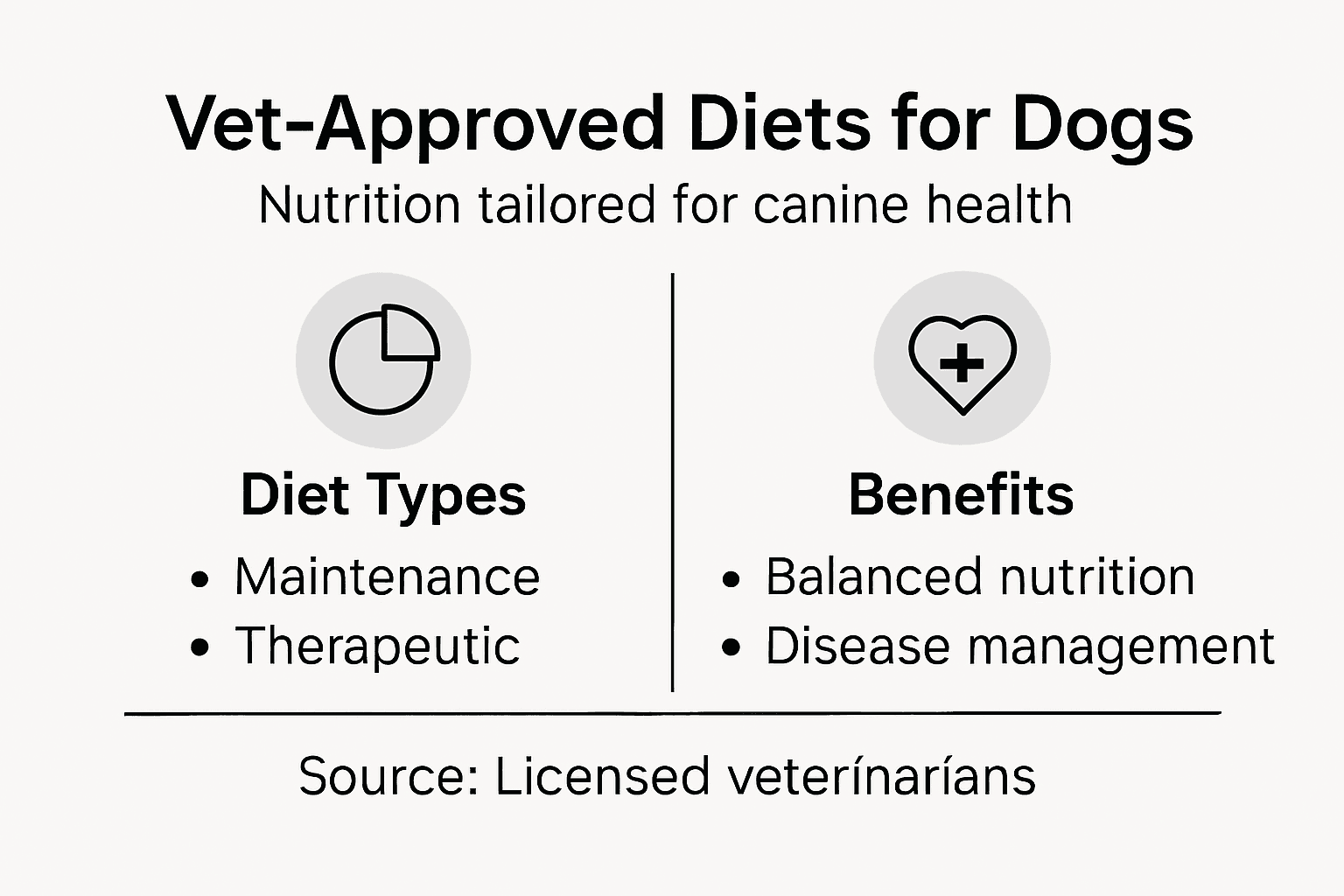
Veterinarian-approved diets come in different formulations, each designed for a specific purpose in your dog’s life. Understanding these categories helps you recognize why your vet might recommend one option over another. The main distinction lies in whether a diet is meant to keep a healthy dog thriving or to address an existing health concern. This targeted approach is what separates truly veterinarian-approved nutrition from generic commercial dog foods available on store shelves.
Maintenance diets form the foundation of veterinarian-approved nutrition for healthy dogs. These formulas provide complete and balanced nutrition to support a dog’s everyday needs, regardless of life stage or activity level. They’re formulated for adult dogs living normal, healthy lives, with no specific medical conditions requiring dietary intervention. When you’re looking for a premium option, freeze-dried or minimally processed maintenance diets made from human-grade ingredients offer the highest quality foundation for your dog’s vitality and longevity. Many health-conscious dog owners in urban areas prefer these options because they eliminate additives and fillers while maintaining perfect nutritional balance.
Therapeutic and prescription diets represent a different category altogether. These formulations address specific health challenges your dog might face, from digestive sensitivities and allergies to urinary tract health, joint support, or kidney function management. The FDA regulates various types of vet-approved pet food including prescription diets that require veterinary supervision. When your veterinarian recommends a therapeutic diet, they’re making a clinical decision based on diagnostics, bloodwork, or observed symptoms. For instance, a dog with food sensitivities might benefit from a limited ingredient diet, while an older dog showing early signs of cognitive decline could thrive on a formula enriched with specific antioxidants and omega fatty acids. The precision in these formulations is what makes the difference between managing a condition effectively and simply feeding your dog.
Some dogs transition between diet types throughout their lives. A healthy puppy might start on a growth-focused maintenance diet, graduate to an adult maintenance formula, then move to a therapeutic diet if health issues develop in their senior years. Others remain on the same maintenance diet their entire lives because they never experience health problems. Your veterinarian evaluates your individual dog’s genetics, lifestyle, body condition, and any emerging health markers to recommend the best fit. The goal is supporting your dog’s unique needs at each life stage, whether that’s maintaining excellent health or managing a specific condition with precision nutrition.
Here’s how major types of veterinarian-approved diets compare in purpose and formulation:
Diet Type | Primary Purpose | Typical Ingredients | Veterinary Oversight |
Maintenance | Daily wellness | Balanced proteins, grains | Regular checkups |
Therapeutic | Address health issue | Targeted nutrients, limited | Prescription required |
Prescription | Treat medical conditions | Specialized protein, minerals | Ongoing monitoring |
Pro tip: When your veterinarian recommends a therapeutic diet, ask specifically which health condition it addresses and what improvements you should expect to see within 4 to 8 weeks, so you can monitor whether the diet is delivering results.
Key Ingredients and Nutritional Standards
What goes into your dog’s bowl matters just as much as the bowl itself. Veterinarian-approved diets stand apart because they’re built on two foundational principles: ingredient quality and precise nutritional balance. When you see “complete and balanced” on a label, that’s not just marketing speak. It means the diet has been formulated to meet strict AAFCO nutrient profiles or has passed actual feeding trials proving it delivers everything your dog needs to thrive. For health-conscious dog owners seeking premium options, understanding what makes ingredients truly nutritious transforms how you evaluate food choices.
High-quality protein sources form the backbone of any nutritionally sound dog diet. Your dog needs amino acids from animal-based proteins to build and maintain muscle, support immune function, and keep their coat healthy and shiny. Premium freeze-dried diets made from human-grade proteins like beef, chicken, turkey, and fish offer superior bioavailability compared to lower-grade protein sources. Beyond protein, AAFCO protein standards ensure your dog receives adequate amounts of all essential amino acids. Fats provide concentrated energy and support skin health, while carbohydrates and fiber aid digestion. Micronutrients like vitamins and minerals regulate everything from bone development to metabolic function. When ingredients are whole, minimally processed foods rather than byproducts and fillers, your dog’s body can absorb and utilize these nutrients far more efficiently.
Nutritional standards shift based on your dog’s life stage and health status. A growing puppy requires different nutrient ratios than an adult dog maintaining stable health, and senior dogs often benefit from adjusted levels of certain minerals and antioxidants. Your veterinarian evaluates which complete and balanced formulation matches your dog’s specific needs, whether that’s a maintenance diet for daily wellness or a therapeutic formula addressing joint support, digestive health, or allergy management. The precision here is critical. Too much of certain minerals can stress aging kidneys, while insufficient protein compromises muscle maintenance in senior dogs. Too few calories leaves your dog perpetually hungry, while excess calories lead to weight gain and joint stress.
What separates veterinarian-approved diets from generic commercial options is accountability. These diets meet measurable standards, include transparent ingredient lists, and carry veterinary endorsement because they’ve been evaluated for safety and efficacy. Many premium options eliminate artificial additives, synthetic preservatives, and unnecessary fillers that add no nutritional value. Instead, they use natural preservation methods and whole ingredients that support your dog’s vitality, muscle strength, digestive health, and longevity. Reading ingredient lists matters too. Look for named protein sources (“beef” not “meat meal”), whole vegetables and fruits, and minimal processed components.
Pro tip: When comparing veterinarian-approved diets, review the guaranteed analysis on the label for protein percentage, fat content, and fiber levels, then ask your vet whether these numbers align with your specific dog’s age, activity level, and any health conditions.
Health Benefits and Clinical Use Cases
Veterinarian-approved diets do more than simply nourish your dog. They actively manage health conditions, support recovery from illness, and in some cases, reverse symptoms that develop from nutritional imbalances or food sensitivities. This clinical capacity is what distinguishes these diets from standard commercial pet foods. When your veterinarian recommends a specific diet, they’re making a therapeutic decision based on your dog’s individual health profile, diagnostic findings, and known nutritional interventions for their condition.

Food allergies and digestive sensitivities represent one of the most common reasons veterinarians recommend specialized diets. Dogs with itching, ear infections, vomiting, or chronic diarrhea often improve dramatically when switched to a limited ingredient diet that eliminates problematic proteins or grains. Your veterinarian identifies which ingredients trigger symptoms through elimination diets, then recommends a formula that provides complete nutrition while avoiding those triggers. The results are tangible: reduced scratching, clearer skin, firmer stools, and a happier dog. Beyond allergies, veterinarian-approved diets manage diseases including renal disease, cardiac conditions, and joint problems. A dog with kidney disease requires carefully controlled protein and phosphorus levels to slow disease progression. A dog with heart disease may benefit from low sodium formulations and specific nutrient ratios. These aren’t random adjustments. They’re evidence-based interventions that directly impact disease trajectory.
Some of the most fascinating clinical applications involve preventing or managing serious conditions through nutritional support. Research has highlighted the role of taurine supplementation and specific nutrient formulations in cardiac health, demonstrating how diet directly influences whether certain conditions develop or progress. Senior dogs benefit from diets enriched with joint-supporting ingredients like glucosamine and omega fatty acids, which reduce inflammation and improve mobility. Dogs showing early cognitive decline respond well to antioxidant-rich formulas. Weight management diets help overweight dogs lose pounds while maintaining lean muscle, directly improving joint health, cardiovascular function, and overall longevity.
What matters most is consistency and veterinary partnership. Your dog’s condition won’t improve if you switch diets randomly or supplement without guidance. When your veterinarian recommends a therapeutic diet, commit to it for the recommended duration, typically 8 to 12 weeks, before evaluating results. Monitor visible improvements: better energy, improved coat quality, reduced symptoms, or weight changes. Report back to your veterinarian so they can assess whether the diet is delivering the expected clinical benefits. This ongoing communication ensures your dog receives the most effective nutritional support for their specific health journey.
Pro tip: When your veterinarian prescribes a therapeutic diet for a specific health condition, ask for written documentation of the expected benefits and a timeframe for reassessment, so you have clear metrics for determining whether the diet is working.
Risks, Limitations, and Safety Concerns
While veterinarian-approved diets offer significant health benefits, understanding their limitations and potential risks helps you make informed decisions for your dog. Not every diet works for every dog, and even well-formulated options require proper veterinary oversight to ensure safety and effectiveness. The key is recognizing that diet alone cannot solve every health problem, and that switching diets without professional guidance can sometimes cause more harm than good.
One common misconception is that limiting ingredients automatically solves digestive problems. Dog owners often assume that grain-free or limited ingredient diets are the answer for itching, vomiting, or diarrhea. However, research shows that diets limiting ingredients improve gastrointestinal issues more effectively when formulated based on individual dogs rather than general trends. The real culprit might be a specific protein, not grains broadly. Switching to a trendy diet without veterinary guidance means your dog might miss the actual problem. Additionally, poorly formulated limited ingredient diets can lack essential nutrients or contain contaminants that create new health issues. Your veterinarian conducts proper elimination trials, identifying the true trigger rather than guessing based on marketing claims.
Another significant concern involves comparing veterinarian-approved diets to alternative feeding practices. Many pet owners consider raw food diets, believing them closer to a dog’s natural diet. The reality is more complicated. Raw food diets carry health risks including contamination with pathogenic bacteria and parasites that can affect both your dog and your family. Homemade diets, while made with love, frequently lack proper nutritional balance unless formulated with veterinary precision. Veterinarian-approved diets undergo regulatory scrutiny, quality control testing, and safety protocols that alternative feeding methods simply do not. They’re manufactured in facilities with contamination prevention standards and ingredient verification processes. When you choose a veterinarian-approved diet, you’re choosing accountability and scientific oversight.
Transitions between diets require patience and care. Abruptly switching foods can trigger digestive upset in any dog, regardless of diet quality. Your veterinarian recommends a gradual transition period, typically 7 to 10 days, mixing increasing amounts of the new diet with the previous food. Some dogs need even longer transitions. Cost is another real consideration. Premium, veterinarian-approved diets often cost more than budget commercial foods, but the health benefits and reduced veterinary expenses for preventable conditions typically offset the difference. Finally, remember that diet changes take time to show results. Most therapeutic diets require 8 to 12 weeks of consistent use before you can fairly evaluate whether they’re working. Patience and consistency matter more than quick switches.
Pro tip: Never start a new diet without explicit veterinary approval, and always report any digestive upset, appetite changes, or unexpected symptoms that occur during the transition period to ensure your dog tolerates the food safely.
Comparing Vet-Approved Diets to Alternatives
The pet food market overflows with options, and choosing between veterinarian-approved diets and alternatives can feel overwhelming. Understanding the real differences helps you make a choice aligned with your dog’s health and your family’s values. The distinction isn’t about marketing or price alone. It centers on nutritional consistency, quality control, and whether a diet has been formulated and tested to meet established health standards.
Veterinarian-approved commercial diets hold significant advantages over homemade or unregulated alternatives. These formulas are developed by animal nutritionists, tested for safety and efficacy, and manufactured in facilities with strict quality controls. Every batch meets AAFCO standards and regulatory requirements, ensuring consistent nutrition from bag to bag. When you buy a veterinarian-approved diet, you know exactly what nutrients your dog receives. Homemade diets, even when made with love and the best ingredients, frequently lack essential nutrients or contain nutrient imbalances that develop over time. Many dog owners believe they’re feeding complete nutrition at home, but studies show that most homemade diets created without veterinary nutritionist guidance lack proper mineral ratios, vitamin levels, or amino acid profiles. Therapeutic diets present an even clearer advantage. These formulations address specific health conditions with precision that homemade food cannot match. A commercial renal diet, for example, is formulated with exact phosphorus and protein levels proven to slow kidney disease progression. Homemade kidney-friendly food might be low in phosphorus, but without precise formulation, it likely lacks other critical nutrients. Veterinarian-approved diets provide nutritional completeness that alternatives struggle to achieve consistently.
Quality control separates premium veterinarian-approved options from other choices. Boutique, grain-free, or trendy diets often lack rigorous testing and quality assurance. Some contain contaminants or ingredient inconsistencies that never appear on labels. When you choose a veterinarian-approved diet from an established manufacturer, that company has invested in quality control testing, ingredient verification, and contamination prevention. Therapeutic veterinary diets offer advantages in quality control, ingredient selection, and scientific formulation that alternative diets cannot match. This doesn’t mean homemade diets are worthless. It means that if you choose to prepare food at home, working with a veterinary nutritionist to formulate a complete and balanced recipe is essential. Raw diets present particular concerns due to bacterial contamination risks, while boutique brands may prioritize trendy ingredients over nutritional science.
Cost is a real consideration, and premium veterinarian-approved diets typically cost more than budget commercial foods. However, the financial comparison extends beyond sticker price. A dog thriving on a veterinarian-approved therapeutic diet avoids expensive emergency veterinary visits, diagnostic testing, and medications for preventable conditions. The health benefits and longevity gains often offset premium food costs within months. Your dog’s improved energy, healthier coat, better digestion, and reduced medical issues translate to savings and quality time together.
Summary of key benefits of veterinarian-approved diets versus homemade and raw alternatives:
Diet Type | Nutritional Consistency | Safety Controls | Clinical Benefits |
Vet-Approved | Meets AAFCO standards | Tested batches | Manages health conditions |
Homemade | Often inconsistent | Limited oversight | Rarely clinically proven |
Raw Alternative | Variable formulation | High contamination risk | Potential illness risk |
Pro tip: If you prefer homemade feeding, consult a board-certified veterinary nutritionist to formulate a complete recipe specific to your dog’s life stage and health status, then rebalance it annually as your dog’s needs change.
Elevate Your Dog’s Health with Veterinarian-Approved Nutrition
Every dog deserves a diet that supports their unique health needs and promotes a vibrant, active life. If you are searching for premium, veterinarian-approved nutrition formulated to meet AAFCO standards with human-grade, whole ingredients you have found the perfect solution. At Loyal Saints Pets, we specialize in freeze-dried dog foods made with high-quality proteins like Beef that nourish muscle strength, improve digestion, and help manage allergies naturally. Our thoughtfully crafted recipes ensure your dog receives balanced nutrition without additives or fillers.

Take the first step towards better health and longevity for your furry family member. Explore our collection of wholesome, health-conscious options today at Loyal Saints Pets and experience the confidence that comes with feeding your dog a food that combines veterinary science with pure, natural ingredients. Shop now and benefit from free shipping on qualified orders to make premium pet nutrition convenient and accessible.
Frequently Asked Questions
What is a veterinarian-approved diet for dogs?
A veterinarian-approved diet is pet food that meets specific nutritional standards and has been recommended by a licensed veterinarian based on your dog’s individual health needs, ensuring complete and balanced nutrition.
How do maintenance diets differ from therapeutic diets for dogs?
Maintenance diets support the everyday nutritional needs of healthy dogs, while therapeutic diets are formulated to address specific health conditions or challenges, requiring veterinary oversight.
What are the key benefits of using a veterinarian-approved diet for my dog?
Veterinarian-approved diets provide high-quality nutrition that helps manage health conditions, supports recovery, prevents nutritional deficiencies, and contributes to your dog’s overall vitality and longevity.
Why is it important to consult my veterinarian before changing my dog’s diet?
Consulting your veterinarian ensures that any dietary change is tailored to your dog’s specific health needs, preventing potential risks and ensuring that the diet supports their well-being effectively.
Recommended
Comments