.png)
Balanced Pet Nutrition: Enhancing Dog Vitality
- Nick Willkom
- Jan 22
- 14 min read


Finding premium nutrition for your dog can feel overwhelming as labels and marketing terms crowd the shelves in every American city. Choosing a freeze-dried pet food with natural ingredients means more than picking what sounds appetizing. What really matters is a balanced nutrition supply of essential nutrients, tailored by life stage, breed, and health status. This guide helps health-conscious urban owners sort facts from hype so your dog enjoys lasting vitality and well-being.
Table of Contents
Key Takeaways
Point | Details |
Balanced nutrition is individualized | Tailor your dog’s diet to their age, size, activity level, and health status rather than assuming one formula works for all. |
Ingredient quality matters | Focus on the bioavailability of nutrients instead of just ingredient names; ensure foods meet AAFCO standards and are formulated by veterinary nutritionists. |
Monitor water intake | Ensure your dog has constant access to fresh water, especially if they are on a dry food diet, to prevent dehydration. |
Consult your veterinarian | Schedule a nutritional assessment to confirm that your dog’s food meets their specific needs, rather than relying on assumptions or marketing claims. |
Balanced Pet Nutrition Defined and Debunked
Balanced pet nutrition isn’t about picking expensive ingredients or following the latest food trend. It’s about delivering the right combination of nutrients tailored to your dog’s unique needs. Balanced nutrition supplies essential nutrients in appropriate proportions based on your dog’s age, size, activity level, and health status. Think of it like a bank account: you need the right mix of protein, fats, carbohydrates, vitamins, and minerals working together. Too much of one nutrient or too little of another creates an imbalance that eventually shows up as dull coat, low energy, or digestive troubles.
Here’s where many dog owners get confused. The ingredient list on your dog’s food package doesn’t tell you much about actual nutritional value. A bag listing “chicken, beef, sweet potato” might sound better than one with “chicken meal, vegetable oil, rice,” but ingredient names don’t reflect food quality or nutritional completeness. What matters is whether the food has been tested by a qualified veterinary nutritionist and meets AAFCO standards for complete, balanced nutrition. Your dog’s body doesn’t read marketing labels. It processes nutrients, not names. The difference between a premium food and a mediocre one comes down to rigorous testing, bioavailability of ingredients, and whether the formula was developed with scientific backing rather than marketing appeal.
Many owners assume one “balanced” diet works for all dogs. That’s simply not accurate. A growing puppy needs different nutritional ratios than a senior dog. An athletic dog burning 3,000 calories weekly requires different macronutrient percentages than a calm apartment dweller. A dog with chicken sensitivities needs alternatives. Individualized nutritional assessments at every exam, tailored to breed, life stage, and health considerations, ensure appropriate body weight and nutritional status. Your veterinarian can help identify what balanced nutrition actually means for your specific dog rather than relying on generic formulas designed for millions of dogs with completely different needs.
The most common myth is that all “natural” or “human-grade” foods are automatically balanced. Natural ingredients sound better at the dinner table, but balance isn’t about whether humans could eat the food. It’s about nutrient ratios, mineral content, vitamin levels, and how those nutrients work together in your dog’s body. Two foods might both use human-grade chicken and vegetables, but one could be deficient in essential fatty acids while the other provides optimal levels. The second part of this equation involves looking beyond marketing and asking for proof: AAFCO certification, feeding trials, and formulation by veterinary nutritionists.
Pro tip: Ask your veterinarian for a nutritional assessment at your dog’s next visit, and request their input on whether your current food meets your specific dog’s needs rather than assuming any premium food automatically delivers balanced nutrition.
Key Nutrients Dogs Require Daily
Your dog’s body runs on six essential nutrient categories, and each one plays a specific role in keeping them healthy, energetic, and thriving. Proteins and amino acids form the building blocks for muscle, skin, hair, and immune function. Without adequate protein, your dog’s muscles weaken, their coat becomes dull, and their ability to fight off illness declines. Fats and fatty acids, particularly linoleic acid, support brain function, skin health, and nutrient absorption. Carbohydrates provide energy and fiber for digestive health, though dogs don’t require them the way humans do. Vitamins like A, D, E, and K regulate metabolism, bone growth, and immune response. Minerals such as calcium and phosphorus maintain bone strength and support nerve function. Finally, water might seem obvious, but it’s the most critical nutrient of all, supporting every bodily function from digestion to temperature regulation.

The challenge isn’t understanding which nutrients matter. It’s ensuring your dog actually gets the right amounts. Essential nutrients for dogs include complete proteins with amino acids, fats with linoleic acid, and balanced vitamins and minerals according to AAFCO standards that regulate pet food across the United States. The percentages vary dramatically based on your dog’s life stage. A growing puppy needs roughly twice the protein and calcium of an adult dog to support rapid development. A senior dog might need adjusted fat ratios to support aging joints. An active breed like a Border Collie or Australian Shepherd requires different caloric and nutrient ratios than a low-energy breed. This is why feeding your neighbors’ dog the same food as your own can create problems even if both are healthy pets.
Here’s what many owners miss: the quality of a nutrient matters as much as the quantity. A food meeting AAFCO minimum protein requirements might contain protein that your dog’s body struggles to absorb efficiently. Nutrient absorption depends on ingredient quality, digestibility, and mineral balance, not just nutrient percentages on paper. A premium freeze-dried food using human-grade proteins, fruits, and vegetables typically delivers superior bioavailability compared to heavily processed alternatives. Your dog’s coat, energy levels, and overall vitality reflect this difference. A dog thriving on high-quality nutrition shows a shiny coat, consistent energy throughout the day, healthy weight maintenance, and strong digestion. The reverse appears quickly when nutrition falls short.
Water deserves its own mention because dehydration sneaks up on pet owners. Your dog needs fresh water available constantly, and the amount increases with diet type. Dogs eating dry kibble need more water than those on moisture-rich diets like freeze-dried food. Urban dogs in climate-controlled apartments sometimes drink less water than they should, leading to subtle dehydration that affects kidney function and digestion. Monitor your dog’s water intake as seriously as their food intake.
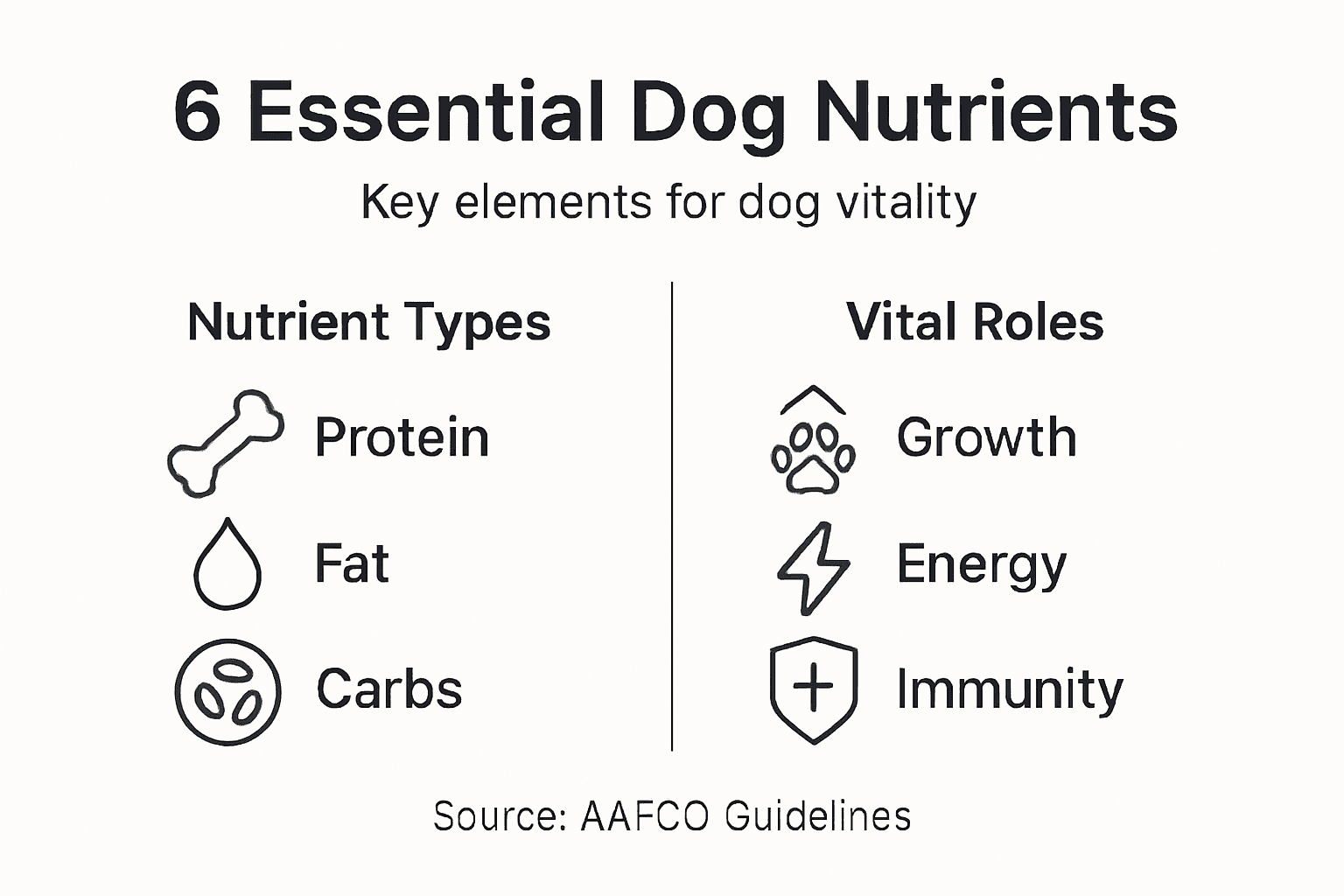
Use this summary to reference key nutrient categories and their crucial roles for canine health:
Nutrient Category | Essential Functions | Deficiency Signs | Example Sources |
Protein/Amino Acids | Muscle, immune, coat support | Weakness, dull coat | Chicken, fish, beef |
Fats/Fatty Acids | Skin, brain, nutrient absorption | Dry skin, poor energy | Salmon oil, flaxseed |
Carbohydrates | Energy, digestive fiber | Low stamina | Rice, sweet potato |
Vitamins | Metabolism, immunity | Poor growth, illness | Carrot, spinach, supplements |
Minerals | Bones, nerve function | Fragile bones | Calcium, phosphorus additive |
Water | All bodily functions | Dehydration | Fresh drinking water |
Pro tip: Check your dog’s food label for AAFCO certification and ask your veterinarian if the protein sources and nutrient ratios match your specific dog’s age, activity level, and any health considerations rather than assuming all foods meeting minimum standards deliver equal nutritional value.
AAFCO Standards and Labeling Essentials
When you pick up a bag of dog food at the store, you’re looking at a label that follows strict AAFCO guidelines designed to protect your dog and give you reliable information. AAFCO, the Association of American Feed Control Officials, doesn’t manufacture pet food or enforce regulations themselves. Instead, they create model regulations that states adopt, standardizing what appears on labels across the country. The label you see reflects years of regulatory development aimed at preventing misleading claims and ensuring transparency. This matters because it gives you a consistent way to compare foods and identify which ones actually meet nutritional standards versus which ones use marketing hype.
Here’s what mandatory labeling elements you should find on every pet food package. The brand name identifies the manufacturer, product identity describes what the food is (like “Complete and Balanced Adult Dog Food”), and the intended species and life stage tells you if it’s formulated for puppies, adults, seniors, or all life stages. The ingredients list shows contents in descending order by weight, though this doesn’t reveal nutrient quality or bioavailability. The nutritional adequacy statement confirms the food meets AAFCO standards for complete nutrition. Feeding instructions guide portion sizes based on dog weight and activity level. Finally, the manufacturer information provides contact details so you can reach out with questions. Modern AAFCO labeling now resembles human food nutrition labels with a standardized Nutrition Facts box, clearer ingredient declarations, and handling instructions that make shopping easier for conscientious pet owners.
The trickiest part of label reading involves understanding what claims actually mean. A label saying “premium” or “natural” carries no official AAFCO definition, so marketing departments use these terms freely. But a label claiming “complete and balanced nutrition” backed by AAFCO nutritional adequacy standards means the food has been formulated to meet specific nutrient requirements or tested through controlled feeding trials. This distinction separates reliable products from overhyped alternatives. When you see “beef” as the first ingredient, it sounds better than “beef meal,” but both can be legitimate depending on the overall formula. The real test comes from AAFCO certification, ingredient quality, and whether a veterinary nutritionist developed the formula.
Urban dog owners seeking premium nutrition often ask whether to trust online retailers versus traditional pet stores. Both channels carry AAFCO-compliant foods, but the quality depends entirely on the brand, not the sales channel. A freeze-dried food meeting AAFCO standards from a reputable manufacturer delivers the same nutritional completeness whether you order online or buy locally, though freeze-dried formats naturally preserve nutrients better than heavily processed kibble. Look for the AAFCO statement on the label stating the food is “complete and balanced for [specific life stage].” Avoid products with vague statements like “intended for supplemental feeding” or “for intermittent feeding,” as these don’t meet complete nutrition standards.
One overlooked element involves the manufacturer’s transparency. Quality brands provide ingredient sourcing information, testing protocols, and nutritionist credentials on their websites or packaging. They welcome veterinary consultation and provide detailed feeding guidance for individual dogs. This level of transparency signals confidence in product quality. Compare this to brands making broad health claims without supporting evidence or reluctant to share formulation details. Your dog’s vitality depends partly on the food you choose, and that choice becomes easier when you understand labeling standards and recognize which claims hold actual meaning versus marketing appeal.
Pro tip: When evaluating any dog food, first verify the AAFCO nutritional adequacy statement on the label, then cross reference the ingredients and feeding instructions with your veterinarian to confirm the specific product matches your dog’s age, activity level, and health status rather than assuming all AAFCO-compliant foods deliver equal results for your individual dog.
Freeze-Dried Diets Versus Other Options
Dog owners today face more feeding choices than ever before, and understanding how these options compare helps you make decisions aligned with your dog’s health and your lifestyle. The main categories include traditional kibble, canned wet food, raw diets, home-prepared meals, and freeze-dried options. Each approach carries distinct advantages and challenges. Traditional kibble offers convenience and affordability but often involves heavy processing that degrades nutrient quality. Canned foods provide higher moisture content supporting hydration, though they require storage space and cost more per serving. Raw diets appeal to owners seeking whole prey nutrition, yet they present contamination risks and require careful handling. Freeze-dried diets occupy a middle ground, preserving whole ingredients and nutrient density while eliminating most processing concerns associated with other commercial options.
The freeze-dried advantage comes from the preservation method itself. Freeze-drying removes moisture while maintaining nutrient density and ingredient integrity through a process that doesn’t involve heat like traditional cooking or kibble manufacturing. This means your dog receives nutrients closer to their original state compared to heavily processed kibble. However, freeze-drying does not eliminate bacterial contamination risks present in raw or minimally processed meat-based diets, so proper handling and storage remain critical. Urban dog owners appreciate that freeze-dried food requires no refrigeration before opening, making it practical for apartment living and travel. The lightweight, shelf-stable format also means free shipping qualifies more easily for online orders, reducing overall costs for busy pet parents.
Home-prepared diets sound appealing because you control every ingredient, yet they carry serious nutritional risks. Home-prepared diets tailored to individual health needs require expert formulation to ensure nutritional completeness and safety, yet many owners create imbalanced formulas missing essential minerals or vitamins. A study of home-prepared dog food recipes found approximately 95 percent were nutritionally incomplete or unbalanced. This means your dog might appear healthy for months or years while developing hidden deficiencies affecting bone density, immune function, or cognitive development. The cost and time investment also surprises many owners who thought home cooking would save money. Between purchasing varied ingredients, coordinating storage, and potentially consulting with veterinary nutritionists to ensure balance, home-prepared feeding often costs more than premium commercial options while requiring constant attention to nutritional ratios.
Raw diets generate passionate opinions but deserve careful consideration. Proponents cite ancestral feeding patterns and claim raw meat benefits coat quality and dental health. Skeptics highlight documented bacterial contamination including E. coli, Salmonella, and Listeria that affect both dogs and their human families. Your dog’s digestive system differs from wolves, and modern raw meat differs dramatically from wild prey including organ meats and bones. Raw feeding requires freezer space, careful thawing protocols, and rigorous food safety practices. Many veterinarians hesitate to recommend raw diets due to contamination risks, particularly for households with immunocompromised people, young children, or elderly family members who might handle food bowls or surfaces.
Freeze-dried diets offer practical advantages for health-conscious urban dog owners seeking premium nutrition without the complexity. They provide nutrient density comparable to fresh food while eliminating most contamination concerns through proper manufacturing and quality control. Unlike raw diets, freeze-dried foods can sit on shelves or in pantries without special equipment. Unlike heavily processed kibble, they maintain ingredient integrity and nutrient bioavailability. Unlike home-prepared meals, they come nutritionally balanced and AAFCO-certified, requiring no complicated formulation work. This makes freeze-dried options ideal for owners prioritizing their dog’s vitality without sacrificing convenience or creating health risks through improper preparation.
Here’s a quick comparison of popular dog feeding methods and their unique advantages and drawbacks:
Feeding Method | Main Benefits | Potential Drawbacks | Suitability for Owners |
Traditional Kibble | Convenient, cost-effective | Can be highly processed, less moist | Busy owners, budget-focused |
Canned Wet Food | Higher moisture, palatable | Needs storage, higher cost | Owners prioritizing hydration |
Raw Diet | Whole prey nutrition, unprocessed | Contamination and handling risks | Experienced, safety-conscious |
Home-Prepared | Ingredient control, customization | Hard to balance, time-consuming | Owners willing to consult experts |
Freeze-Dried | Nutrient-dense, shelf-stable | Can be more costly | Urban, health-focused owners |
Pro tip: Regardless of which feeding method you choose, consult your veterinarian about your specific dog’s nutritional needs, digestive sensitivities, and any health conditions that might make one approach safer than others rather than assuming any trendy feeding method automatically suits every dog.
Risks and Mistakes to Avoid in Dog Nutrition
Good intentions pave the road to nutritional mistakes that silently damage your dog’s health. Many urban dog owners make critical errors without realizing the long-term consequences. The most dangerous mistake involves feeding unbalanced diets without veterinary oversight. This might mean rotating through random premium brands thinking variety ensures complete nutrition, or assuming human-grade ingredients automatically create balanced meals. It might mean home-cooking with good intentions but missing essential minerals like zinc, copper, or iodine that appear invisible until deficiencies emerge months later. Unbalanced nutrition doesn’t show immediate symptoms. Your dog might seem healthy and energetic while developing bone density problems, immune dysfunction, or cardiac issues that surface years later. Routine nutritional assessments and individualized feeding plans prevent these hidden deficiencies rather than assuming any premium commercial food or home-prepared meal meets your specific dog’s needs.
Obesity represents perhaps the most visible nutrition mistake, yet also the most preventable. Overweight dogs develop joint problems, diabetes, heart disease, and shortened lifespans. The mistake often starts innocently with extra treats, table scraps, or free-feeding that owners think shows love. A dog getting 200 extra calories daily gains roughly 20 pounds annually, sneaking up on owners who don’t weigh their dog regularly. Urban dogs often lack outdoor space for spontaneous exercise, making caloric management even more critical. Another overlooked mistake involves ignoring life stage requirements. Puppies need different nutrient ratios than adults. Senior dogs require adjusted calories, joint support, and sometimes modified protein levels. Feeding an adult formula to a growing puppy stunts development. Feeding a high-calorie puppy formula to a senior dog causes obesity and joint stress. Overlooking specific life stage needs creates nutritional mismatches that compromise health outcomes, yet many owners feed the same formula throughout their dog’s entire life.
The supplement trap catches many health-conscious owners. Believing more nutrients mean better health, they add vitamins, minerals, omega supplements, or joint support to already balanced commercial foods. Excess vitamin A becomes toxic. Too much calcium interferes with other mineral absorption. Oversupplemented dogs develop the same deficiencies as undersupplemented ones because nutrient imbalances disrupt absorption. Premium foods already include balanced supplementation, so adding more creates problems rather than solutions. Another critical mistake involves transitioning diets too quickly. Switching foods abruptly causes digestive upset, vomiting, and diarrhea that owners blame on the new food rather than the transition method. The correct approach involves gradually mixing increasing percentages of new food with old food over 7 to 10 days. Additionally, many owners neglect to account for treats within daily calorie limits. A dog on 1,000 calories daily who receives 300 calories in training treats is actually overfed by 30 percent. These calorie calculations seem tedious but directly impact your dog’s weight, energy, and lifespan.
Trusting marketing over science represents a foundational mistake affecting many urban pet parents. A label saying “premium,” “natural,” or “veterinarian recommended” lacks regulatory meaning. The food sitting next to it on the shelf might contain better ingredients and formulation but lacks flashy marketing. Misinterpretation of nutritional advice and marketing claims leads owners toward inferior foods that don’t meet their dog’s actual needs, while the dog’s health gradually declines. Your veterinarian remains your most valuable resource for cutting through marketing noise and identifying foods that actually match your individual dog’s age, activity level, health status, and any dietary sensitivities. Refusing veterinary guidance and instead relying on internet forums, social media influencers, or well-meaning friends creates risk. Yes, seek information. But verify recommendations against your dog’s specific situation before implementing dietary changes that might harm rather than help.
Pro tip: Schedule a nutritional assessment with your veterinarian at your dog’s next wellness visit, bring your current food labels and treat list, and ask specifically whether your feeding approach matches your dog’s life stage, activity level, and any health concerns rather than assuming online research or social media trends provide adequate nutritional guidance for your unique pet.
Elevate Your Dog’s Vitality with Truly Balanced Nutrition
The article highlights how critical it is to provide your dog with balanced nutrition tailored to their unique needs. Many pet owners struggle with finding foods that meet specific nutrient ratios while maintaining high ingredient quality and bioavailability. At Loyal Saints Pets, we understand the challenges of navigating confusing labels and nutritional myths. Our freeze-dried dog foods are carefully formulated to deliver essential proteins, fats, vitamins, and minerals in the ideal balance to support muscle strength, immune health, and digestive vitality. Offering natural, human-grade ingredients with no fillers or additives, we help you avoid common nutrition pitfalls that can impact your dog’s health long term.
Discover the convenience of our thoughtfully crafted Chicken and Beef options or explore value-packed Bundles designed to suit varying life stages and activity levels. Each product meets rigorous AAFCO standards and is veterinarian approved so you can feed confidently knowing your dog’s diet supports a longer, healthier life.

Choose balanced nourishment that truly makes a difference today. Visit Loyal Saints Pets to shop premium freeze-dried diets that help your dog thrive with vitality and joy. Order now and give your beloved family member the nutrition they deserve.
Frequently Asked Questions
What constitutes balanced pet nutrition for dogs?
Balanced pet nutrition for dogs involves providing the right combination of essential nutrients tailored to your dog’s unique needs, including age, size, activity level, and health status. It includes proteins, fats, carbohydrates, vitamins, and minerals in proper proportions to maintain good health and vitality.
How can I determine if my dog’s food meets AAFCO standards?
To determine if your dog’s food meets AAFCO standards, check the nutritional adequacy statement on the packaging. This statement confirms that the food is formulated to provide complete and balanced nutrition for your dog’s specific life stage.
Are freeze-dried dog foods a good option for balanced nutrition?
Yes, freeze-dried dog foods can offer balanced nutrition by preserving the nutrient density of whole ingredients while eliminating most processing concerns. They provide a convenient and quality option for health-conscious pet owners, although proper handling is essential to avoid contamination risks.
What are common signs that my dog may not be receiving balanced nutrition?
Common signs of unbalanced nutrition in dogs include dull coat, low energy, digestive issues, and signs of weakness. If your dog exhibits these symptoms, it may be time to reassess their diet and consult your veterinarian for individualized nutritional guidance.
Recommended
Comments